With daylight saving time coming to an end, the sun will soon be setting earlier according to our clocks. And while many people dread the darker evenings, our family is choosing to embrace them. Because just as I discussed in Part I, nature’s cycles are always coupled. We cannot focus solely on the benefits of sunlight without giving proper respect to the darkness that follows. Light and darkness are both important, and one cannot replace the other.
In Part I, I discussed how our bodies contain biological semiconductors and how sunlight interacts with these materials to influence the movement of electrical charge. But what happens when the sun disappears?
What Happens to Our Cells When Darkness Arrives?
Biological semiconductors respond differently to the presence AND absence of sunlight. During the day, sunlight interacts with these semiconductors, influencing electron movement and contributing to electrical activity within our tissues. But as the sun sets and the spectrum of light changes, the electrical conditions within these semiconductors also change.
In the biological semiconduction model, the disappearance of sunlight allows the electrical conditions of semiconductor structures to transition. During the day, incoming photons can excite electrons within biological semiconductor materials, moving them into higher-energy states and leaving behind what are known as holes, or vacancies in the electronic structure where electrons were previously located. As darkness arrives and the electrical conditions change, electrons can recombine with these holes, releasing energy that may be emitted as light. This process is described as a way for cells to use light internally for communication and regeneration. In short, our cells don’t simply stop interacting with light when the sun goes down. Instead, they transition into a different electrical state to focus on nighttime repair. And this is where darkness becomes so important.
Sleep Is About More Than Rest
We often think about sleep in terms of how many hours we get. And while the hours do matter, there is another question worth asking: What electrical and environmental conditions are we creating for our cells during those hours? The relationship between magnetism, electrons, proteins, and intracellular water is central to the biophysical framework I’ve been learning about. Within this framework, sleep is described as a period when electrons help restore the energetic state of proteins and support the electrical potential of intracellular water. Nighttime conditions (aka darkness) is also connected with cellular redox, protein maintenance, regeneration, and quite frankly, so much more. But we aren’t going to dive into that today.
Why We Turn Off the Lights When the Sun Goes Down
Think about how different our evenings look compared to those of previous generations. The sun sets, but the lights stay on. We illuminate every room in our house like we’re afraid of the dark. Between that and technology, we’ve essentially created a world where daylight never has to end. And while this may be the norm, making it easy to ignore the fact that artificial blue-rich light after sunset interferes with the natural transition between daytime and nighttime biology, that doesn’t change its long-term negative effects on human health. Growth hormone signaling, autophagy, and mitochondrial function are connected to nighttime light exposure (just to name a few). So, for our family, respecting darkness means more than simply turning off the lights when we’re ready to go to bed. It means being intentional about the light environment we create from the moment the sun goes down.
What This Looks Like in Our Home
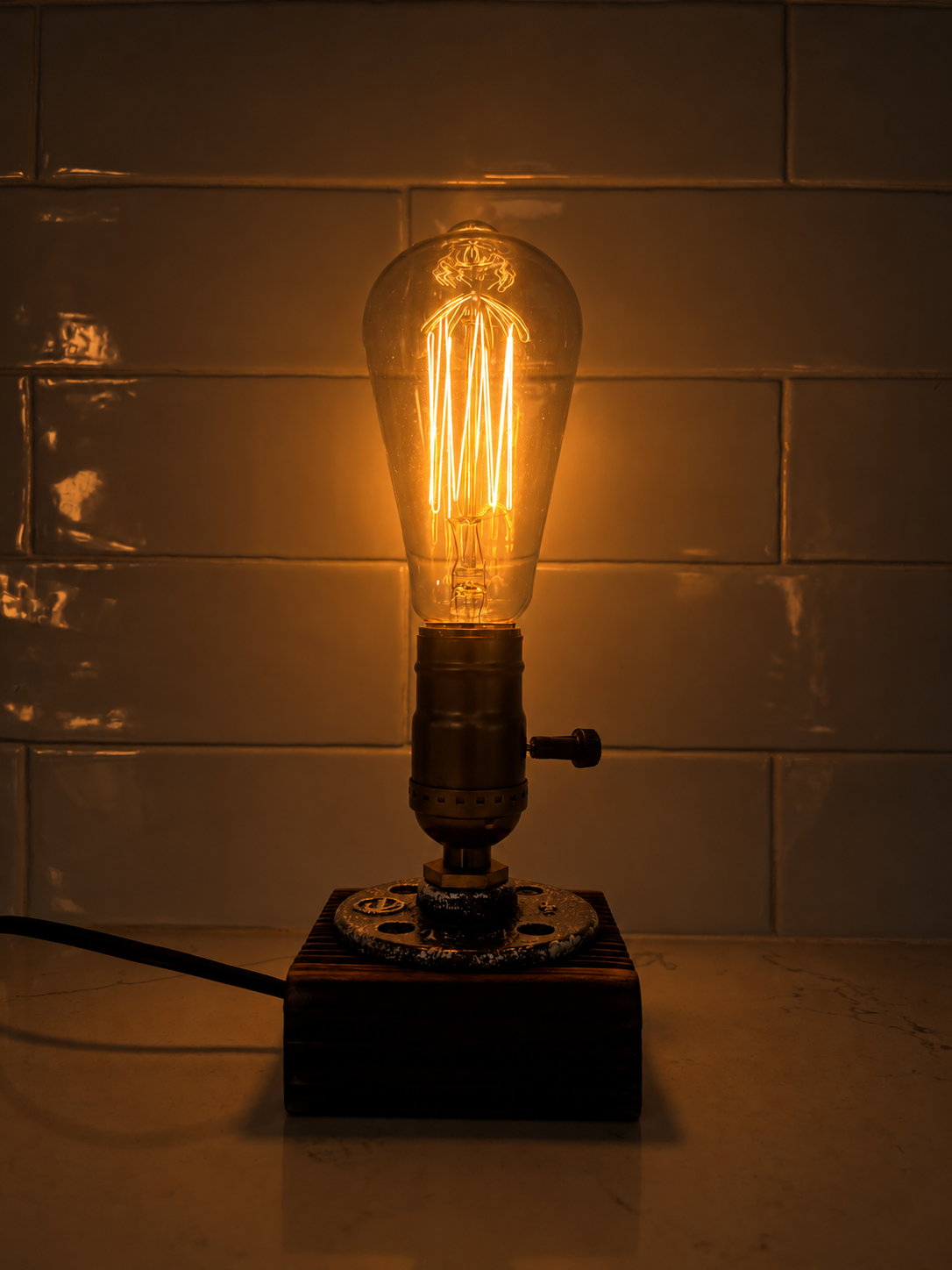
We don’t live in complete darkness from sunset until bedtime. We have a house full of children, meals to clean up, books to read, and plenty of things that still need to get done. But we do make intentional choices about how we light our home. We use dim red lighting in the evenings where necessary, and when we need additional light (don’t try cleaning your kitchen in red light, it’s a disaster), we use dim incandescent bulbs rather than bright overhead ones. We also avoid screens as much as possible after sunset, and when artificial lighting or screens are unavoidable, we wear our blue-blocking glasses.
And perhaps one of the biggest changes we’ve made is allowing the natural light-dark cycle to influence our bedtime. As the days grow shorter and the sun sets earlier, we intentionally move our evenings earlier, too, allowing our entire routine to shift with the seasons. And yeah, that might sound inconvenient in a world that expects us to maintain the same schedule year-round. But why have we become so accustomed to expecting our bodies to function on the same schedule regardless of what is happening outside? The sun doesn’t follow our clocks, and neither does our biology. Both operate according to the rhythms of nature.
Learning to Live With the Seasons Again
Overall, the more I’ve learned about light, water, magnetism, and their relationship to our biology, the more I’ve begun to question the way we’ve structured our modern lives. We’ve become so accustomed to controlling our environment that we’ve forgotten what it means to adapt to it. We control the temperature inside our homes. We decide when it’s light and when it’s dark. We eat whenever we want, stay awake as long as we please, and expect our bodies to keep up.
But nature has always operated in cycles. Sunrise and sunset, light and darkness, summer and winter, activity and rest… And those cycles aren’t arbitrary. They provide information to our bodies about the environment we’re living in. For our family, this journey hasn’t been about changing everything overnight. It’s been a gradual process of learning, questioning, and making different choices as we begin to understand more. It started with prioritizing sunrise. Then getting outside more in the morning hours and throughout the day (even when it’s cold or wet out). Then being intentional about sunset. And eventually, learning that what we do after the sun goes down matters just as much as what we do while it’s shining.
So, as the clocks change and the evenings become darker, we’re not going to fight the darkness by filling our home with artificial daylight. We’re going to respect it. We’re going to dim the lights, slow down our evenings, put away the screens, and head to bed earlier. Not because it’s trendy (it’s quite the opposite, as you may know), but because we’re choosing to structure our lives around the natural cycles that have always existed.
The sun is only half of the story. And I’ve come to learn that the other half deserves just as much of our attention.
2 Thessalonians 3:16 “Now may the Lord of peace himself give you peace at all times in every way. The Lord be with you all.”
Leave a Reply