• Skip to primary navigation
  • Skip to main content
  • Skip to primary sidebar
  • Home
  • About Me
    • My Videos
    • Organ Meat Makeover
  • Recipes
  • Health Articles
  • Resources
    • Young Living Essential Oils

Beyond the Bite

Get Beyond the Tick Bite and Eat Right For Your Life.

  • E-books
    • Organ Meat Makeover
    • Practical Animal-Based Eating
  • About Me
    • Videos
    • Health Articles
  • Recipes
    • Email
    • Facebook
    • Instagram
    • Pinterest
    • YouTube

Recipe Index

Paleo Thanksgiving Roundup

November 23, 2014

As Thanksgiving quickly approaches, my family, friends, and I are trying to scramble together an appetizer, main course, and dessert menu.  Instead of trying to copy all of my favorite recipes, I have decided to take advantage of the many mouths to feed by creating some new recipes of my own, of which I will be sharing in the weeks to come.  I am also bringing little baggies of ingredients from home, so that we will not have to buy the full amount (grass-fed gelatin, coconut flour, baking soda, etc…).  The outcome should be a great one, and I am very excited to be able to see my older brother, as well as other family and friends that we otherwise cannot see.  Since I obviously cannot share recipes that are still in the works, I figured I’d round up a few of my previously created ones, in hopes to make your planning a bit easier.   If you wish to pin the recipes, you can do so here.  I have also put a star next to the recipes that are AIP friendly.

Have a wonderful Thanksgiving!


Savory

Herb Roasted Stuffing  *

Garlic Grilled Kale  *

(Crispy kale chips without the oven)

Creamy Roasted Broccoli *

Sweet Cider Slaw *

(No cook, make ahead recipe)

Pomegranate Reduction  *

(Great over roasted veggies, turkey, or ham)

Mojo Dipping Sauce

(A favorite by all)

Sweet’N Savory Hash *


Sweet

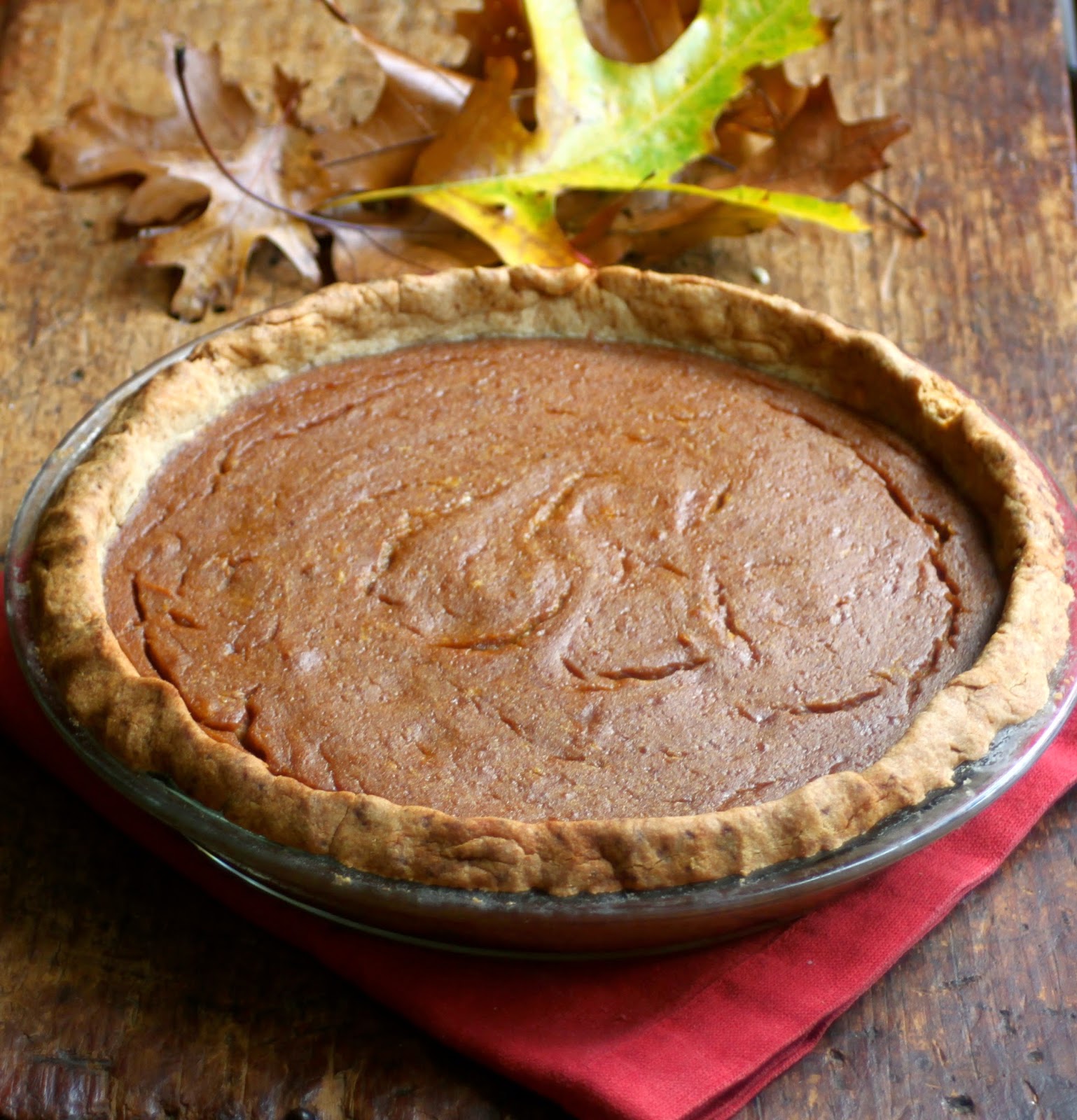
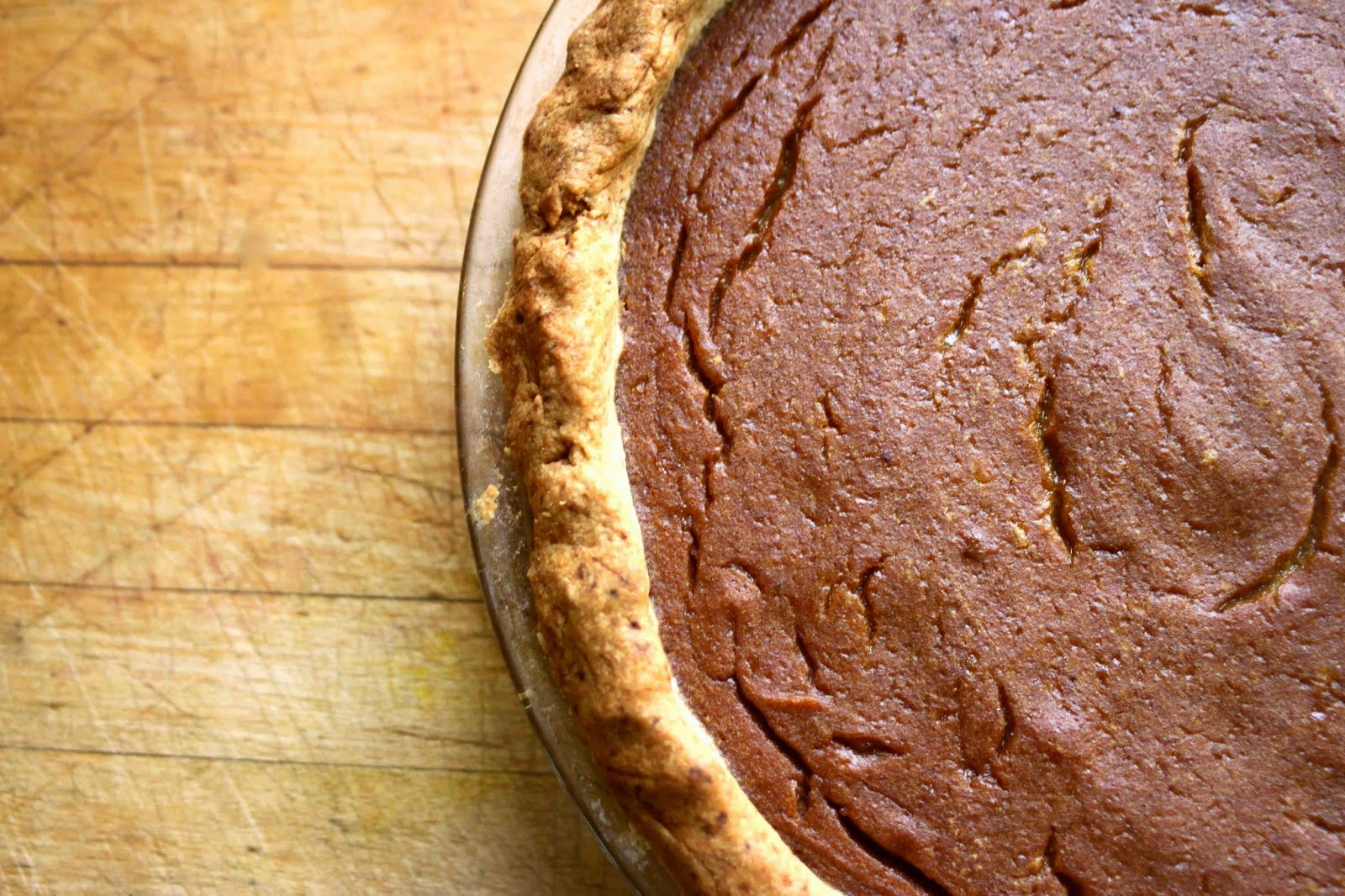
Spiced Pumpkin Pie *

(Loved by all)

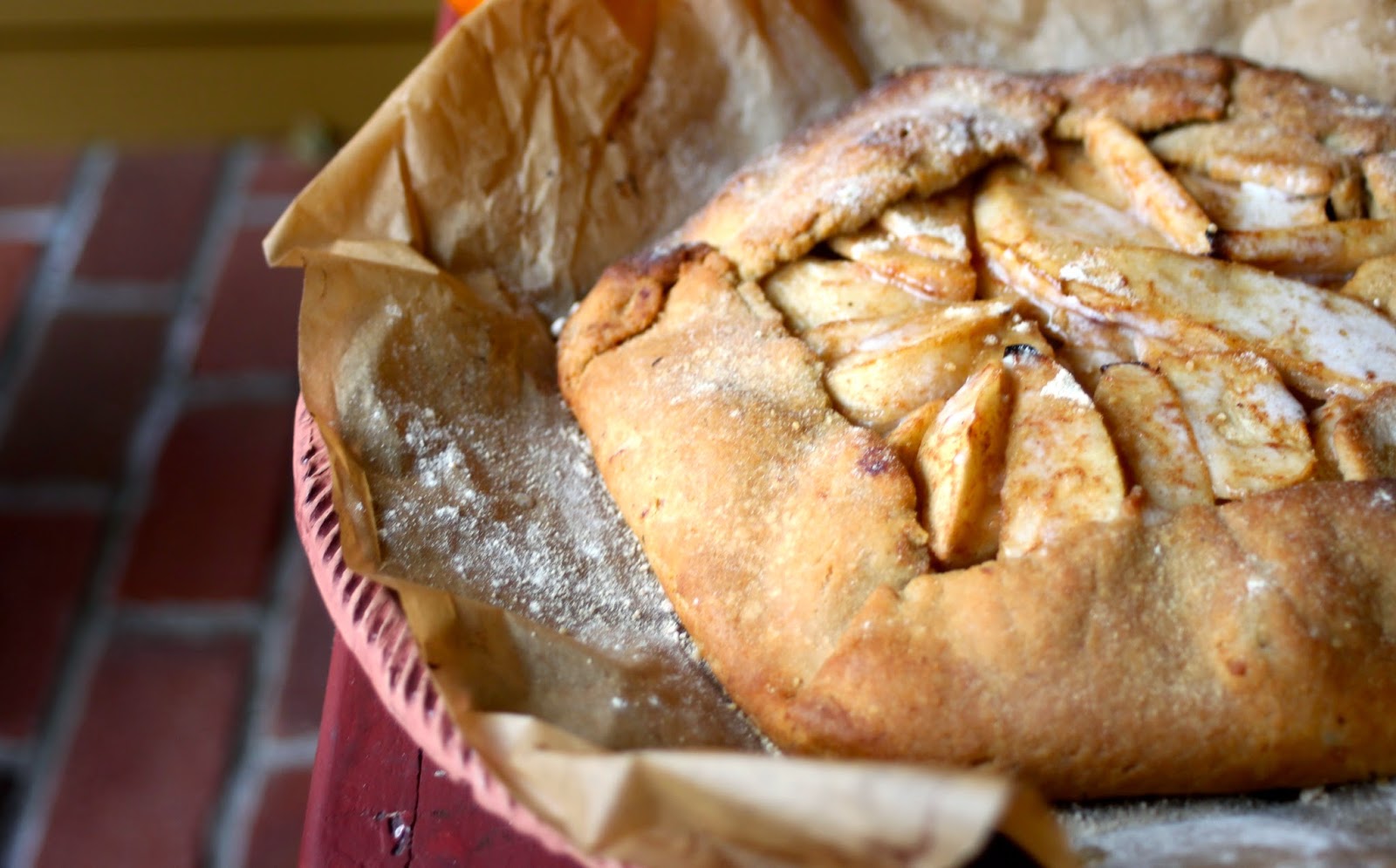
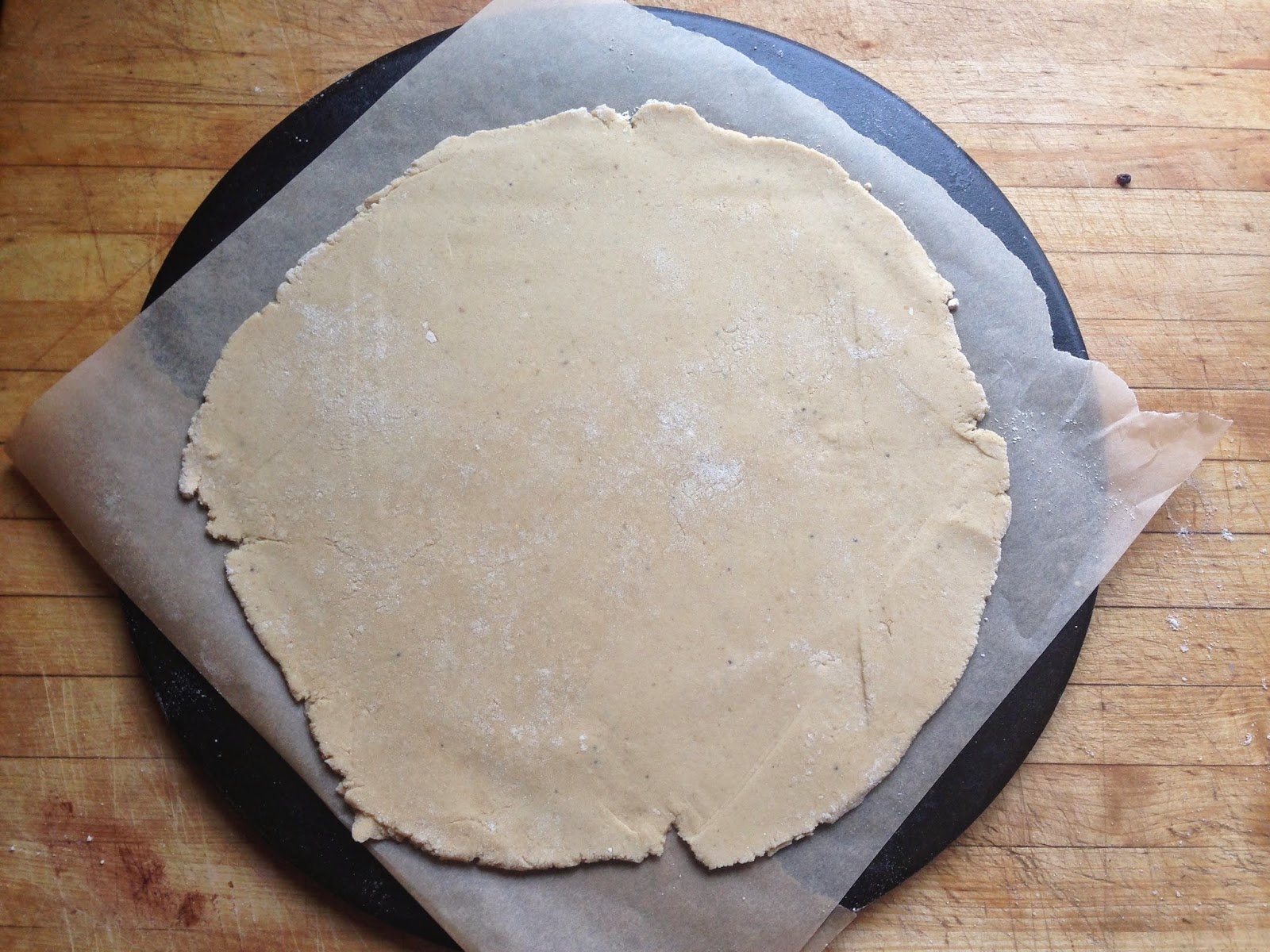
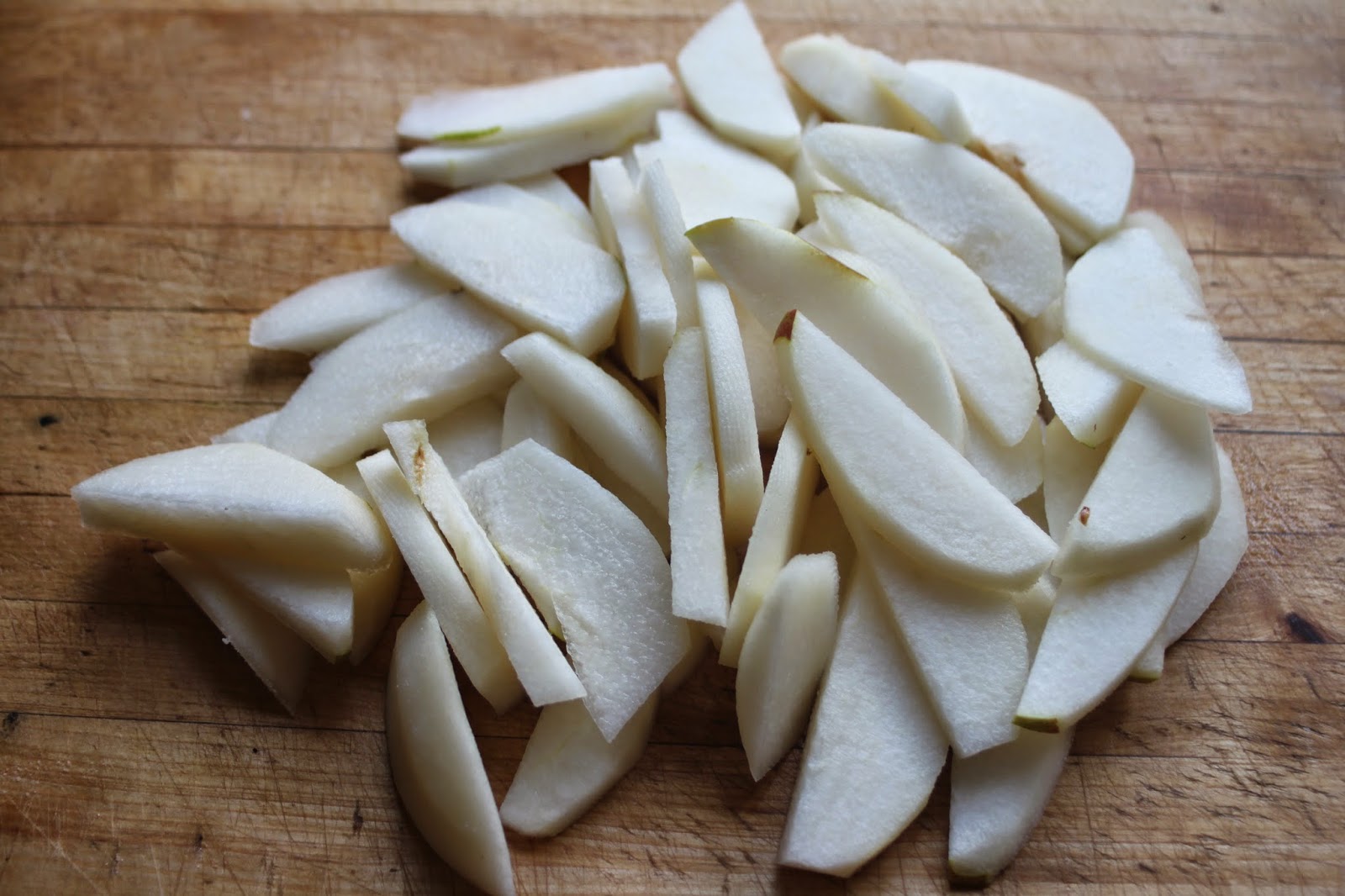
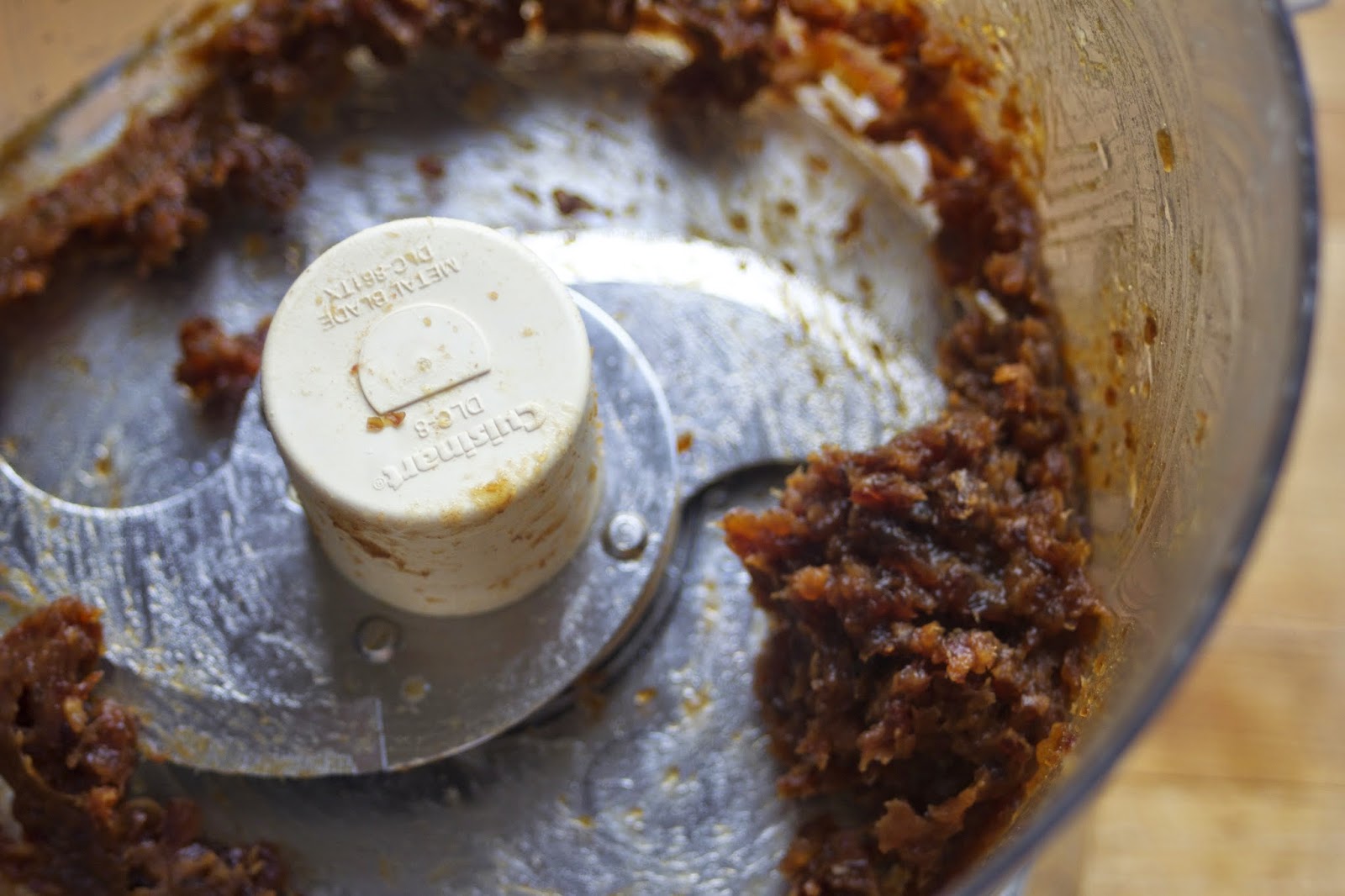
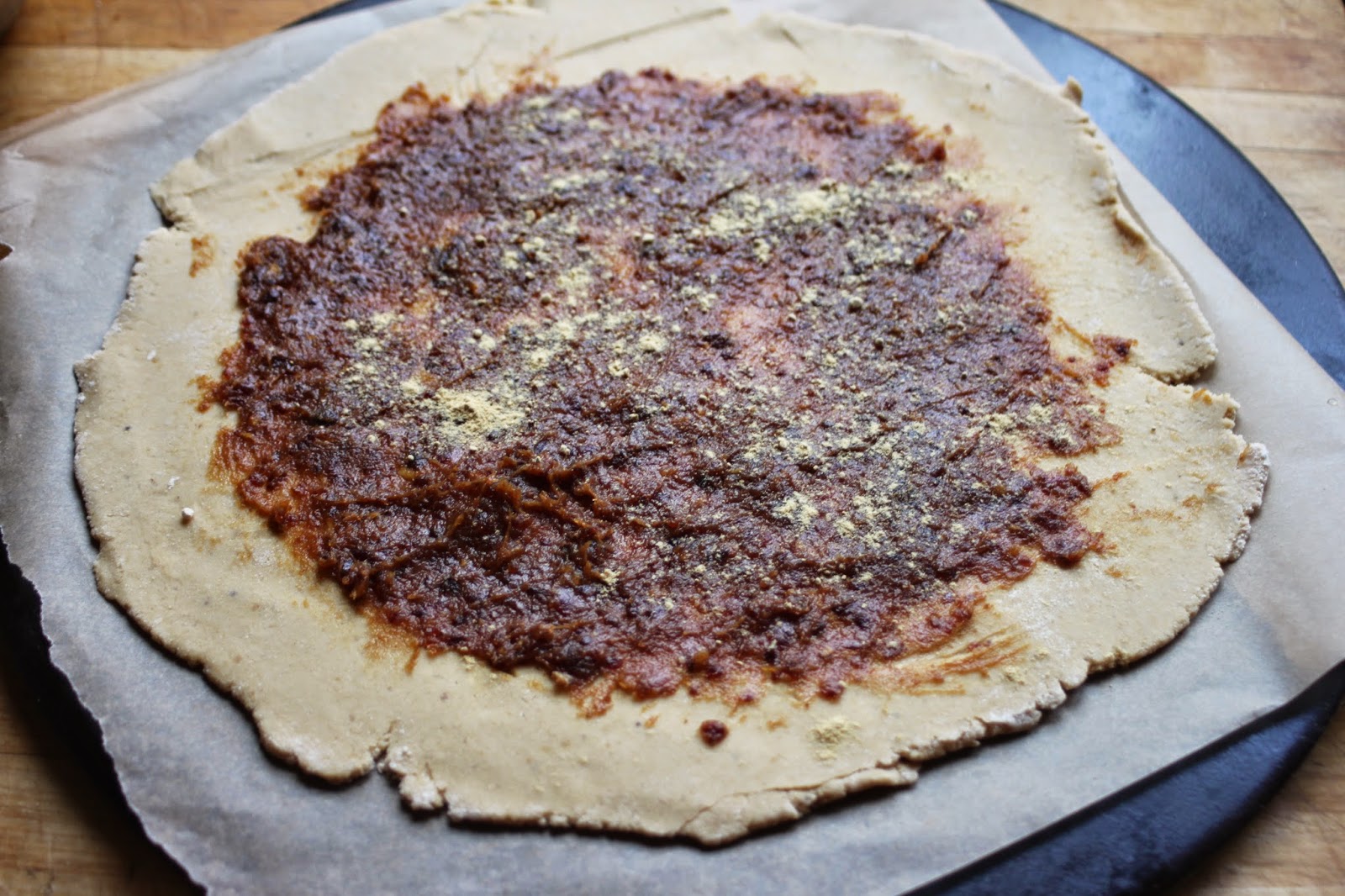
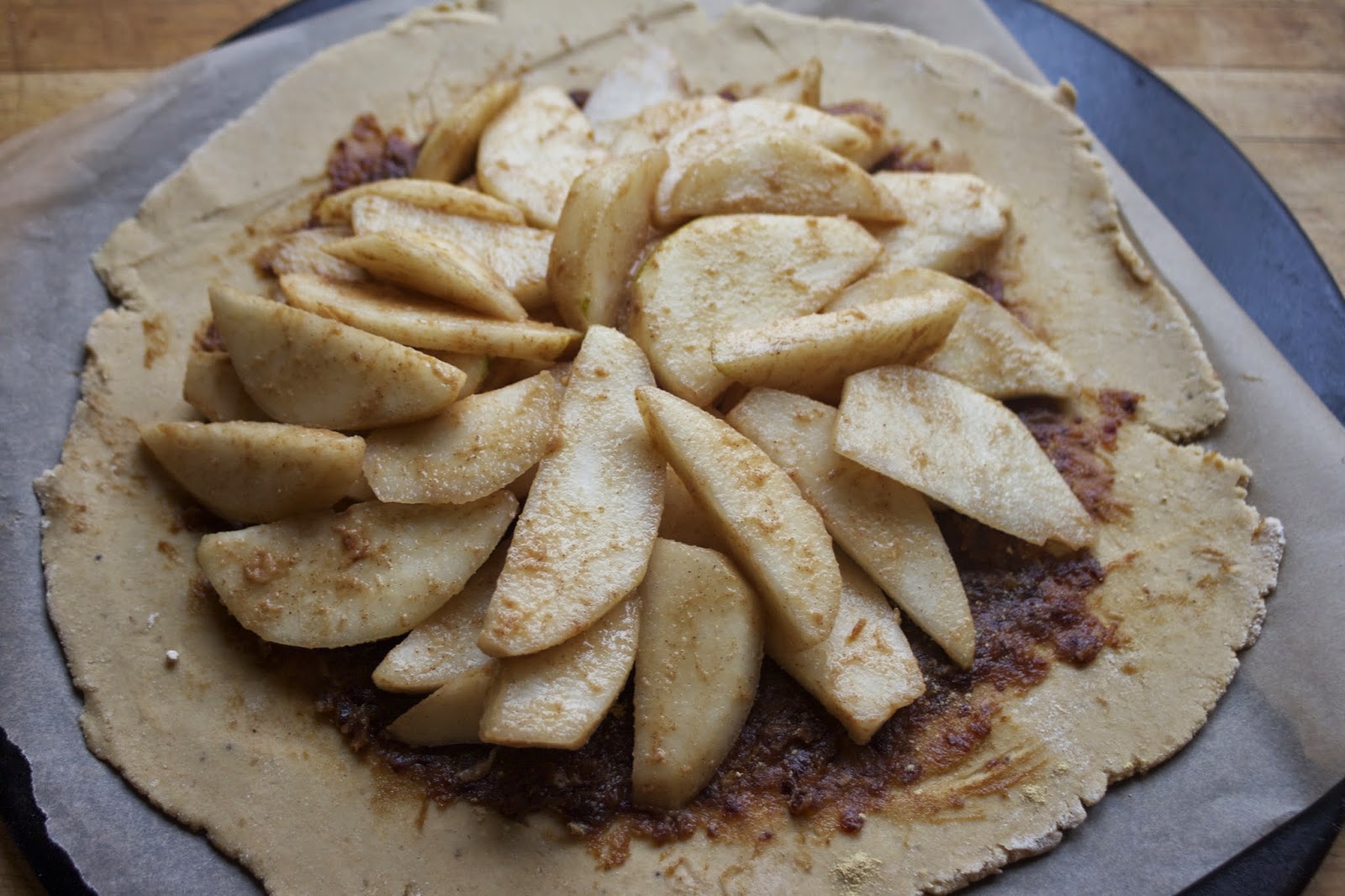
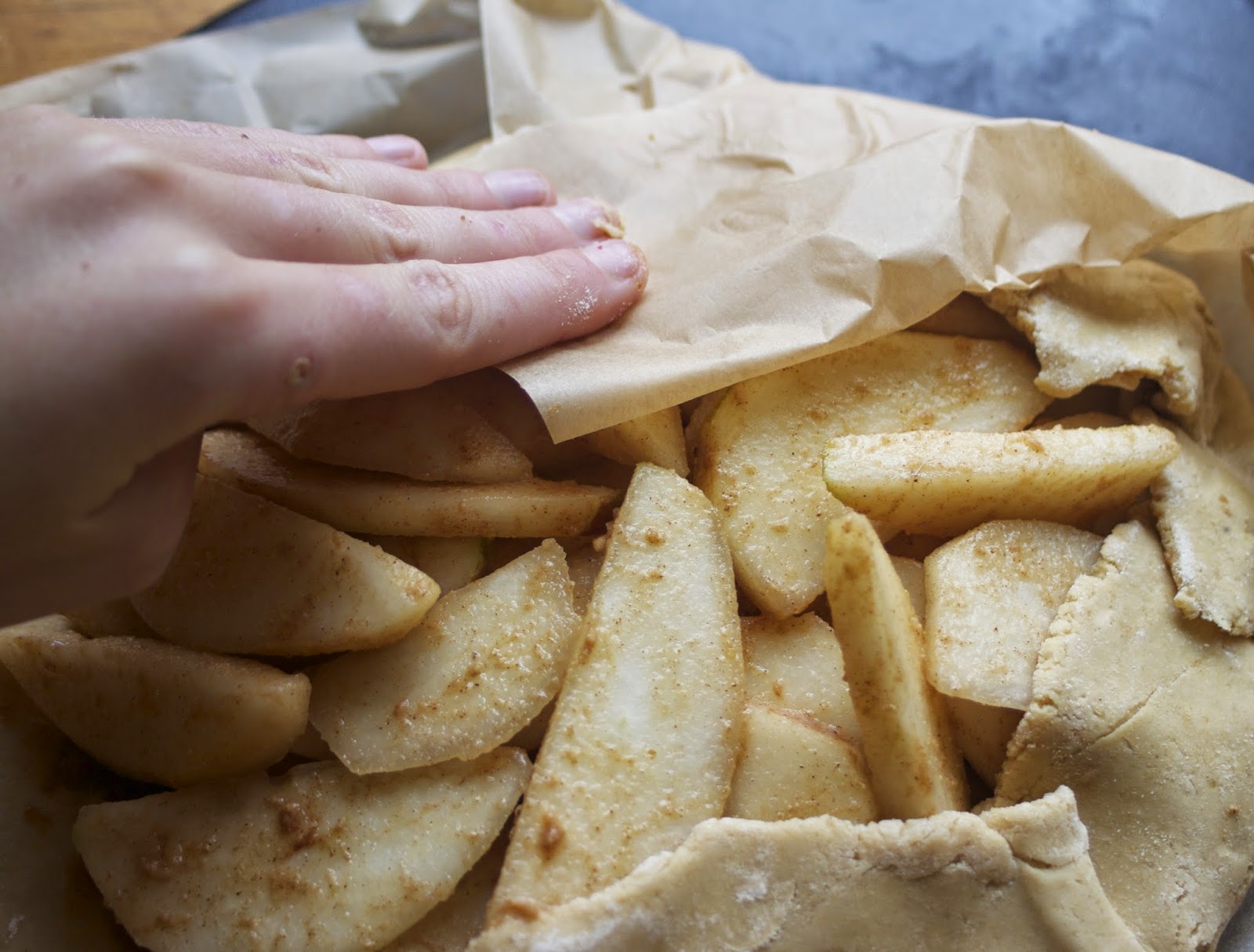
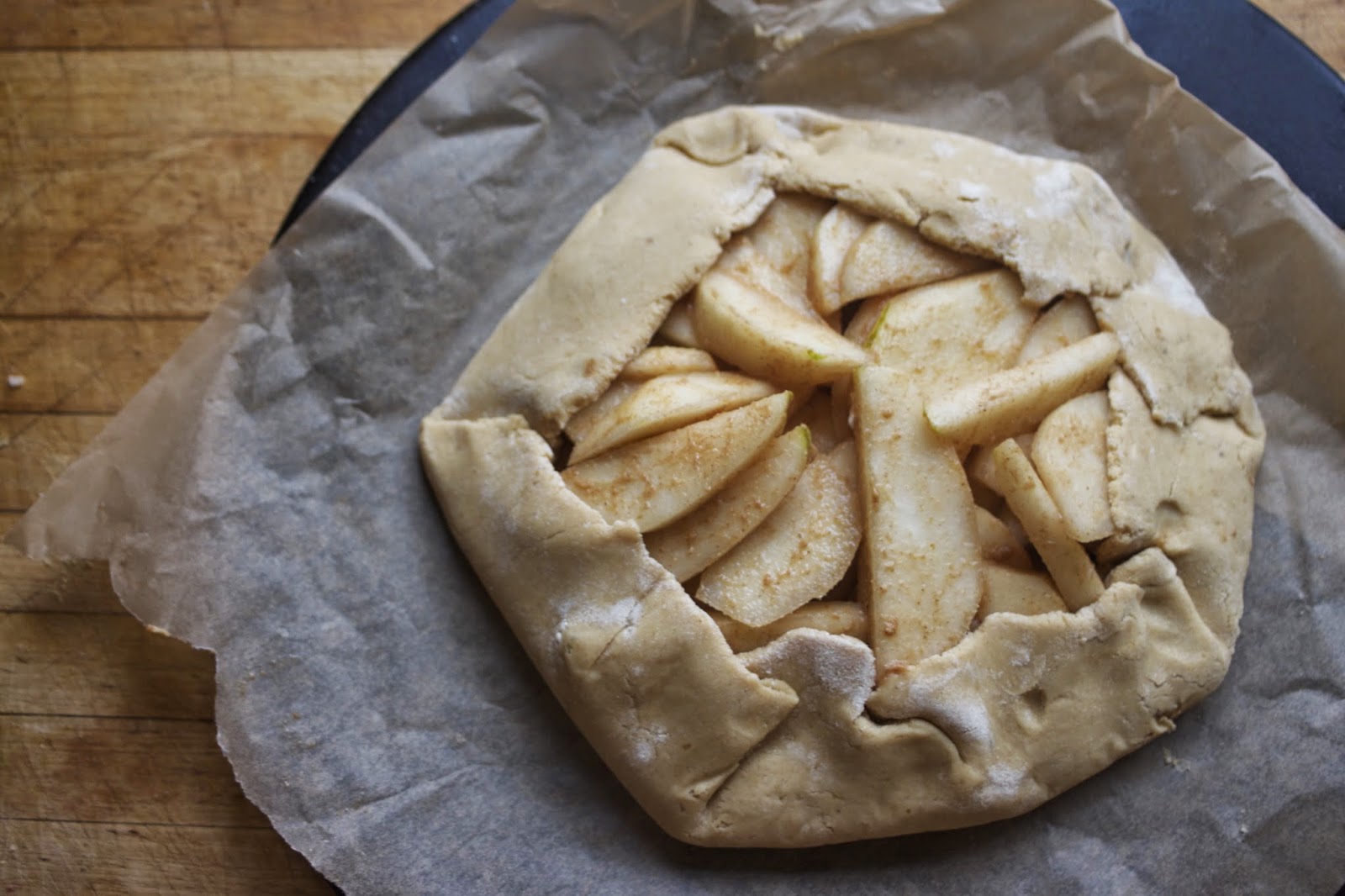
Rustic Pear Galette *

(A spin on my favored pie crust)

Molasses Spice Cookies *

Pumpkin Spice Blondie Bites 

Biscuits & Jam Thumbprints 

Chewy Cinnamon Cookies *

Leftovers

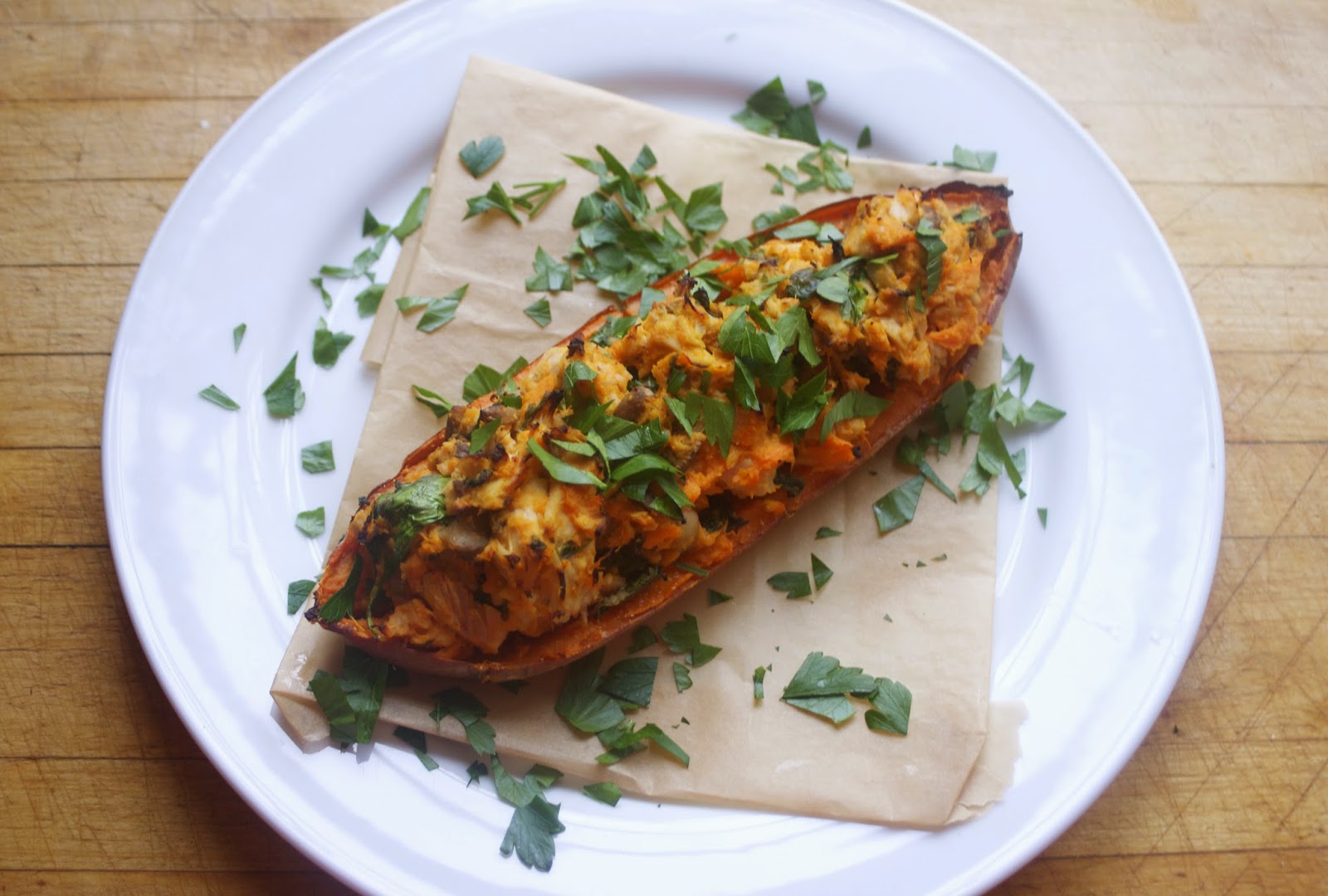
Stuffed Sweet Potatoes*

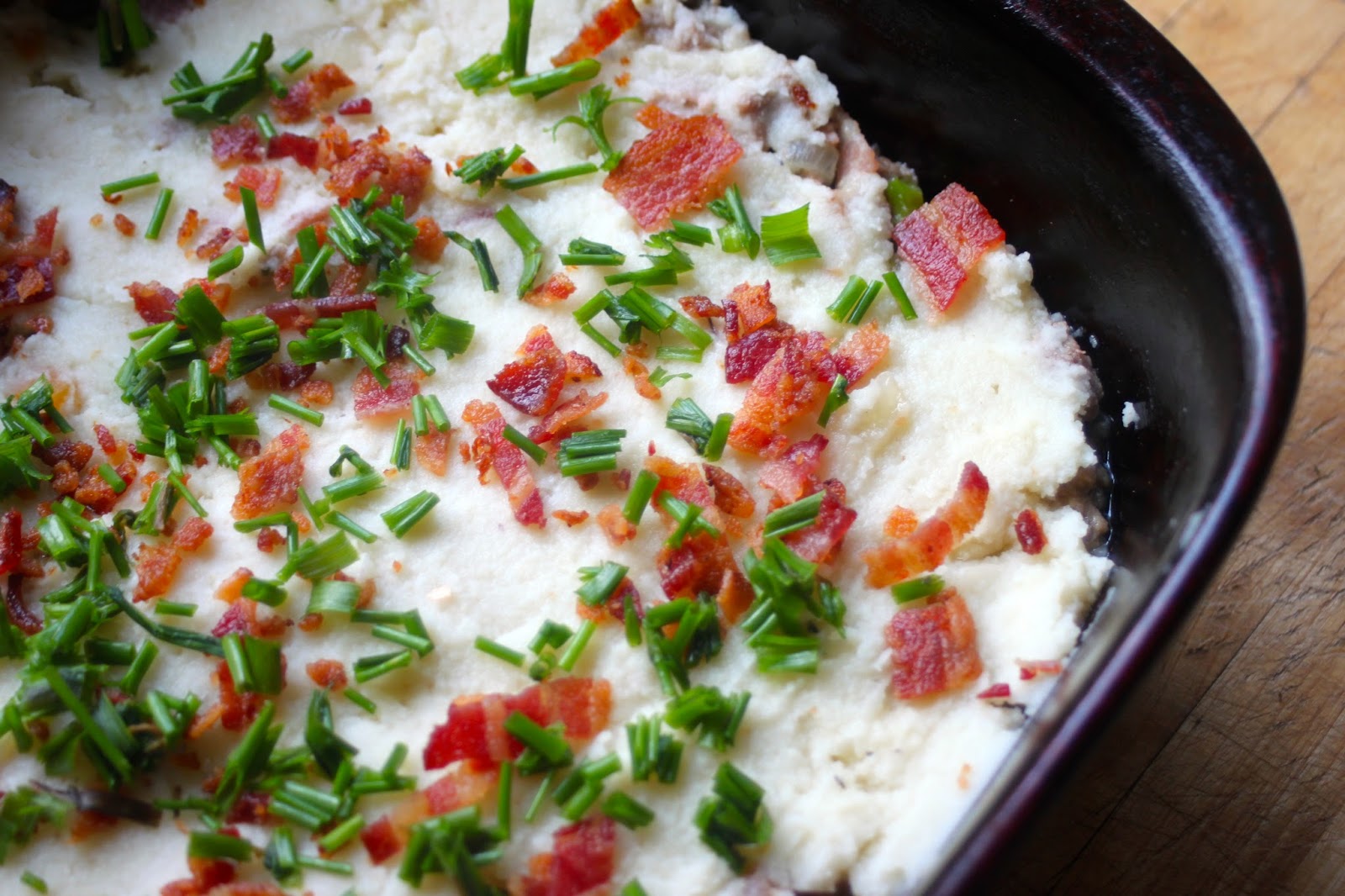
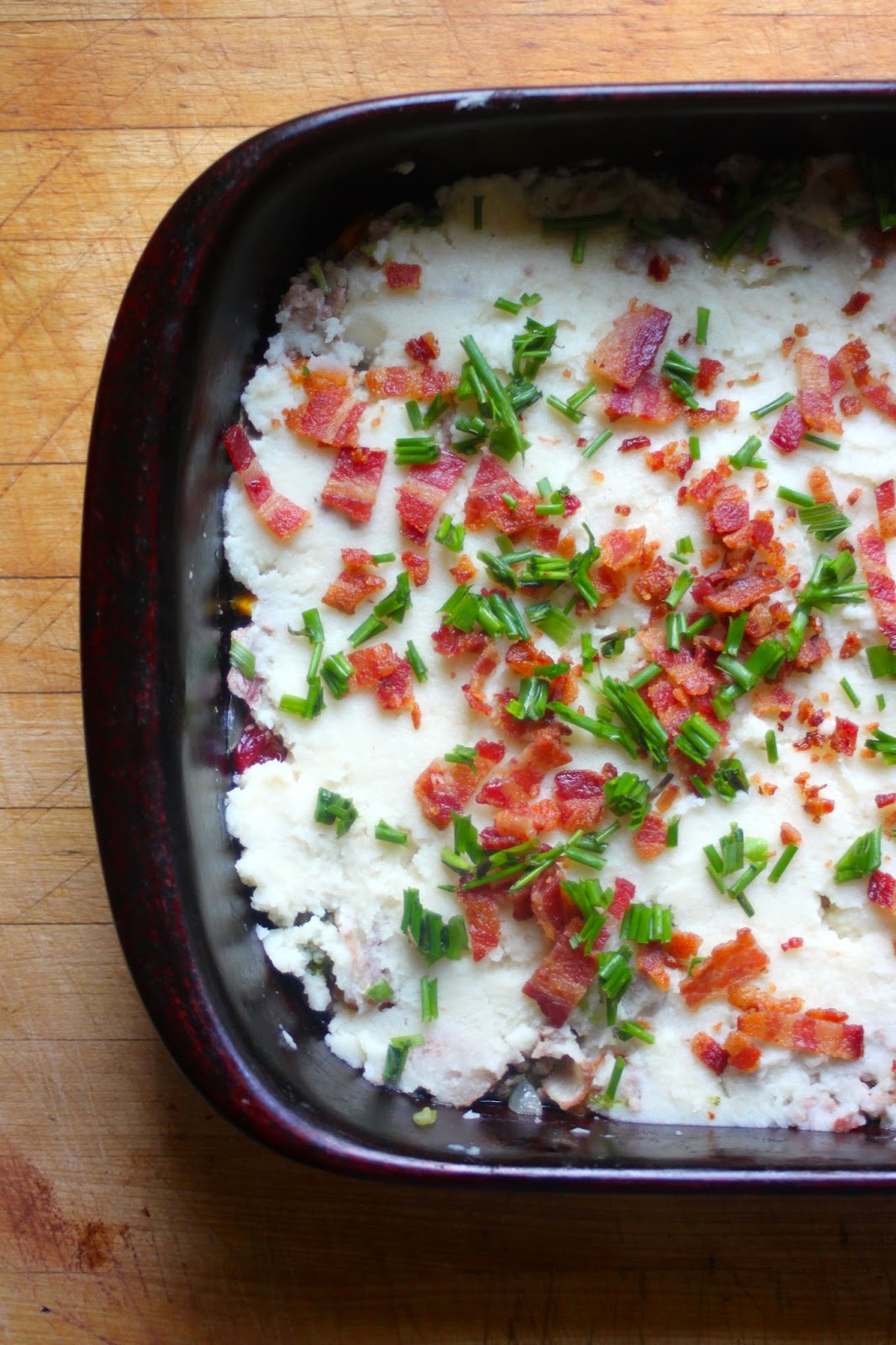
Shepherd’s Pie*

Mexican Crab Cakes *

(Replace crab with leftover meat)

Stuffed Cabbage Rolls*

(Replace lamb with leftover meat)


Psalm 100:4-5 “Enter his gates with thanksgiving and his courts with praise; give thanks to him and praise his name. For the Lord is good and his love endures forever; his faithfulness continues through all generations.”
Filed Under: AIP, beyond the bite Tagged With: Paleo, primal, recipe roundup, thanksgiving

Hearty Paleo Fish Chowder (AIP)

November 22, 2014

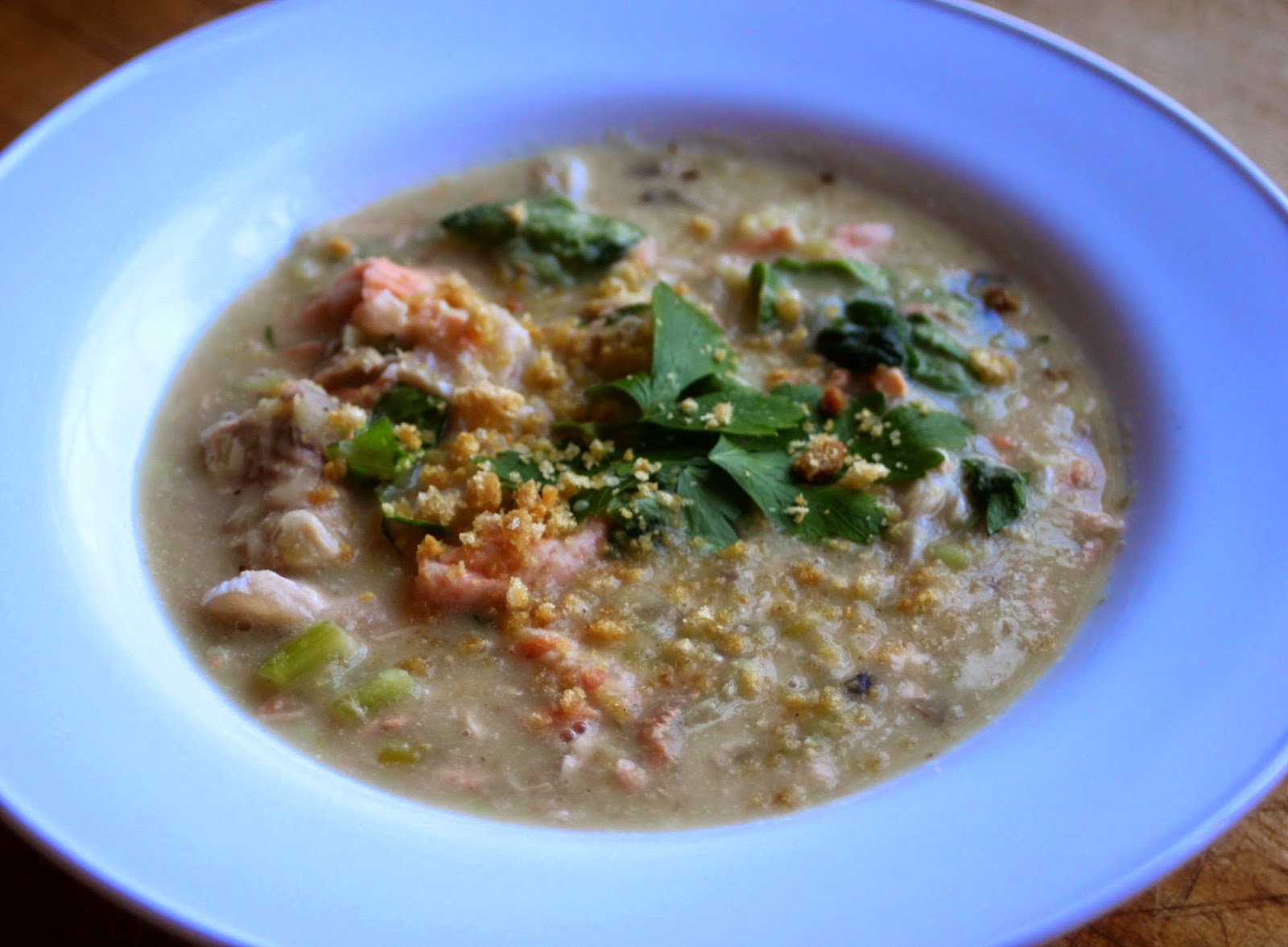
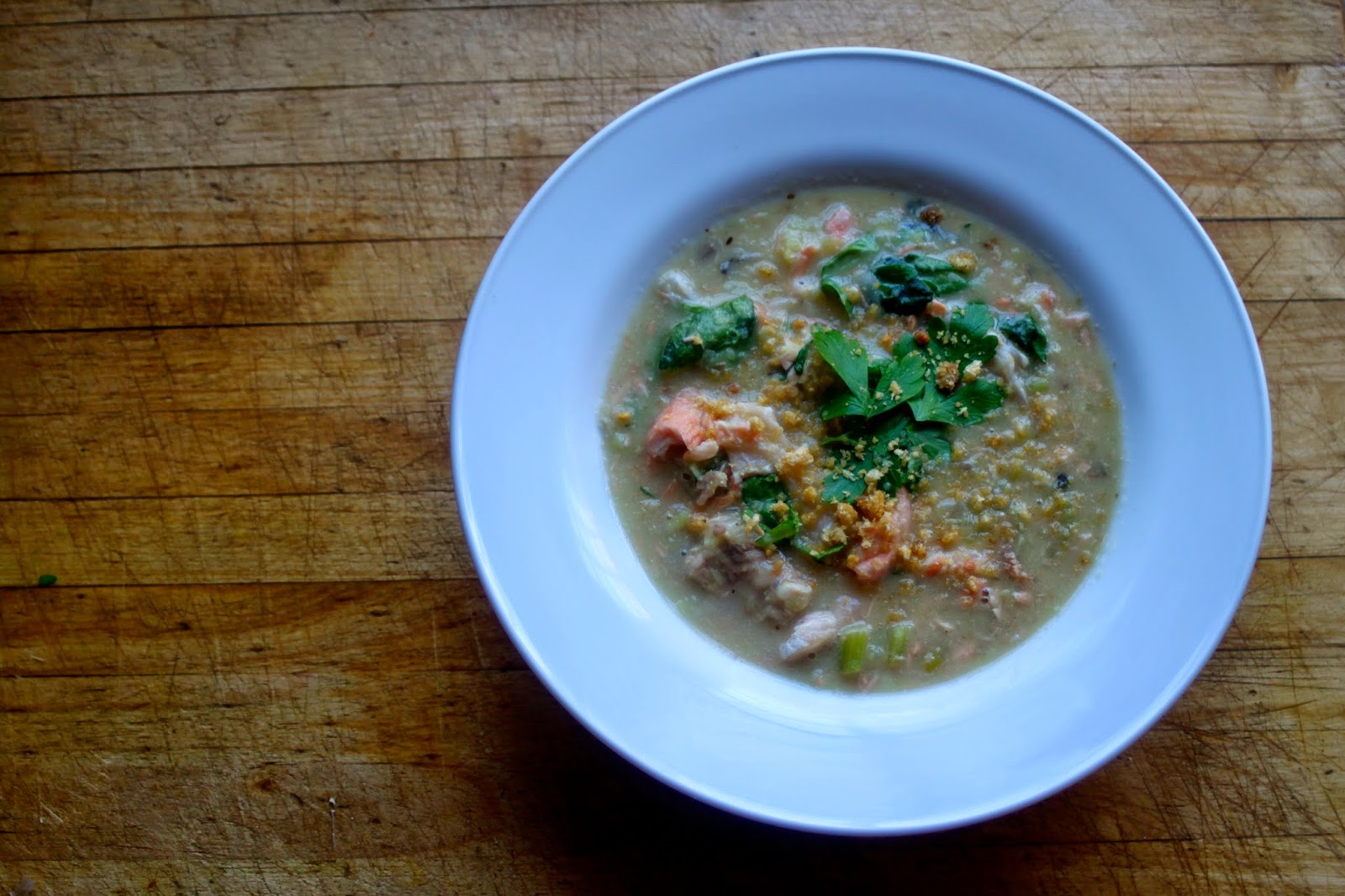
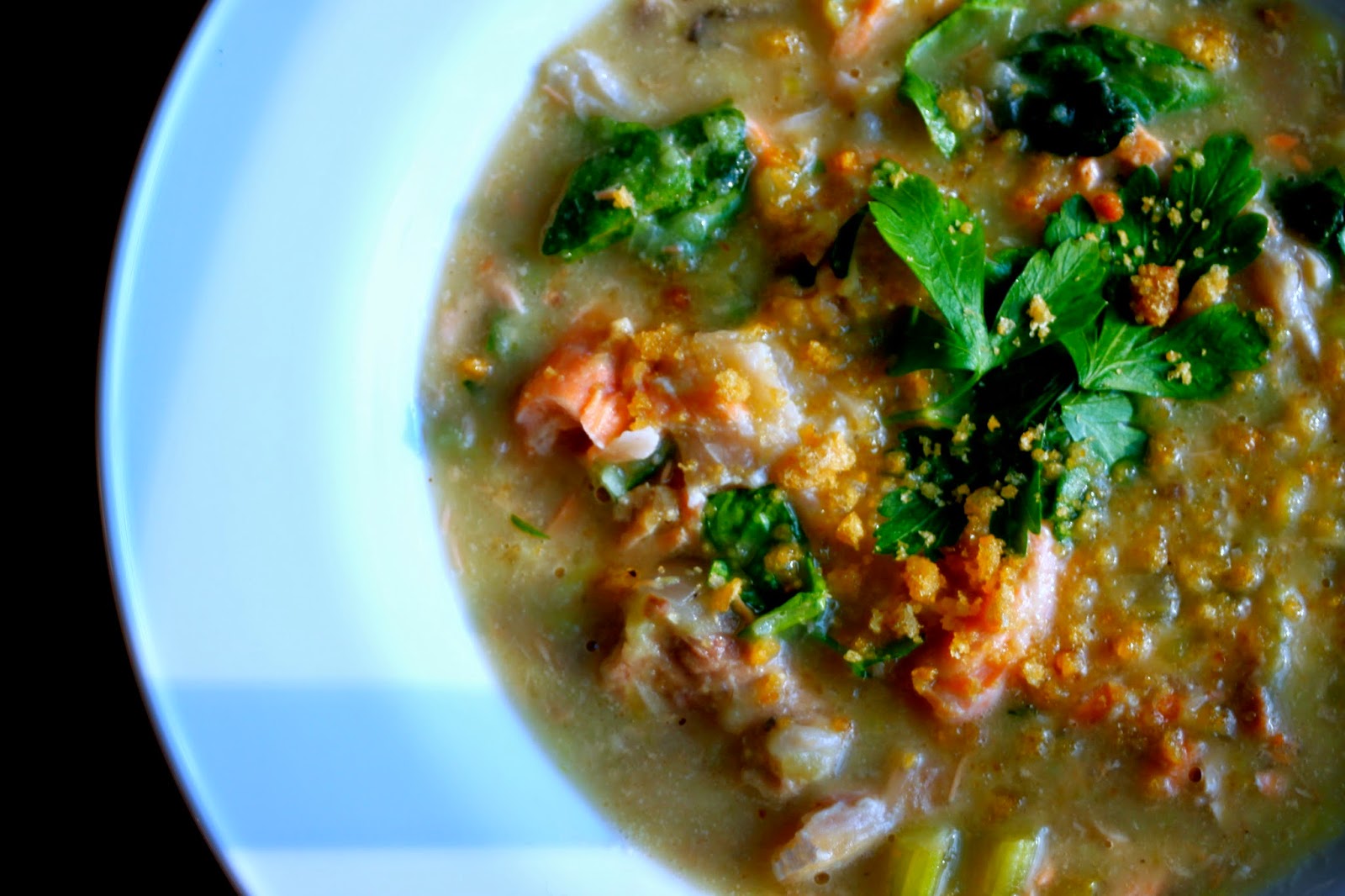
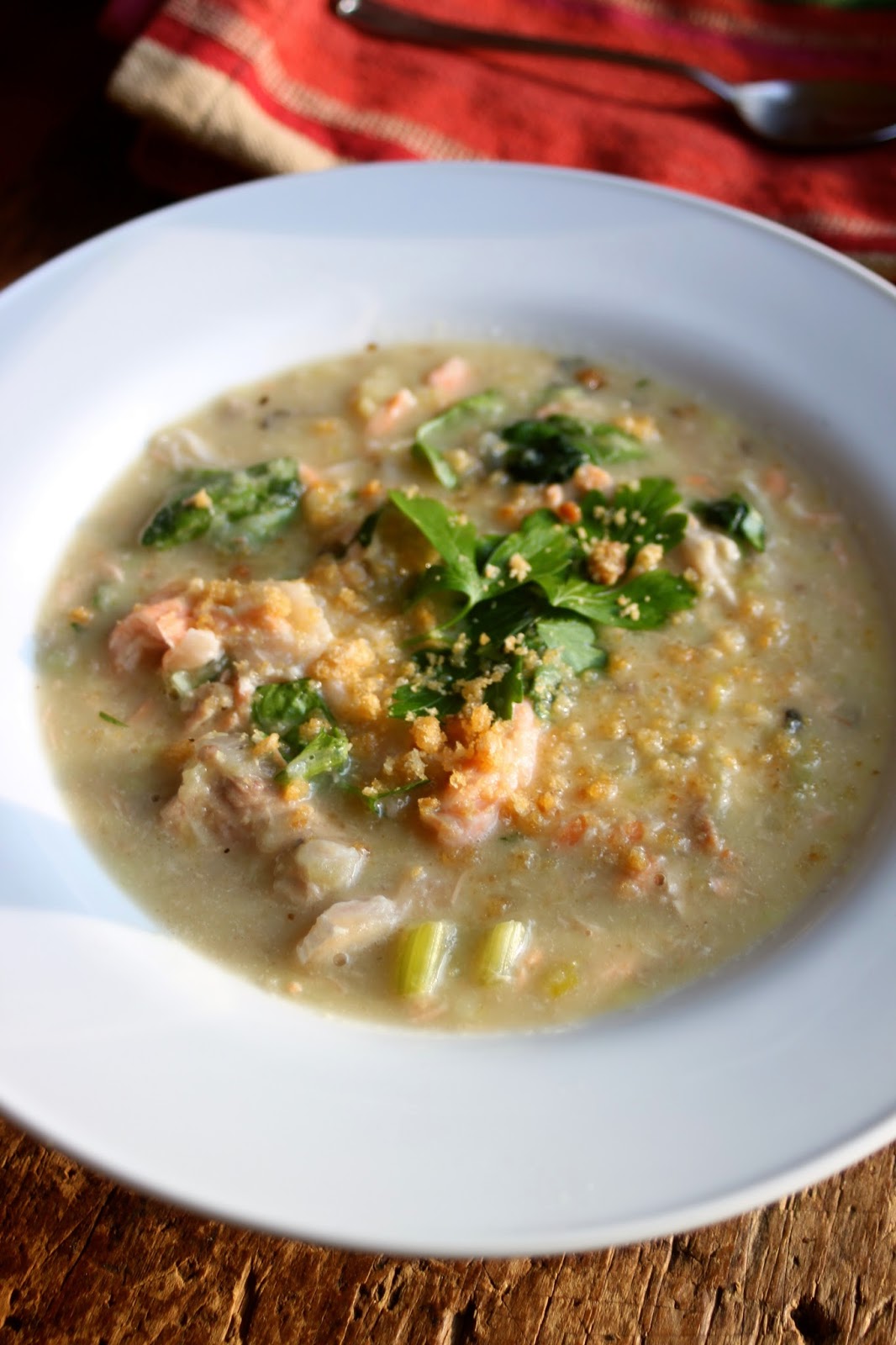
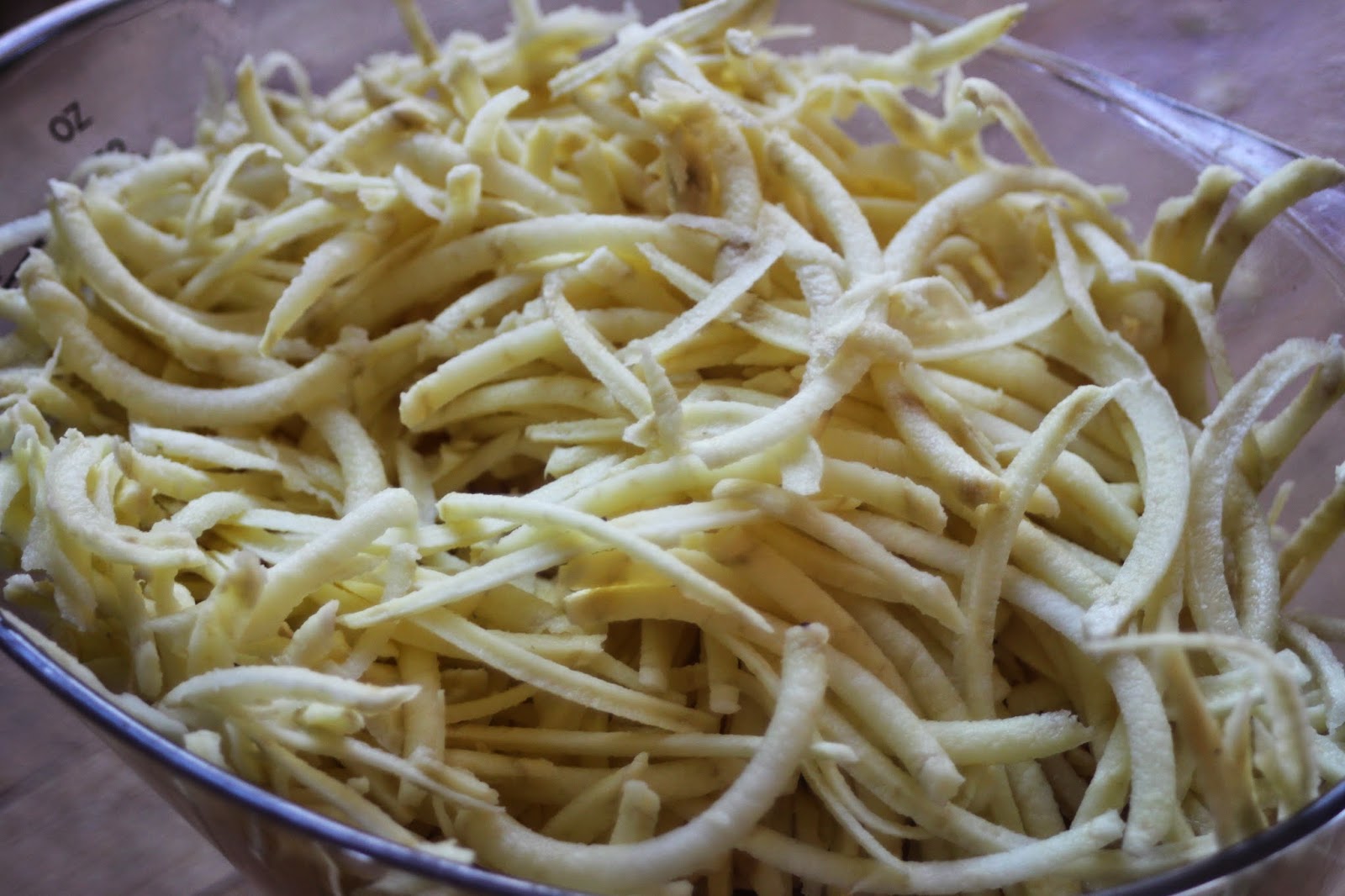
 Chowder, which is a type of vegetable or seafood stew, is usually made with dairy and grains.  However, getting the consistency of a thick, satisfying, and hearty soup is quite obtainable through using whole food sources.  In today’s recipe, I utilize white fleshed, or, “Japanese” sweet potatoes, which give the chowder its signature, creamy texture.  Though you may have never heard of white sweet potatoes, they are quite common in most grocery stores.  Mine had an off-white colored skin, but other versions may also be red, purple, or even the typical brown tone.  Once, my mother purchased this variety without even realizing it until we cut into the sweet potato to roast.
It is hard to explain the difference between orange and white sweet potatoes, as I have only had them once or twice, and online nutritional data is limited.  From my own research, the orange variety is higher in vitamin A, however, the white sweet potato has more vitamin C.  Either way, you are getting a good amount of nutrients.   Though the white variety is dryer and more dense, the amount of carbohydrates per serving is exactly the same, while the high potassium content is also similar.  All in all, I would not worry about the differences between the two, except that Japanese sweet potatoes are great, nightshade-free substitutes for the regular, white potato in chowder.  Though this dish would be undoubtably fantastic with orange sweet potatoes, tricking a picky teenager (aka my younger brother) who “hates” them, might not work.  However, in the case of using a white version, my brother had no idea, and therefore I have decided he never will, as I plan to use this technique for future dishes.

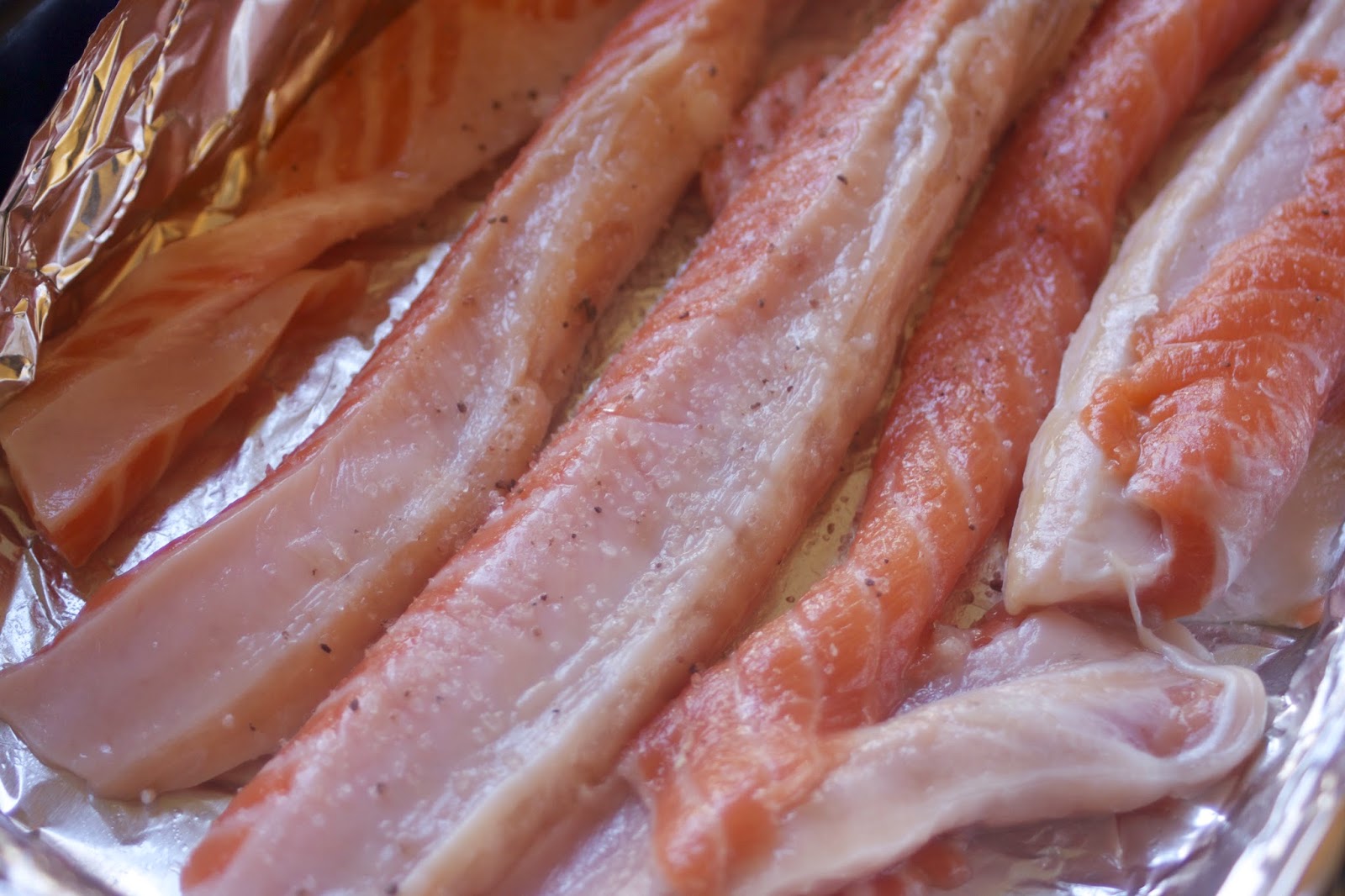
A few notes beyond the sweet potatoes in today’s recipe, if you cannot tolerate coconut products, simply remove and use an extra cup of stock, or skip the extra liquid all together.  It may come out a bit lighter, however, you can always make up for the lack of fat with adding some extra lard or ghee.  You may notice in the step-by-step photos below that my salmon fillets look very unusual.  This is due to the fact that I used salmon belly, an incredibly inexpensive ($1 per lb), underused and appreciated piece of the fish.  Though you will not see this part of the salmon presented in the show cases up front, simply ask the fish filleters for this prize piece of fish and they more than likely can “hook you up” (no pun intended).  As long as the market sells salmon fillets, and they haven’t already given the belly to a nearby sushi restaurant, finding it should be a breeze on not only you, but also your wallet.  Much like the belly meat of a tuna, salmon belly is favored for shake sushi, as it has an oilier texture and rich flavor.  These qualities in fish are the absolute best, yet tend to be avoided due to America’s unnecessary case of fat phobia.  However, this aversion to fatty fish is great for those aware of the fact that fat, especially from salmon, is amazing for the body. If you are not a fan of handling raw fish, buying the equivalent amount of canned, wild caught salmon, works just as well.  In the end, between the succulent salmon belly, smooth texture of the sweet potatoes, and subtle, background flavors of leek, celery, and onion, this fish chowder was a hit with the entire family.

Hearty Fish Chowder

Print Recipe

(Serves 4-6) 
Ingredients

  • 1 small, purple onion – diced
  • 1 stalk of leek (1/2 cup) – chopped
  • 3 medium stalks of celery (1 cup) – chopped
  • 2 medium, white fleshed sweet potatoes (5-6 cups) – shredded
  • 2 cups baby spinach
  • 1/2 cup parsley – chopped
  • 1 large clove of garlic – chopped
  • 1 tbsp sea salt
  • 1 tbsp fish sauce (or) 2 tsp more sea salt
  • 2 lb fresh salmon fillets (or) canned wild salmon 
  • 1 cup coconut milk (or) 1 extra cup of stock
  • 5 cups chicken stock
  • 2 tbsp olive oil
  • Pork Dust (optional)

Process

  • Preheat oven broiler to high.
  • In a foil lined baking pan, place salmon fillets in a single layer, sprinkling with 2 tsp sea salt.

  • Place under broiler and allow to cook 5 minutes.
  • Once browned, take salmon out of the oven, setting aside for later.

  • In a food processor, shred sweet potato.

  • In a large soup pot, heat olive oil over medium low heat.
  • Add chopped celery, onion, garlic, and leek, sauteing for 5-8 minutes until slightly soft.
  • Add 5 cups of chicken stock, coconut milk, fish sauce, and remaining 1 tsp of sea salt to the pot, and bring to a simmer over medium-high heat.
  • Next, stir in shredded sweet potato, turning heat to medium-low, and allow the mixture to simmer for 5-10 minutes until the sweet potato has become soft.

  • Fitting the food processor with the “S” blade, ladle 3 cups of the soup into the food processor, running until completely smooth.
  • Pour the smooth mixture back into the pot and stir until incorporated.
  • Chop up salmon pieces into bite-size chunks, adding to the soup to heat through.

  • When ready to serve, stir in baby spinach and parsley until wilted.
  • Top with pork dust “bread crumbs” and enjoy!


Philippians 4:6 “Do not be anxious about anything, but in every situation, by prayer and petition, with thanksgiving, present your requests to God. ”

Filed Under: AIP, autoimmune friendly, autoimmune paleo, dairy free, gluten free, Protein Dishes, seafood Tagged With: grain free, Paleo, primal, Salmon, sweet potato

My Take on the Primal Blueprint Certification

November 21, 2014


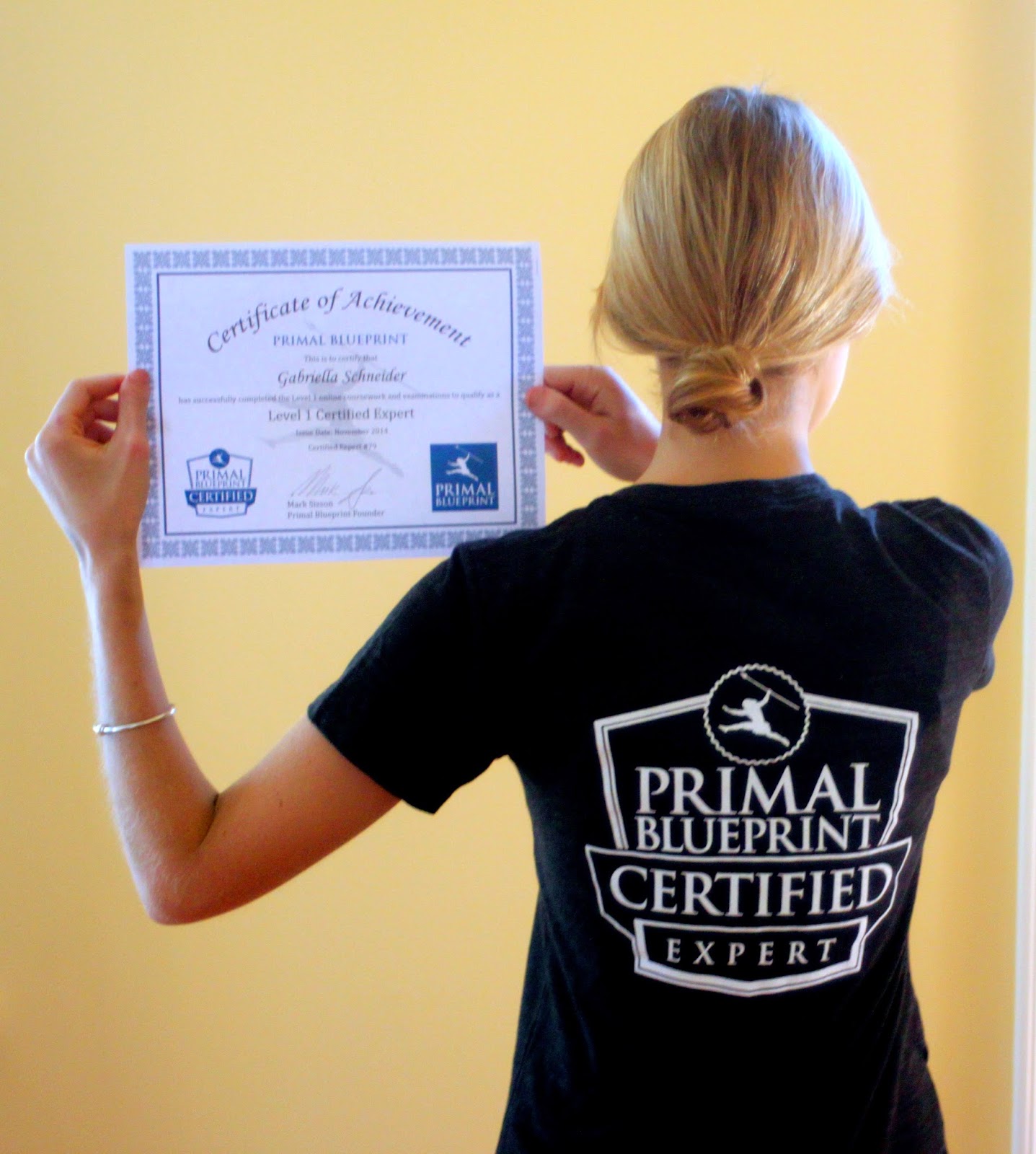
Just recently I had the privilege of officially completing Mark Sisson’s “Primal Blueprint Certification Course.”  Because I am still battling the effects of Chronic Lyme Disease, class, assignment, and test deadlines are all things out of the picture.  There are still many debilitating symptoms that I experience on a daily basis, and doctor’s appointments are what fill the majority of my week.  Therefore, not only is participating in a regular, regimented class physically impossible, the strain of having to focus on an a deadline would ultimately defeat the purpose of doing the class, as it would only hinder my healing process.  That being said, I am always on the hunt for programs that are flexible, allow students to work at their own pace, and fit into my love for the human body, science, and food.  When I heard Mark talk about his program on The Paleo View, a podcast hosted by two of my favorite bloggers, the Paleo Parents, and the Paleo Mom, I knew it was perfect for me.  I have always been a fan of his Primal lifestyle philosophy, and knew that taking the course would only further my ability to help not only my own body, but anyone else I come in contact with in the future. I am proud to announce that I am the 79th certified expert, and more than likely the only chronically ill, 18 year old girl who has completed it.  Though this is exciting in and of itself, I hope others will be inspired to accomplish the same and grow the Primal Blueprint community!
 
 
The Primal Blueprint certification course is a thirteen module study program, each lesson including virtual educational videos, reading materials, and an exam. Once introduced to the program, Mark takes you through the eight key concepts of Primal living, all of which you can apply to not only your life, but every other human being that is living or yet to be born.  Ultimately, it is a program designed for anyone, young and old, to take their own health to a  new, peak level. It allows you to be officially affiliated with the Primal Blueprint brand, simultaneously becoming active in a movement that has allowed thousands to reclaim their health, sculpt their bodies, and sharpen their minds.  Though this enlightening course is a first in ancestral health, it easily surpasses all others in that it can be done from the comfort of your own home.
 
About
 
Instead of being a boring course filled with information about unrealistic diet, lifestyle, and exercise goals, the Primal Blueprint Certification truly invests in one’s future.  Whether for
growth in one’s medical, health, and (or) fitness business, or simply for personal knowledge, it allows one to dive deeper into what it really means to “get back to human,” and thrive in today’s modern world.  Not only did this course help me understand at an even deeper level of how the body is truly effected by all aspects of life (food, movement, sleep, play, technology, etc), but it also was very freeing.  By breaking all of the food, exercise, and body myths of conventional wisdom, it allows one to realize that living a healthy life is not as hard as the media has made it seem!


“Carbohydrates are necessary for energy”

“Running on the treadmill is the only way to lose weight“

“Whole grains are better than white bread”

“Drinking raw milk is incredibly dangerous“ 

“Vegetable oils are heart healthy, but saturated fat will kill you.”

“Eating steak will rise your risk of a heart attack” 

“Avoid the sun, it will give you cancer”

“Fat makes you fat”

“Avoid sugar because it is just empty calories”

“If you work out enough, you can eat anything“

“The calories in:out ratio is vital for weight management”

“Genetic predispositions are impossible to reverse”

“Quantity over quality makes you a better athlete”

“Accelerated aging is inevitable” 

“Organic food is always the best”


SAYS WHO?
Says industry simply looking out for their best interest, not yours. 


Being healthy is not about dietary restriction, a consistent exercise regimen, and other impractical lifestyle and diet goals modern living has made us believe are necessary.  Instead, having fun, being outdoors, enjoying sleep, tanning in the sun, using food as fuel AND medicine, and many other enjoyable activities, are all aspects of life that, when combined together, lead to effortless health. If you feed and treat your body the way it was made and intended, it will run like a lean, mean, fat-burning machine. 


Yes – despite the odds, you can reprogram your genes.

Yes – your body prefers fat as fuel over carbohydrates.

Yes – 80% of your body weight is determined by what you eat (NOT how many calories you burn).

No – grains are not necessary for living.

No – saturated fat and cholesterol are not the enemy.

No – exercise alone is not effective for weight management.

No – achieving maximum fitness does not require running on a treadmill.

 
The Primal Blueprint certification course allows one to realize that YES – living primally in a modern world is possible, easy, and surprisingly effortless, when all conventional dogma is laid aside. 


No more diet plans for weight loss, no more hours at the gym to get in shape, no more spending a fortune to feed the family, no more guilt after weekend indulgences, no more feeling lazy after taking a nap or skipping a workout.  Instead, this certification course directs one to learn how to navigate the grocery store, gym, work place, and home, as well as play, technology, sleep, eating, and all other components of today’s busy life.  Ultimately, finding health should not be hard, stressful, or strenuous on one mentally or physically.  All that is truly need is responsibility, accountability, and the right mind set, all of which the Primal Certification course help you, or those you are teaching, obtain.  


I see how work stresses people out, how wanting to exercise is more of a chore than a liberating activity, and how food becomes an obsessive, unhealthy relationship.  Not only does today’s world feed us lies that ultimately degrade our health, but people themselves are too afraid to go against the grain (no pun intended).  Despite what we have been born believing, many of the aspects of life deemed “necessary,” are the last things needed to thrive.  Though I was well aware of how the Paleo lifestyle benefits one’s overall mental and physical health, taking the Primal Blueprint certification course helped me realize this on a whole new level.  I was always very excited to get through each module, so that I could go on to the next and learn more.   Whether looking to lose OR gain weight, expand one’s athletic ability, or simply learn and grow in any aspect of everyday life, I highly recommend the Primal Blueprint Certification course. Through applying elements of ancestral  living, the essence of a vibrant, satisfactory, and truly healthy life, become readily available.  How can you not be excited?! If it were up to me, I would make this course a fundamental program for all ages. It takes the confusion and frustration out of life, an infuses it with fun, playful, and enjoyable components everyone should (and will) love. Though I have been researching information about the human body, and how all aspects of life affect it, the information presented in Mark Sisson’s course was like unlike anything I had ever experienced. All in all, it gives you hope, reassurance, and guidance in a world so tangled and ensnared in the lies of conventional wisdom.   I don’t care how much you think you do or do not know, if you are human, this class is for you. Personally, I believe that there is never a time in life where one cannot grow or learn more, so what are you waiting for? 

Get Certified Here 


If you have any other questions, please, feel free to email me!


Psalm 146:6 “He is the Maker of heaven and earth, the sea, and everything in them– he remains faithful forever.” 

Filed Under: Food and The Human Body, Uncategorized Tagged With: diet, lifestyle, mark sisson, nutrition, Paleo, primal, primal blueprint, science

Further Food Community

November 20, 2014

One of the greatest opportunities of starting a food, health, and wellness blog, is to be able to connect with others on a similar journey.  Just a couple of weeks ago, Further Food, a website on a mission to improve health and wellness through food, reached out and invited me to be part of their online community.  Not only was I incredibly thrilled to have another resource to share my allergen-friendly recipes with the world, but just the fact that they base their philosophy off of science is right up my alley!  The team consists of nutritionist, cooks, food-lovers, and do-gooders, all striving to help people eat better, so that they can conquer their health and go further in life (sound familiar?).  By featuring “delicious & health-supportive recipes, informative articles, and inspiring user stories,“ Further Food is a great resource for anyone! 

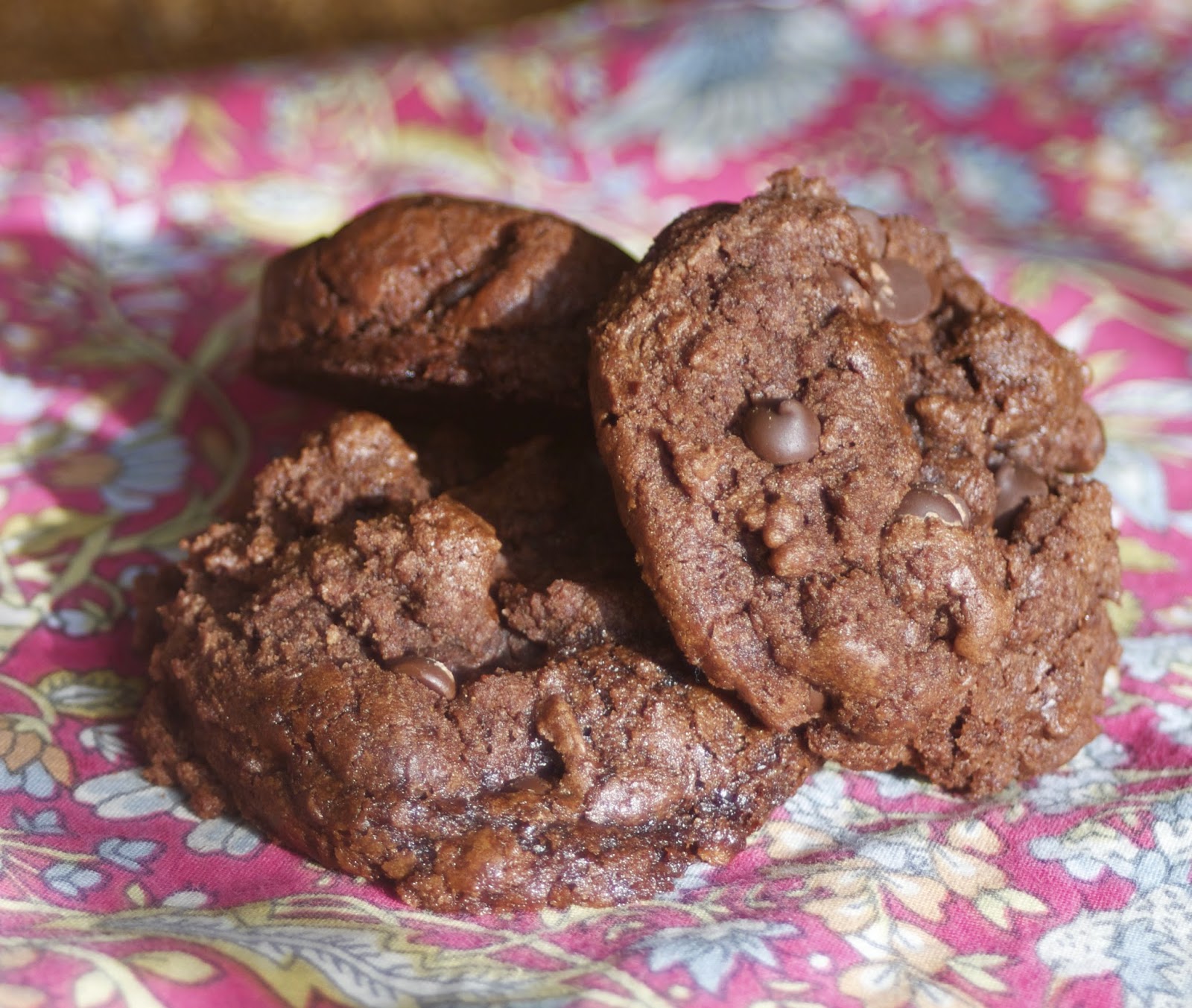
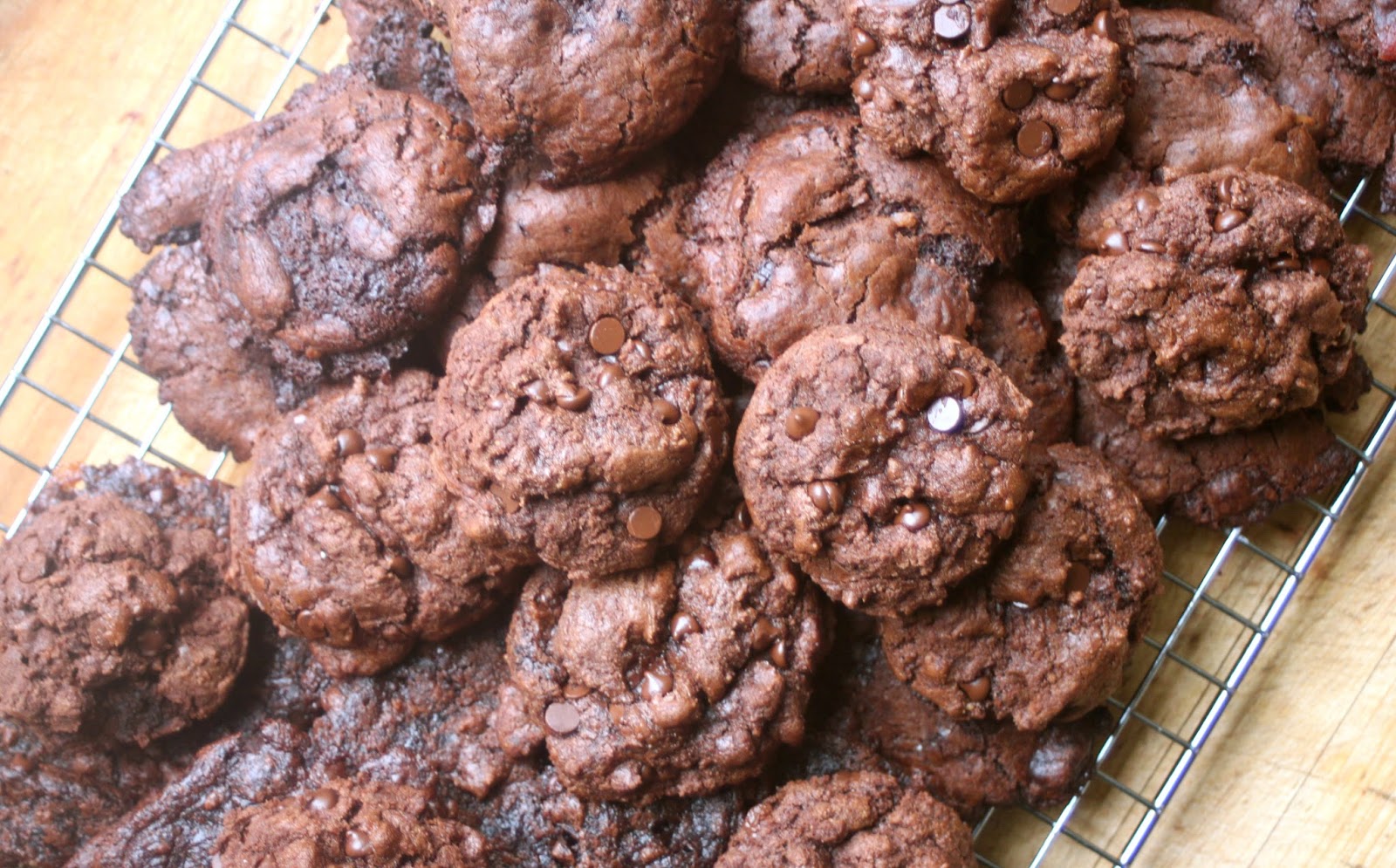
Though I plan on sharing more of my recipes on their site in the future, I decided that my “Double Chocolate Maple Bacon Cookies” would be a great way to start things off!  Who doesn’t like a salty and sweet combination? I also like this recipe because it is easily adaptable for those who don’t eat meat, simply by excluding the bacon.  Either way, what’s not to love? 
You can view my recipe here , and off course feel free to support Further Food through pinning it on Pinterest – you can do so here. While you are at it, check out the rest of Further Food’s amazing, inspiring, and food-loving community here.


As a note for those looking into making my Double Chocolate Maple Bacon Cookie recipe – you may be able to find water chestnut flour at a nearby ethnic grocery store.  However, ordering it off of amazon is much easier! Both 14 and 28 oz bags are available, though I would go with the bigger one, due to it being cheaper then buying 2 of the smaller bags. You can purchase them both here and here. 

If you are looking to make the homemade, refined sugar free chocolate chunks that I feature in my original recipe post, you can find the recipe here. 

Please enjoy, and don’t forget to push the envelop and go FURTHER!


Gabriella


Isaiah 40:29 “He gives strength to the weary and increases the power of the weak.”

Filed Under: chronic illness Tagged With: coconut free, dark chocolate maple bacon cookies, egg free, food community, further food, nut free, Paleo, primal

Herbed Thanksgiving Stuffing (AIP/Paleo)

November 19, 2014

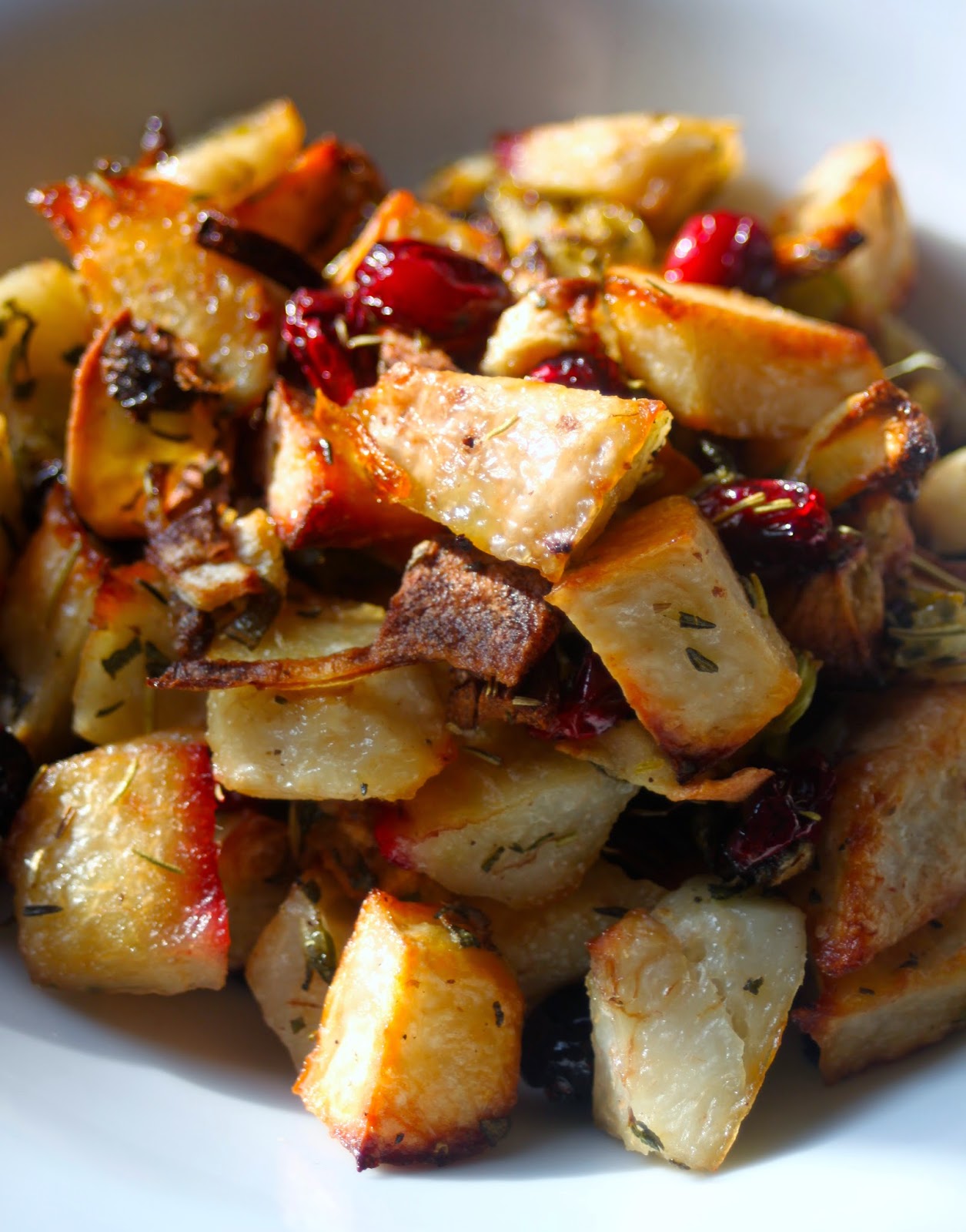
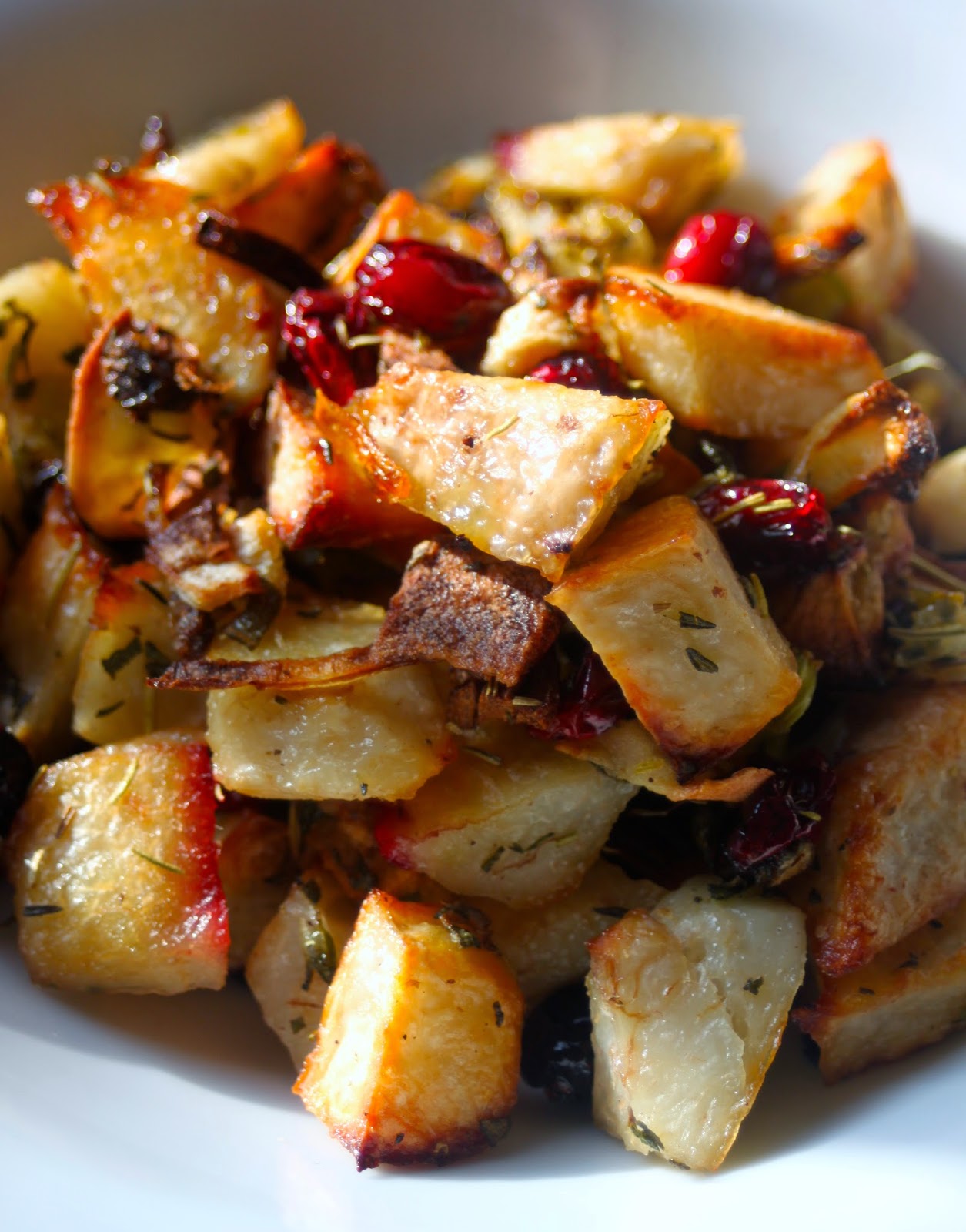
To be perfectly honest, I have never been a fan of stuffing.   There is just something about stale, dry bread mixed with celery, that is not appetizing.  If a food requires pouring gravy over it to make it delicious, I’d say it is pointless.  Gravy on the other hand, now that is amazing. Full of nutrients, minerals, and other healthy components, bone broth smothered over a slab of turkey and vegetables is right up my alley.  However, though I was never a fan of stuffing, I’ve seen how exited certain members of my family get when they hear my mom is making it for Thanksgiving.  Therefore, I decided to duplicate the essence of stuffing (sans the bread, eggs, and dairy).  With all the same flavors, this recipe smells EXACTLY like stuffing when put into the oven to bake.  Because taro does not necessarily have a strong, distinct flavor, it works perfectly in place of normal bread.  Unlike other vegetables that you and (or) your family may have never cooked with, it is by far one of the least offending foods out there, which makes it quite easy for anyone to love.  If you are not familiar with this vegetable, it is a starchy tuber typically found in Asia, West and South Africa, as well as the Pacific Islands, and is probably one of the greatest nightshade-free potato substitutes. Originally, taro had over 300 varieties grown in Hawaii, due to its popularity, especially in the classic dish “Poi.”  However, the differing types have dwindled to around 10.  Taro comes from a perennial herbaceous plant that grows 5-6 feet big, whose leaves look like big elephant ears. Typically, the tuber grows best in humid, hot, and moist climates, which is why you will probably not be seeing it at your local farmer’s market here in America. Taro will always have a inner white flesh, and depending on the variety, will sometimes be speckled with purple (my personal favorite).Both Whole Foods and ethnic grocery stores carry taro, however, if you cannot find it anywhere near you, I have also ordered it through Amazon.  There is nothing funnier than the mail lady dropping off a package with a whole taro inside.  My mom and I always joke that, it is a good thing the workers didn’t open the package in the office, as they would have been very confused.  Naturally, taro averages around the size of a medium sized potato, with furry brown skin that reminds me of a coconut.  If you are interested in buying this tuber online to get in time for Thanksgiving, you can do so here.  Overall, though I have never had stuffing, this recipe is so identical in the taste and smell of the classic dish that, even my younger brother walked in the kitchen and asked my mom if someone was cooking stuffing – SCORE! I hope you will enjoy it, even if it is not for Thanksgiving, as this dish is fitting for any occasion.

Herbed Thanksgiving Stuffing

Print Recipe

(Serves 4-6)
Ingredients 

  • 1 1/2-2 lb taro root
  • 1 cup celery – chopped into crescents
  • 2 medium onions – chopped
  • 2 tbsp fresh sage
  • 2 tbsp fresh thyme
  • 2 tsp dried rosemary
  • 1 cup cranberries
  • 1 small apple – skinned, cored, and chopped
  • 3 tbsp duck fat
  • 1 tbsp sea salt

Process

  • Place taro in steamer basket and steam for 10-15  minutes.
  • Preheat oven to 375 degrees.
  • Once fork tender, dump taro into a strainer to cool for a few minutes.
  • Next, use a knife to cut of the furry skin of the taro, and then cut into like-size wedges, putting into a mixing bowl.
  • Add to the bowl the chopped onions, sliced celery, cranberries, chopped apple, sea salt, and herbs.
  • On a large, sided baking sheet, dollop 3 tbsp of duck fat, and stick sheet into the oven to melt.
  • Once melted, take out of the oven and spread stuffing mixture out onto it, mixing with the oil by hand.
  • Place in preheated oven to bake for 50-60 minutes.


John 17:17 “Sanctify them by the truth; your word is truth.”

Filed Under: AIP, autoimmune paleo, beyond the bite, vegetables, Vegetables and Sides Tagged With: cranberries, grain free, nightshade free, Paleo, stuffing, taro root, thanksgiving, tuber

The Good, The Bad, The Ugly, Histamine

November 18, 2014

histaminehealth2-2
Though the average person knows little about histamine besides the commonly prescribed “antihistamine” for seasonal allergies, they can cause many serious issues in those with a compromised body. Because of the damage done through untreated, Chronic Lyme Disease, my body has become overrun with this important, yet very annoying compound that my cells are constantly releasing. Despite what the results of any allergy blood test may or may not show, those with overactive histamine tend to react to practically anything from taste, touch, and even smell. However, most doctors do not seem to take the statement “I’m allergic to everything” very well, and most people are left to deal with the debilitating symptoms alone.

Note: simply click on highlighted words for more info

What is Histamine?
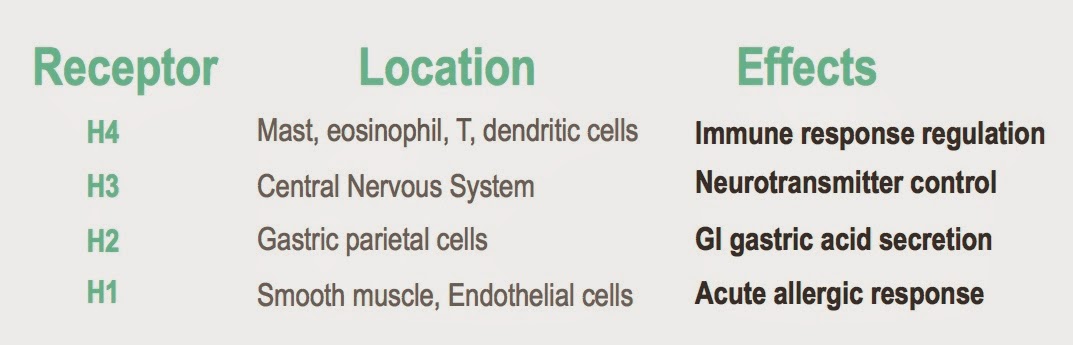
Chemically speaking, histamine is one of five biogenic amine neurotransmitters; dopamine, norepineprhine (noradrenaline), epinephrine (adrenaline), histamine, and serotonin. From the decarboxylation group of the amino acid histidine, this small molecule is destroyed and thus regulated through the enzymes DAO (diamine oxidase) and HMT. Histamine is made throughout the bodies tissue, especially in the GI track, skin, and lungs. However, it is also produced by the immune system as an inflammatory response. Histamine not only regulates immune reactions, but also the various cells involved; macrophages, dendritic, T-lymphocytes, B-lymphocytes, endothelial, antigen-specific Th1, and Th2. Together, these various cells play a very important role in the bodies detoxification, vascular, and immune system. While histamines are important parts of the human body, they can easily become a source of chronic inflammation, due to binding to receptors on these cells. This suppresses the cells from maturing, being active, and polarizing, which then alters their immune regulation, and further causing them to attack the body even when there is not a foreign substance present. There are four known histamine receptors in the body that are found on different cells; H1, H2, H3, and H4. These receptors are proteins throughout the body that bind with histamine to create certain effects. H1 receptors are found on endothelial cells, H2 on gastric parietal cells, H3 in the central nervous system (CNS), and H4 on mast, eosinophils, T, and dendritic cells.
Because there are more than one type of histamine receptor, treating those with histamine induced allergies can not simply be fixed by taking over the counter, antihistamine drugs such as Benadryl and Claritin (a diphenhydramine or loratadine). Both of these pills only stop histamine from binding to H1 receptors, while the remaining H2, H3, and H4 are left unblocked and thus unrestrained. Therefore, while one’s itchy eyes might be gone, GI, brain, and immune system symptoms will still very likely be present.


Receptor Overview
In short, H1 receptors are involved in allergies that occur in the nasal airways and lung.
They are found in blood vessels, smooth muscle tissue, the central nervous system, and heart. Just one of many, hayfever is a perfect example of over-active H1 receptors, and can be treated by standard antihistamine drugs such as Benadryl, that block histamine from binding to these receptors. Endothelial cells are also responsible for H1 receptor histamine release. These cells supply all tissues throughout our body with blood through the lining of blood vessels. Without these important cells, it would be impossible for tissue to grow and repair. Because histamine is also a neurotransmitter that communicates with the brain, taking antihistamines cause the active receptors to be suppressed, simultaneously making you sleepy. Other H1 antagonists that inhibit histamine action (or the enzyme that stops the enzyme histidine from making histamine) include, Zyertec, Zantac, and Allegra.

H2
Histamine H2 receptors are found on gastric parietal cells, which produce hydrochloric acid (HCI) in the stomach. Though too little can cause inadequate digestion, too much can create ulcers and peptic acid disease. There are three types of stimulators that aid in acid secretion; acetylcholine, gastrin, and histamine H2 receptor (which is the primary modulator). Therefore, if the amount of released histamine is low, then weak acid secretion will follow. H2 receptors are also on cells of the heart, uterus, and vascular, smooth muscles. When histamine reacts with these, relaxation in the smooth muscles occur, causing veins to dilate, and altered bladder, intestine, and heart function. However, when a H2 antihistamine is taken, pro-inflammatory antibodies, T cells, and cytokines are decreased, subsequently compromising the motility of the gut.

H3
H3 histamine receptors (along with 1 and 2) play a large role in regulating neurotransmitter activity in our central nervous system (CNS). Through the TMS (tuberomammillary nucleus) that is located in the posterior hypothalamus, histamine is released, sending messages throughout the brain and exciting certain cells. This increases wakefulness in an individual, thus significantly effecting one’s sleep and wake cycle, as well as daily brain function. TMS neurons are ultimately responsible for memory, sleep, energy, arousal, learning, reaction time, and food consumption, as they are the sole source of histamine projection in the brain. H3 receptor in particular, is thought to decrease the release of other brain neurotransmitters that control both skeletal and smooth muscles (acetylcholine), arousal (dopamine and norepinephrine), and drowsiness (serotonin), while simultaneously increasing H1 and H2 receptors. It also controls activity of hormone secretion through the pituitary “master gland.” High amounts of H3 histamine are also a major component of many neurodegenerative diseases, such as Alzheimer’s, M.S, and Parkinson’s, while low amounts cause seizure disorders like Epilepsy. It can also be linked to neurotic actions, due to exciting NMDAR (N-methyl-D-aspartate receptors) that control memory function and strength or weakening of brain synapses. An example would be Chronic Lyme Disease, where Borrelia Burgdoferi spirochetes have been attacking the immune system for years, manifesting as both a neurological and autoimmune disease. Severe neuroborreliosis (damaged CNS disorder) is just one outcome of untreated spirochetes, and has been shown to be directly linked with high histamine markers in the brain. Doctors have found that herbal supplements and drugs (when needed) reduce histamine activity, and thus can help patients manage the resulting brain fog and congestion.

H4

H4 receptors are located throughout the bodies mast cells, eosinophil cells, T cells, and dendritic cells, all of which regulate the immune system’s response.
Mast cells are in highest concentration where the body is exposed to external environment, such as the skin, yet are ultimately derived from bone marrow, and are present throughout the lining of the respiratory, digestive, urinary system, and blood vessels. These cells play a large role in producing immediate allergic inflammation, followed by cytokine and chemokine production, which both act as messengers between cells that ultimately makes the inflammation chronic. Mast cells also aid in fighting off various parasites, regulating the degree of which the immune system responds, repair of old vessels into new ones, tissue repair, and variety of allergic diseases (asthma, rhinitis, dermatitis, anaphylaxis, etc), due to controlling pro-inflammatory white blood cells (eosinophils), and thus causing over activity of histamine related immune responses. Out of the five immunoglubulin subtypes, Immunoglubulin E tends to bind to mast cell receptors, which is why doctors typically test for overgrowth through IgE blood tests. When an antigen cross links on the surface of mast cells, they react through releasing histamine and other bioactive mediators. This causes conditions such as Mastocytosis, or MACD (Mass cell activation disorder). However, IgE testing is not always accurate, as one can have a severely active mast cells regardless of what a test may indicate.
H4 receptors also activate dendritic cells, which capture and process antigens, provide the body with various immune responses, and activate B and T lymphocyte cells, which together, serve as immunity mediators. Interestingly enough, dendrite cells also minimize autoimmune responses, showing that they play a large role in manipulating the immune system. However, when histamine receptors bind to these cells, the opposite happens, causing inflammation.
T cells, another type of white blood cell that find and destroy immune system invaders, gets its name for maturing in the thymus gland. The subset helpers of this immune response cells are TH1 and TH2, which are involved in both autoimmune diseases as well as allergic reactions, through the secreting of cytokines (much like mast cells). An example would be when IFN-gamma production is up-regulated in T cells, causing the formation of eczema.
All together, H4 receptors are what increase the amount of immune cells in inflammatory health issues including allergic reactions, both autoimmune and allergic diseases (asthma, colitis, RA, cancer, M.S., etc). Therefore, not only do they control the original signal of inflammation, but also the maintenance. This means that, while they recruit mast cells to respond to the initial allergy, H4 receptors make this state of inflammation continue, or in other words, chronic.
Rheumatoid arthritis, which is characterized by joint tissue inflammation, erosion, and destruction of cartilage, is just one disorder where histamine acts as a pro-inflammatory mediator. Thus, how severe or long one’s RA is, can be linked back to H4 receptors on joint, collagen, and white blood cells, as well as on the blood vessel wall. If you suffer with RA and want to know whether histamine will help, contact your Rheumatologist for advice.


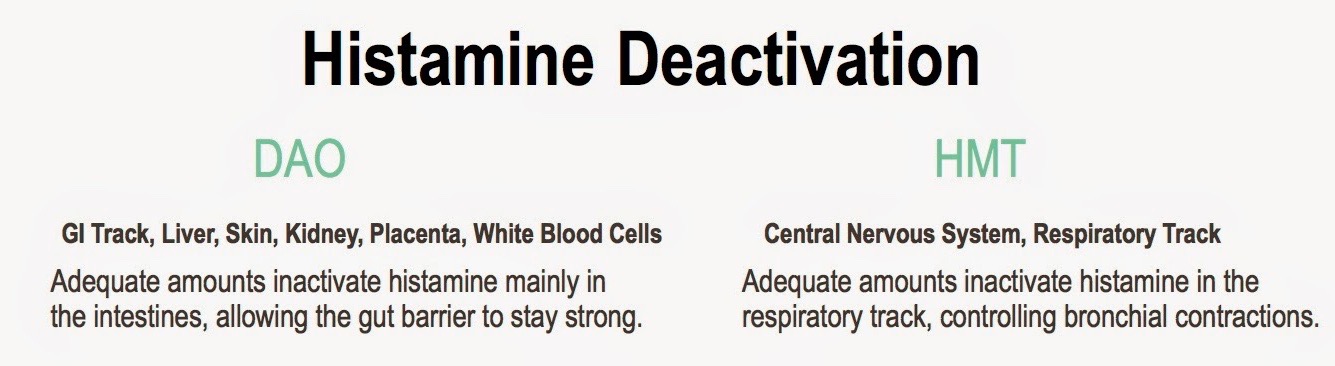
histaminemetabolism-2
Histamine Metabolism
Histamine is regulated in the body through two major enzymes; DAO and HMT.
Histamine N-methyltransferase (HMT) is responsible for more than half of histamine control throughout the central nervous system (CNS) through converting the N-methyltransferase into N-methylhistamine, which de-activates the effects of the histamine molecule. Both endothelial and epithelial cells (which make up the tissue of skin and blood vessels) are found in the main respiratory system airways of the body and contain HMT enzymes. Though a healthy human being creates enough HMT to degrade histamine and therefore regulate the function of those airways, insufficient amounts of this enzyme can cause constriction of the smooth muscles (bronchoconstriction), causing asthma symptoms.

DAO

The remaining 30-45% of histamine in our body is metabolized through DAO, which is present mainly in the lining of our intestines, but also the liver, skin, kidney, placenta, and white blood cells (neutrophils and eosinophils). In order for histamine in the gut to stay balanced, this enzyme must be present. Diamine Oxidase is responsible for breaking down histamine into imidazole acetaldehyde, which destroys any allergic reactions from occurring. However, if DAO production is compromised, histamine builds up, causing numerous issues throughout the body. There are many different reasons why this important enzyme would be suppressed, one of them being the use of pain killers, sleeping aids, asthma medications, muscle relaxants, and antibiotics. However, this GI barrier is also effected through genetic mutations. In general, if the lining of the gut is damaged, whether due to a SAD (standard American diet), chronic illness, and (or) infection, DAO secretion becomes very weak. This not only causes histamine to build up in the gut, but it can also lead to a leaky gut, which allows proteins to cross into the bloodstream, causing an autoimmune response. Therefore, having a leaky gut can be caused by numerous reasons that go hand in hand with insufficient DAO production, as health complications leading up to this condition almost always result from a poor immune system (in which histamine becomes over active).
Though healthy people are able to break down ingested histamine, those with a compromised gut do not have this advantage. SIBO, which results from bacteria becoming overgrown in the small intestine, subsequently creates extreme amounts of histamine in the gut. Other bacteria, such as Lactobacillus, Streptococcus, Aeromonas, E.Coli, Plesimonas Staphlococcus, are also histamine producing. Interestingly enough, vitamin B6 is an important co-enzyme to DAO, and is typically found low in individuals with histamine intolerance due to inadequate amounts of DAO. Some foods, both processed and not, are naturally high in histamine. Fermented items (alcohol, cheese, sauerkraut, etc), spinach, tomatoes, fish, pork, and citrus fruits, are some of the highest histamine containing foods. While a low-histamine diet is beneficial for some individuals, it does not necessarily cure the issue at hand. Usually, the foods highest in histamines (such as alcohol) should already be taken out of ones diet if they suffer from a compromised immune system. Therefore, following both a healing diet and lifestyle can be a major factor in ultimately turning histamine-intolerance into efficient regulation.
My Experience
Throughout the years of chronic illness, my allergies have simultaneously grown, to the point that I will (and do) react to literally everything. Whether food, environment, or a personal care item, histamine has become a big enemy of mine on a daily basis. Originally, this molecule was trying to help defend my immune system, however, in the process, it has caused a seemingly irreversible attack on my body.
Symptoms & Causes
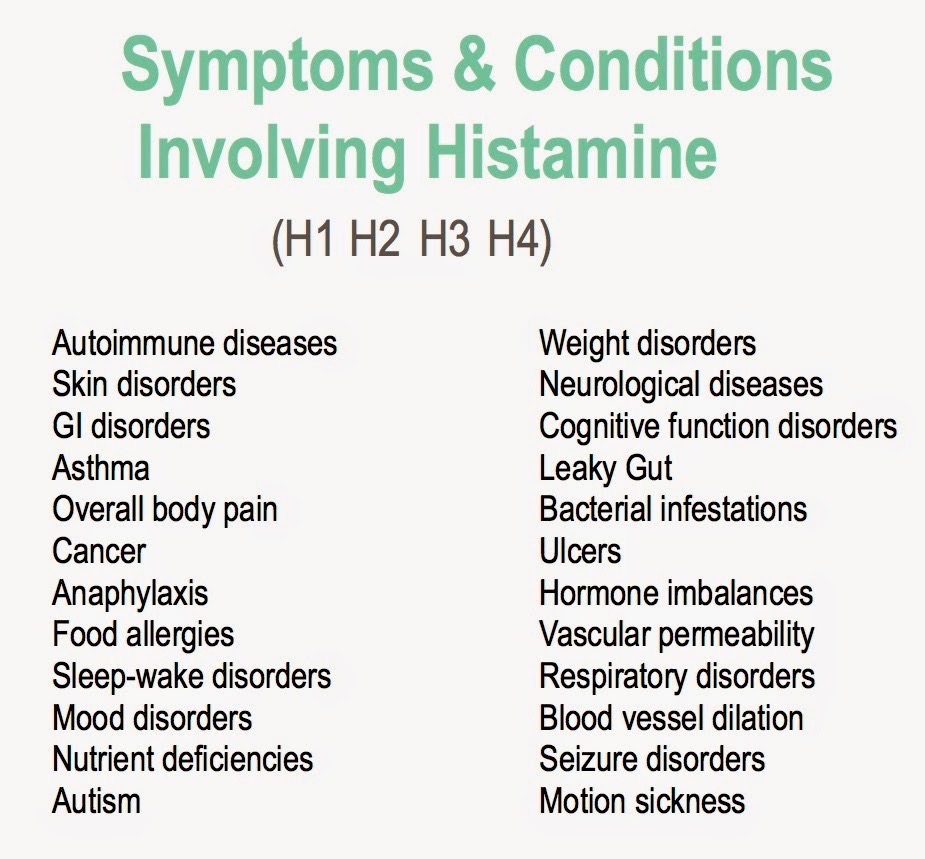
There are many reasons for histamine overgrowth in my body, due to untreated Lyme spirochetes, which resulted in numerous bacterial infections (SIBO, parasites, aeromonas, bartonella, babesia, etc), all of which breath histamine into my system. Though I do take the natural route for treating these infestations, antibiotics were also used, which is another cause for DAO enzyme suppression. With an untreated immune, neurological, and bacterial disease, leaky gut is something I have also developed. However, regardless of all of the other co-factors leading up to my histamine-intolerance, the main point is that it has become a big problem in my health journey. Foods that would otherwise be healing to the body, I react too, whether from previously activated mast cells, or simply histamine thinking they are foreign, bad guys. A typical day consists of hot flashes, nigh sweats, swollen hands and legs, nasal congestion to the point where I cannot breath, full body itchiness, sore, stinging eyes, pregnant bloating, fatigue, headaches, dilated veins, skin reactions, and when very out of control, anaphylaxis reactions, where my throat closes and I am unable to breath, talk, eat, drink, and thus function normally. All of these symptoms are due to differing histamine receptor cells being overactive, which then causes numerous immune system reactions.
I am not going to lie, coping with all of these things can be very debilitating, therefore pushing me to write a post on how important and BIG histamine really does play in one’s health.
I also implemented a 5-7 rotation diet about a year ago, where I do my best to literally rotate every food that I consume so that I do not eat the same more than a week apart. This has helped me pinpoint what I call “allergens of the week,” allowing me avoid them for 1-2 weeks, where then my body is no longer reacting to them. Because my range of foods is limited as it is, protein sources, which are naturally high in histamine, are the main emphasis of my rotation. To make things less confusing, I keep an on-going document on my desktop of the ingredients I have eaten that day. Through this, I am able to keep track of how many days it has been since last ingesting a certain food, allowing me to plan future meals. This list also allows me to determine any correlated allergic reaction symptoms with specific foods.

Treatment
Though I have been experiencing histamine-related symptoms for years now, it was not until this past summer that I began seeing a Chinese herbalist/allergist/immunologist M.D for treatment. Through her, I take what she calls “tea,” which is actually different Chinese herb combinations in pill form. She also has me drinking actual, herbal tea, taking baths in specific bath salt remedies, and morning/night cream supplements. My doctor explains her FAHF-2 (Food Allergy Herbal Formals) as able to reset the immune system to no longer react to ingested foods that it perceives as being infectious diseases. Through the binding of immunoglobulin E (IgE) to mast and basophil (pituitary, hormone producing) cells, the body becomes over-active with released histamine, even to things are not inherently dangerous such as food or pollen. By taking the herbal formulas, Th2 (immune response) cell activity is lowered, without taking away the protective, beneficial mechanism of subset Th1 cells (which is to protect the body from bacteria and viruses). Scientifically, this is called immune modulation, where allergic reactions are decreased and thereby treated through changing the pathological immune response. By reseting the immune system, foods are no longer seen as foreign toxins by internal cells, which then stops them from reacting and producing harmful molecules.
Though a low histamine diet can be somewhat helpful depending on the degree of one’s histamine activity, eating your way out of an intolerance is very unlikely. Because of the numerous diets I must follow to maintain my present health (Ketogenic as part of the PK Protocol, AIP for the effects of Chronic Lyme, and Low-FODMAP for SIBO), eating low-histamine is anything but possible. Though many foods naturally high in histamine are already eliminated through the Low-FODMAP and AIP approach, foods such as fish, are simply items I cannot afford to take out of my diet.
For those of you who cannot see a doctor studying the area of histamine treatment, taking supplements DAO or Quercetin, have proven to be very beneficial in certain individuals (I take them as well). Of course, learning and being aware of which foods are high in histamine is also beneficial, as this can help you make educated decisions regarding meals.

histaminesymptoms-2
The Importance
Overall, the extent to of which I have explained histamine and histamine receptors may have been somewhat overwhelming. For those without a scientific brain, I probably should had advised taking notes early on in the article. However, regardless of how much you remember of all the small, yet incredibly important chemical reactions that occur with histamine, the one thing that you should take away is that, histamine, along with the receptors on various cells throughout the body, are a HUGE, underestimated factor in one’s overall health. Even if you do not suffer from chronic food allergies, other factors of life such as hormones, appetite, weight, mood, learning, eating, and sleep, are all significantly effected by histamine (and that is only scratching the surface). Though even colleagues of my immunologist initially say that it is impossible, the truth is, getting out of the histamine-reaction-damage cycle is possible. However, studying the body in such a way is very cutting-edge, and thus not very popular in the conventional medical world. Yet the verdict is still clear, the body can heal itself, all that it needs is the proper tools to do it. Therefore, though I still suffer from the effects of over-active histamine on a daily basis, I do not believe my life will be this way forever.
As of now, histamine, and all that goes along with this small molecule, is still very misunderstood and (or) being investigated. Many people are ignored, mistreated, and told they are crazy for thinking they are allergic to everything. However, having a weakened immune system, and thus body, is not very hard now in days, especially when following a SAD (Standard American Diet). It is time that we stopped underestimating the effects of modern living, and start realizing just how powerful the body really is.

Related Reading:

Paleo Mom Histamine Archives
The Low Histamine Chef
Headache, Hives, & Heartburn
Histamine Home Remedies
Quercetin


Ephesians 2:10 “ For we are God’s masterpiece. He has created us anew in Christ Jesus, so we can do the good things he planned for us long ago”

Filed Under: autoimmune disease, chronic lyme disease, Food and The Human Body, health, health article Tagged With: allergies, H1, H2, H3, H4, histamine, histamine intolerance, mast cell, neurological disease, Paleo

Kid Friendly Meal Part 2: Creamy Roasted Broccoli (AIP)

November 17, 2014

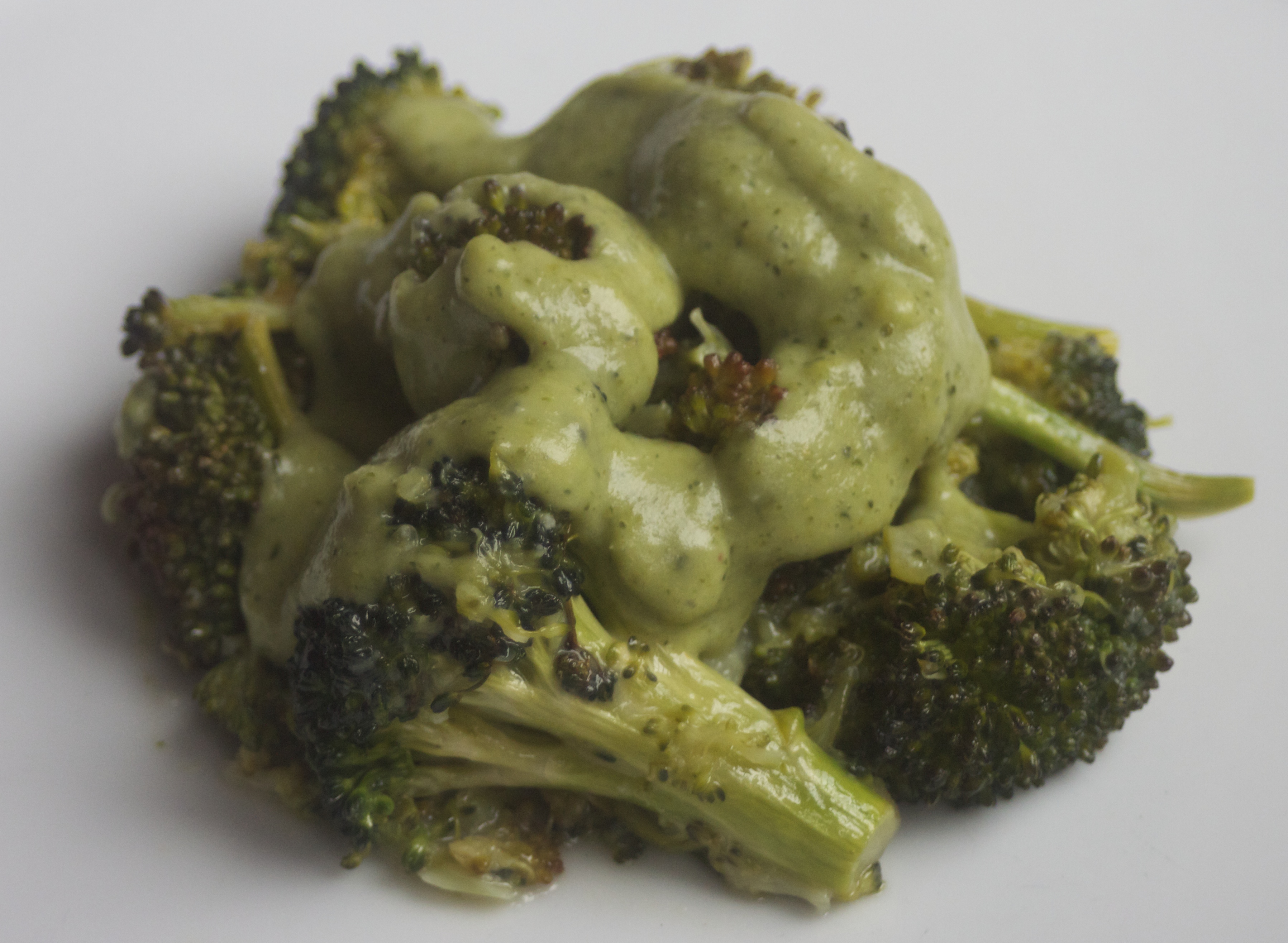
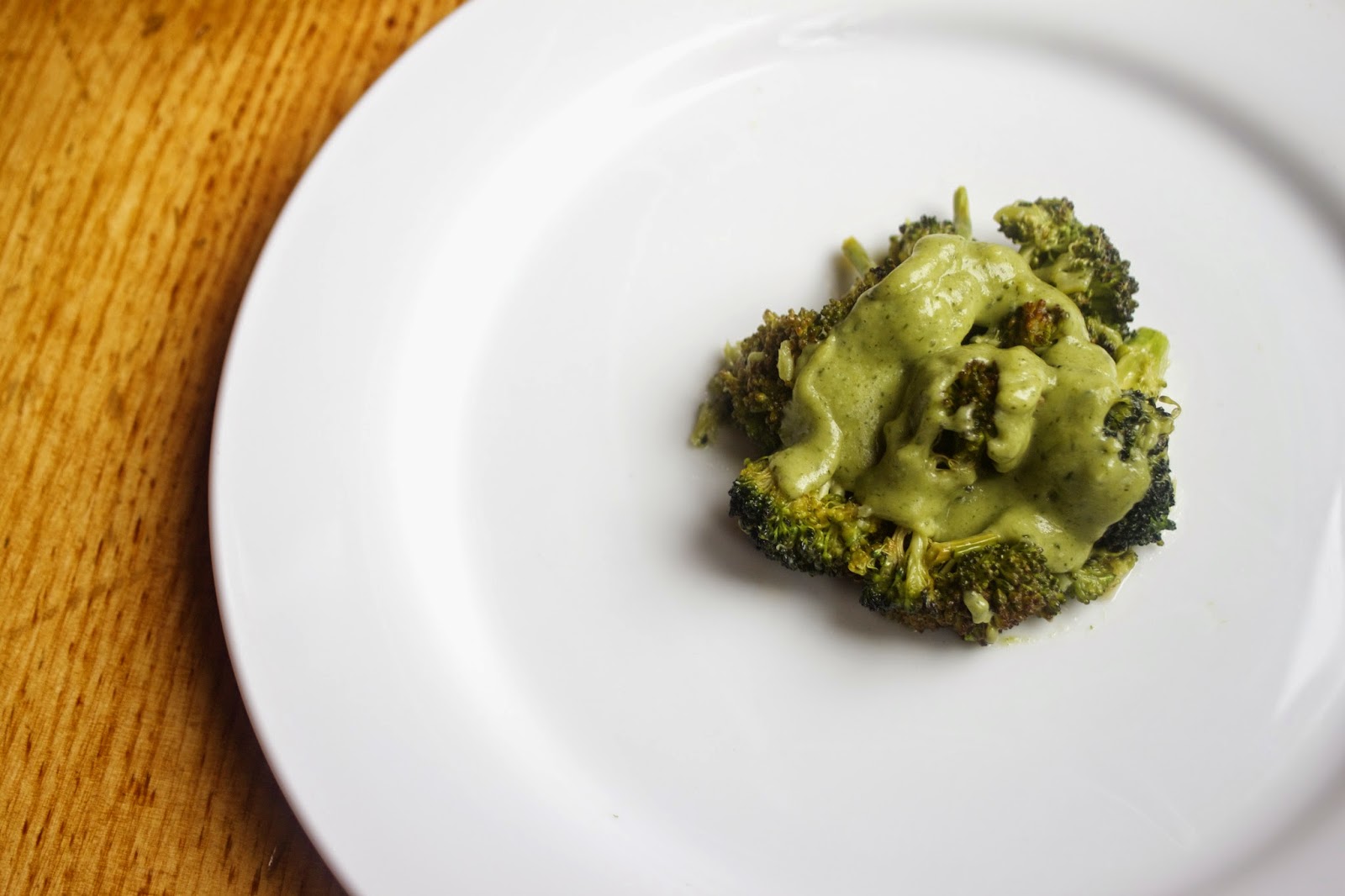
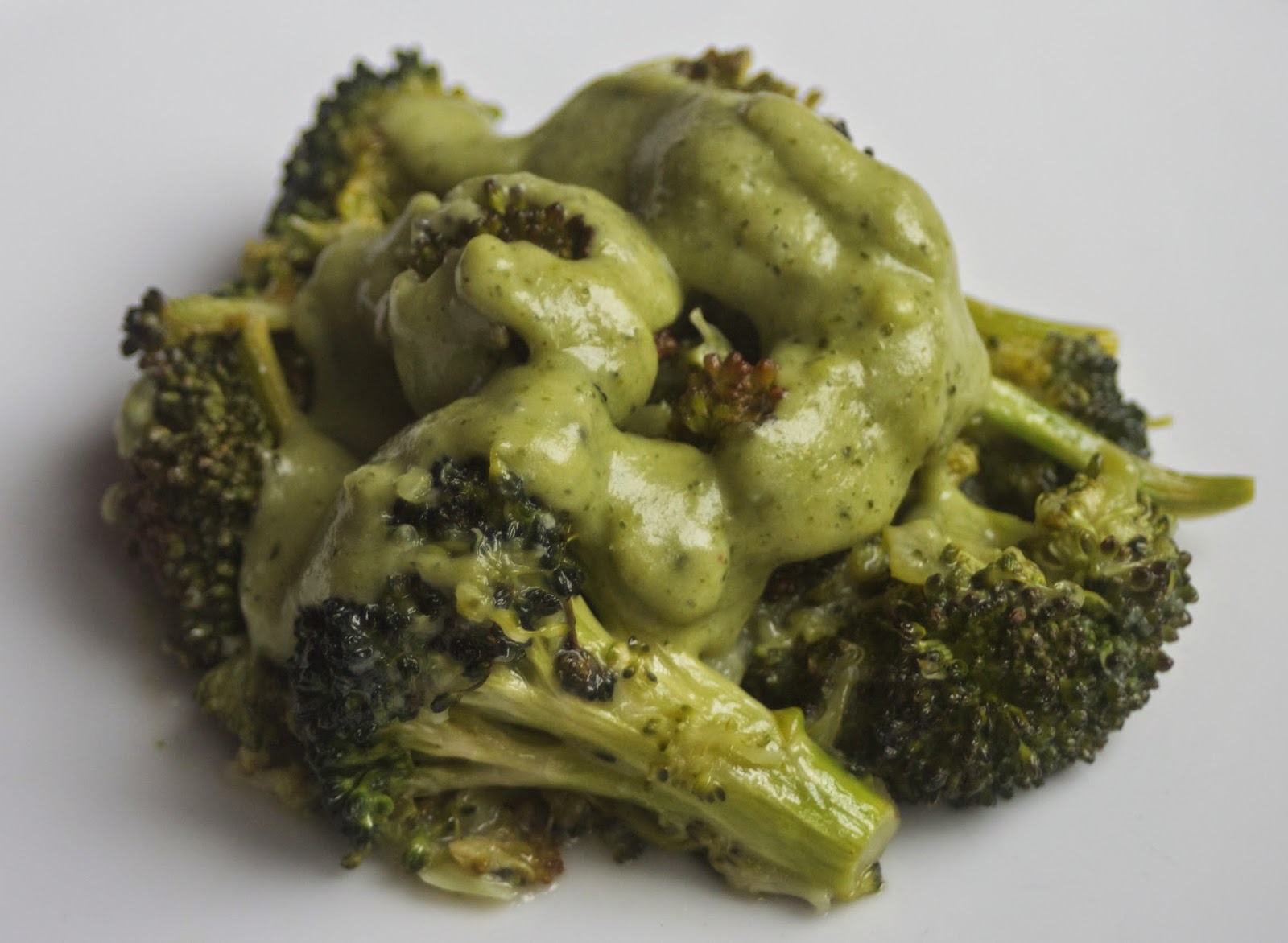
I have always loved broccoli since I was a child, and therefore have never understood kids who don’t. Though I can’t handle it at this point and time in my illness (high FODMAP), it is truly a vegetable I cannot wait to be able to eat! Because not everyone has the same passion for broccoli as me, I decided to spice things up a bit and turn what would otherwise be a despised food, into a flavorful side dish. Though typically mixed with cream, butter, cheese, and more cheese, I simmer the broccoli down in coconut milk to get the same creaminess. For those of of you who don’t do well with coconut milk, the amount left after cooking is reduced so much I don’t believe it will cause an issue.  However, if you are allergic, or simply looking to avoid it completely, I believe chicken stock, or another bone broth, would achieve the same results. I recommend adding 1 tbsp of tapioca starch to the stock when simmering down, to ensure the thicker consistency that coconut milk would otherwise provide.  Over all, my friends and family loved their broccoli, even those who normally would not.  What matters most, is the 100% approval by little Ben himself, proving this recipe to be kid friendly.  To be the most efficient with your meal prep, follow these steps; 1. roast the broccoli 2. make the plantain breadcrumbs 3. get the broccoli mixture simmering 4. turn down the oven and get the chicken tenders baking 5. finish up the creamy broccoli 6. take out the tenders 7. serve together!

Creamy Roasted Broccoli

Print Recipe

Ingredients

  • 8 cups of broccoli florets
  • 1 can full fat coconut milk
  • 1 tbsp garlic powder
  • 1 medium sized orange – juiced
  • Zest of 1 orange
  • 1 lemon – juiced
  • Zest of 1 lemon
  • 1 1/2 tsp sea salt
  • 3 tbsp lard – melted

Process

  • Heat oven to 425 degrees
  • In a baking dish, mix 5 cups of the broccoli with the melted lard, lemon and orange juice.
  • Place in oven and allow to baked 15-20 minutes.
  • While the broccoli is roasting, add coconut milk, orange zest, lemon zest, salt, and garlic powder to a medium sized pot.
  • Allow milk to come to a boil over medium-high heat, then turn down to a simmer on low.
  • Add remaining broccoli to the pot of milk, allowing to cook down for another 15 minutes.
  • Once soft, mash the broccoli in the milk pot until full incorporated.
  • After the milk has reduced by half, add roasted broccoli and stir with a spatula until mixed together.
  • Serve warm with my recipe for baked chicken tenders.


Recipe Notes

Substitute coconut milk for chicken stock and 1 tbsp of tapioca starch is coconut-free
You can find my baked chicken tender recipe here


Psalm 124:8 “Our help is in the name of the LORD, the Maker of heaven and earth.”

Filed Under: AIP, autoimmune paleo, beyond the bite, ketogenic, vegan, vegetables, Vegetables and Sides Tagged With: broccoli, coconut milk, garlic, kid friendly, lemon, orange juice, Paleo, primal

Kid Friendly Meal Part 1: Autoimmune Protocol Paleo Plantain Chip Chicken Tenders

November 17, 2014


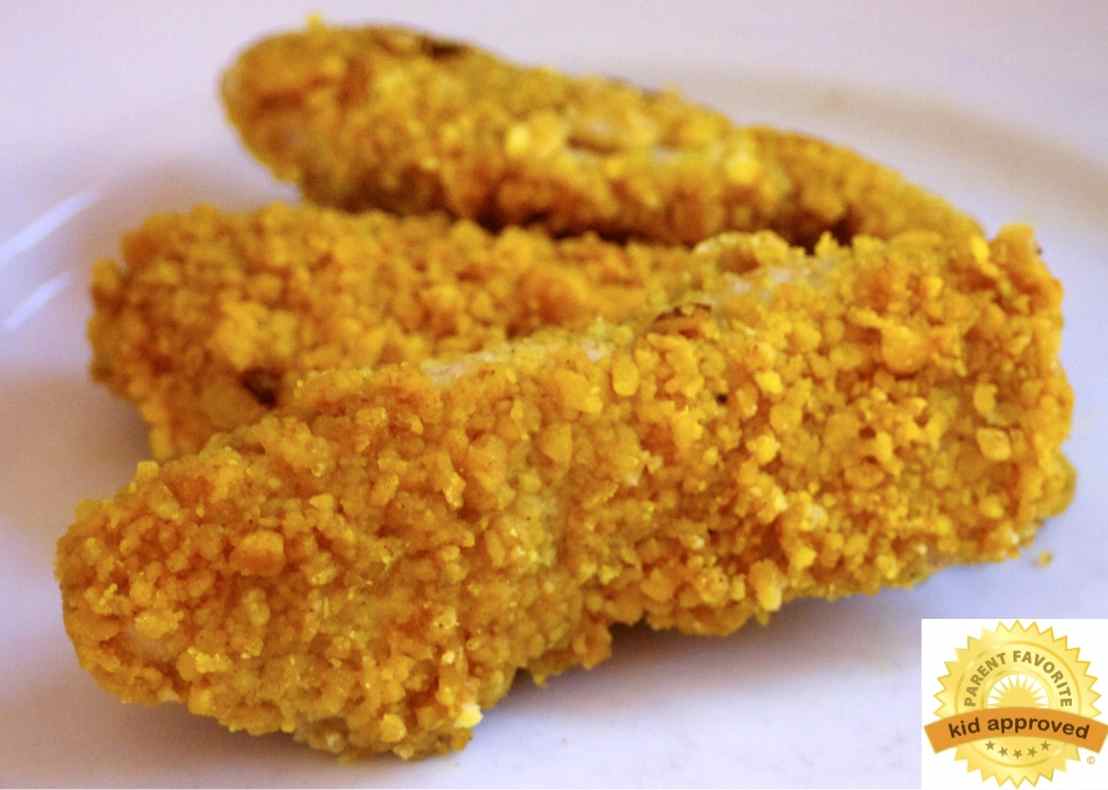
Growing up, date night for my parents happened about every Friday or Saturday night.  With our favorite, family friend babysitter readily available, my mom always opted for feeding us steamed broccoli, baked french fries, and hotdogs (real, organic ones that is) for dinner.  It was either that or chicken tenders from Whole Foods, which I can specifically remember being 100% better than any I had ever had outside of our house, especially the ones breaded with shredded coconut. I cannot say that my brothers and I ever complained of these simple, yet tasty dinners, and they will forever remind me of my simple, carefree, healthy childhood.  Though there truly is not anything easier than opening a package of frozen chicken tenders and sticking them in a hot oven, there is something about making the homemade version even better.  Not only that, but your kids can get involved in the process, making them even more willing to eat the finished product.

If you are not familiar with plantain chips, they’re pretty similar to a thick cut potato chip with a bit more crunch.  My favorite brands are those that are thinner and require less jaw work, however, the typical version works perfectly for this recipe.  Some generic grocery stores carry plantain chips, depending on where in the U.S. (or world) you live.  However, much like other chips, they are usually heavily processed and fried with rancid vegetable oils.  Whole Foods carries a few options, both of which are cooked in palm oil, and most of the time are actually roasted (not deep fried).  I am aware that this fat is not the greatest unless in whole, cold pressed form (which is actually a bright orangey-red color, not white), however, the amount used to coat the chicken fingers is nothing worth stressing over. If you are interested in learning more about palm oil and its health benefits, click here.  As a side note, if you cannot find suitable plantain chips locally, simple ordering Inca brand chips through Amazon is even more convenient. Click here to do so now. Last week I decided I wanted to create a homemade, kid friendly recipe.  Because my younger brother is not necessarily “young” anymore, having our friends over who have a 15 month old baby was the perfect test.  Ben, whose parents own Ben’s Beans Coffee Roaster, licked his plate clean and exclaimed “YEAH!” when asked if he wanted more. All in all, the dish was a hit with everyone that we were serving, which means I clearly had to share the recipe with you all.  There is no better way to determine whether or not a recipe is a success than inviting a whole group of friends over.  I hope you and your kiddos will enjoy them just as much!


Baked Plantain Chip Chicken Tenders

Print Recipe

(Serves 3-4)
Ingredients

  • 1 lb chicken breasts
  • 1/4 cup lard – melted (or) avocado oil
  • 1 tsp sea salt
  • 1/2 tsp turmeric
  • 1/4 cup arrowroot powder
  • 7.5 oz plantain chips *I used 3, 2.5 oz size bags

Process

  • Preheat oven to 350 degrees.
  • In a food processor, pulse plantain chips until the coarsely ground.
  • Add turmeric, salt, and arrowroot powder, letting the processor run until fully combined.
  • Dump breading into a bowl and set aside.
  • Cut chicken breasts in 1/2 inch thick, like-sized strips and place in a mixing bowl.
  • Melt lard and slather over chicken.
  • Spread 1/3 of the breading on a large plate.
  • Using on hand to touch the chicken, and the other to roll the chicken in the breading until fully coated.
  • Place on a baking sheet and repeat with remaining tenders.
  • Place sheet in oven and let bake for 20-30 minutes, depending on how thick your chicken tenders are.
  • Remove and serve with creamy roasted broccoli.

Psalm 119:105 “Your word is a lamp for my feet, a light on my path.”

Filed Under: autoimmune friendly, autoimmune paleo, chicken, coconut free, dairy free, egg free, gluten free, grain free, meat, nut free, paleo, plantains, Protein Dishes Tagged With: arrowroot flour, chicken tenders, coconut free, egg free, kid friendly, lard, nut free, Paleo, plantain chips, primal

Succulent Stuffed Sweet Potatoes (AIP Friendly)

November 14, 2014

Today’s recipe is one that I made with a special family in mind.  With three adorable children that have multiple food sensitivities, I decided to create a recipe based off of the list of foods that they could eat. As someone with an extremely restricted diet, I understand how overwhelming it can be to come up with something interesting enough that it is worth eating.  Therefore, I can only imagine how frustrating it can be to be a busy mom with three children, and still try and create meals that the whole family will love.  Though I have been making recipes for family and friends for some time now,  it is only recently that I have started making them for people I barley know.  However, there is a unique connection between those with differing health conditions (whether large or small), that is consoling, supportive, and inspirational.  Because of this, it does not matter whether I know someone personally or not, food is the commonplace that brings us all together. 

Showing my appreciation and thankfulness to family, friends, and doctors, usually comes out through a tasty dish or dessert.  The people and resources God has blessed me with in my own health crisis is truly amazing.  Therefore, though I am still sick, at home, and trying to overcome my own battle with the effects of Chronic Lyme Disease, I realized that I could utilize my blog to help those that are beyond physical reach.  I have always loved taking on a challenge, which makes creating recipes for a specific person, with certain allergies, even more enjoyable.  Having a illness has not only opened my eyes to the needs of others, but also sparked a passion to help them.  I am not sure what my future career will be yet, whether a practitioner of some sort or a personal health coach and chef, however, I do know it is going to be one that involves assisting others in reclaiming their health.

 
The recipe I made for Holly and her family is one perfect for Thanksgiving leftovers.  While turkey salad, soup, and stir fry can be tasty, they can also get really old, very fast.  I have never been a fan of the white meat poultry, especially in the form of leftovers where all moisture has been lost.  However, by mixing leftover turkey breast with the flesh of a soft baked sweet potato, the once dry and bland meat becomes incredibly soft and flavorful.   Another thing that I, as the cook, like about this recipe, is that it can easily be made ahead of time, and simply reheated in the oven.  Because I am the only one who eats an autoimmune paleo diet in the house, my friends and family loved topping their sweet potatoes with sriracha and raw sheep yogurt.  However, if both of these condiments are out of the picture, simply drizzling with melted lard is equally as delicious.  Depending on what your family enjoys, this recipe would also work perfectly with leftover ham or chicken. To the eye, the portions of half a sweet potato might look very large and rich, however, my parents and two friends easily finished their portions up without feeling overly stuffed or sick. With only five extra ingredients, your once boring leftovers are turned into a whole new, melt-in-your-mouth meal the whole family (including veggie haters) will love.  Please Enjoy!

Succulent Stuffed Sweet Potatoes
Print Recipe 
(Serves 4-6)
Ingredients

  • 3 medium sweet potatoes (or) two large 
  • 2 limes – juiced
  • Zest of 1 lime (1 tsp) 
  • 12 oz leftover turkey (roaster chicken or ham will also work) 
  • 7 mini portabello mushrooms – diced
  • 4 cups baby spinach
  • 2 tsp sea salt + more for sprinkling
  • 2 tbsp lard + more for topping 
  • 1 tsp garlic powder + more for sprinkling (optional)
Process
  • Preheat oven to 400 degrees.
  • Poke holes in sweet potatoes and stick them in the oven to roast for 45 minutes until soft to touch.
  • Over low heat, melt 2 tbsp of lard. 
  • Next, wash, dry, and dice mushrooms, adding to the pan once oil is hot.
  • Put the cover over the pan, allowing the mushrooms to cook down and sweat out for 5 minutes.
  • Meanwhile, chop turkey into like size chunks.
  • Zest one lime, and then just both, placing all in a small bowl. 
  • Once mushrooms have cooked down, add 4 cups of spinach, 1 tsp garlic, 2 tbsp lime juice, and 1 tsp salt.
  • Cover once more and allow the spinach to wilt for another 5 minutes.
  • Next, add shredded turkey, lime zest, remaining tsp of salt, and the rest of the lime juice. 
  • Stir until fully combined, turning off heat until the sweet potatoes have finished baking.
  • Once soft to touch, take sweet potatoes out of the oven and cut in half lengthwise. 
  • Using a large spoon, scoop out 3/4 of the flesh, adding to the pan full of cooked veggies.
  • Place the sweet potato skins on a foil lined baking dish or pizza stone. 
  • Repeat with remaining sweet potatoes until all are empty.
  • With a spatula, fully incorporate the sweet potato into the vegetable mixture.
  • Sprinkle sweet potato skins with a bit of sea salt and garlic powder if using.
  • Spoon mixture into the sweet potatoes, stuffing until very full.
  • Place dollops of lard on the top of the stuffing. 
  • When ready to eat, stick the baking dish back in a 400 dg oven, allowing the sweet potatoes to heat through for 10-20 minutes. 
  • Once brown and crisp, remove potatoes from the oven and serve with desired toppings.
Galatians 6:2 “Carry each other’s burdens, and in this way you will fulfill the law of Christ.”

Filed Under: autoimmune friendly, autoimmune paleo, Protein Dishes, turkey, vegetables, Vegetables and Sides Tagged With: egg free, mushrooms, spinach, stuffed sweet potatoes, sweet potato, Thanksgiving leftovers, turkey

Paleo Autoimmune Protocol Molasses-Spice Cookies

November 13, 2014

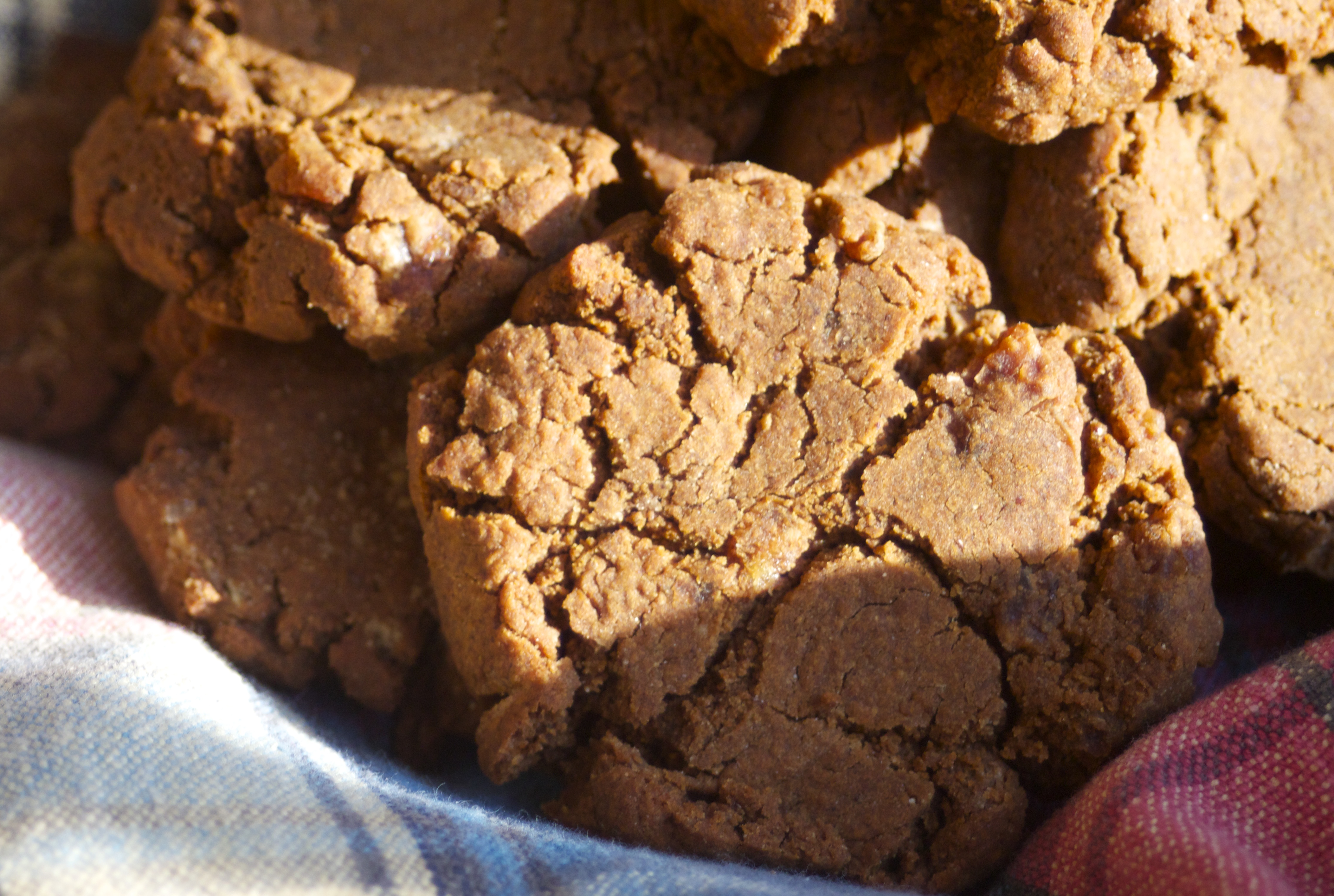
Today’s recipe is one that I am very excited to share.  Ok, maybe I am always enthusiastic every time I post a recipe, however, this one I am really happy about.  Growing up, it has always been a family tradition to make Christmas cookies together.  Though random types will get thrown into the mix, two standard recipes that are NEVER missed include both of Martha Stewart’s molasses and sugar cookies.  Therefore, if I were to describe the essence of Christmas time, it would be the smell of these two cookies baking in the oven.  Though my family and I have continued to bake these regardless of my illness, I have always wondered if I could somehow duplicate them for those with allergies and (or) a chronic illness like myself.  First, I decided to tackle Martha’s chewy molasses cookies, and let me tell you, I succeeded!  You know a recipe is a keeper, when those with no allergies, restrictions, and plenty of opinions, like them.  Though free of grains, dairy, eggs, nuts, coconut, and refined sugar, today’s cookies were fully approved (and equally loved) by my family and friends.  What was even more rewarding, was the wonderful aroma that spread throughout the entire house while they were baking.  The recipe itself makes an odd number of 19 cookies when rolled into 1 tbsp balls.  However, if you use a standard cookie dough scoop, it will most likely result in a dozen.  Rolling the cookie dough balls in maple sugar is optional, and not altogether necessary, but if you are one for the classic look of molasses cookies, I would say go right ahead. All in all, with a crispy outside, and chewy interior, these festive cookies are sure to be a hit with anyone you know.  However, whether or not you will want to share them is debatable…You can pin the recipe here, please enjoy!


Molasses-Spice Cookies

Print Recipe
Ingredients

  • 3/4 cup tapioca flour  
  • 3/4 cup water chestnut flour 
  • 1 tsp baking soda
  • 3 tbsp maple syrup
  • 3 tbsp molasses
  • 6-7 tbsp non-hydrogenated palm shortening  *Amount depends on humidity 
  • 3/4 tsp cinnamon 
  • 1/2 tsp ginger
  • 1/4 tsp sea salt
  • 10 deglet noor dates – pitted
  • Maple sugar for rolling (optional) 

Process

  • Preheat oven to 350 degrees. 
  • In a food processor, fitted with the “S” attachment,” blend dates for 30-45 seconds until chopped up.
  • Dump the date mixture into a bowl and set aside.
  • Back in the food processor, pulse together the  3/4 cup of tapioca flour, water chestnut flour, baking soda, 3/4 tsp cinnamon, sea salt, and 1/2 tsp ginger.
  • In a separate bowl, whisk together oil, molasses, and maple syrup.
  • With the food processor running, pour wet mixture into dry, allowing a ball of dough to form.
  • Add chopped date mixture, pulsing until just combined.
  • On a parchment lined baking sheet, form dough into balls, rolling in a small ramekin of maple sugar if desired, and placing 2 inches apart from each other.
  • With the back of a large spoon or the palm of your hand, press the cookie dough down half way. 
  • Place sheet in the oven and allow to cook for approximately 13 minutes.
  • Take out of the oven and let the cookies cool for 10 minutes.
  • Once slightly cooled, transfer cookies onto a wire rack to continue cooling down. *After another 5-10 minutes, the cookies should be ready to eat.


Philippians 3:12 “Not that I have already obtained all this, or have already arrived at my goal, but I press on to take hold of that for which Christ Jesus took hold of me.”

Filed Under: AIP, autoimmune friendly, autoimmune paleo, coconut free, cookies, dairy free, grain free, Sweets and Snacks, water chesnut flour Tagged With: christmas cookies, coconut free, egg free, grain free, molasses cookies, nut free, Paleo, primal, tapioca flour, water chestnut flour

Paleo Debunking: Wheying the Pros & Cons of Dairy

November 12, 2014

Dairy is considered a “grey area” food in the world of Paleo. Because of the rising number of allergies to the milk protein casein, coupled with the lack of enzymes to properly digest lactose, dairy has become something those with health complications tend to avoid. However, not everyone experiences the debilitating symptoms of dairy consumption, raising the question, is dairy good or bad? Therefore, today I will lightly discuss which dairy products, if tolerated, can be part of a healthy diet, along with those with potential health risks.
Milk Proteins
There are two proteins in milk products that pose issues for many individuals; lactose and casein. Lactase, the enzyme required in order to convert lactose into glucose and then galactose, is the necessary component for proper dairy digestion. Infants in particular, thrive off of their mother’s milk, and subsequently have ample amounts of this lactose-digesting enzyme in their small intestine. However, after childhood years, lactase production is essentially reduced and practically stopped. Except for some European, Scandinavian, Middle Eastern, and South Asia descendants, lactose intolerance is almost inevitable, causing mild symptoms in 75% of adults worldwide. Though even the most severe lactose intolerance reactions can be very painful, they are not all together life threatening. Casein on the other hand, is actually a protein molecule almost identical to the structure of gluten. Because of this cross reactive nature, it has the ability to cause autoimmune problems in those with compromised immune and digestive function. Because of the SAD high in grains, legumes, sugar, and chemically altered oils, it does not necessarily take a chronic illness or disease for one to not tolerate dairy, due to these foods naturally wrecking havoc on the GI tract (i.e. causing a “leaky gut”).
Conventional Hazard
Another issue that arises in dairy products is the high probability that the animal itself was conventionally raised. Dairy cows are commonly poisoned with excess antibiotics, pesticides,
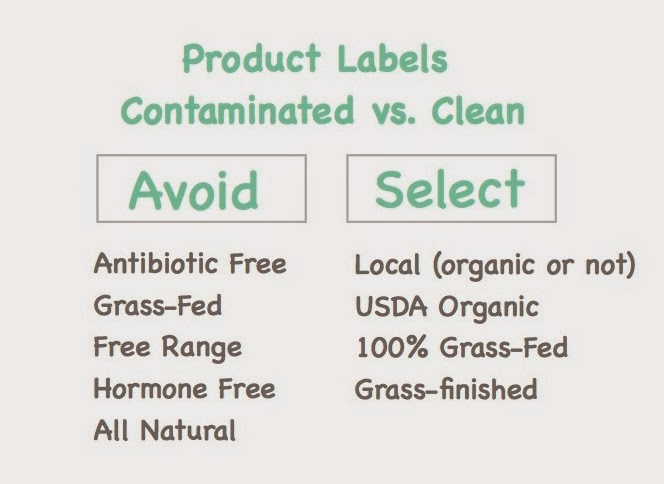
GMOs, and growth hormones. Since Monsanto’s use of their genetically modified rBGH (recombinant bovine growth hormone), the insulin-like growth factor (IGF-1) linked to various cancers, has rapidly increased the amount of aggressive, milk-duct tissue cancer by 60%. Other consequences of consuming conventionally raised dairy products include a 50% raise in breast cancer risk for pre-menopausal women, and four times the risk of prostate cancer in men. Due to being heavily injected with antibiotics, these inhumanly raised cows also pass down antibiotic resistance to us humans, making our chance of fighting off deadly bacteria slim. Despite all of these scary side effects, GMOs in general have been linked to a slue of health complications, including birth defects, allergies, reproductive issues, infertility, making their consumption clearly unnecessary. Therefore it is very important to know the real history behind any given brand of dairy, regardless of what a label may claim. Because this may take the “convenience” out of a “convenience store,” it is ideal to purchase products locally, where one on one contact with both the farmer and animals is available.
Full vs. Low Fat

Fat in and of itself is vital for properly functioning cells in our body. Without adequate amounts, cells ultimately suffer, which then results in an unhealthy individual. While low-fat dairy varieties may sound like a good idea when trying to reduce overall daily calories, the problem is not only there lack of fat, but also added sugar and carbs. To put it plainly, food without fat is quite bland. Toast, cereal, pizza, and even rice, are clearly boring without additional fat (i.e. butter, milk, cheese). Therefore, in order to make a product that consumers love, manufacturers add ample amounts of sugar and starch to thicken and flavor the product. This lack of saturated fat also inhibits present nutrients to be absorbed and stored in the body. Vitamins A, D, E, and K, various minerals, along with the conversion of carotene to vitamin A, and many other biological processes resulting from dairy consumption, are all suppressed when fat is taken away. With beneficial fatty acids no longer present, excess insulin and appetite are stimulated, while the once available vitamins pose as pointless. Full fat on the other hand, is chock full of both nutrients and the vehicles needed for the body to utilize them, therefore helping in gene expression, tooth development, dental and skin health, vision, transportation of calcium to where it belongs, and bone density restoration. It also been strongly linked to lowering diabetes levels, cardiovascular disease (which is the opposite low fat varieties), stroke, cancer, and overall body weight regulation (when combined with a proper diet).
Pasteurized vs. Raw
Despite what the government wants us to believe, the risk of developing a foodborne illness from raw milk is only 9.4 x higher than from pasteurized products. That may seem like a scary increase until you put that number into the context of relative risk, which makes it only 1/1000th percent likely. This is a much smaller ratio than eating raw oysters, and even more so of simply driving a car. Now, the point of this is not to scare you away from eating or socializing, but rather to shed some light on the fact that raw milk, though demonized, is NOT that risky to eat. So, while you may have a 1 in 6 million chance of actually being hospitalized due to raw milk consumption, the benefits compared to pasteurized milk reign far more supreme than any low-risk value. Not only that, but the CDC doesn’t even provide the dataset on which they base their conclusion that raw milk causes startling health issues. However, the information behind other food born illnesses is, showing that dairy, in general, is the lowest food source of death or sickness.
Due to the heating of pasteurization, nutrition in both organic and conventional milk products are reduced, resulting in a decrease of the very things one would be eating dairy for (i.e. manganese, copper, iron vitamin C, B6, etc). The protein beta-lactoglobulin is also destroyed, leaving the vitamin A added to milk unable to be fully absorbed. Though organic varieties are one step up from conventionally raised products, they are still commonly fed a diet high in grains. This imbalances the omega 6:3 ratio in animals considerably, which then gets passed down onto us humans, making inflammatory markers rise. Much like meat, the term “organic,” is used very loosely when it comes to dairy, allowing manufacturers to still implement some of the same feeding practices.
Courtesy of Wendy Myers
Raw Revolution
Regardless of if you are worried about raw dairy putting your health at risk, the real reason raw milk should naturally be one’s first choice is simple; taste. Creamy, flavorful, rich, smooth, and satisfying, are all things that can be likened to raw milk (not pure white, thin, and watery store bought varieties). This can also apply to all raw cheeses, yogurt, and fermented kefir products. You will not see raw milk on any regular store shelves, but rather at a local farmers market or CSA. Because raw milk can only be sold and produced close to the farm itself, the purchase is well worth the money spent due to supporting a family owned business. This simultaneously grows the town’s strength and foundation as well, making for a well connected, flourishing community (much like purchasing local meat and produce). Local farms also use sustainable, environmentally friendly methods, which is quite the opposite of industrialized dairy production. This is one of the reasons why the best cow breeds for milk can be found in small communities rather than large cities. Instead of polluting the air, water, aquatic life, and subsequently the health of all individuals in and around the area, cows are well-managed and raised in pastures, which actually increases water quality and soil fertility. Confinement, abuse, mass breeding, and constant injection of antibiotics, hormones, and pesticides, are all things proven to be completely unnecessary in animals grazing off of open pastures (their natural habitat and diet). It has also been extensively studied in Europe on how raw milk may very well protect against asthma, allergies, and various immune-mediated disease, when drunk during childhood years.
How Much is Too Much?
Though dairy does contain essential fatty acids and vitamins, eating it everyday is not needed to get adequate amounts of these compounds. Therefore, it is important to proceed with caution, especially if you suffer from any health complications. Gut health is one of the first things to be compromised in an illness, making a harmful immune response or allergic reaction very likely with dairy. The fermentation of lactose can also pose as a significant source of gas, bloating, constipation, diarrhea, and overall GI inflammation due to an imbalance in bacteria. Therefore, though dairy can be a good source of calcium, protein, and minerals, it is not all together necessary, due to there being many other staple Paleo foods much more nutrient dense. If you are one suffering from a chronic illness, or a resulting leaky gut, it is a good idea to avoid dairy until further healing to avoid any extra damage. If you’re wanting to avoid possibly doing any extra damage but you’re wanting to try and manage the symptoms you’re dealing with due to your gut, you might want to look into an alternative remedy that could help relieve symptoms such as constipation and irregular bowel movements. However, I am not saying dairy should be avoided by everyone at all cost, especially since locally raised options are both tasty and nutritious. In the end, grass-fed and raw varieties (which are high in fat soluble vitamins and CLA), and fermented dairy products high in probiotics and protein (glutathione and whey), are ultimately the best options whether it be yogurt, milk, cheese, or butter. If raw is not available, buying organic is better than toxin ladened, conventionally raised products (though not ideal), while low-fat, skim, non-fat 1-2% milk products should always be avoided, as they are simply excess and unnecessary forms of sugar and carbs.
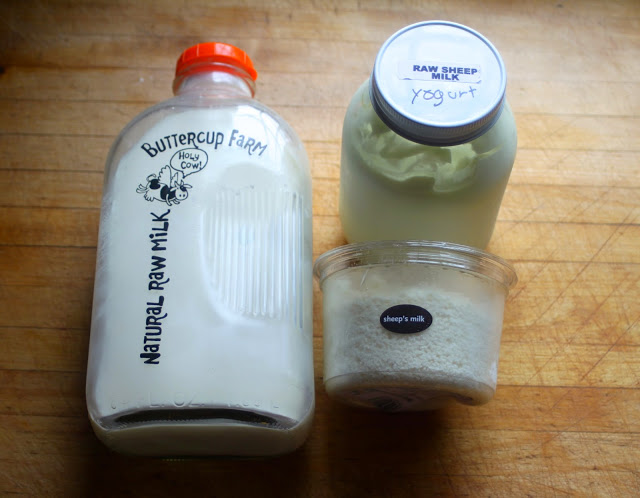
Common Household Dairy; raw milk, raw sheep yogurt, aged pecorino
My Experience
As for my own personal experience, minimal amounts of raw, sheep or camel yogurt, and raw, aged goat and sheep cheese, are what I can handle best. However, I must be very aware as to how much I intake per serving. Raw, sheep kefir, is another way I like to get needed probiotics into my diet, without having to take another supplement in pill form. I also find that taking the “Say Yes to Dairy” lactase enzyme, which is a natural version of drugstore’s “Lactaid” pill, also helps if I experience congestion or acid reflux after consuming dairy products. Growing up, my mother never had us drinking dairy milk, however, she now enjoys buying raw milk from a few different local farmers. It is so delicious, even my 15 year old brother can attest to how much tastier it is than standard, store bought dairy.
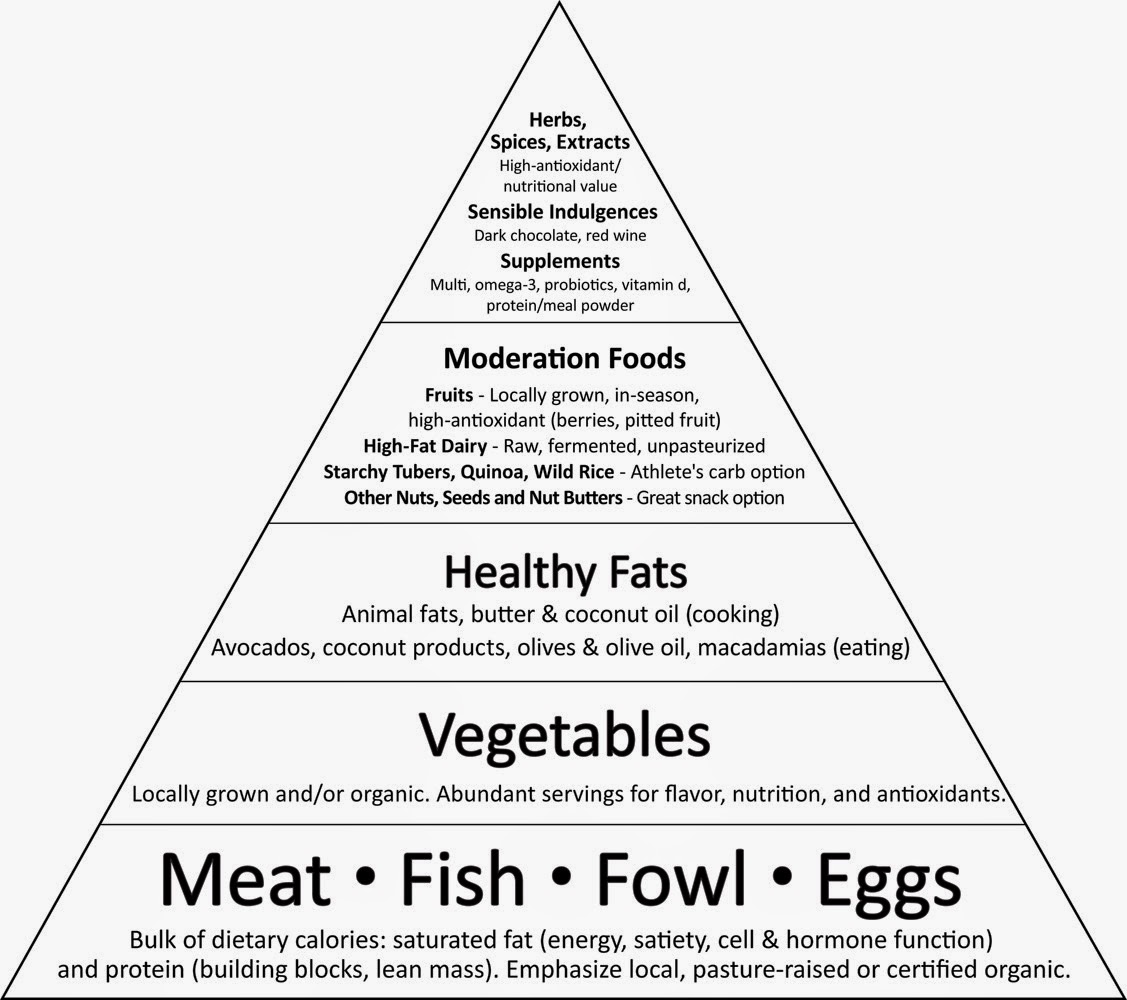
Overall, ones tolerance is dependent solely on the individual, yet keep in mind, the enzyme production used to digest lactose is quite reduced as one ages. Though there may be a small space for raw, grass-fed dairy, the majority of dairy products sold in the grocery store are just as unnecessary as the grains that contaminate most all packaged foods. Picking up a few, local cheeses at your town’s farmers market is completely acceptable, especially since you are supporting a local farmer. However, stocking up on processed, store bought, and (or) sugar ladened varieties is anything but necessary. Above, I have included Mark Sisson’s chart to help you gage where dairy intake should fall for optimal health. Ultimately, dairy should be seen more like a condiment, flavoring, or “side” ingredient, rather than the main focus of one’s overall diet.
Further Reading and Resources
The Great Dairy Debate
Is Full Fat Dairy Paleo?
About CLA
10 Reasons to Drink Raw Milk
Raw Milk Reality
Inhumane Conditions of Conventional Dairy
6 Reasons to Skip Conventional Dairy
Definitive Guide to Dairy
Dairy Q&A
Psalms 116:6 “The Lord protects the unwary; when I was brought low, He saved me.”

Filed Under: Food and The Human Body, health article Tagged With: camel milk, dairy, full fat dairy, lactose, Paleo, primal, raw milk, sheep yogurt

Hope for Healing: Chronic Lyme Disease

November 6, 2014

The longer I battle with the effects of Chronic Lyme Disease, the more I want to get the word out there that Lyme is so much more than a tick bite. When the average person heres of someone with “Chronic Lyme,” they tend not to differentiate what the word “chronic” before the term “Lyme” actually means. Due to skewed, unreliable testing, and doctors being unable to find a quick, “one shot” solution, patients almost always get dumped to the way side. In the end, “Chronic Lyme” is not taken seriously, thus making those with it left to figure things out on their own.

How it Begins

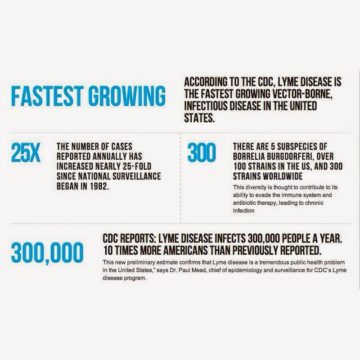
Getting the general “Lyme Disease” can be through ticks, mosquitos, spiders, fleas, or mites which are carried via deer, mice, chipmunks, squirrels, birds, raccoons, skunks, possums, and many other animals. Sometimes it seems as if they can never make their way into your home or garden, but it is something that does happen, bringing pests with them that can infect your home and endanger the health of you and your family. If this happens, you can get in touch with a pest control experts florida service. However there are many people around the world who aren’t able to remove the problem from their homes before they were bitten. Once bitten, spirochetes enter into the bloodstream, multiplying rapidly every day. If you complain to your family medical doctor about having the “common” symptoms of the acute onset of Lyme, such as a bulls eye rash, fatigue, achey joints, or headaches, they will (if you are lucky) stick you on 30 days of doxycycline, an antibiotic they claim will kill all active Lyme in your system. However, with 300,000 new infections every year, it is clear that this standard dose of antibiotics is nowhere near enough. Results from a John Hopkins University study showed that 20% of individuals treated with this textbook protocol had new, widespread body pain, 36% reported new-onset fatigue, while almost half had neurocognitive problems.

Infestation
Lyme spirochetes have the crafty ability to nestle themselves in between cells, making them safe from the immune system’s white blood cells, whose job is to fight against any foreign invader. They also tend to bind with heavy metals and form literal protective shields called “biofilms,” making them resistant to antibiotics. In other words, spirochetes are a small bug with a BIG issue, creating various problems depending on how the individual is created.

Though they have many technical scientific names and co-infections, the general term for these spirochete bacteria is “Lyme.” A great metaphor for these evil minions would be to picture them as termites. From the outside, an infested house (or in this case, a body) can seem perfectly fine. Yet the reality of the situation is that inside the covered and painted walls, bugs are slowly working away to destroy the structure. No one is aware of the issue at hand, until suddenly, the house collapses due to weeks, months, or even years of being slowly broken down and weakened. With this picture in mind, it is easier for people to understand how the “typical” tick bite, bullseye rash Lyme (which is shrugged off by both smart and ignorant doctors alike) enters into the dreaded, and even deadly, “chronic” stage.

My Experience

Because I, like many others, did not see a rash (which is thought by western medicine as being the only real indicator of Lyme), proper treatment was not given. Lyme spirochetes, much like the termites mentioned above, were left unrestrained and free, able to wildly target any system in my body and nibble away at its integrity and function as they pleased. Therefore, though we were not aware of what internally was truly happening in my body, rotating symptoms such as extreme joint and muscle pain, sinus infections, finger sores, and loss of menstrual cycle were all ways my body was trying to fight back. However, once it had enough of trying to beat the foreign invaders, it collapsed. In other words, my body hit the “brick wall,” a term other Chronic Lyme patients know all too well. If anything, it took away a lot of the hope and belief that I had of being able to control this disease and to come out on the other side. The extreme joint and muscle pain was one of the hardest things about it all, to be honest. That’s when my friend recommended to me that I should start having a look for something similar to these best CBD oil UK located products, to see if the use of CBD can help relieve some of these symptoms. At this point, I’d be willing to try anything if it meant being able to get my hope and belief back.
Those who have never experienced a chronic illness do not understand how all the sudden you just “develop” one. However, that is the most common misunderstanding of Chronic Lyme Disease, as you do not simply wake up one day with a slue of life threatening issues. Regardless of numerous tests not being able to “diagnose” anything wrong, the body slowly becomes extremely weakened by the Lyme spirochetes and it is no longer able to withstand this deteriorated state.
Instead, every organ goes into shock, stopping the communication it has with others, and simply tries to work on keeping itself from being damaged any further. Inside the body, there is a natural flow and rhythm of all the bodies internal functions. However, when something threatens this state of homeostasis, the different systems that were once communicating and thus creating a healthy body, stop talking to each other. Because the body is intelligent enough to realize that something is not right, it does what it was programmed and designed to do (aka enter self protection mode). While every organ, cell, nerve, muscle, and tissue is working on keeping itself protected, toxic bacteria (in this case Lyme) and viruses are able to breed and manifest throughout all of the once empty spaces that literally compromised the individual’s skeleton.

Compressed Celiac Artery

One example of this would be a condition that I developed at the beginning of my illness called a “compressed celiac artery.” As one of your major arteries directed towards the heart, your celiac trunk is located on the upper right side the torso, feeding to various digestive organs. After almost a year of literally not being able to eat anything without excruciating pain in my entire abdomen, face and body drained of any signs of life, and weighing only 83 pounds, we were able to figure out through a MRA scan that my diaphragm had literally dropped onto my celiac artery. With this kink in my blood flow, digestive organs were unable to function, thus making anything I ate go to waste, due to not being able to take in the calories, nutrients, or vitamins.
Now, based on the research that has been conducted using specialized equipment like pipette tips (you can find out where pipette tips are produced here) and conversations with many world-renowned doctors I have had, no one is quite sure what exactly causes this condition. It is not necessarily from weight loss, though it can be coupled with this issue, losing weight is not the actual cause. Despite having dozens of tests done that scanned my abdominal cavity for any issue, an MRA (magnetic resonance imaging) was needed show my internal arteries, not just organs (as is the case for an MRI).
This compression syndrome can leave one puzzled and wondering why in the world a diaphragm would randomly just “collapse” on itself. However, with understanding of the body and how everything works together, it is more clear, and rather logical reasoning, as to why this thin skeletal muscle that separates the abdominal and chest cavity would drop. Truly, everything that happens in the body, whether internally or externally, happens for a reason. My body didn’t just compress the celiac artery because it felt like it, but rather because it was trying to protect more important organs from the harmful situation at hand.
Therefore, with the infection of spirochetes terminating my body, in attempt to save the lungs, heart, and surrounding GI organs from further damage, it is highly possible the diaphragm literally tried to wrap around and save my internal systems. Talking with one of my specialists, we do not see a collapsed diaphragm as a way of it giving up, but rather its own, natural, intuitive nature to protect what it was given to rule over in the body. In the process however, my celiac artery, which supplies life to the intestines, stomach, liver, pancreas, gallbladder, and spleen, got obstructed.

Treating the Effects

I could go on all day of the different ways my (and other Lyme patients) bodies are trying to fight back. However, it is important to realize that the human body is much more intelligent than Western medicine gives credit to, and with the right help, I believe it can heal itself. Lyme disease can be highly debilitating and over time many changes in your body can develop, potentially causing more issues. You may want to contact a DNA testing Miami center like health-street, or one that is closer to your location to see the changes happening in your body and what measures can be taken to help yourself.

Chronic Lyme is known as the “master of disguise” or “great imitator” when it comes to disease. Because there are so many different strains of Borrelia burgdorferi, the patterns that may occur in an individual are different in everyone. Problems that occur along side of the initial infection include Babesia, a blood borne parasite carried along with Lyme spirochetes, and Bartonella, a gram negative pathogenic bacteria. Though 30 days of doxy might sound like enough, most Lyme bacteria have become resistant to antibiotics and know how to trick and invade the immune system. Because the body eventually begins to attack itself, Lyme in its chronic state can cause autoimmune damage. Therefore, in order to overcome the various infections created by the initial onset of the Lyme bacteria, the bodies immune system must become strong, simultaneously fending off any further issues that may arise.

Peeling Back the Layers

In other words, Lyme bacteria invade the body, weakening and thus damaging every cell in their path. Cells, which are the foundation of our bodies organs, must be healthy in order for the body to heal itself. Without a strong cell, the body will be susceptible to the many problems that occur after being exposed to spirochetes. In my case, after the Lyme severely damaged my small nerve endings and made my organs go into lock down mode, various infections including, H.pylori, SIBO, Bartonella, Babesia, Rocky Mountain Spotted Fever, tape worms, yeast infections, aeromonas hydrophila (gram negative bacteria), protozoa and other parasites, all became part of my illness. However, the story does not end there, and I do not believe it has to for any Lyme patient.

With multiple complications overriding the bodies normal functions, healing from Chronic Lyme Disease can seem impossible. How to break the cycle and make spirochetes unable to reproduce, hide out, or come back when the “smoke has cleared,” is one of the most frustrating things to figure out. Ultimately, the body does have the power to get better, it just needs some direction and help. I know what it is like to be doing all of the right things and still go nowhere. Running is circles is what my body does best, due to the damage caused by untreated Lyme bacteria. In order to reverse this effect, I must get back the integrity of each and every cell in my body. Being secure on a cellular level will allow me to fight against all of the foreign particles circulating throughout my body. Infections are able to be destroyed, and ultimately stay gone, due to the body functioning normally. When cells are working, organs are able to re-learn their lost functions, and thus create a strong and resilient body once more.
Diagnosing Chronic Lyme is one thing, while healing from the aftermath is a whole other story. This process, while ignored by most doctors, is NOT impossible, but rather inside each and every one who suffers with this debilitating disease. However, I do not believe that the hope for healing is not just available to those with Lyme, but rather anyone who is still alive. If you are breathing, your body is still beating whatever it may be that is compromising its function. No matter what the odds, the human body ultimately DOES want to find true health again. As my Chinese medicine doctor says, “getting sick is like a mountain crashing, while healing is like the journey of a silk worm.”

Speaking Up
Soon, I plan on talking more in detail about two of the main healing treatments that I am on right now. In the meantime, I would love to hear from all the Lymies out there that have been shoved down by conventional medicine and told there is no hope for them. Instead of being “hush hush” about personal treatment plans, doctors, or personal experiences and complications, I am all about helping others and supplying them with information and resources that they might need. Though I still may feel awful, I will never succumb to the belief that there is no hope for healing, because there is, and it is right there inside each and every one of us.
(Pin Post Here)


John 5:6 “When Jesus saw him lying there and learned that he had been in this condition for a long time, he asked him, “Do you want to get well?”

Filed Under: chronic lyme, Lyme 101 Tagged With: compressed celiac artery, hope for healing, lyme disease, spirochetes

Paleo Autoimmune Protocol Rustic Pear Galette

November 5, 2014

One of the greatest compliments that you can get as being a cook, is to have people outside your family tell you how much they like your recipes (especially when they were originally created for those on restricted diets). It goes to show that just because something is different, does not automatically make it weird or gross. This is one reason why I personally hate using the term “restricted” in context to what one can eat.  Words like that always seems to have a negative connotation paired along side them, when in reality, one is usually eating a certain way to better their bodies in a good, positive way.  Once you separate “different” from “bad,” it is much easier to be happy with what you are doing, where you are in life, or any situation that may occur at any given moment. That being said, after lasts week spiced pumpkin pie recipe was such an incredible hit, I knew I had to expand on the recipe. If you are not familiar with a “galette,” it is originally a French delicacy, always freeform, and typically in the shape of a round tart or pie.  Though they can be made sweet with fruit or cream fillings, they can also be a savory dish with meat, cheese, or vegetables.  Eventually, I am thinking of turning this recipe into a caramelized onion, ham, sage, and butternut squash galette.  If you do not eat any form of sugar outside of fruit, simply omit the maple sugar in the filling, as I am sure the pears and dates alone will be sweet enough for your liking.  However, if you are one simply trying to cut back on refined sugar and are looking for great alternatives, maple sugar can be just the thing.   Personally, I am very sensitive to sweets, consequentially making any dessert I create usually on the less-sweet side. However, my mother thought the balance in this recipe was perfect.   I understand that the spiral pear center can seem sort of confusing and hard, as I myself had never done one before this recipe.  Though it appears as if it will never come together, as long as you keep evenly layering the slices of fruit around the entire crust, you are golden.  If things just keep going wrong and you truly cannot get the hang of it, simply chop up the pears into like-sized cubes. As a note for those allergic to coconut, you can easily substitute it for any other fat on hand.  Because of the fading light, I had a hard time capturing the galette as tasty as it really was. However, do not let my lack of photography skills fool you, this dessert is the perfect addition to your Thanksgiving meal. 

Rustic Pear Galette 
Print Recipe 

Ingredients 

  • 1 pie crust 
  • 3-4 ripe pears (3 1/2 cups sliced) *I used Bartlett 
  • 2 tbsp sweet potato flour
  • 2 tbsp maple sugar + more for dusting 
  • 1/4 tsp cinnamon
  • 1/2 tsp ginger 
  • 1/2 lemon – juiced 
  • Pinch of salt 
  • 9 medjool dates – pitted, soaked, and pureed 
  • 2 tbsp coconut oil + more for brushing
Process
  • Prepare pie crust ingredients as directed 
  • Roll out dough to 14 inches on a parchment lined baking sheet.
  • Place baking sheet in fridge to chill while making the filling. 
  • Preheat oven to 400 degrees.
  • Core, peel, and pears slice into 1/4 inch slices. 
  • Place in a large bowl and toss pears, cinnamon, sweet potato flour, maple sugar, ginger, lemon juice, and pinch of salt.
  • Place dates in very hot water and soak for at least 5 minutes.
  • Once softened, puree in the food processor until a smooth paste has formed. 
  • Spread the date mixture over the crust, leaving a 1-2 inch rim around the outside.
  • Sprinkle date paste with 1/4 tsp ginger.
  • Next, spiral pears around the crust in a circle, starting in the middle and rotating around until the crust is full. *Make sure to leave a 1-2 inch gap around the sides 
  • Using parchment paper, lift the edges of the crust over the pears, folding over and lightly pressing down without breaking the dough.
 
  • Continue until the entire pie crust is folded over and a round pie has formed.
  • If your crust is too full of pears, simply removed a few slices and continue to fold over the dough. 
  • Dollop the top of your galette with 2 tbsp coconut oil. *Or any other fat on hand. 
  • Place in oven and bake for 30 minutes.
  • Cover with foil, and allow to cook for 20 more minutes.
  • Take out of the oven and let galette cool.
  • Transfer onto plate and dust with maple sugar and brush with melted coconut oil.
  • Slice and serve.
 
 
Coconut Glaze (Optional): 2 tbsp full fat coconut milk + 1 tbsp coconut oil melted together and brushed over the finished galette. 
 
1 Thessalonians 5:18  “Give thanks in all circumstances; for this is God’s will for you in Christ Jesus.”

Filed Under: AIP, coconut free, dairy free, Dessert, grain free, Recipes, Sweets and Snacks Tagged With: 1 Thessalonians 5:18, coconut free, dates, egg free, galette, ginger, nut free, Paleo, pear, plantain, primal, sweet potato flour, thanksgiving

Paleo Debunking: Beauty or Beast? The Truth Behind Personal Care Products

November 3, 2014


The Story of Cosmetics


#1 You are what you eat.
#2 Your skin is your biggest organ, which is why you need to make sure you are using dermaceutic skin care products to keep it healthy.

After reviewing the two facts above, why then, has what we put in our bodies become superior to what we put on it? Just because it’s not going through our stomach, does not mean it won’t effect us.
Beauty and personal care items seem to be one aspect of life more naively ignored than the food we eat. Though to some extent everyone gets that there is such thing as “junk food,” no one quite understands that the same can be said for hair, makeup, and skin products. While the European Union has banned 1,400 ingredients from beauty products, the U.S has only eliminated 10. There are no regulations on what the words “natural,” “organic, or “herbal” actually mean, making them simply a marketing gimmick.

All Natural or All Nonsense?

Have you ever looked on the back of your “all natural” moisturizer, only to turn it back around because you simply can’t read both the “active” or “inactive” ingredients. Despite what the commercial, label, or company may claim, these products are the last thing from beneficial. They may appear to make our skin, hair, or nails healthy, but most leading brands contain literal carcinogens and a slue of untested chemicals. Half of these ingredients have to be handled with extreme caution, as they have been linked to cancer, severe allergies, birth defects, learning disabilities, and infertility.


Facing the Facts


With the industrialization of our nation, most food products at the grocery store have become severely toxic and foreign to our bodies. Even those that are from nature such as apples, spinach, and grapes, have all become ladened with GMOs, herbicides, and pesticides. Just as many of us fight for the right to know what we are eating, we should also pursue clean beauty products. If all beauty product companies were passionate about their products and what was in them, like many of them are, their product positioning would be different (click over here to learn more on that). Companies would promote their products by placing focus on the goodness inside them, not purely just what they can possibly do for you.
Think about it, cosmetic manufacturers are allowed to put anything they want into a bottle that is sold on drugstore shelves nation wide. With no regulations or mandatory testing as to how these raw materials effect the human body, the FDA has done quite a good job at distancing itself from having any responsibility in the beauty industry. Because products are rarely banned due to potentially harmful side effects, the average adult is exposed to a variety of 126 chemicals by just using 9 personal care items. However, it is estimated that an even larger number of 15 toxic products are used daily by 1 in every 100 men, and over a quarter of a million women.


Caution: Use at Your Own Risk


The question then that comes to mind, is there really a problem with primping and pampering with these shiny, colorful bottled products? Much to some people’s disappointment, the answer is yes.


As noted above, the government could care less about what the personal care industry puts in their products. Due to the lack of mandatory standards, an assessment studying 7,500 products found that only 28 had ever been completely tested by the self-regulated Cosmetic Industry Panel. Besides this scary low number, the fact that the manufacturers were allowed to simply approve or disprove their own products is not very promising. Just like any big company looking to better their business’ well-being (not the buyers), the beauty industry could care less about taking the extra time and money to ensure a product is completely safe and healthy. Rather, they shrug off any skeptical side effects and allow 1/3 of all products (out of the 7,500 tested) to contain human carcinogens. Not only that, but there it was found that there was carcinogenic coal tar in 71% of the hair dyes tested, that were also 70% tainted with toxins related to serious chronic illnesses, including cancer. What is even more absurd, is the fact that over half of the products studied had violated the recommended safety laws proposed by the self-regulated Cosmetic Ingredients Review Board.

Tricky Tactics

What did the FDA do about this finding? They decided to ban a whopping 9 products out of the 7,500 reviewed. Nine, not ten, nine, a number not even classified as a mathematical double digit, was the number of items removed. The scary thing is, this study was published ten years ago. Though it may sound appalling, the main reason for this is simple. Synthetic (aka foreign and toxic) ingredients are cheap, stable, and allow products to have a considerably longer shelf life than those that are truly “all natural.” Instead of warning users of the potential, long-term side effects, companies simply cover up these toxic cocktails with bright labels, attractive models, images, and alluring scents.


Poisonous Potions Unlimited


Most all shampoos, skin products, and makeup, have all been proven to commonly (or always) contain toxic coal tar colors, phenylenediamine, benzene, and formaldehyde. DEA (diethanolamine), benzoyl peroxide, petrolatum, siloxens, PEG (polyethylene glycol), propylene glycol, triclosan, sodium lauryl & laurel sulfate, aluminum, lanolin, silicone, phenoxyethanol, phthalates, and parabens, are just literally a few other ingredients quite normal in leading brands of beauty and personal care products. Everything from deodorant, hand soap, acne products, lipstick, baby oils & lotions, toothpaste, mascara, facial moisturizers, and hair spray, are chock full of these dangerous compounds. It is important to note that, avoiding these ingredients does not just apply to women, as many male products have the exact same problem.

Parfum, a toxin found in even “unscented” or “fragrance free” products, is used to trick the brain into not being able to perceive any present odor. In other words, this ingredient overrides our bodies normal processing, simultaneously triggering allergies, migraines, asthma, and hormone disruption, which then sets the stage for a variety of chronic diseases such as cancer and diabetes.

Another example would be the chemical “phenoxyethenol,” which has been found to be in 756 facial treatments products, 512 moisturizers, 496 so-called anti aging products, 397 cleansers, 341 sunscreens, 225 foundations, 203 body cleansing products, 182 exfoliant scrubs, 211 sun-blocking skincare products, and 178 other types of creams, resulting in a whopping total of 3501 different cosmetics readily available at buyer’s fingertips. Acute problems caused from this harmful ingredient range from red, watering, inflamed, itchy, scaling, and blistering of both the eyes and skin, to more serious issues such as chronic respiratory irritation, liver, nervous system, and kidney toxicity.


Weighing the Pros & Cons


Seriously, I could go on all day about the 100’s of harmful toxins found in personal care products that are scattered through everyone’s household. To sum it all down, these ingredients don’t just put you at a risk of developing a health condition, they do. Due to some of the ingredients used in these products, they can be quite harmful to the body when exposed in large doses. Whilst the risk still remains for everyday users, the risk is much larger for those creating the products. To learn about some of the handling and storing methods of these flammable and dangerous liquids, it might be worth visiting this Storemasta post to read over some of the ingredients that may be harmful for those working in the factories and labs. Some of these chemicals can be dangerous, so make sure to store them carefully and handle them with caution.
Every organ in the body works together to support each other and ultimately produce a strong, healthy individual. However, feeding your largest organ foreign invaders day in and out, through toxic personal care items, will only weaken and deteriorate the integrity of your bodily systems. If you are having trouble with a cream that is supposed to “calm” your skin, makeup that is causing you to flush more than it claims to hide redness, or simply a shampoo that is flattening more than anything, it more than likely has a carcinogenic ingredient that your body is not reacting well too. It is safe to say, never underestimate the ingredients that make up these shiny bottles. Instead, ditch the drugstore and seek out products with real (readable) ingredients that are not only approved for your skin, but also for eating (if it was really necessary). There is a serious reason behind the need to call poison control if you swallow too much Crest toothpaste, but there doesn’t have to be!


Be a Modern Hippie


Now, you could go to the drugstore and try and decipher the back of all your favorite go-to shampoos, shaving creams, conditioners, creams, and makeup products. However, this process will not only be extremely long, but also very frustrating and confusing, as many toxins have many different “code names,” derivatives, and cousins. Instead, the easiest and least stressful thing to do is ditch all of these products, regardless of what the label says is “all natural,” “skin friendly,” “odorless,” or even “organic.” Despite what the manufacturers want you to (and usually do) believe, there will 99% of the time always end up being a ingredient harmful to not only your present health, but also longterm state of well-being.
I understand that finding products not along these lines that actually work are hard to come by, especially when it comes to shampoo and conditioner. Some find that the baking soda and vinegar method is quite beneficial, while others are left with the same greasy hair they started with. Therefore, doing your best to eliminate all “normal” brands such as Pantene and Eucerin, in place for brands truly invested in their buyer’s well-being. A great place to start include, JASONS, Deep Steep, Alba, Original Sprout, and Kiss My Face. For those looking to naturally rid themselves of acne, Real food Liz has a great “skintervention guide” program that reminds us having AMAZING skin is possible without scary drugs. Because the recommended brands above have so many products, I cannot 100% guarantee that they are all completely clean, however, they are definitely better than any drugstore variety. Because of this, pure, 1 ingredient products such as avocado and coconut oil tend to benefit my dry skin the most. Another new, personal favorite of my mother and I is, Fat Face Skincare.

Fat Face Forever


You all know my love for saturated fat, so when I saw that this company used tallow and coconut oil as some of their main ingredients, I knew I had to jump on the band wagon. Yes, they incorporate beef fat, much like real farmers used back in the day for softening their rough and calloused hands. Not only are Fat Face ingredients readable, but they are 100% REAL. Being someone with over-active histamines, finding a cream that I don’t break out from is rare. Even seemingly clean, organic brands, end up making me itch more than I would without them. However, this is not the case with Fat Face, as my skin literally breaths a sign of relief after I use a dab on my hands, face, or legs.

Fat Face for ALL!

My mother, who has always suffered from severely dry and cracked skin in the winter, agrees that Fat Face is the real deal. She only used to use a home-made product from a lady in Colorado, however, since she stopped selling, my mom has been in dire need of something truly effective to take its place. Fat Face skin care did just that, as she uses the “Body Butta” on her legs every night, and a bit of “Myrrhaculous Face Cream” as part of her nightly cleansing routine. All in all, my mother and I are incredibly satisfied and happy with both of Fat Face’s products. They also carry deodorant, face oil, cleansing oil, and a few cosmetic bags and apparel.

Instead of conveniently buying Dove or Neutrogena (both of which are damaging down to the very cells in our body), it is important to support companies like Fat Face that are created by real people with real stories, looking for REAL solutions, and making great quality products that care for and support the body. As Cassy the founder says, remember, fat is your friend! If you are big into health, diet, and lifestyle, what are you waiting for? Don’t just support the real food movement, go support the real SKINCARE movement!!!


Further Reading:

Grain Free Acne Free


Be a Drugstore Dropout


The Problem With Cosmetics


The Dirty Dozen of Skincare


Real Food Liz: Body Care

25 Alternative Cosmetics

Inforgraphic Chart of Product Dangers

Shaving Cream & Cancer


(Pin Post For Later)


Romans 13:1 “Let everyone be subject to the governing authorities, for there is no authority except that which God has established. The authorities that exist have been established by God.”

Filed Under: Uncategorized Tagged With: fat face, Health info, personal care products, romans 13:1, skin care, skintervention guide, toxins

Paleo, Nut-free Double Chocolate Maple Bacon Cookies (Egg-free, Coconut-free)

November 2, 2014

 Today’s cookie recipe was one that I made with a very special purpose in mind.   If you have ever had Elana’s Pantry chocolate chip cookies, you know how tasty almond flour cookies can be.  However, while most Paleo baked goods are based off of nut and coconut products, not everyone can tolerate these ingredients.  Being an individual with innumerable and rotating allergies, I understand first-hand as to how frustrating finding recipes free of certain ingredients can be.   Therefore, when I hear of someone with specific allergies, I love the challenge of making something that makes them forget of their limitations. If you are unfamiliar with water chestnut flour, it is a great, nut-free paleo friendly flour good for both baking and cooking. It is made from dried and then ground water chestnuts after being boiled, peeled, and dried. Primarily used in India, water chestnut flour is made for a variety of dishes ranging from sabudana dosas, singhare ki kadhi soup, and farali batata vada (deep fried potato/water chestnut goodness).

~~~~~~~~

 As my blog has begun to (slowly but surely) grow, I have had the joy of connecting with others in their own health and (or) Paleo journey.  One of these individuals is Jami, who just so happens to be the owner of “Mmm….Coffee,” an amazing Paleo bistro based in Denver Colorado.  With a chocolate-loving, Paleo daughter who is similar in age and experiencing some very inconvenient allergies, I decided I wanted to create a cookie recipe she would love.  Some may find the fact that I am doing this a little crazy, however, making things for people (regardless of if I know the recipient or not) is a passion that has grown through the course of my illness.  I don’t have to be able to eat whatever is being made, I find joy solely in the act putting a smile on other peoples faces.

~~~~~~~~~

 Today’s cookie is free of nuts and coconut, however, it can also be made vegan friendly due to naturally not having any eggs.  Of course, if you do not eat bacon, skipping this ingredient results in an equally decadent cookie.  However, if you are into sweet and salty combinations, the tiny bits of bacon mixed throughout the batter make these cookie that much more amazing.   Oil wise, you can use melted lard, ghee, butter, or any other neutral oil you have such as avocado, though saturated fats are the best option health wise.  Due to the cocoa, this recipe is not Autoimmune Paleo friendly, but don’t worry,  I am working on a variation all AIP-ers can enjoy also.  For now, after 3 different test runs and variations, this recipe is aimed for those with nut and coconut allergies.  I hope you enjoy every chocolate-filled bite!

Double Chocolate Maple Bacon Cookies

Print Recipe

(Makes 1 1/2 dozen) 
Ingredients

  • 1 cup tapioca flour
  • 1/2 cup water chestnut flour
  • 1/4 cup unsweetened cocoa powder
  • 1/2 tsp baking soda
  • 1/4 of salt
  • 1/4 cup maple sugar
  • 6 tbsp lard – room temperature *I use the bacon fat from the cooked bacon as part of the oil
  • 1/2 cup maple syrup
  • 2 tsp vanilla extract
  • 6 pieces of bacon (1/2 cup crumbled)
  • 1/2 cup homemade chocolate chunks (or) Enjoy Life chocolate chips 

Process

  • Preheat oven to 400 degrees.
  • Place bacon in a baking sheet and put in oven for 25 minutes until brown and crispy.
  • In a medium sized mixing bowl, whisk together tapioca, water chestnut flour, cocoa powder, baking soda, and salt.
  • In a small mixing bowl, whisk together maple sugar, oil, maple syrup, and vanilla until smooth.
  • Crumble cooked bacon into “bits” using hands or a knife.
  • Fold in bacon bits and chocolate chunks until fully incorporated.
  • Turn oven down to 350 degrees.
  • On a parchment lined baking sheet, scoop cookie dough 3-4 inches apart from each other, placing in the oven to bake for 10-12 minutes.
  • Once done, remove sheets from oven and let cookies cool on them for 10 minutes.
  • Next, transfer cookies to a wire rack to fully cool. 

Recipe Notes

You can easily make these lower in sugar by omitting the maple sugar.  I’ve never tried lowering the maple syrup, but if you do, make sure to replace it with another wet ingredients.
I’ve also made these cookies using a ratio of 3/4 tapioca, 3/4 water chestnut flour. 


Zephaniah 3:17 “The Lord your God is with you, the Mighty Warrior who saves. e will take great delight in you; in His love He will no longer rebuke you, but will rejoice over you with singing.”

Filed Under: coconut free, cookies, dairy free, egg free, grain free, nut free, paleo, Recipes, Sweets and Snacks, water chesnut flour Tagged With: bacon, cookies, egg free, homemade chocolate, maple sugar, maple syrup, nut free, Paleo, tapioca flour, vegan, water chestnut flour, Zephaniah 3:17

Homemade Paleo Chocolate Chunks

November 2, 2014

I have been making variations on homemade chocolate for quite a while now.  From coconut oil to bacon fat freezer chocolate, I love experimenting with ways to replicate the beloved chocolate bar.  Regardless of how much of a savory-foods lover I have become, chocolate is something I will always love.  However, most all (except Lily’s stevia sweetened) chocolate chips are packed with cane sugar, something I stopped eating many years ago due to it giving me headaches. There are many great vegan and raw chocolate bars out there that use coconut sugar or maple syrup (such as “Not Your Sugar Mamas“), however, sugar of any type is something I have to stay away from. Therefore, being able to make my own variations with stevia or chicory root, is something I have enjoyed as a special treat every few months.  One of the reasons that I 90% of the time avoid chocolate, is that cocoa is extremely high in phytic acid, a compound very irritating to those with an already compromised GI track.  Another reason is that sugar substitutes all tend to have hidden secrets.  Besides usually being packaged with added fillers and ingredients, seemingly healthy sweeteners such as xylitol, erythritol, sorbitol, and even stevia, have all been shown to mess with hormone balance, insulin sensitivity, metabolic function (and thus weight gain), protein synthesis, and gut bacteria.  Due to these side effects, I usually try limit my intake of substitutes (much like regular sugar) to special occasions or treats like today’s homemade chocolate. Today’s recipe uses maple sugar, which I personally love to get from a local provider, “Fabyan Sugar Shack.” However, as noted above, you can truly use any sugar or substitute that fits into your diet. Though I cut the chocolate up into chunks for baking, the variations of what you do with this recipe are pretty much endless.  With only 3 ingredients and 4 basic steps, this homemade variety is any chocolate-lover’s dream.  Raw cocoa butter can be a bit pricey depending on where you get it.  However, most places are simply giving you a truly good-quality product, making it completely work it for those unable to eat cane-sugar filled chocolate products.  Besides the taste, my favorite thing about making today’s recipe is that the entire house ends up smelling like Willy Wonka and the Chocolate factory.

Homemade Chocolate Chunks

(Print Recipe)

Ingredients

  • 1 cup raw cocoa butter
  • 1 cup unsweetened cocoa powder
  • 1/2 cup maple sugar
  • Pinch of salt

Process

  • Chop cocoa butter in like size cubes and place in a heat proof bowl, big enough to fit over a small pot.

  • In a small pot filled with 1-2 inches of water, heat on high until a full boil and then lower to low.
  • Place cocoa butter filled bowl over the pot and let the cocoa butter slowly melt *Make sure the water does not come to a boil.

  • Stir occasionally, taking off the heat once mostly all the cocoa butter is melted *The rest will melt simply due to the hot, already melted cocoa butter.
  • Once fully melted, pour cocoa butter back into your measuring cup to get the exact measurement. *It should be 1 cup.

  • Next, whisk is maple sugar, cocoa, and salt until smooth and fully combined.
  • Pour chocolate into a glass pie plate and place into the freezer to fully harden. *This will take around 1 hour.

  • Once hardened, lightly tap the chocolate out of the pie plate onto a cutting board, using a knife to cut chocolate into desired shapes. *I cut mine into chocolate chip-like chunks.

  • Store in plastic bag or a glass jar in freezer, fridge, or pantry. *The chocolate will only melt under extreme heat such as in an oven, not room temperature like coconut oil.


1 Peter 2:9 “But you are a chosen people, a royal priesthood, a holy nation, God’s special possession, that you may declare the praises of him who called you out of darkness into his wonderful light.”

Filed Under: coconut free, dairy free, Dessert, gluten free, Sweets and Snacks Tagged With: 1 Peter 2:9, Baking, chocolate, chocolate chips, cocoa, cocoa butter, grain free, maple sugar, Paleo, primal, sugar substitutes, vegan

Paleo Debunking: Why Meat Source Matters

October 31, 2014

Food Inc.


When it comes to meat products, the seemingly endless options available at any given grocery store can be somewhat overwhelming. “Raised without antibiotics, “hormone-free diet,” “grass-fed,” “all natural,” “pasture raised,” and “organic,” are all signs you will likely come across printed onto similar looking packages. However, do these terms really make the product a healthy choice, or are they simply another way industry tries to confuse buyers, ultimately making us purchase whatever seems cheapest? In today’s post, I will be discussing how to discern between these tricky food labels, which ones to buy, and what ways are the most friendly to not only your wallet, but the world as we know it.


Toxins in Toxins out

CAFO, which stands for concentrated animal feeding operations, is how the majority of meat products on the market are raised. Instead of naturally grazing in open pasture, these animals are abused and slaughtered merely for the act of making profit, with little thought as to how the process effects the environment or humans. Stuffed with foreign grain products (sound familiar?) and crowded in inhumane and dirty conditions, animals are then treated with hormones to make them grow faster, while pesticides and antibiotics are used to treat the inevitable disease that thrives in these dirty conditions. Toxins such as arsenic, are added to animals feed to speed growth and produce more tender and pink meat. Though it seems that antibiotics are the be-all end-all in medical treatment plans, the food industry easily overrides this use by four times, ending up with more than 30 million pounds of these drugs being pumped into animals annually. However, the problems do not stop there, as these animal products are then eaten by humans, causing the effects of bacteria resistant cattle to be passed down through large doses of drug resistant bacteria, environmental toxins, pesticides, and herbicides. While the FDA does inspect for some suspected bacteria (salmonella, E.coli, etc…) not all are tested. Staphylococcus aureas or “Staph” bacteria is estimated to be in 47% of the US meat supply, and has consequentially become resistant to at least 3 types of antibiotics, leaving the door wide open for a range of deadly human diseases. All of this combined is what encourages many people to bring their own meat to their family’s dinner plates and head out hunting when they can. This means that they can avoid the toxins in animal feeds and the drugs the animals are given in favor of pure meat sourced in the wild. Of course, doing this requires the right equipment which could include hunting rifles, camo gear, and backpacks – finding the best game camera for your purposes could also help you to pinpoint the location of the animals you’re hoping to hone in on and hunt.

The Dollar Menu’s Disguise

If you think that conventional, big named meat products are the only affordable option, then it is sad to say that the food industry has got you just where they want you. Not only does the retail price of these products fail to consider the huge impact on human health, but also the contamination of the air, water, and soil as a consequence of the inhumane feedlots. You do not have to be an environmental “wack-o” to realize that toxic fumes and other waste leaking into 35,000 miles of water in 17 different states is going to be (and is) very harmful. So, while fast food chains believe they are doing the world a favor by allowing people to purchase hamburgers or chicken wings for less than a dollar, the reality of the situation is quite degrading to both the environment, as well as the consumer. That being said, though the dinner receipt may be cheap, the cost to mass produce those meat products is anything but inexpensive. Synthetic fertilizers, pesticides, animals waste, lethal gases, nitrous oxide, and methane, constantly pour into the soil, water, and air around us, causing what is called “dead zones.” It is estimated that there are over 400 of these areas around the world, all ultimately being ignored by big industries due to costing billions of dollars to fix. Because of the hefty price tag, states and cities alone are unable to clean up the poisonous by-products of mass produced animals, thus resulting in an unmanageable, untouchable crisis.


Human Health Costs

All environmental aspects aside, CAFO raised animals have a significant and direct toll on us humans. Because of the massive dose of antibiotics used to treat these animals, eating their meets significantly increases our own vulnerability to disease and infection. E.coli, a harmful bacteria largely present in animal manure, cost 370 million dollars per year for the deaths caused alone (not to mention all the others alive and suffering), and 2.7 billion for salmonella. Cancer, heart disease, stroke, and diabetes, are all linked to conventional meat consumption as well, making the bill to treat these health complications alone, 33 billion dollars a year. Due to the toxic emissions produced by factory farming and the various illnesses that follow, social service and insurance premiums have also skyrocketed. Due to the 10 to 1000’s of infections and hospitalizations per year, death, which is 88% premature, is subsequently caused by these food born illnesses. However, for CAFOs to eliminate their use of antibiotics for growth purposes would be highly detrimental on their own pockets, as income would reduce 1.5-3 billion dollars per year. These conventionally raised animals are also omega-6 dominant (much like processed vegetable oils), which consequentially creates imbalances in human’s omega6;omega 3 ratio, thus paving the road for systemic inflammation. However, the harmful side effects of processed meats do not simply stop with the animal itself, as the procedures of packaging these products is just as deadly. Sodium Nitrate, an all-too-common chemical compound added to processed meat, has been shown to increase cancer, lung poisoning, skin, organ, and tissue irritation (due to toxicity), and severe GI problems. Other dangerous ingredients that get thrown in on the factory conveyer belt include a slue of heavy metals, MSG, and PCBs. Though these factors alone make CAFO meat consumption very risky, it is scary to say they are only a few of the rising health disasters caused by insouciant investors and ignorant consumers.

Rising Taxes

Government subsidies are also a big part of industrial animal agriculture, providing 35 billion extra dollars to big livestock corporations through large community and taxpayer costs. In 2002, individual CAFO investors had 450,000 dollars at their disposal due to government funding, allowing them to deal with animal waste clean up without putting a dent in their own pockets. Because of this, animals were able to be mass produced in greater quantities, thus creating more profit and making these large companies even stronger. Sadly, the same can not be said for local, small to midsize farm owners, who emphasize sustainable practices with their pasture-raised, grass fed animals. As huge conventional business overtake the market, it is said that for every industrial factory, 10 family run establishments are put out of business. When this happens, not only does the farmer’s family suffer, but also surrounding businesses, employers, and ultimately the community. Despite small farms being more efficient and sophisticated, CAFOs are sure to keep these companies out of store shelves due to not having to actually pay for their own bills. In other words, with the 300 tons of animal waste created per year (x2 the amount made by us humans), not one of the 9,900 CAFO facilities claim responsibility of paying for cleanup. Instead, people like you and me get to pay extra in taxes to support their greed for money, only to end up with fatal products lining store shelves and restaurant menus.

Know Your Farmers (Know Your Food)

Between the ever growing taxpayer subsidies, degrading of rural communities through pollution, and public health, the price payed to support CAFOs is slowly becoming more than the earth and population can handle. Because of this, there are many who seek extreme measures by declaring we should avoid meat products all together in order to defeat the enemy. However, doing this usually leads to relying on legumes and grains as staples in one’s diet, an act that ultimately counteracts the original plan to eliminate big industry production. Restricting meat products also takes away the opportunity to support local farmers, the true foundation of a town or county’s success.


Go Local


Local farms do not use the same harmful chemicals in their animals as big industries, nor do they create the same by-products that are literally killing America. Instead of having 1000-10,000’s of animals crammed into an average feedlot, local farmers actually care about the animals that they raise, and only have as many as they can physically handle. Unlike CAFOs, they are easily able to manage their field and pastures without creating by-products such as carbon dioxide, allowing the animals to consume more natural nutrients present in nature.Though family owned farms are smaller, they avoid conventional MIRG (managed intensive rotational grazing) methods, producing a more cost effective and environmentally friendly product. If local is truly not available, buying from organic grocery stores such as Whole Foods can be helpful in ensuring you are obtaining quality meat products. Because the regular prices can seem obnoxiously high, it is smart to take advantage of sale items by stocking up and storing these extras for later use. All in all, local foods are not only helpful to you, the farmer, and the environment, but they are also incredibly tastier. After just one bite, it is clear when an animal lived a good life, making the (very little) extra time, money, or research to find local food worth it all the while.

Product Over Price

Instead of taking 5 billion dollars our of our pocket per year to pay for unlimited amounts of GMO grain, soy, and corn feed products, local farms rely on natural grass, only supplementing with grain when completely necessary for the health of their livestock. It is important to realize that having only enough animals to care for by hand results in eliminated health compromising toxins such as unnecessary nitrogen, ammonia, and methane. All in all, smart and healthy pastured raised agriculture methods allow for the communities health, environment, and economy to thrive. For this to happen however, we must fight against CAFOs through correct, alternative agricultural policies. While not everyone is cut out or wants to be a farmer, everyone can (and should) at least support those who are willing to physically fight for the right to eat real food. Through buying local products and seeking out the best 100% organic alternatives at the supermarket, we are doing our share of supporting the important movement of stopping the poison that is our conventional food supply.
Grocery Store Gimmicks

Though 99% of the time locally sourced meat products are available through CSA (community supported agriculture) memberships, farmer’s markets, or directly from a farmer, knowing what to pick at the grocery store is equally as important. Because there are few regulations that monitor food manufacture’s claims, seeking out local, trustworthy sources is truly the best thing, regardless of if they are certified organic or not. However, many labels at the store are simply marketing gimmicks tricking the consumer into believing they are purchasing sustainably raised animal products, when they truly have little connection between the real definition and the actual practice. “Grass-fed,” without the 100% American grass-fed association qualification, simply means the animals had access to a tiny patch of grass (or dirt with a few weeds), while still living in confinement on a grain-based diet. Instead look for the green, USDA certified organic label, as well as 100% grassfed, or grass-finished if completely necessary. All in all, local is your best bet for nutrient dense protein sources, as they are not only fresher, rarely (more so never) treated with pesticides, hormones, antibiotics, and are easily guaranteed to be thriving off of the land (not GMO feed). Because of this, their nutritional content is exceptionally higher in essential fatty acids, minerals, antioxidants, and vitamins.
“Just eat real food that eats real food.”

After touching on just a few of the dozens of ways that our meat system is tainted, it is quite easy to realize how eating local, buying organic, and growing your own food is an incredibly important and beneficial aspect of life. Don’t buy into the trash talk of how good food is only for the “rich,” but instead, use your own readily available knowledge, resources, and time to seek out food that not only feeds your family, but also ensures a healthy and bright future.

My Local Providers:

Devon Point Farm

Green Valley Farm

Coventry Farmer’s Market

Putnam Farmer’s Market


Helpful Resources:

Eat Wild


Local Harvest

US Wellness Meats

Slow Food USA

Cow Pooling: How-To


Further Reading:

CAFO Destruction


3 Food Industry Lies


Why Grassfed Trumps Grainfed


12 Reasons to Eat Local


Why Grassfed is Best


Staph’s Trouble

Avoid GMOs: How-To


Genesis 9:3 “Every moving thing that lives shall be food for you. And as I gave you the green plants, I give you everything.”

Filed Under: Food and The Human Body, health article, meat Tagged With: CAFO, dead zones, devon point farm, food inc, food labels, Genesis 9:3, GMOs, green valley farm, Health info, local, Meat, toxins

Paleo Mini Almond Joy Candy Cups

October 31, 2014


 Today I am sharing another quick, clean-eating candy recipe for you during this holiday season; mini almond joy cups.  If you do not have a chocolate silicon candy mold, you can easily pour the mixture into a parchment lined loaf pan.  However, there are many affordable mold options on Amazon, or your local craft supply store.  If you are short on time and none of these options are available, simply divide the mixture into mini and (or) regular sized cupcake liners.  Either way, the candies come out great!


Mini Almond Joy Cups

Print Recipe

Ingredients

  • 1/2 cup chocolate chips (or) 1/2 cup coconut oil + 1/2 cup cocoa + 2 tbsp coconut nectar
  • 2 tsp coconut oil + 2 tbsp
  • 4 tbsp coconut butter – softened
  • 4 tbsp coconut milk – full fat
  • 2 tbsp coconut nectar
  • Splash of almond extract
  • Roasted or raw almonds (1 per candy)
  • Silicon candy mold

Process

  • In a heat proof bowl over a pot of simmering water, melt chocolate chips with 2 tsp coconut oil.
  • Spoon chocolate into silicon mold, filling half way up the sides of eat one.
  • Place in freezer for 10-20 minutes to fully harden.
  • In the same pan, remove the water and melt coconut butter, milk, nectar, and 2 tbsp of coconut oil until fully combined.
  • Stir in a splash of almond extract.
  • Once chocolate has hardened, spoon coconut mixture over the chocolate and lightly press 1 almond onto the very top.
  • Place mold back in freezer and let harden for another 20-30 minutes.
  • If using homemade chocolate recipe, combine 1/4 cup melted coconut oil, 1/4 cup cocoa, and 2 tbsp of coconut nectar until smooth, following the same directions as noted above.

Recipe Notes

If you do not have coconut nectar, you can easily substitute maple syrup, honey, or any other sweetener that you have on hand.


Psalm 47:8 ” God reigns over the nations; God is seated on his holy throne.”

Filed Under: candy, dairy free, Dessert, low carb, no bake, paleo, Sweets and Snacks Tagged With: almond joy, chocolate, coconut butter, coconut milk, coconut sugar, Paleo, primal, Psalm 47:8, raw

Paleo Autoimmune Protocol Shepard’s Pie (Nightshade Free)

October 30, 2014

“What? A shepard’s pie with flavor? I think I could eat the whole pan!”
 
Yes, this recipe is literal comfort food. By taking out the unnecessary eggs, grain, and dairy, the real ingredients are able to fully shine, making this shepard’s pie anything but the usual. To be perfectly honest, I have never even had a shepard’s pie, and if I have, it obviously didn’t leave a lasting impression. Therefore, I wanted my recipe to be different so that people would remember it as being different from anything they have ever had. 
 
With bacon bits, chives, and a bit of cranberries thrown into the filling, this dish has all the flavors of a turkey dinner.  Ideally, you would serve it in a square casserole dish, however, all I had on hand at the moment was a large, rectangular pan.  Either way works, however, the bigger your dish, the harder it will be to smooth out the celery root puree over your meat mixture.  In the end, this dish is great as a make-ahead meal that is easily heated up when ready to be served. Because of this, you are able to spend your evening outside of the kitchen, doing whatever it is you love most. If for you that means being in the kitchen, then make a side salad. 


Shepard’s Pie 

Print Recipe
(Serves 6-8) 
Ingredients

  • 2 lb celery root (celeriac) 
  • 4 tbsp lard
  • 2/3 cup coconut milk
  • 1 1/2 tsp salt
  • 1 lb turkey 
  • 1 lb bacon 
  • 1 cup carrots – diced
  • 1 white onion (3/4 cup) 
  • 1 cup broccoli – chopped 
  • 1/4 cup cranberries – chopped
  • 1 tsp thyme
  • 3 tsp garlic powder
  • 1 cup of beef broth 
  • 2 tsbp sweet potato flour 
  • Chives
Process
  • Peel and chop celery root into like size chunks
  • Boil in a pot of water for 20 minutes
  • Once soft, drain celery root and place into a food processor.
  • Puree until smooth, then add coconut milk, 2 tbsp lard, 1/2 salt, and 2 tsp garlic powder.
  • Continue to process until mixture is creamed and fluffy. Set aside.
  • Preheat oven to 400 dg
  • Without waiting for it to heat up, put 4 slices of bacon in the oven on a baking dish, and let cook until super brown and crisp (25 minutes) *Ideally you will cook the bacon in the same dish as your pie. 
  • Once the bacon is done, remove and pat dry with paper towels and set the baking dish aside. 
  • While the bacon is cooking, slice the remaining bacon the short way and put in a large skillet on medium-low heat. 
  • While the bacon starts to render off its fat, diced up the carrot and place in the pan with the bacon. 
  • Next, finely chop up up onion and broccoli and add to the pan.
  • Either chop cranberries in half or leave whole and throw into the mixture as well. 
  • Once the veggies begin to soften, add turkey meat, thyme, 1 tsp garlic powder, and 1 tsp salt.
  • Cover pan and put on low, allowing to simmer and sweat. 
  • In a small saucepan, make a rue by heating 2 tbsp lard and 2 tbsp sweet potato flour until melted and combined. 
  • Add beef stock and it let come to a boil, whisking for one minute, then pouring over your meat mixture. 
  • Once fully incorporated, pour meat in the bottom of a square baking dish.
  • Top with celery root puree, smoothing with the back of a wet spatula
  • Chop 4 remaining pieces of bacon into bit size pieces and crumble over the top of the pie.
  • Chop 1/4 cup chives and sprinkle over the pie as well.
  • When ready to eat, place pie in 400 dg oven for 20-25 minutes covered with tin foil until bubbling and warmed fully through. 


Exodus 14:14 “The Lord will fight for you; you need only to be still.”

Filed Under: AIP, autoimmune friendly, autoimmune paleo, beyondthebite, low carb, meat, paleo, pork, Protein Dishes, turkey Tagged With: bacon, broccoli, carrots, celery root, chives, cranberries, Exodus 14:14, lard, Paleo, shepard's pie, sweet potato flour, thanksgiving, turkey

Autoimmune Protocol Paleo Spiced Pumpkin Pie

October 27, 2014


No Thanksgiving is complete with a pie.  After practically being in my 5th year of illness, I have come to terms that you don’t actually have to participate in eating pie for the warmth of the oven and smell of cinnamon to make you feel all cozy and festive. This year, my parents, little brother and I will be spending Thanksgiving in Nashville with my older brother, close friends, and relatives from my father’s side.  Because getting to experiment in the kitchen will not really be an option, I figured I would try making a new pie recipe while I was still home.  It seems everyone has a favorite pie, whether it be apple, pumpkin, pecan, raspberry, or blueberry.  For some reason, pumpkin has always been my favorite.  There is just something about the creamy texture that has always reminded me somewhat of a lighter cheesecake.  Seriously, I would eat pumpkin pie everyday for breakfast if I could.  Therefore, with Fall in full swing, an empty house, and a kitchen all to myself, I decided to take advantage of it all and brainstorm on a new pumpkin pie recipe.   The crust, I am in awe of, as it rolled out better than any “regular” crust I have ever worked with.  Though I use half maple syrup and half date puree for the sweetener, you can easily skip the maple syrup and double the date mixture, or, if you don’t have dates on hand, use all maple syrup. Because I cannot eat any type of carb or sugar on the Pk Protocol, I knew I had to make a pie that would pass “family inspection,” yet still comply to the challenge of dietary restrictions.  This pie is Autoimmune Paleo-friendly, however, you would never know it.  Both my mom and dad dug in right away and loved every bite! Everyone (including friends outside of the family) thought it could be easily served to a group of people without anyone ever knowing it was any different than a pie full of regular sugar, dairy, and gluten.  The crust was noted as being exceptionally tasty, and the inside very creamy (without any eggs)! Therefore, as a way to hopefully make the pie crust less daunting to make, I have included step by step photos that guide you along in the process.  All in all, I am incredibly pleased and happy with this recipe, and I am sure you will be too.  


Spiced Pumpkin Pie 

Print Recipe
Crust Ingredients 

  • 1/4 cup green plantain – pureed 
  • 1/2 cup sweet potato flour
  • 1/2 cup arrowroot flour
  • 1 tbsp coconut flour (or) 2 tbsp sweet potato flour for coconut free
  • 1/4 tsp sea salt
  • 6-7 tbsp lard – cold
  • 2 tbsp ice water
  • 1 tbsp maple sugar 
  • Coconut or arrowroot flour for dusting.
Filling Ingredients 
  • 1 can (15 oz) organic pumpkin puree
  • 2 tbsp grass-fed gelatin mixed in 6 tbsp water = 2 gelatin eggs 
  • 1/3 cup full fat coconut milk
  • 6 fresh medjool dates – pitted
  • 1/4 cup pure maple syrup (or) 6 more pitted, medjool dates 
  • 1/4 cup green plantain- pureed 
  • 1 tbsp cinnamon
  • 1 tsp ginger
  • 1/2 tsp salt
  • Dash of cloves
Crust Process
  • In a food processor, puree plantain until smooth, and transfer to a bowl for later use.
  • Next, pulse together sweet potato flour, arrowroot flour, coconut flour, salt, maple sugar, and 1/4 plantain puree until the mixture becomes crumbly.
  • Slowly pulse in lard 1 tbsp at a time, making sure not to over-mix
  • Add ice water and pulse until the mixture forms into a dough.
  • Scoop dough onto plastic wrap dusted with coconut flour and form into a large ball. *If dough is too sticky to handle, wrap up and place it in the fridge for 30 minutes.
  • Once cool enough to handle, push dough down with fingers until a thick circle is formed, sprinkle with more coconut flour and flip over.
  • Dust the dough with coconut flour as needed, pressing out to around 12 inches wide, and flipping over once more, dusting with coconut flour. 
  • Next, dust a rolling pin and roll dough out until about 14 inches (about 1/4 cm thick), or bigger than the width of your pie plate.
  • Grease pie plate with 1 tbsp of lard.
  • Place pie plate upside over the dough and carefully flip over, making sure the pie plate stays in contact with the dough.
  • Press the dough down around the inside of the pie plate, crimping the sides, and poking holes in the bottom with a fork.
  • Bake in oven for 10 minutes and beginning to brown.
  • Take out of the oven and let cool while making the pie filling.
Filling Process 
  • Preheat oven to 350 degrees. 
  • Pit dates and place in a bowl of hot water to soften for 5-10 minutes. 
  • Once soft, place in food processor and let run until the dates become a smooth paste.
  • Next, add pumpkin puree, remaining 1/4 cup plantain puree, ginger, cinnamon, cloves, and salt, letting run until mixture becomes smooth.
  • Add coconut milk, maple syrup, both gelatin eggs, pureeing until smooth.
  • Pour pie filling into prepared pie crust and baked for 45 minutes.
  • Take out of oven and let cool for at the least 3-4 hours or overnight 


1 Corinthians 1:25 “For the foolishness of God is wiser than human wisdom, and the weakness of God is stronger than human strength.


Filed Under: AIP, autoimmune friendly, autoimmune paleo, dairy free, Sweets and Snacks Tagged With: 1 Corinthians 1:25, dates, egg free, Gelatin, maple syrup, nut free, plantain, primal, pumpkin pie, sweet potato flour, thanksgiving

Paleo Autoimmune Protocol Coconut Curry Soup (Nightshade Free)

October 26, 2014

Eating “Autoimmune Protocol” due to Chronic Lyme, is something I came to on my own, before it seemed to make a name for itself. Nightshades (potatoes, tomatoes, peppers, eggplant, etc.) were the first to go, as these foods give me severe leg pain that shoots down the outer sides like a sharp, cutting razor. Because nuts and seeds are notoriously known as being hard on the gut, I naturally gave up these foods at the beginning of my illness. Though my chive and basil omelette were once a breakfast staple, I started realizing that reactions to these yummy, farm fresh eggs getting severely worse.  I also have been strictly avoiding fructose through a Low-FODMAP diet, as a way to keep SIBO away while my damaged small intestine nerves heal.  All others, such as alcohol, sugar (of any kind), and thickeners, have always been off my plate, and therefore never really occur to me as being part of the AIP.  

Personally, eating in such a way allows me to cope with every day symptoms, without exacerbating the underlying issues.  However, not everyone is able to transition to this way of eating as easily.  Even when eating devote Paleo for an extended period of time, nightshades and eggs seem to pop up literally everywhere.
While restrictive eating can quickly become monotonous, all it takes is a little thought and preparation to make each meal that much more satisfactory.  Today’s recipe, a hands-off chicken curry soup, is one that I made to help people see that the Autoimmune Paleo protocol does NOT have to be tasteless.  It can be plain and simple, with a bit of salt and lard, but it doesn’t have to be bland, and I am here to prove it.  

Another important aspect of not just eating an AIP diet, but also living with an illness, is energy conservation.  Though being in the kitchen is my favorite form of pain therapy, coming up with meals on the spot is exhausting and frustrating.  Because of this,  I always have a small selection of fish or meat thawing in the fridge, along with a bunch of staple go-to vegetables readily accessible.  With constant fatigue, weakness, and full body pain, planning food ahead is key to minimizing unneeded stress.  Today’s recipe is a great example of time and energy management, as you can prep all veggies, meat, and liquid ingredients the evening before.  Therefore, all that is left the next day is the simple act of placing the ingredients into your crockpot.  I started cooking the soup on the “low” setting, however, 1 hour in I realized time was running short, and proceeded to turn it to “high,” making it to finish around 3-4 hours later. All in all, if cooking the soup of low, I would advise allowing a 6-8 hour time gap, while a setting of high will easily cook in 4 hours.  Though this recipe is acceptable for those on the AIP, my family, friend, and cousin, all equally enjoyed it, as I am sure you will too.

Coconut Curry Soup
Print Recipe 
(Serves 5-7)
Ingredients

  • 2 lb chicken thighs (or) turkey cutlets
  • 1 full-fat canned coconut milk
  • 3 cups chicken stock
  • 4 tsp ground turmeric
  • 1 tbsp ground ginger
  • 1/4 tsp ground cinnamon
  • 1 tbsp garlic powder
  • 1 tbsp fresh lemongrass – chopped 
  • 2 cups leeks (white parts) – sliced into rounds
  • 1 medium sweet potato (2 cups) – cut into chunks
  • 3 cups baby bok choy – chopped and slivered 
  • 1/2 head of cauliflower (2 cups)
  • 1/2 cup fresh squeezed orange juice (or from a carton) 
  • 1/2 cup Coconut Aminos 
  • 1 tsp sea salt
  • 2 tsp Red Boat Fish Sauce

Process

  • In a blender, combine coconut milk, turmeric, ginger, cinnamon, garlic powder, coconut aminos, fish sauce, and orange juice until smooth. 
  • Cut chicken into chunks (about 1-2 inches) and place in the bottom of your crock pot, and sprinkle with salt. 
  • Next, slice leeks into rounds, chop cauliflower and sweet potato into like-sized chunks and place on top of chicken.
  • Cut the bottom off the bok choy and sliver leaves down the center for long, skinny strips, placing in the crock pot as well.
  • Poor chicken broth into the crockpot, followed by the blended coconut milk dressing.
  • Cover pot and cook for 6-8 hours on low, or 4-6 hours on medium-high. 
  • Ladle into bowls and serve topped with fresh green onion or cilantro.


Proverbs 23:18 “There is surely a future hope for you, and your hope will not be cut off.”

Filed Under: AIP, autoimmune friendly, autoimmune paleo, beyondthebite, chicken, chronic lyme, meat, Protein Dishes, soup, vegetables Tagged With: chicken, coconut, curry, Dinner, nightshade free, Proverbs 23:18, Recipe, slowcooker, soup

« Previous Page
Next Page »

Primary Sidebar

Recent Posts

My Guide to Practical Animal-based Eating

Paleo Banana Collagen Bars with Coconut Flour (Nut-free)

Paleo AIP Cinnamon Raisin Collagen Bars (Fruit-sweetened, Coconut-free)

Coconut Flour Molasses Spice Cookie Bites (AIP-friendly, Nut-free)

Crustless Keto Cheesecake (Carnivore-friendly)

Paleo Fruit Sweetened Harvest Bread (Gluten-free)

Copyright © 2026 · LBD Pro V on Genesis Framework · WordPress · Log in