• Skip to primary navigation
  • Skip to main content
  • Skip to primary sidebar
  • Home
  • About Me
    • My Videos
    • Organ Meat Makeover
  • Recipes
  • Health Articles
  • Resources
    • Young Living Essential Oils

Beyond the Bite

Get Beyond the Tick Bite and Eat Right For Your Life.

  • E-books
    • Organ Meat Makeover
    • Practical Animal-Based Eating
  • About Me
    • Videos
    • Health Articles
  • Recipes
    • Email
    • Facebook
    • Instagram
    • Pinterest
    • YouTube

Recipe Index

Homemade Paleo Raspberry Jam (AIP Friendly)

December 14, 2014

 
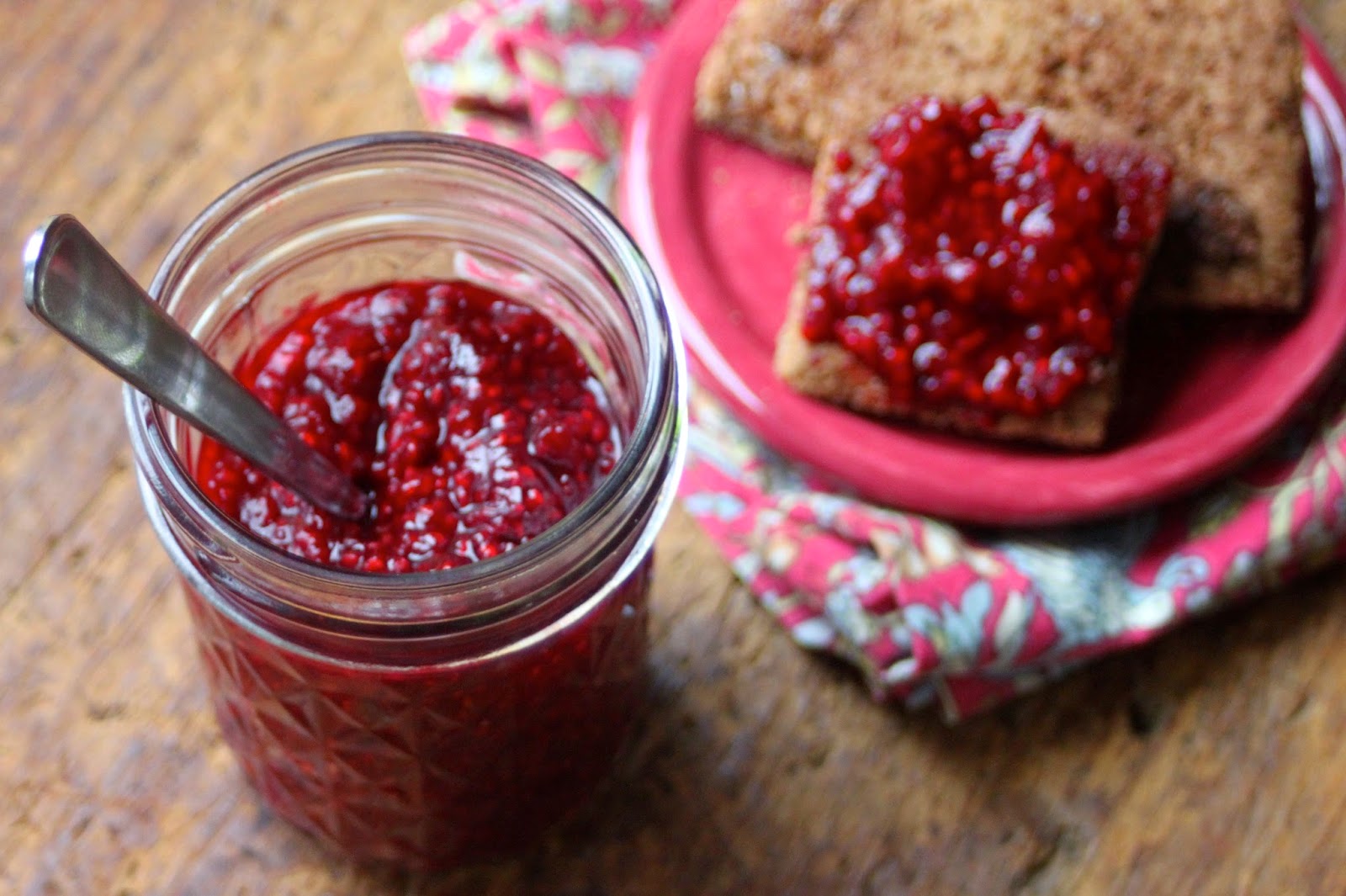
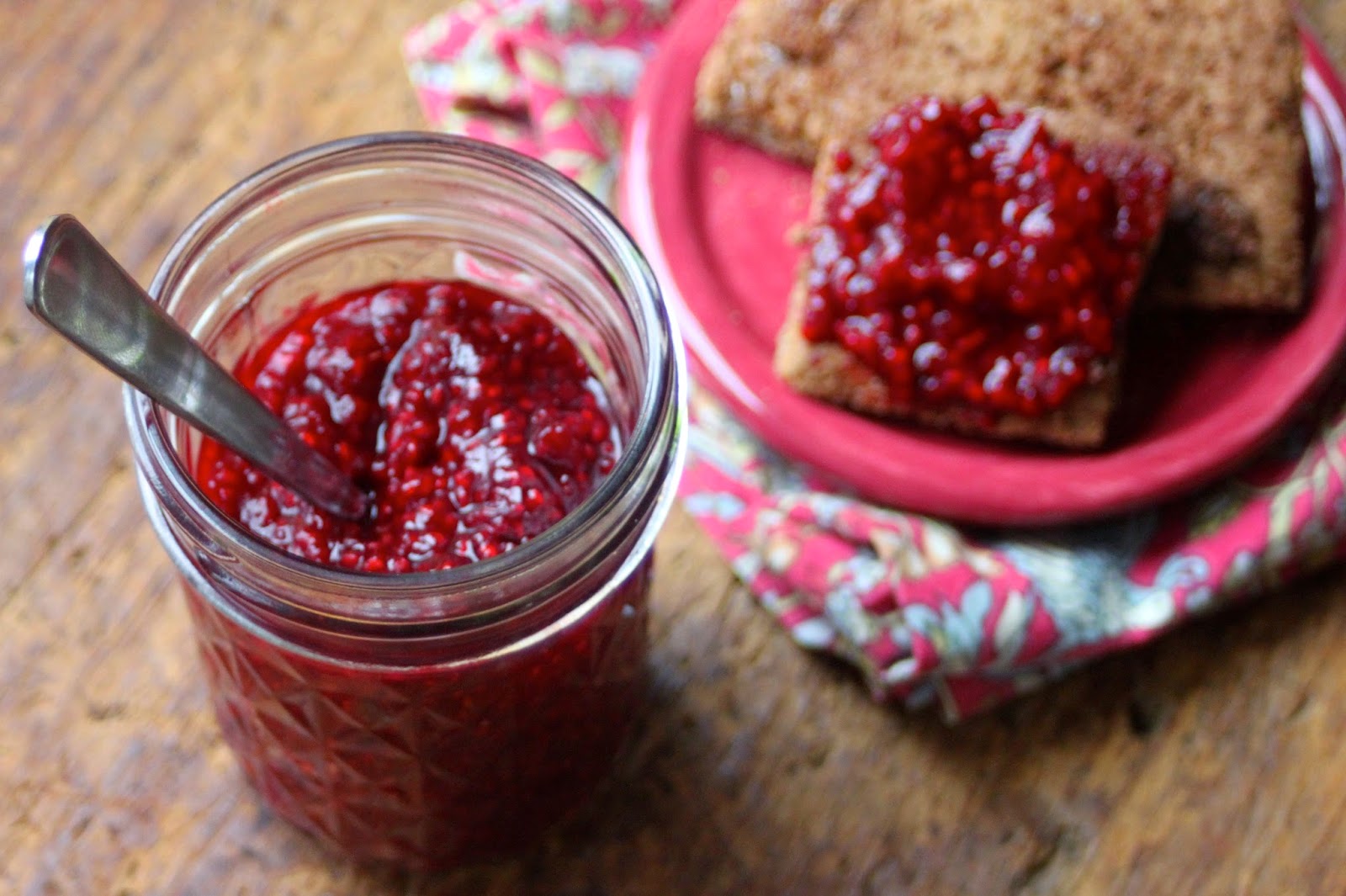
A tangy, homemade jam, perfect slathered over my cinnamon graham crackers, stirred together with a favorite nut or coconut butter, or baked into my Raspberry Linzer Torte.  It is also a great Christmas gift that you can put in a cute mason jar wrapped with a bow. All in all, nothing beats jam made in under 10 minutes, with less than 5 ingredients.  Therefore, whether for a gift, or simply your own eating pleasure, my homemade raspberry jam is sure a winner.  
 
Raspberry Jam
Print Recipe
Ingredients
  • 2, 10 oz bags frozen raspberries
  • 2 small clementines – juiced
  • 1/2 cup maple syrup
  • 1/8 tsp sea salt

Process

  • Stir all ingredients together in a small sauce pan.
  • Heat mixture over medium-high heat until it begins boiling.
  • Allow to boil on medium-high heat for 5-7 minutes, stirring continually to make sure nothing burns to the bottom of the pan.
  • Next, turn heat to medium-low, and allow the mixture to simmer for another 2 minutes, stirring continually.
  • Once the mixture has reduced from boiling to “bubbling,” remove from heat and transfer jam into a glass bowl or jar for further cooling.
  • Use in my linzer torte recipe (here), spread over cinnamon graham crackers (here), or anything else you enjoy! 


John 14:26 “But the Advocate, the Holy Spirit, whom the Father will send in my name, will teach you all things and will remind you of everything I have said to you.“

Filed Under: AIP, autoimmune friendly, autoimmune paleo, Condiments and Sauces Tagged With: fruit, homemade, jam, jelly, maple syrup, Paleo, primal, raspberry, vegan

Your Paleo Guide to Fish

December 13, 2014


Out of all of the whole food sources out there, fish tends to always get a bad rap.  Whether due to mercury scares, pregnancy warnings, or simply because of the “fishy” smell, most American’s choose to eat no fish over the little amount the USDA deems as “safe.”  However, going to this extreme is not only harming the health of today’s nation, but also the ones to come.  Therefore,  I have decided to discuss and debunk the dogma that surrounds these aquatic creatures, which types that are truly worth avoiding, while which fish to emphasize, and how much.  

 
Old McDonald Had a Fish Farm? 

While finding a pasture-raised, sustainable source for meat is important, the term “farm” when paired with fish, is not exactly the greatest option. Due to the lax regulations on production methods, most fish farms are similar to conventionally raised meat in that the quarters are unsanitary and packed “to the gills.”   Because of these inhumane conditions that they are raised in,  farmers pump fish full of antibiotics, which then negatively effects the nutritional content, and also us consumers as well.  Toxaphene, dieldrin, dioxin and many others pesticides, are all dangerous components that farmed fish are also frequently exposed to.  Unlike wild caught fish, farmed varieties have seven times the amount of PCBS (polychlorinated biphenyls), as well as 30 times the amount of sea lice and previously mentioned dioxins.  Interestingly enough, though big industry farms dominate in the fields of meat, dairy, and poultry, fish farming surpasses all of these.  To keep up with the mass amount of fish being raised, “fish food” consists of chicken feces, GMO corn, canola oil, and soy products (gross?).  Though there are some fish farms committed to feeding their fish a more natural diet of actual fish, fish meal, and fish oil, the practice of raising fish outside of its wild, natural habitat ultimately depletes the ocean’s natural stock.  All together, fish farms typically have a large amount of interbreeding, leaked chemicals, and disease contamination, all of which cause a lower omega-3 content, and subsequently a higher omega-6 count in the fish’s nutrition.  Asian imports from Korean, Vietnam, and other surrounding countries, are all varieties you will want to steer completely clear of in any grocery store. Regardless of if they are wild caught or not, these species of fish are almost always guaranteed to have come from polluted waters where the fish are exposed to many harmful toxins that then get passed on to us humans.  Farmed fish in Asian countries have even less regulations than here in the states, allowing for owners to feed their fish extremely high amounts of chemicals.  Of course, the most obvious reason to not buy fish from half way across the world can be summarized in one word very important to food in general; freshness.  It is no secret that fruit, veggies, and meat lose their natural flavors when frozen, and the same can be said for fish.  Not only that, but previously frozen fish is extremely more “fishy” smelling when being thawed, unlike local, never frozen and (or)
wild varieties, which tend to have no odor at all.  Though US fish farming may not be as bad as those in foreign countries, they still “follow the same food safety guidelines as land farmers,” which is not very promising, after one knows the truth behind the majority of meat products on the market.   Much like the food industry wants us to believe, most people think that purchasing “Atlantic salmon” means that the fish was caught and (or) raised in the Atlantic ocean.  However, despite the deceiving name, this variety of fish (that takes up 90% of the salmon supply) truly refers back to a specific species of farmed raised fish (not an actual location). In contrast, the term “Pacific” salmon actually refers to a whole group of differing Oncorhynchus genus fish in the Salmonidae family (including Coho, Pink, Sockeye, Masu, Chinook, and Chum salmon), that are found in areas of the North Pacific Ocean, while “Alaskan” refers to the actual place where the salmon was caught.  


Pregnant & Breastfeeding 
 
The media and medical community tend to overplay how dangerous it is for pregnant and breast feeding women (as well as younger children) to consume seafood, and more specifically, fish. However, not only is this advice harmful to mothers, but it is also extremely hurtful to a developing fetus as well.  As previously mentioned in my FAT Phobia series (part 1, 2, & 3), fish are very high in omega-3 fatty acids, which are essential (i.e. must come from one’s diet) fats for cell development.  Because these fatty acids have such an important role during pregnancy, not consuming enough can lead to fetal brain and retina damage.  This then causes behavioral and visual deficits in one’s child that sadly can not be reversed with supplements once born.  Consuming enough biologically active forms of omega-3 known as DHA (docosahexaenoic acid) and EPA (eicosapentaenoic acid) not only improve fetal development, but they also may aid in reducing postpartum depression in mothers.   Though there are certain fish that contain a low selenium content, and thus should be avoided by most individuals (not just those who are pregnant), the reality of the situation is that most all people have become so fearful of the hype over mercury that they do not consume any fish at all.  This is a serious issue that is literally depriving developing babies from necessary nutrients and thus causing  damaged neurodevelopment outcomes (i.e. language & problem solving issues, ADHD behavior etc).  In contrast, Chris Kresser  points out that women who consumed high amounts of fish during pregnancy had children with higher visual recognition, memory, and verbal intelligence, while other studies show that those lactating also reduced the risk of their children developing food allergies and IgE-related eczema skin conditions.  

Selenium vs. Mercury 
 
Selenium is an essential trace element that defends the body against oxidative damage.  Without it, severe health conditions, such as thyroid disease, can occur.  Other, more “minor” symptoms such as hair loss, poor mood, fatigue, and reproductive issues, can also be linked back to poor selenium content in one’s body.  Ultimately, selenium has a significant antioxidant role, and is important for keeping the integrity of our immune system all the way down to a cellular level.  Therefore, it is important to keep our selenium stores full, and can be done so through the proper, Primal-Paleo aligned diet, that subsequently includes foods rich in this compound.  One of these, which is also full of beneficial omega-3 fatty acids, is fish. Therefore, much like the protection we have from this essential element, fish are able to counteract the harmful effects that mercury may have on it through its natural selenium content.  Between the high levels of this potent antioxidant in most salt water fish, as well as the levels in our own bodies, obtaining mercury toxicity from eating fish is highly unlikely. Above I have included a chart that reviews the amount of selenium in many of the fish you may see in grocery stores near you.   Ultimately, any fish above “0” is safe to eat, while the ones highest on the spectrum are undoubtedly the best to emphasize in one’s diet (>1000).  Outside of the selenium:mercury ratio in fish, Mark Sisson adds another great way to determine what fish to purchase and emphasize in one’s diet.  Below, I have included a spectrum chart based off of the information that I learned taking the Primal Blueprint Certification course. 


Summary
 
Overall, consuming fish in one’s diet is incredibly important to not only boost one’s health, but to maintain it.  Omega-3 fatty acids, complete protein, B-complex vitamins, vitamin D and E, selenium, phosphorus, magnesium, zinc, iron, and many other nutrients and antioxidants, are all found abundantly in fish.  That being said, to get the most out of your purchase, it is important to emphasize wild varieties, due to farmed fish being lower in nutrients and higher in potential toxins and chemicals.  Because purchasing fresh, wild caught fish can be somewhat expensive when trying to feed an entire family, stocking up on canned versions is not only easy, but also affordable.  In the end, oily, cold water fish are the most nutrient dense (i.e. wild salmon, sardines, herring, mackerel, and anchovies), and are subsequently some of the least difficult varieties to get your hands on.  Farmed fish, especially Asian imports, should be avoided at all costs.  That being said, if one’s budget only allows for farmed fish, strive to find domestic, USA raised catfish, barramundi, crayfish, and coho salmon (freshwater, tank farmed).  Consuming these in moderation is certainly better than no fish intake, yet it is important to remember that the cheapest, most nutritious types of fish can almost always be found in canned form.  To get the most out of these products, aim for those packaged in spring water.  This allows you to avoid processed, oxidized oils, as well as the potential for any oil (damaged or not) to bind with the present nutrients. When shopping for fresh fish, it is important to note that the “fishy” odor should be pretty much nonexistent in freshwater varieties, while saltwater  may have a slight, “saltiness.”  It is also key to realize that eating fish is not in any way harmful to those pregnant, breastfeeding, or younger in age, such as children.  Instead, the nutrients found in these aquatic creatures are essential to optimum development of both individuals born and yet to be brought into this world.  Therefore, though fish may be one of the most underutilized and scrutinized super-foods available, this “fear factor” brought on by media and the medical community, should not hinder you from experiencing its benefits.  With the charts provided above, I hope you will learn and see, that finding nutrient dense, safe sources of food in today’s modern world is actually quite obtainable.  Whether you suffer from cardiovascular, blood pressure, lung problems, and depression, or are simply trying to lower overall inflammation, consuming fish weekly can make a significant difference.  If you are not certain on how to prepare fish, I have included a few of my recipes below, as well as other resources for your reading pleasure. 
 
 
Recipes
 
Grilled Fish & Chips (AIP)
Blueberry Balsamic Glazed Salmon (AIP)
Coriander Fish Kabobs 
Foil Baked Lemon Parsley Cod (AIP)
Creamy Fish Chowder (AIP)
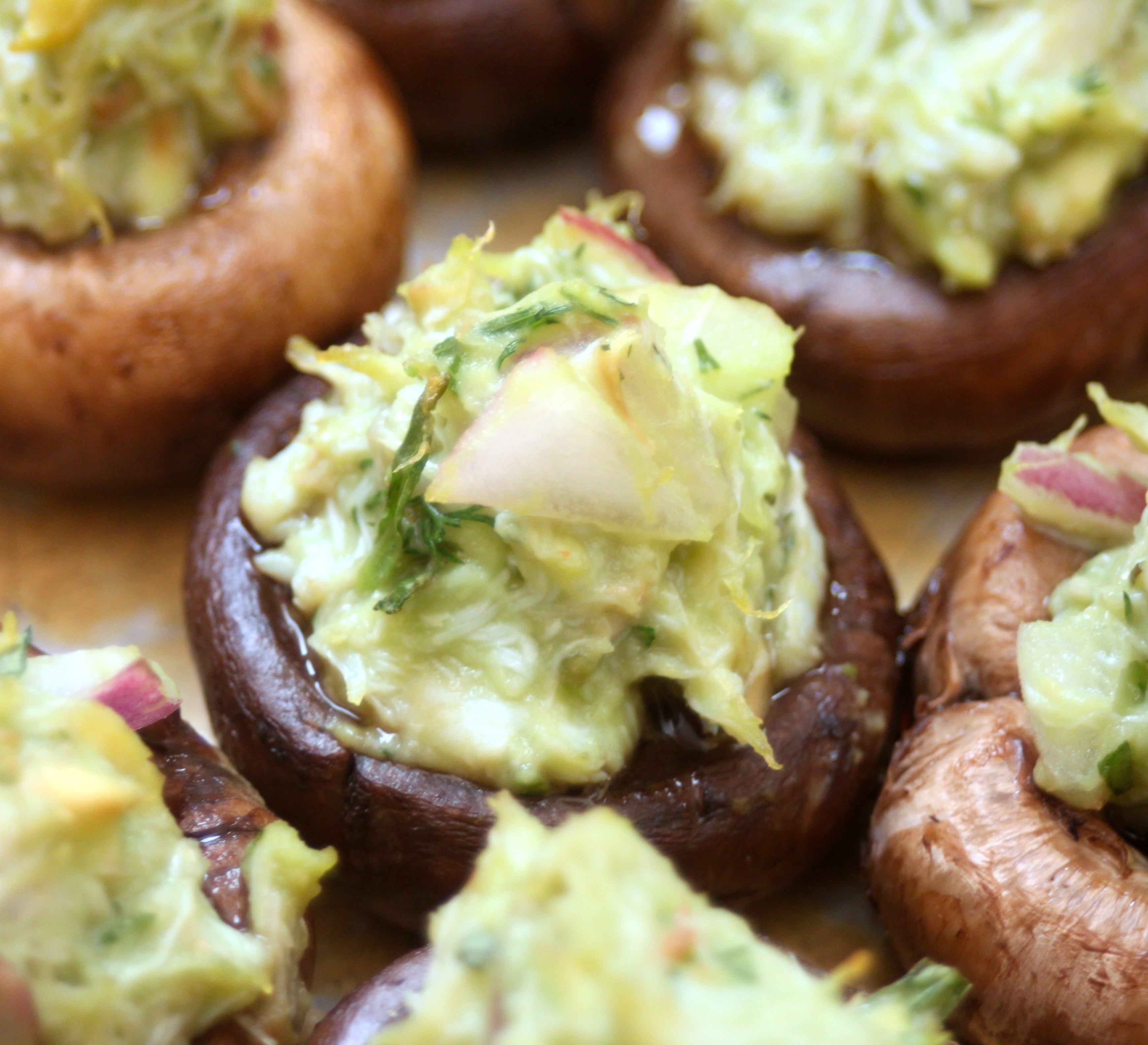
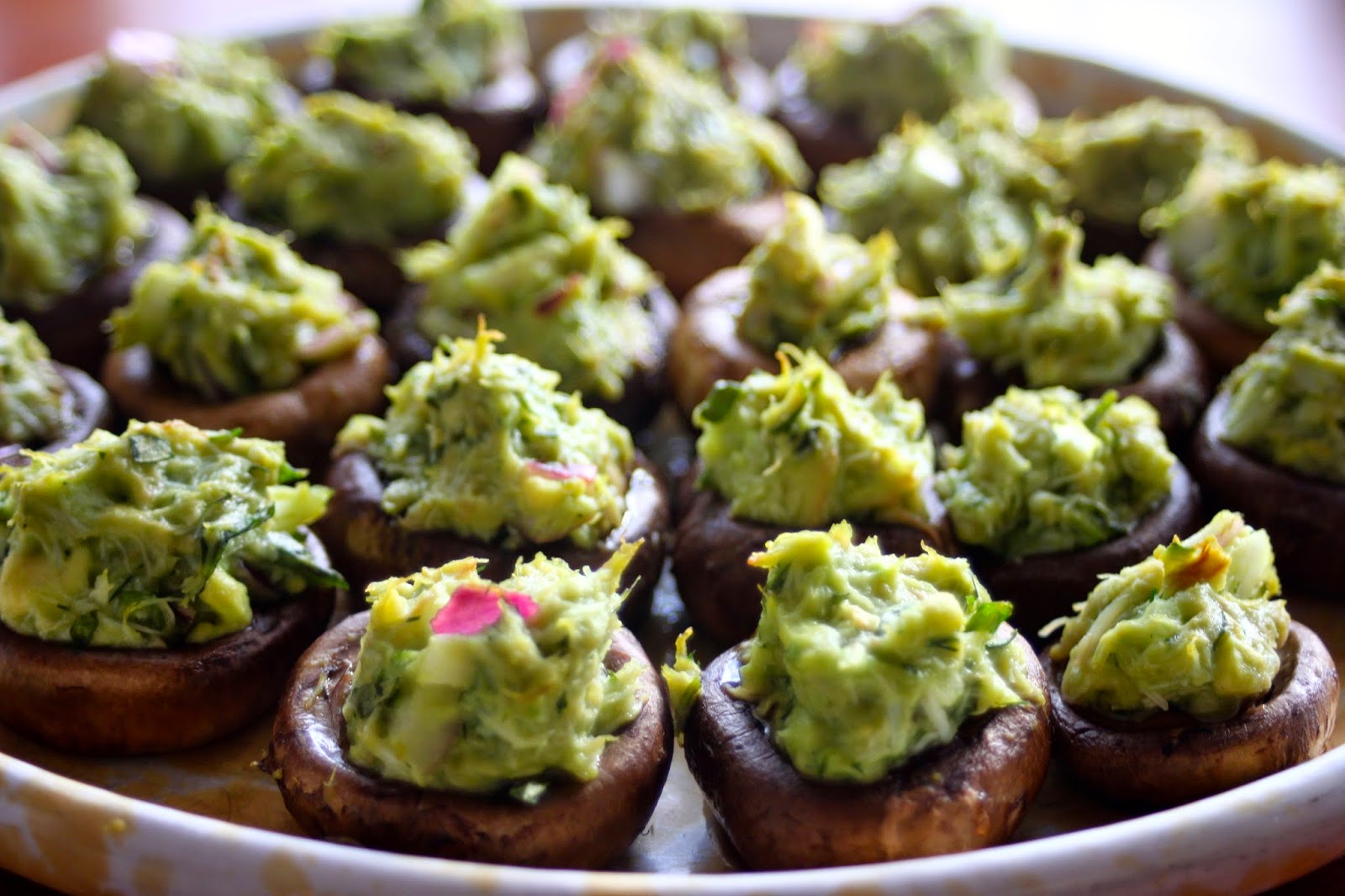
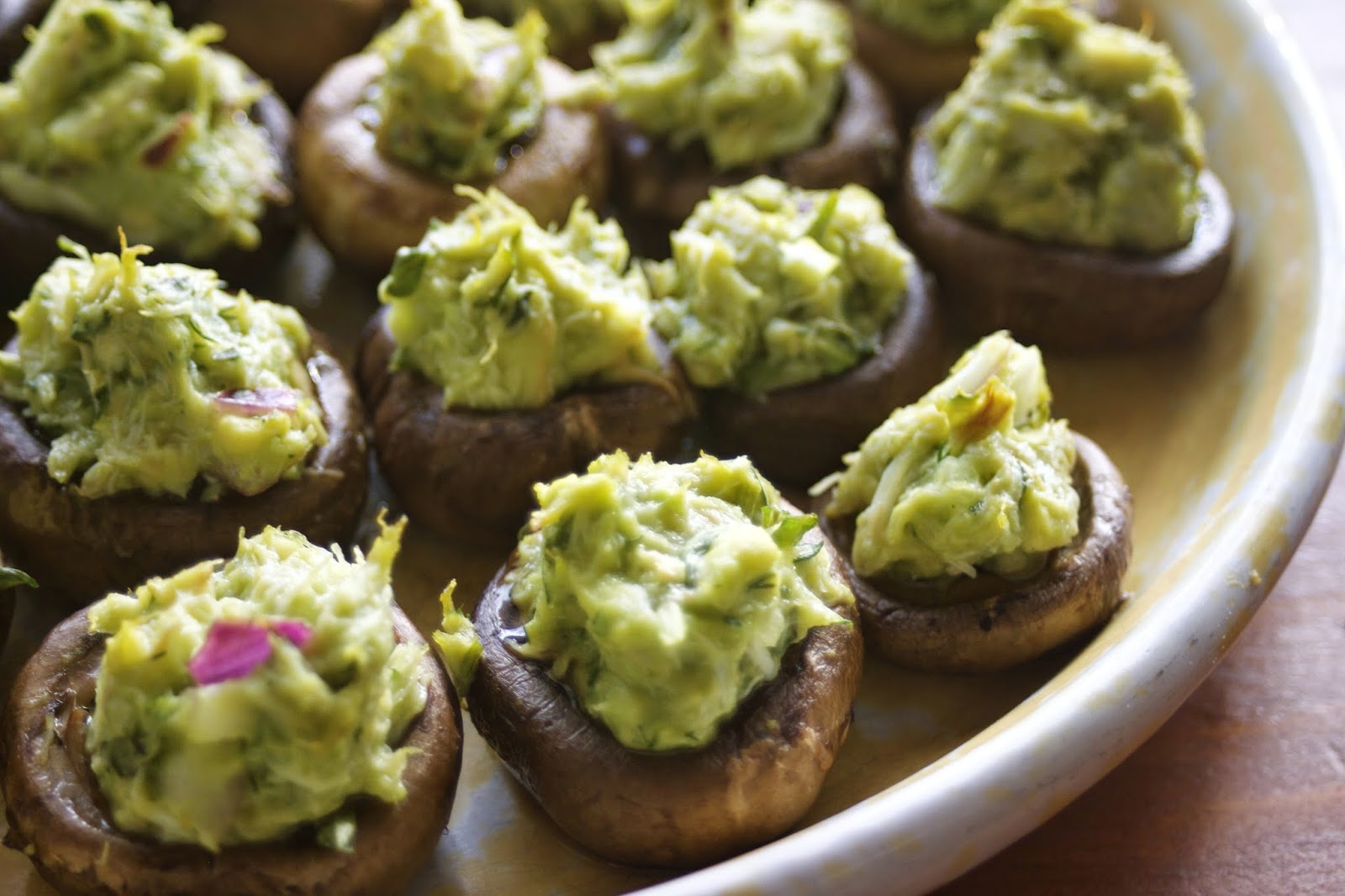
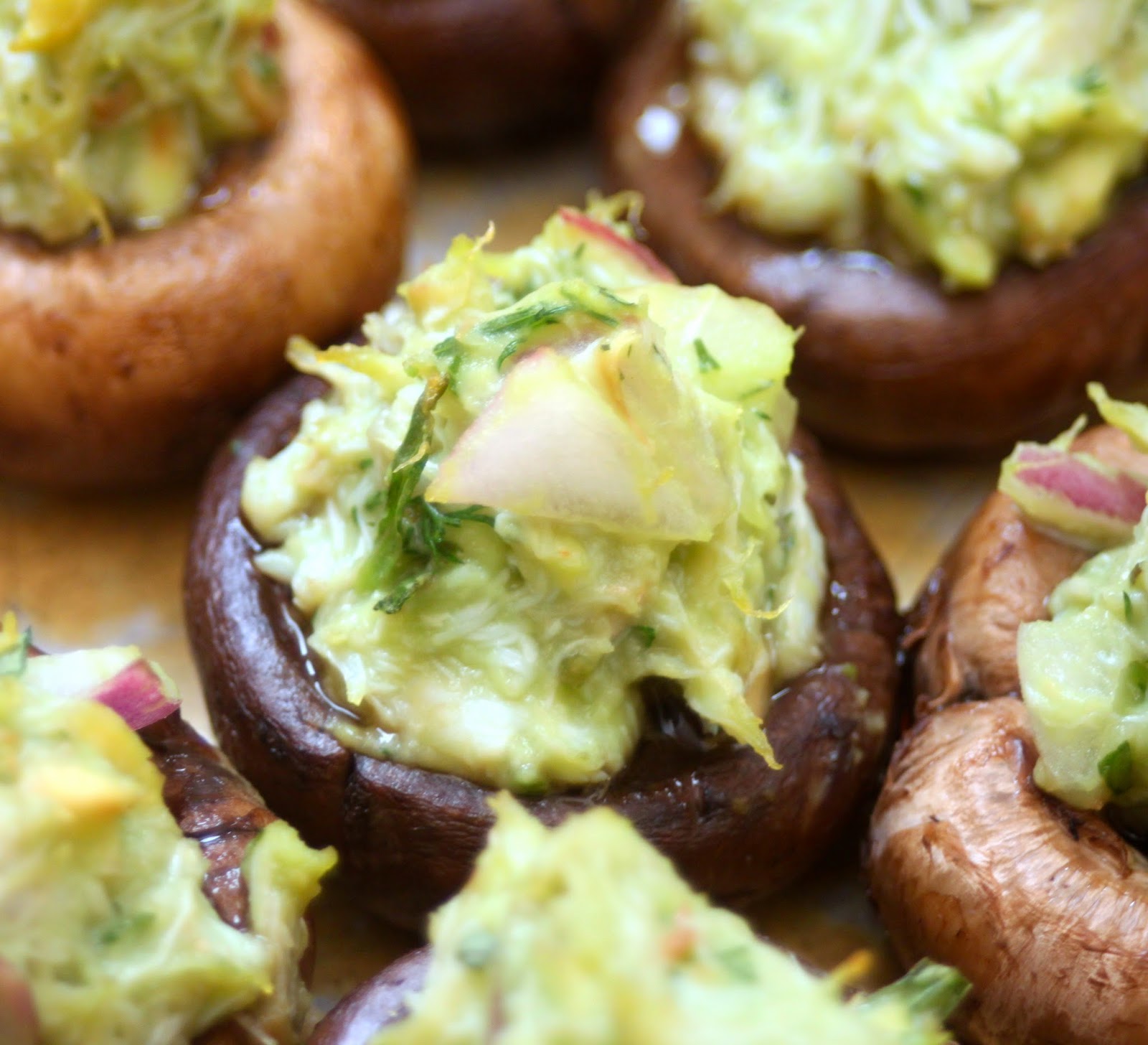
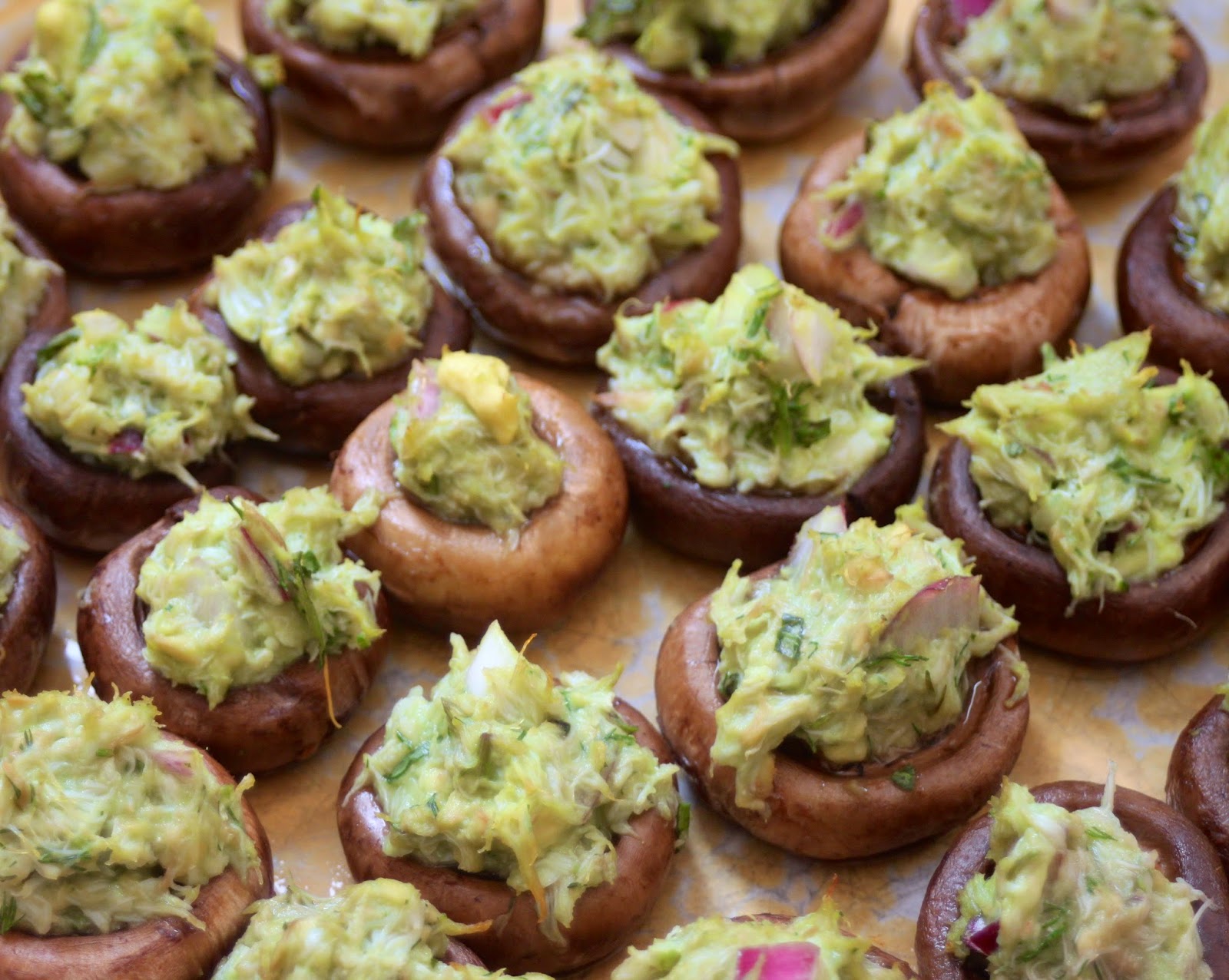
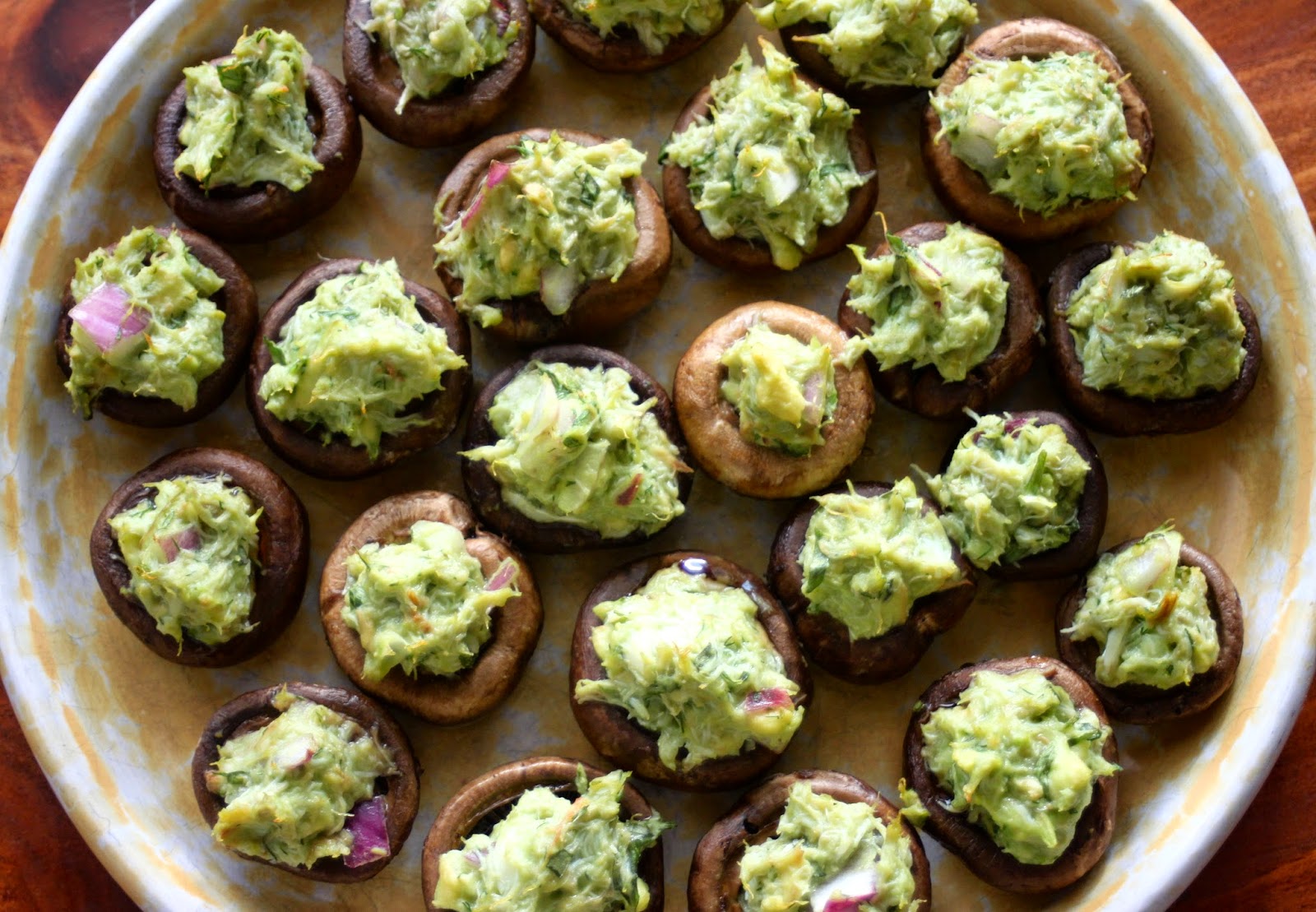
Stuffed Mushrooms  (AIP)
 
Further Resources 
 
Fish Oil 
Omega-3 & Pregnancy 
Eating Fish is Much Safer Than None
Selenium & Hypothyroid
Encore on Omega 3s 


Galatians 4:4-5 “But when the set time had fully come, God sent his Son, born of a woman, born under the law, to redeem those under the law, that we might receive adoption to sonship.”

Filed Under: Food and The Human Body, Uncategorized Tagged With: Chris Kresser, farmed fish, Galatians 4:4-5, Health info, mark sisson, mercury, omega 3, Paleo, primal, Salmon, sardines, selenium, the paleo mom

Primal Blueprint Testimonial

December 12, 2014


As many of you may know, I had the joy of completing Mark Sisson’s Primal Blueprint Certification course this past fall.  Not only did I enjoy every iota of the information and time I spent learning, but I walked away with a profound passion to encourage others to take the course as well.  Therefore, when the folks from Primal Blueprint contacted me with the opportunity to write a testimonial for Mark’s Daily Apple, I could not pass it up! If you wish to take the course yourself, the affiliate links in my “resources” tab, as well as my side bar, will all bring you to the certification page.  Because I am now affiliated with the Primal Blueprint brand, I will receive a commission for any purchases made through the links on my blog.   It is important to point out that this is in no way a “sales pitch,” but rather my way of showing how much I enjoyed and stand behind the Primal Blueprint brand.  Therefore, the choice to purchase anything via my blog is completely up to you.  Of course, I do greatly appreciate anyone who furthers their support in this way, and am even more excited to hear of your own personal outcome.  If you are interested, you can read my testimony about the Primal Blueprint Certification course by clicking here, as well as my past blog post that covers the course in more detail by clicking here. As mentioned in the article, taking the certification was not only enlightening, but also very encouraging in my battle with chronic Lyme disease.  Therefore, I know it is a course beneficial to anyone, regardless of their walk of life.  Grok on!


Jeremiah 17:7-8 ““But blessed is the one who trusts in the Lord, whose confidence is in him.  They will be like a tree planted by the water that sends out its roots by the stream.  It does not fear when heat comes; its leaves are always green. It has no worries in a year of drought and never fails to bear fruit.”

Filed Under: chronic lyme disease Tagged With: certified expert, mark daily apple, mark sisson, Paleo, primal, primal blueprint certification

Autoimmune Protocol Paleo Sweet Potato Flour Frosted Cinnamon Buns

December 11, 2014

IMG_3189_2

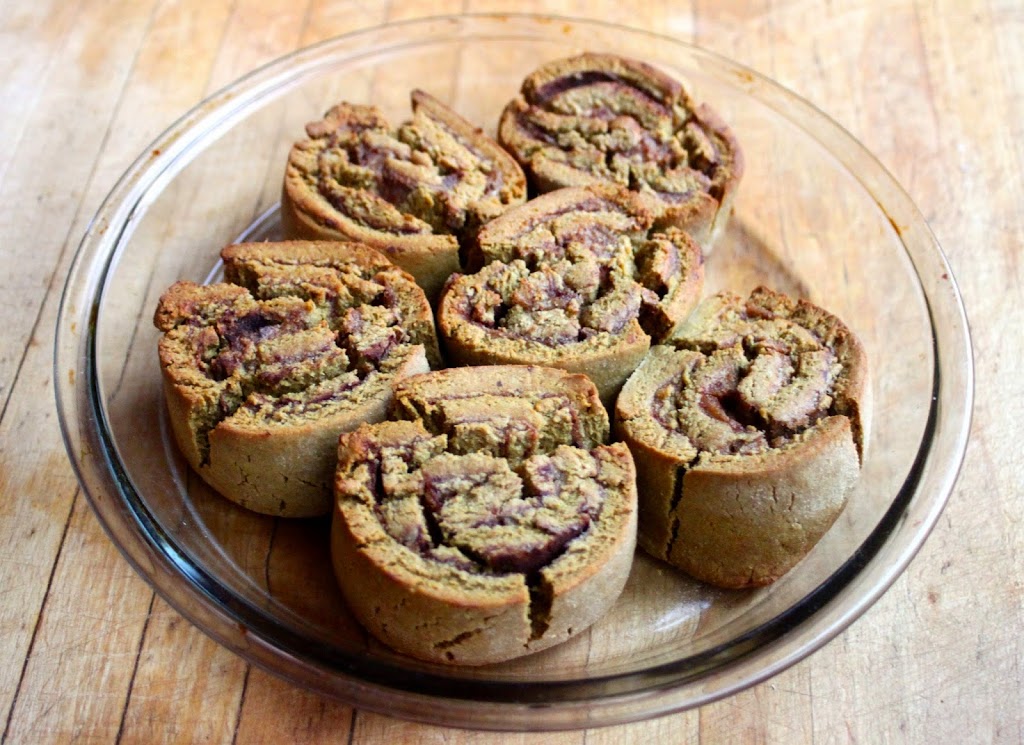
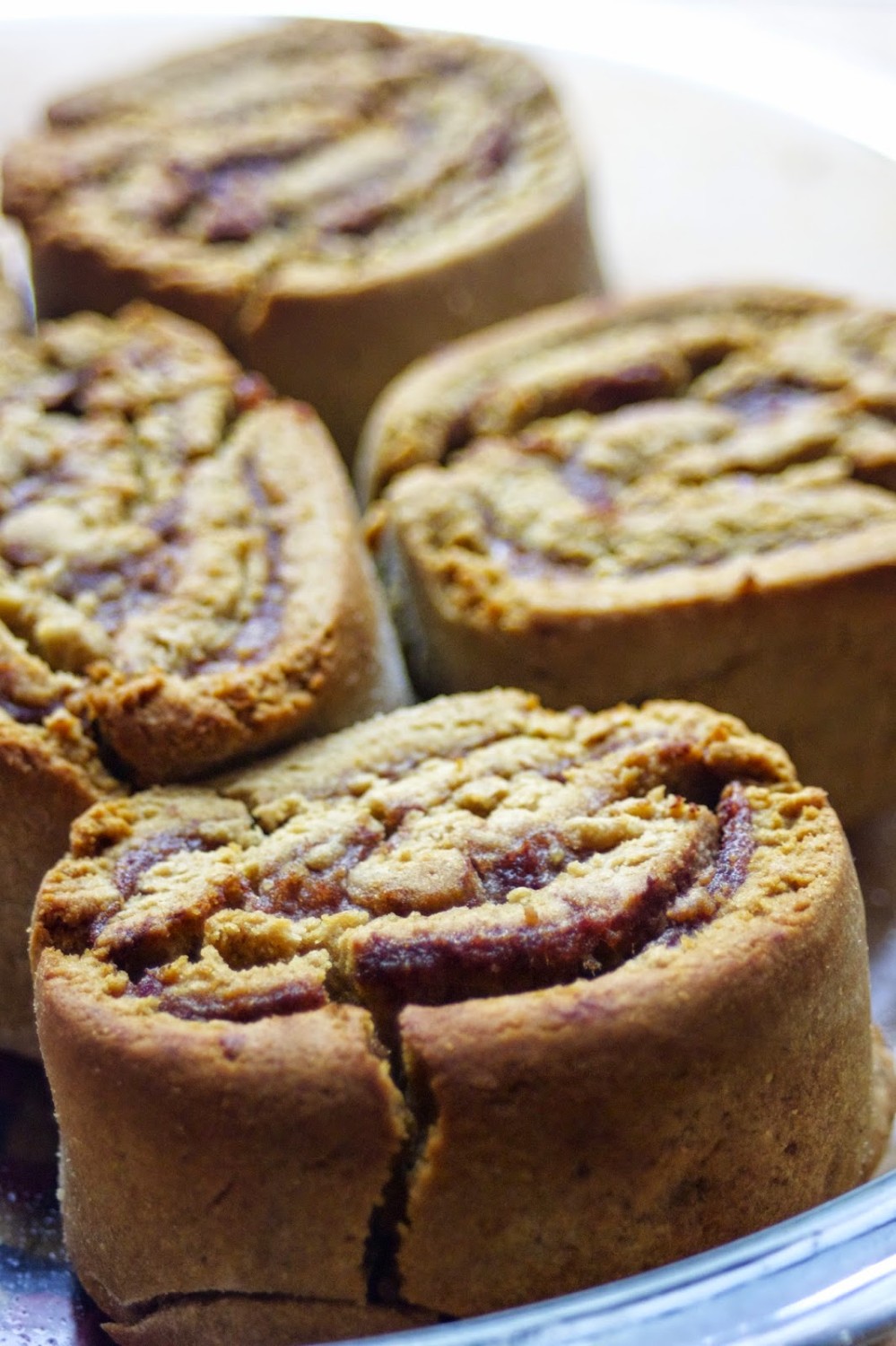
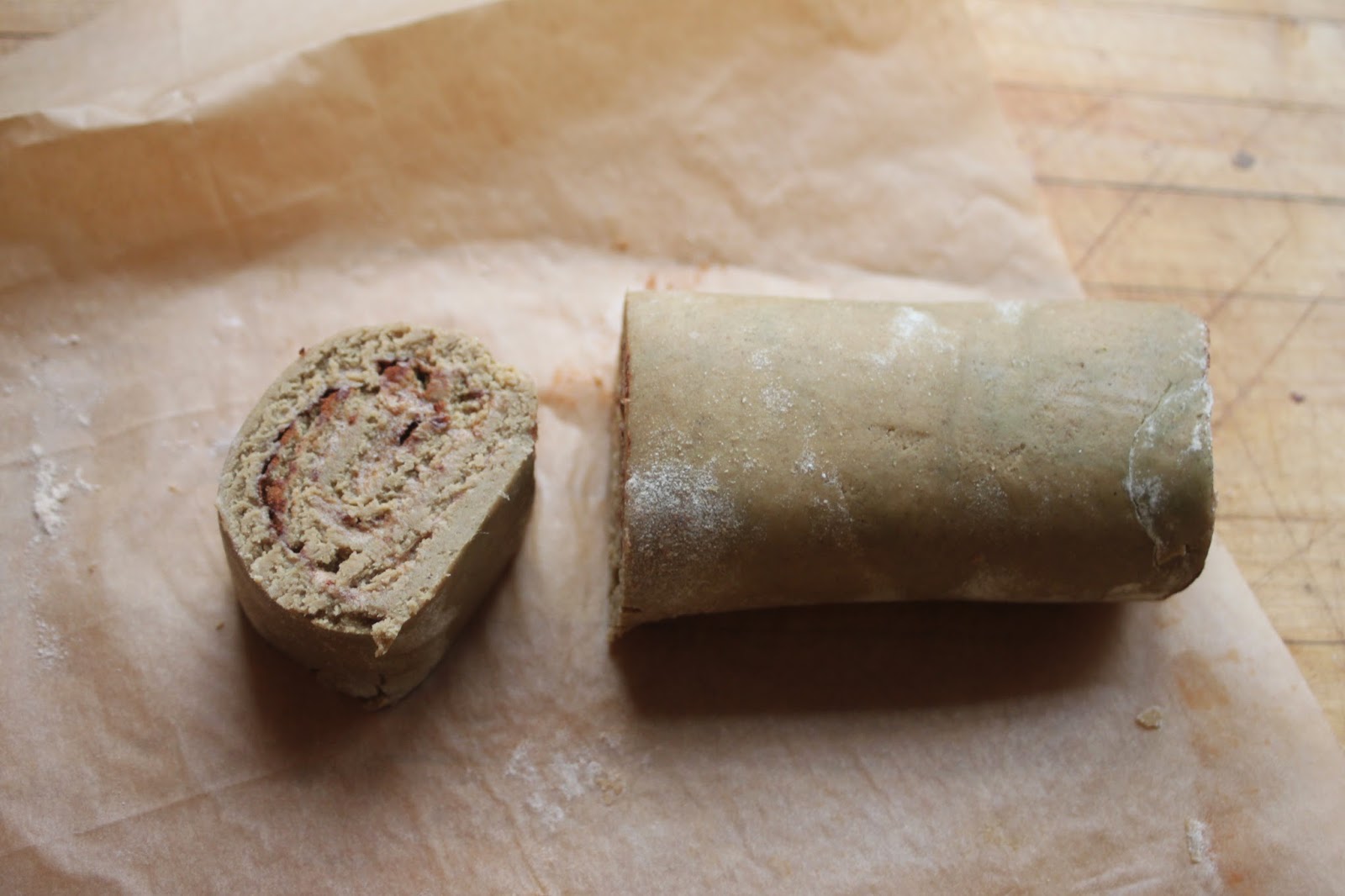
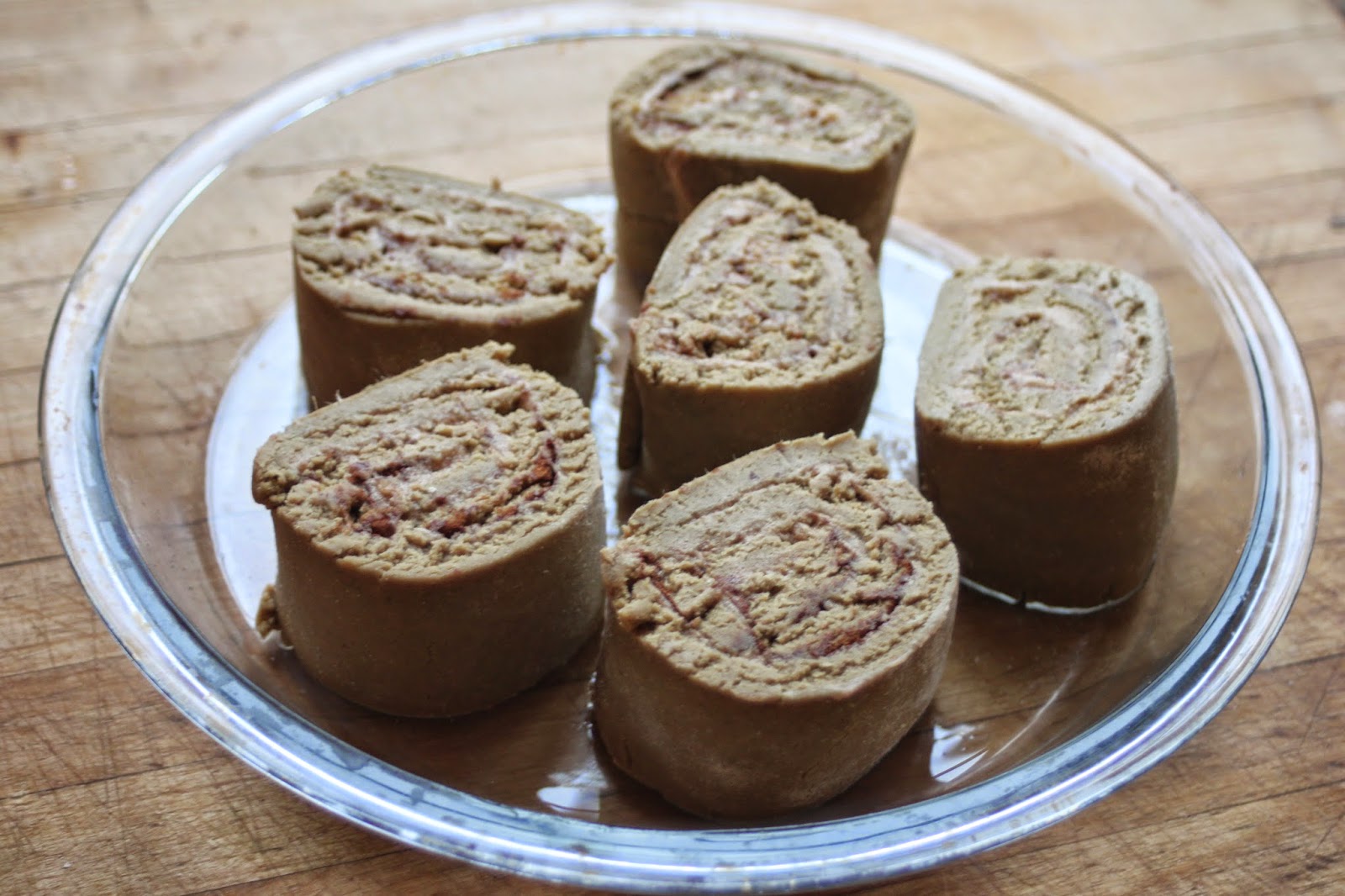
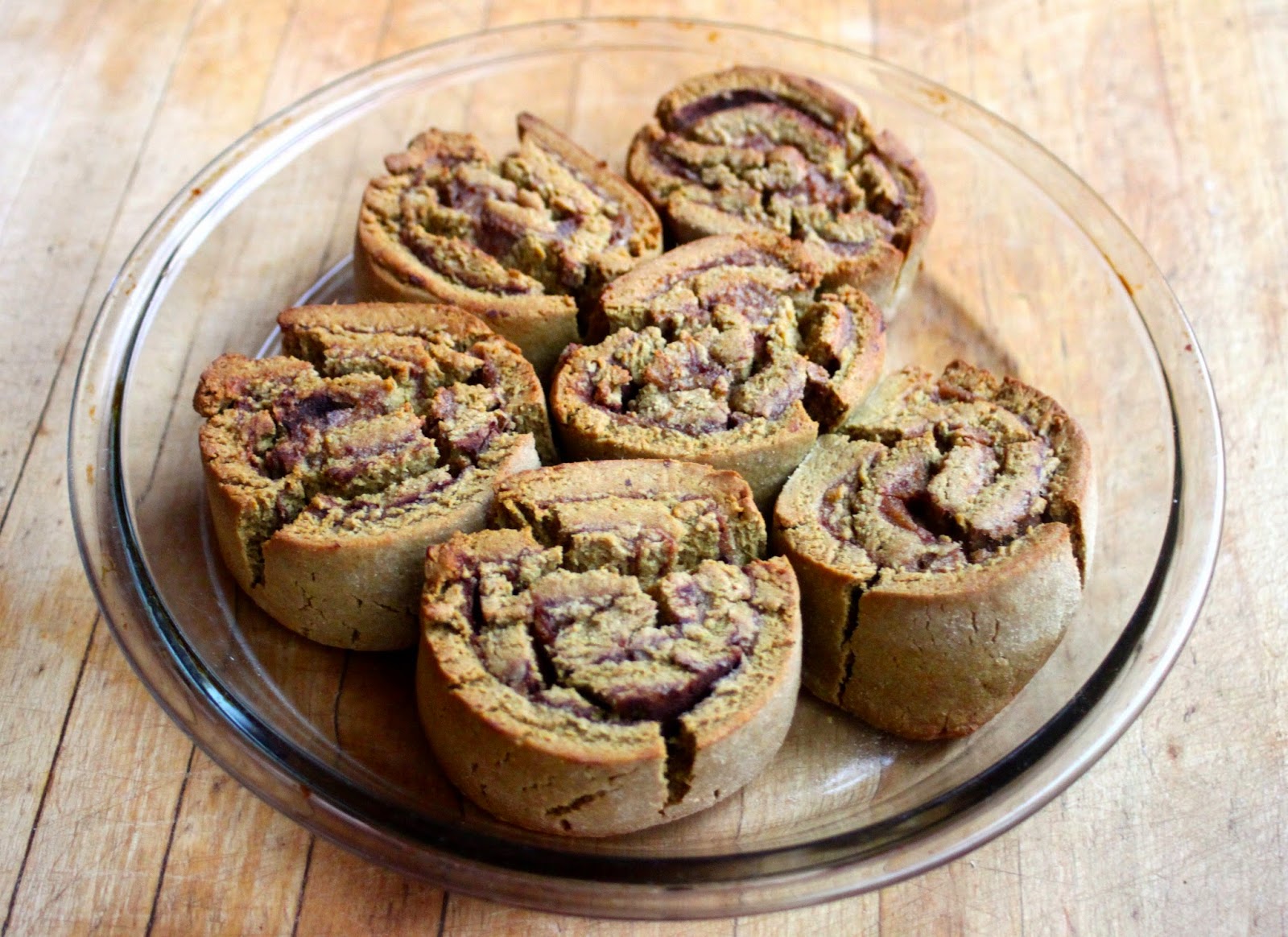
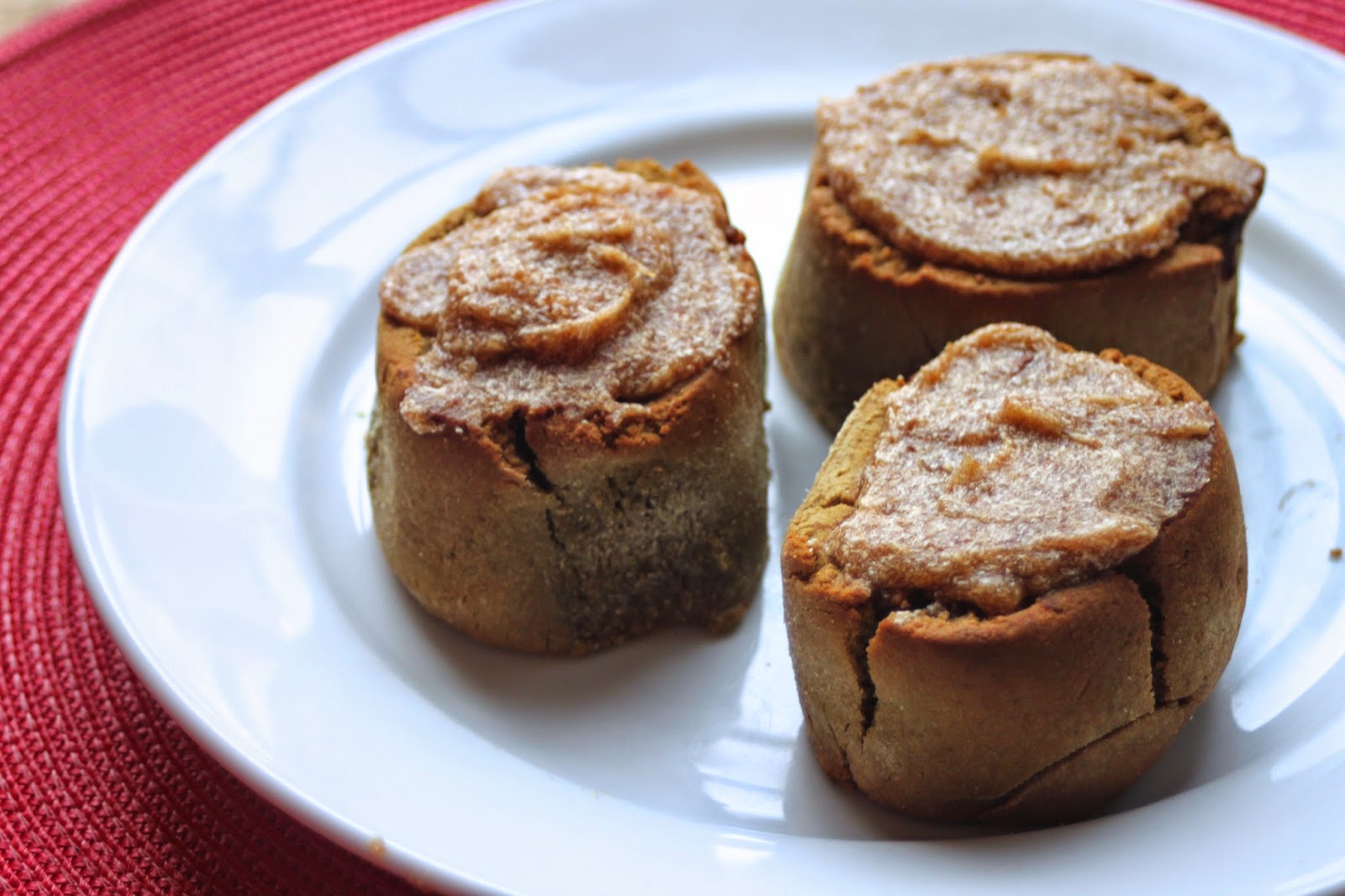
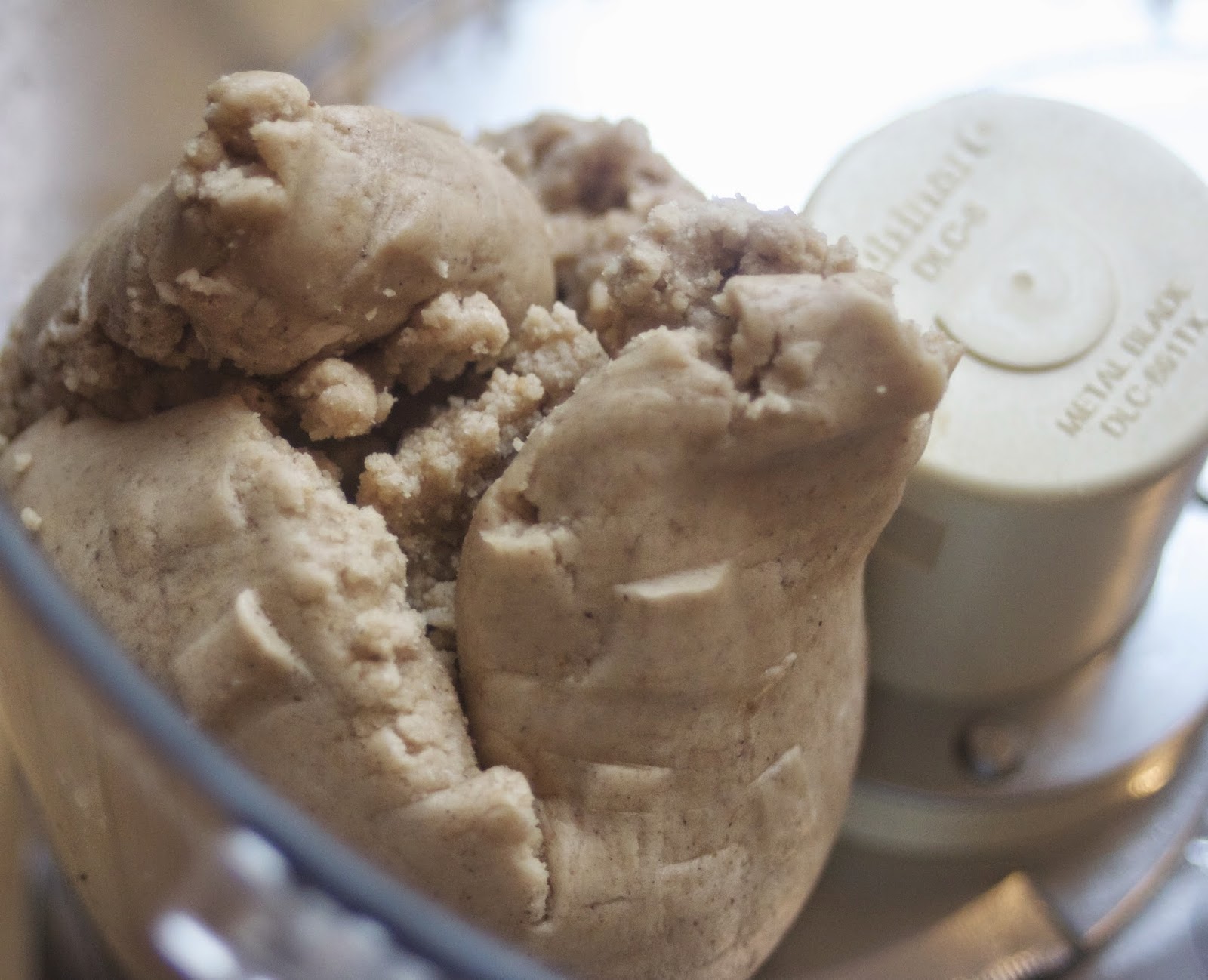
Many of the recipes that I create, especially around Thanksgiving and Christmas, are ones that remind me of my childhood.  It is not to say that I do not have good, recent memories, however, the years leading up to my 11-12th birthday are definitely some of the most fond times of my life.  Anything after then has been tainted with many painful memories as the effects of my Chronic Lyme Disease set it.  Though I would never go back and change the fact that I am ill, thinking back on some of the past experiences can still be hard, as the trauma of certain events is undoubtably real and unforgettable.  Yet one happy memory that I will always remember are the amazing cinnamon rolls my mom used to bake off the morning of Christmas while we took turns reading the birth of Jesus from the bible and opening presents.  These past times are simply like a fairytale to me, which is why I wanted to create a recipe that would allow others, who hold the same tradition of baking sweet rolls on Christmas morning, to not miss out on this special treat.Personally, I find these cinnamon rolls to die for, as you can probably tell with all of the photos I simply had to include.  After having such success with my pie crust in my pear galette and spiced pumpkin pie recipe, I knew I had to adapt it into a cinnamon roll.  Therefore, with Christmas quickly approaching, and cinnamon rolls being a treat my mother always prepared on Christmas morning, I decided to dive head first into creating them.  Not only did the dough roll out easily, but the rolls both uffed up and held together like any regular, yeast risen cinnamon roll.  After allowing the rolls to cool for 10 minutes and snapping a few pictures, I made the first cut with the corner of my fork.  The result? An utterly delicious, flakey, fluffy, perfectly sweetened and spiced roll that married perfectly with the naturally-sweetened frosting slathered on top of it.  Though my family did not eat them until the next morning for breakfast, they were still equally tasty heated up a day later.  Overall, these cinnamon rolls are the perfect treat for anyone’s Christmas morning, as they fill both the house and spirits of all individuals with Christmas cheer!  As a quick side note, the cinnamon rolls are best within the few hours after they come out of the oven.  Once they fully cool, the gooey filling and soft dough both become a bit more firm due to the natural consistency of the ingredients used.  Therefore, if you are looking to eat any leftovers, simply frost the cinnamon rolls and place them in a warmed oven for 10-20 minutes until they are heated completely through.  Please enjoy, and Merry Christmas!


Frosted Cinnamon Buns

Print Recipe

(Makes 6)
Dough Ingredients

  • 3/4 cup sweet potato flour 
  • 3/4 cup arrowroot flour
  • 1 tsp baking soda
  • 1/4 tsp sea salt
  • 1/4 cup maple sugar
  • 3 oz (6 tbsp) green plantain – peel & pureed *Best to simply puree 1 plantain ahead of time
  • 3 tbsp ice cold watered
  • 10 tbsp non hydrogenated palm shortening *I like using half shortening, half lard
  • 1 tsp vanilla extract

Filling Ingredients

  • 6 (1/2 cup packed cup) Medjool dates – pitted & soaked in 1 cup boiling water overnight *Be sure to save the soaking water
  • 1/4 cup non-hydrogenated palm shortening
  • 1/8th tsp sea salt
  • 1 tsp cinnamon

Frosting Ingredients

  • 6 Medjool dates – pitted & soaked in 1 cup boiling water overnight
  • 2 tbsp date soaking water
  • 1/4 cup non-hydrogenated palm shortening 
  • 1/2 tsp vanilla
 Process
  • Before making anything, puree one peeled plantain until smooth, transferring to a dish for later use.
  • In a food processor fitted with the “S” blade, pulse together sweet potato flour, arrowroot flour, baking soda, sea salt, and maple sugar until fully combined.
  • Add 6 tbsp pureed plantain, vanilla, and 5 tbsp of palm shortening.
  • Turn food processor on, and let run until mixture has just combined and is crumbly.
  • Pulse in remaining 5 tbsp of shortening, 1 tbsp at a time.
  • Once finished adding shortening, slowly pour in 3 tbsp ice water, and pulse until a ball of dough has just formed.
  • Turn food processor off and scoop dough onto a piece of plastic wrap, putting in the fridge to chill for 30 minutes or overnight.
  • While the dough is chilling, make the filling and frosting mixture.
  • For the frosting, puree together 6 dates, 2 tbsp palm shortening, vanilla, and date water until fully combined and smooth.
  • Place frosting in a small bowl and set aside for later use.
  • To make the filling, puree remaining 6 dates, 2 tbsp palm shortening, and sea salt until fully combined and smooth. *It is OK if a few drops of water from the soaked dates gets in the mixture
  • Set filling aside wile you roll out the dough.
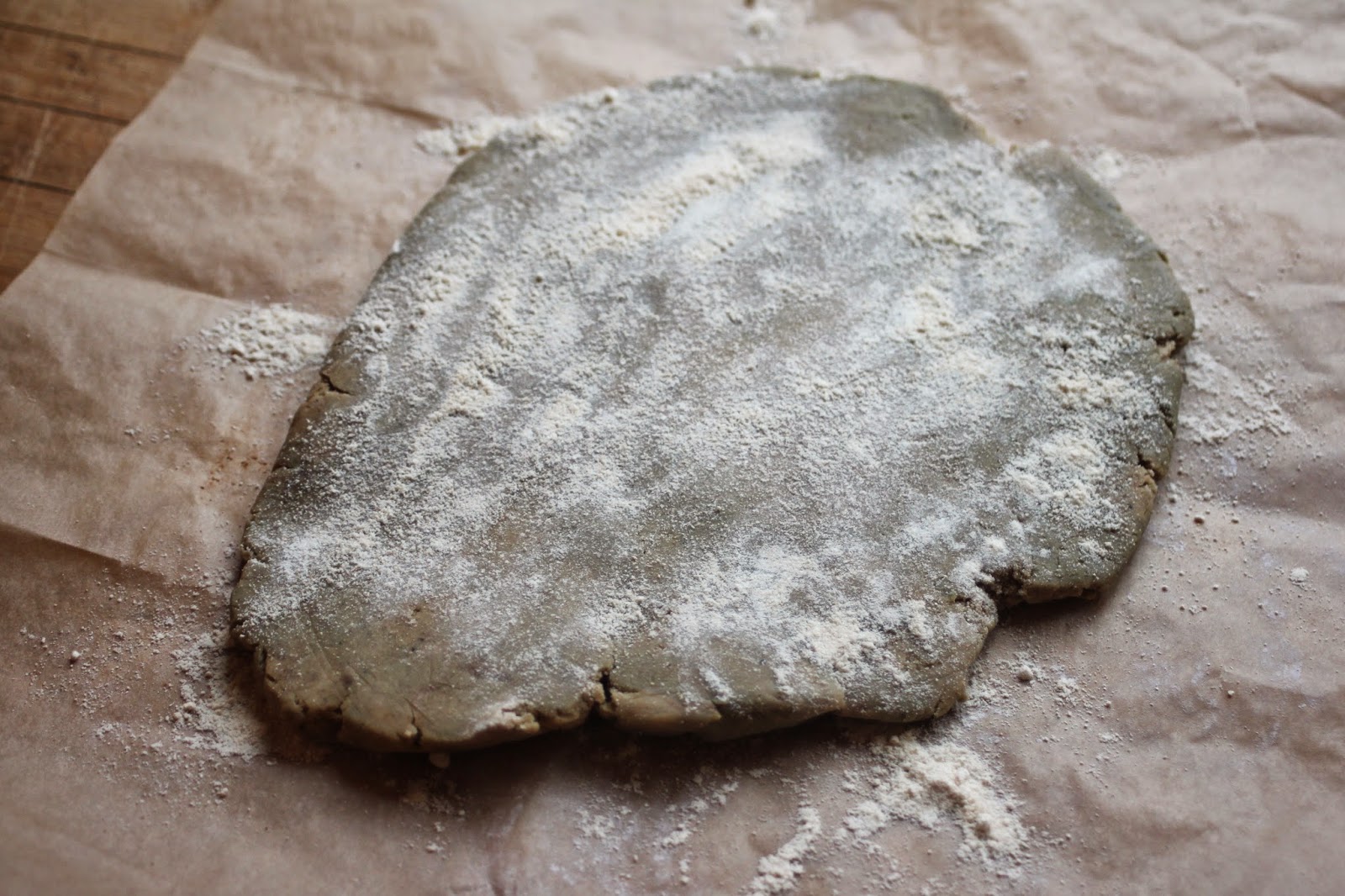
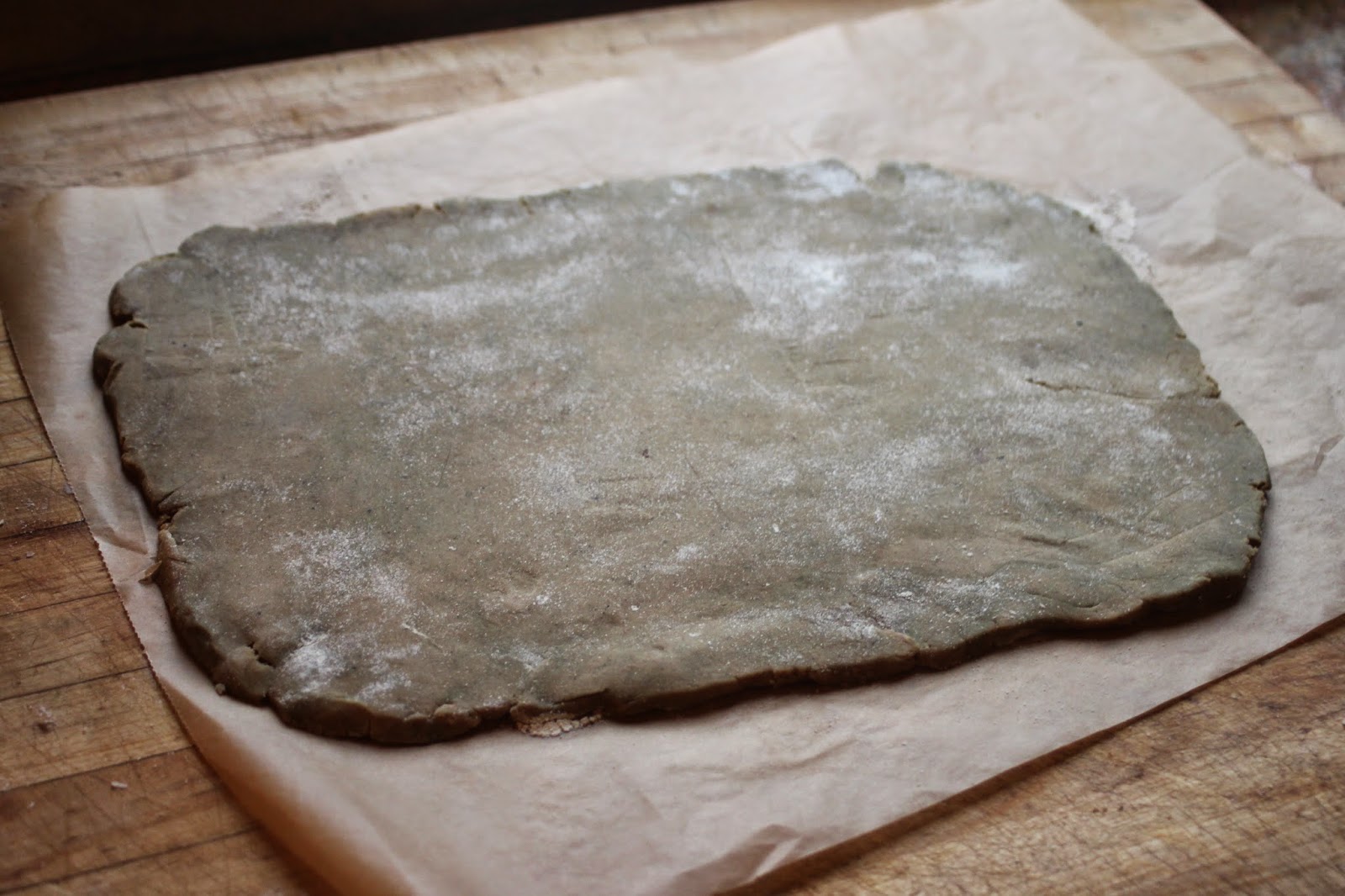
  • Once chilled, place dough onto a piece of parchment paper dusted with flour.
  • Sprinkle more flour on top of the dough and rolling pin to prevent sticking.
  • Roll dough out into a rectangle, about 1/4-1/8 inch thick.
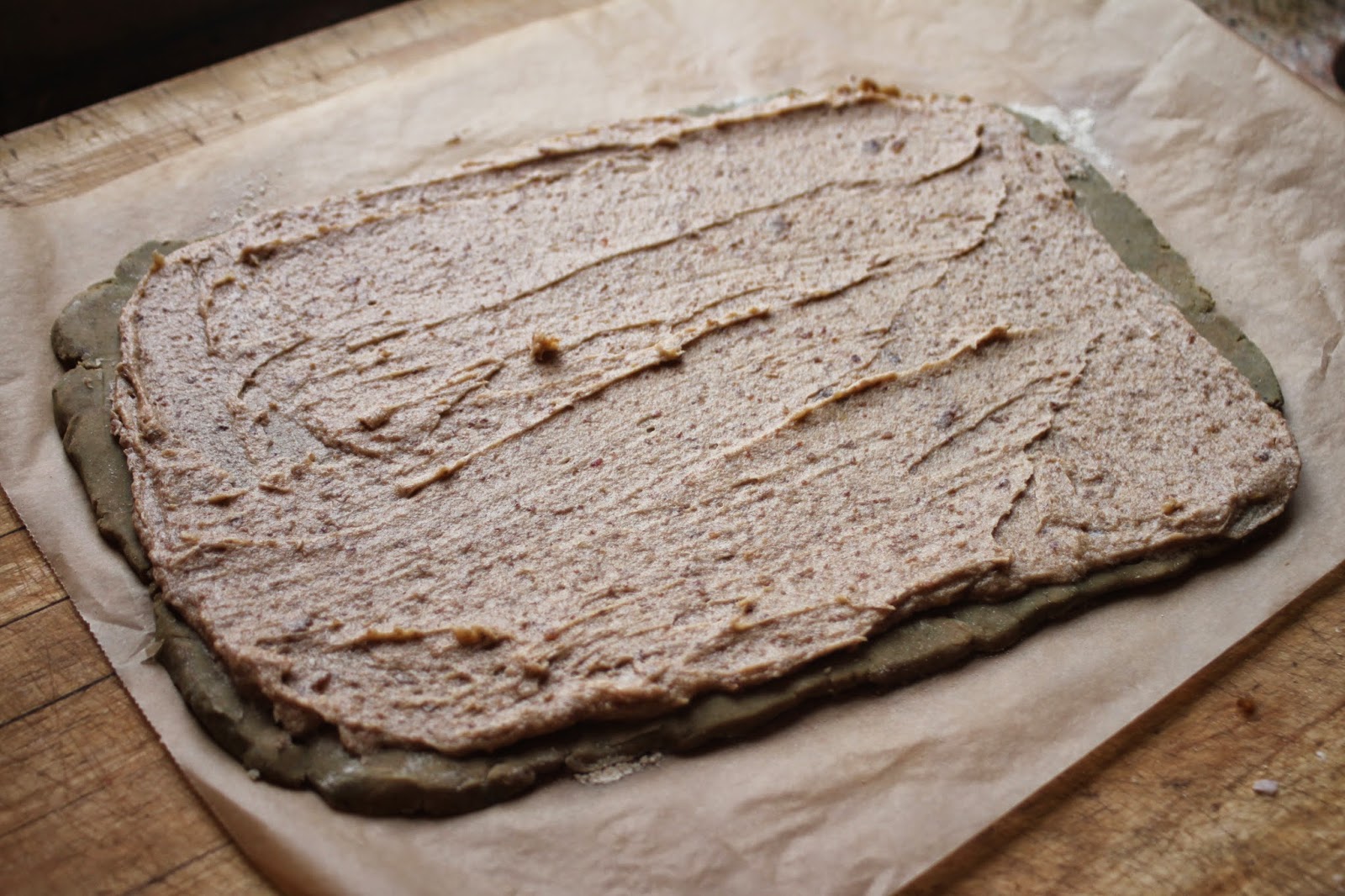
  • Dollop filling mixture into the center.
  • Using the back of your spatula, spread mixture out in an even layer to all four corners of the dough.
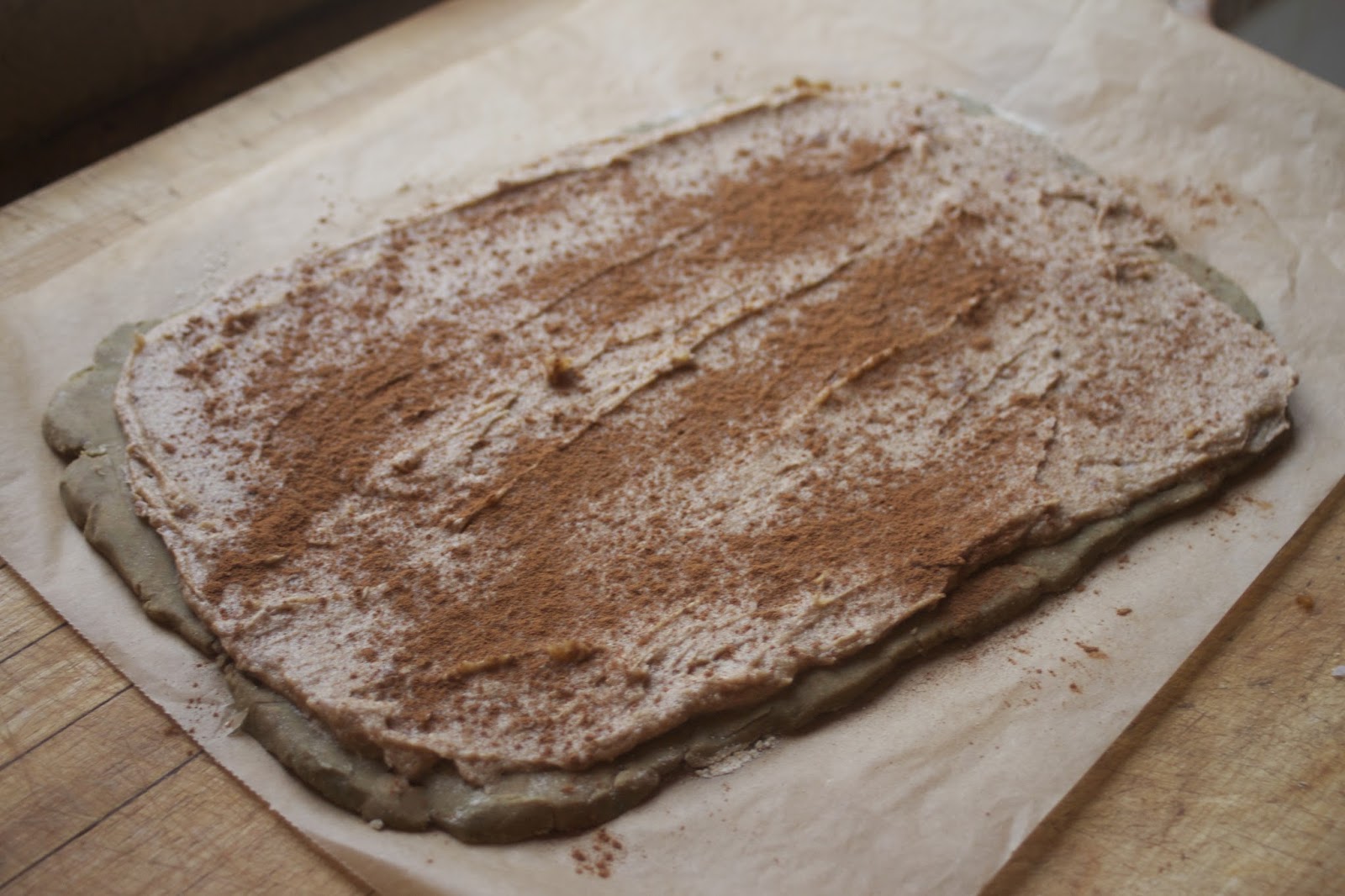
  • Sprinkle filling with 1 tsp cinnamon.
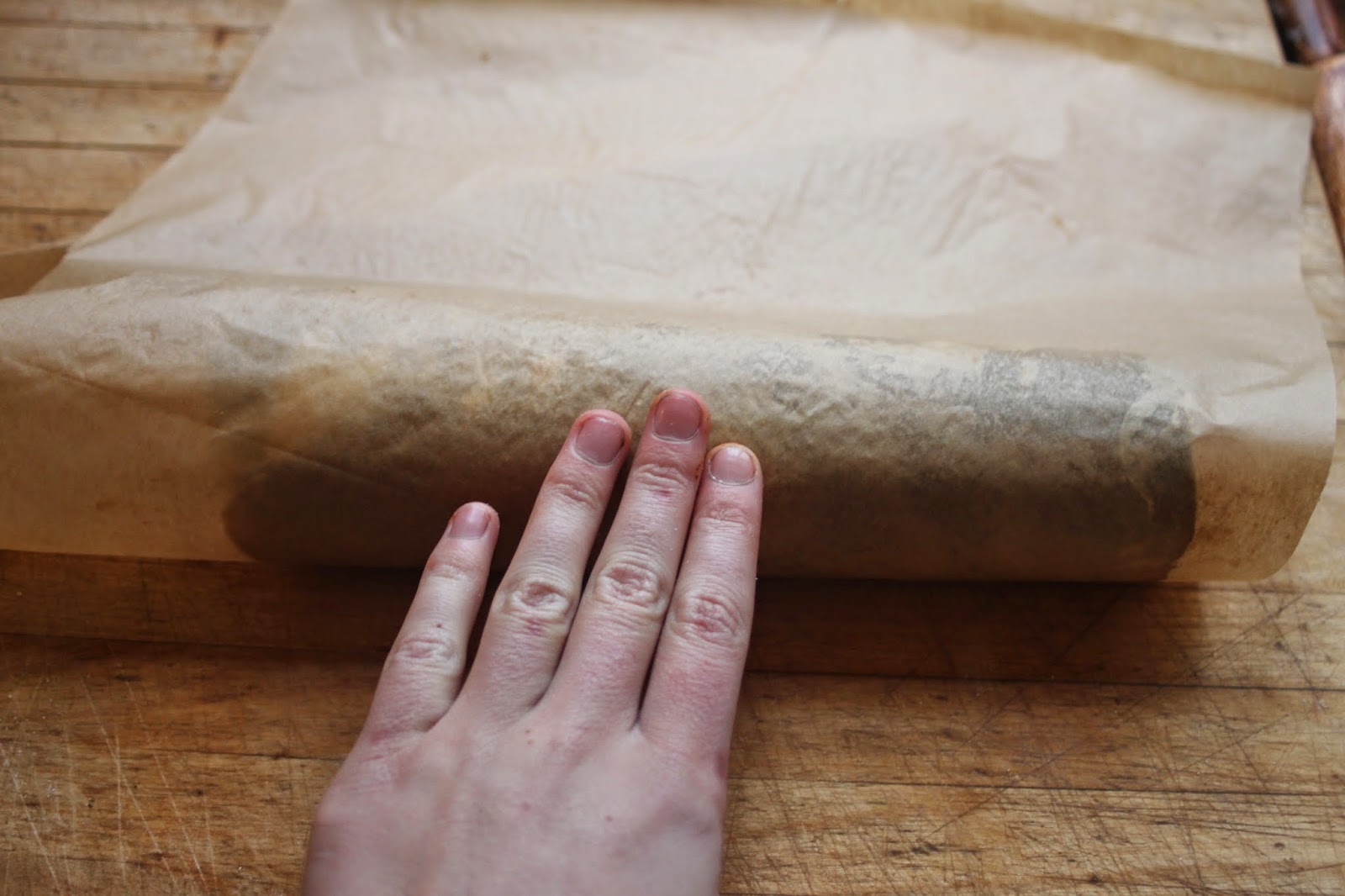
  • Turn the paper so that a the short end of the dough is facing you, and tightly roll the dough into a long log, lightly pressing down to seal the dough together.
  • With a wet dough cutter or knife, slice the log into 6 like-size rolls.
  • Place each cinnamon roll into a oiled pie plate.
  • Bake at 350 degrees for 25-28 minutes until beginning to brown around the edges.
  • Top with frosting and enjoy hot out of the oven!

Recipe Notes

It is best to cook off the cinnamon rolls the morning or day of when you are planning on eating them, or else they may seem a bit dry when cold.
To reheat the cinnamon rolls, frost liberally and place in a warmed oven for about 10 minutes.
My mother had hers the day after and said once the roll was fully warmed through, the dryness went away and it was gooey like when first baked off.


Isaiah 40:31 “But those who hope in the LORD will renew their strength. They will soar on wings like eagles; they will run and not grow weary, they will walk and not be faint.”

Filed Under: AIP, autoimmune friendly, autoimmune paleo, beyond the bite, dairy free Tagged With: arrowroot flour, cinnamon rolls, coconut free, egg free, nut free, plantain, primal, sweet potato flour

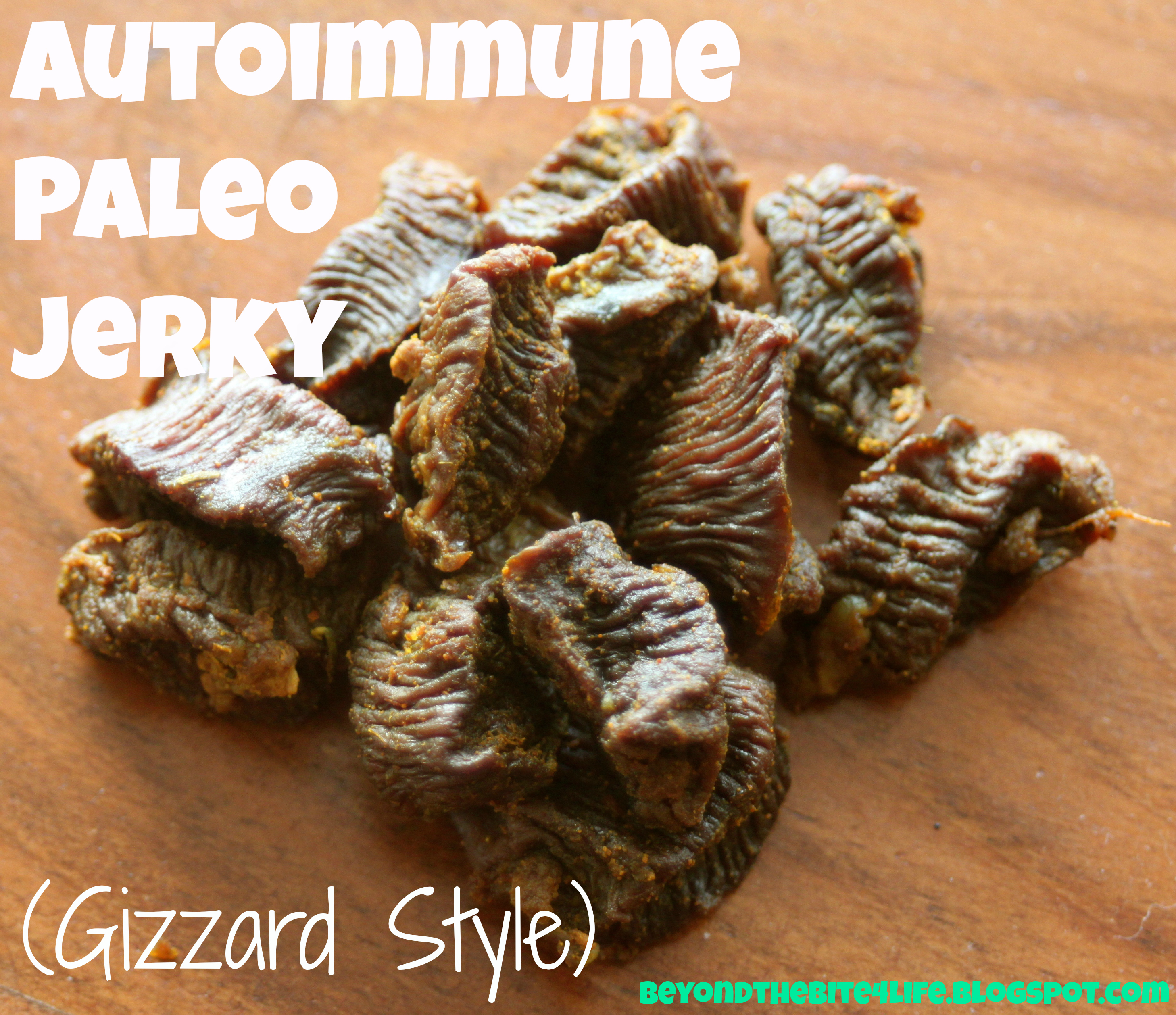
Homemade Autoimmune Paleo Jerky (Gizzard Style)

December 10, 2014

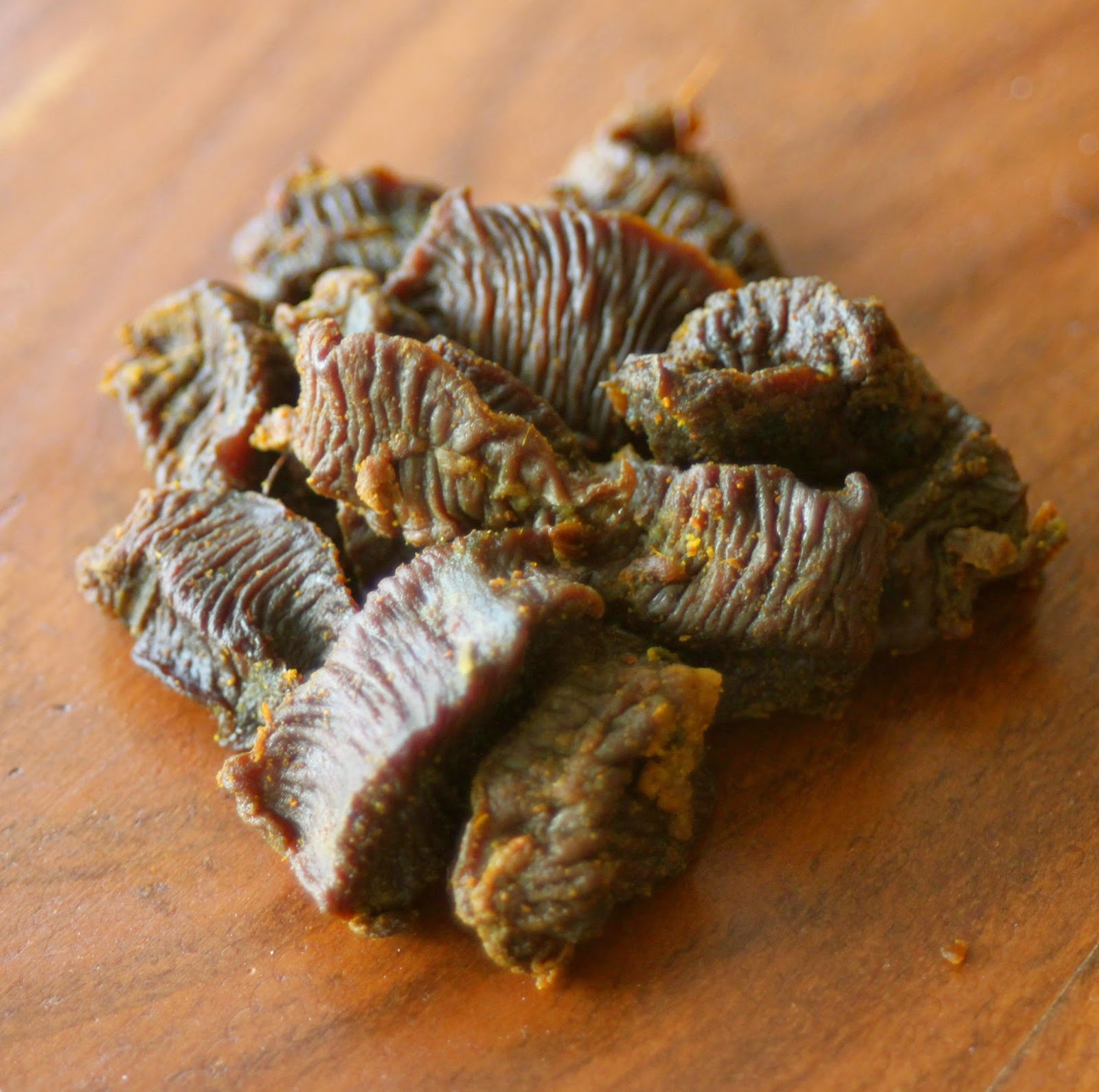
Jerky
Today’s jerky recipe was pretty much a life saver this past month when my family and I traveled to Nashville for Thanksgiving.  As many of you may have previously read, the airport our connecter flight was scheduled to fly out of “randomly” lost complete power.  After aimlessly waiting 7 hours, finally getting another flight to Tennessee, having no food due to losing our bags, and getting a rental car key that stopped working, this jerky that I had for an early breakfast, is what kept me going till dinner, 11 hours later. 
However, I am not the only one who enjoyed this jerky on our vacation, as I shared it with many visiting family members, all who loved it just as much.  My mother and grandmother, in particular, were rather exciting to be eating organ meat in such a tasty way.  Therefore, not only was it super easy to make, but it is quite versatile in that everyone (even those with an aversion to organ meat),  loved munching on it.  Also, as a hint for anyone trying to sneak any organ meat into their kiddos diet, this jerky is the absolute perfect way.  
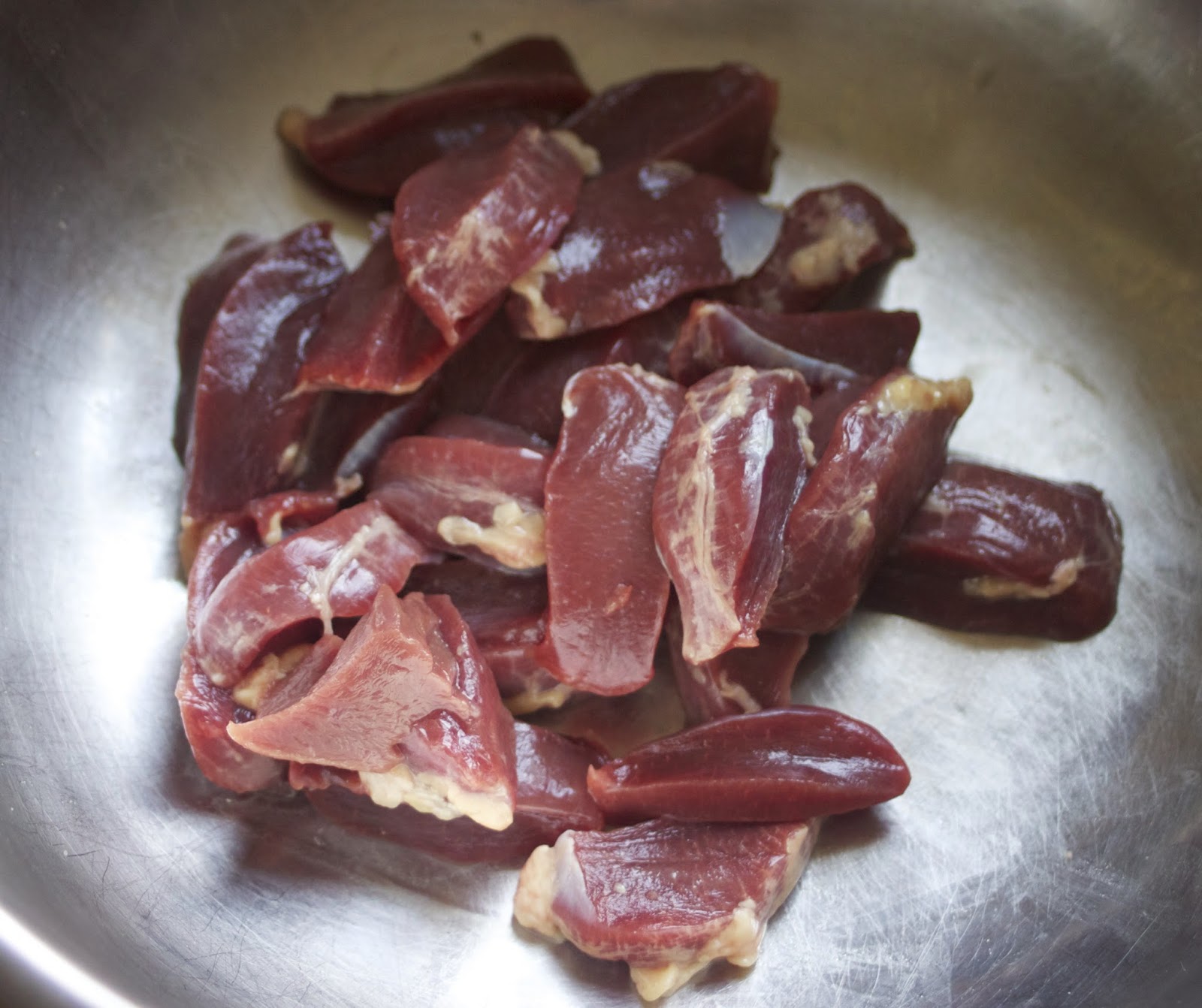
Chewy, but not so much that you feel like your jaw is getting a workout, while at the same time packed with flavor and nutrition, my homemade chicken gizzard jerky is great as an on-the-go meal while traveling, thrown on top of a salad for lunch, or as a mid-afternoon snack.  Unlike most store bought varieties, the ingredients are pure, simple, and very flavorful.  Because I do not eat high FODMAP foods, I omitted any added onion or garlic powder.  However, if you do not have an issue with these foods, simply adding in a teaspoon of each to the rub would be great!  Of course, if you do not have gizzards, yet still want to make the recipe, simply substitute any other type of thin sliced meat and prepare as directed.  Though the dehydrating time may vary, the overall time frame will be anywhere from 4-6 hours, of which you can easily determine by checking on the meat every couple hours.  Ultimately, homemade jerky is one of the easiest foods to prepare, making it a must for anyone looking for a great, nutrient dense snack.  
Chicken Gizzard Jerky
Print Recipe
Ingredients
  • 1 lb chicken gizzards
  • 2 tsp sea salt
  • 1 1/4 tsp ground ginger
  • 2 tsp ground turmeric

Process

  • Prepare chicken gizzards by trimming of any excess fat, as well as the outer blueish colored skin. *After prepared, the gizzards should be about 1/2 inch thick, and an inch long
  • Toss gizzards in a bowl with the sea salt, ginger, and turmeric.
  • If using oven, preheat to 175 degrees convection *If you do not have this setting, prop the oven door open with a large wooden spoon to allow the air to circulate 
  • Lay gizzards in single file on a broiler sheet hat is lined with aluminum foil (or) in your dehydrator rack. 
  • Place the sheet in your oven and (or) dehydrator and allow to dehydrate for 5-6 hours *Time will depend on the size of your gizzards.
  • Remove sheet from the oven and allow gizzards to cool before packaging in a mason jar or baggy. *The jerky will keep in both the freezer, fridge, or at room temperature
 
Recipe Notes
If you do not have gizzards, you can easily substitute for any other cut of meat instead.
If you do not follow a Low-FODMAP diet, feel free to add a tsp of both garlic and onion powder.


John 14:16 “Jesus answered, “I am the way and the truth and the life. No one comes to the Father except through me.”
Filed Under: AIP, autoimmune friendly, autoimmune paleo, beyondthebite, chicken, ketogenic, organ meat, Protein Dishes, Sweets and Snacks Tagged With: chicken gizzards, gizzards, grain free, homemade, jerky, organ meat, Paleo, primal

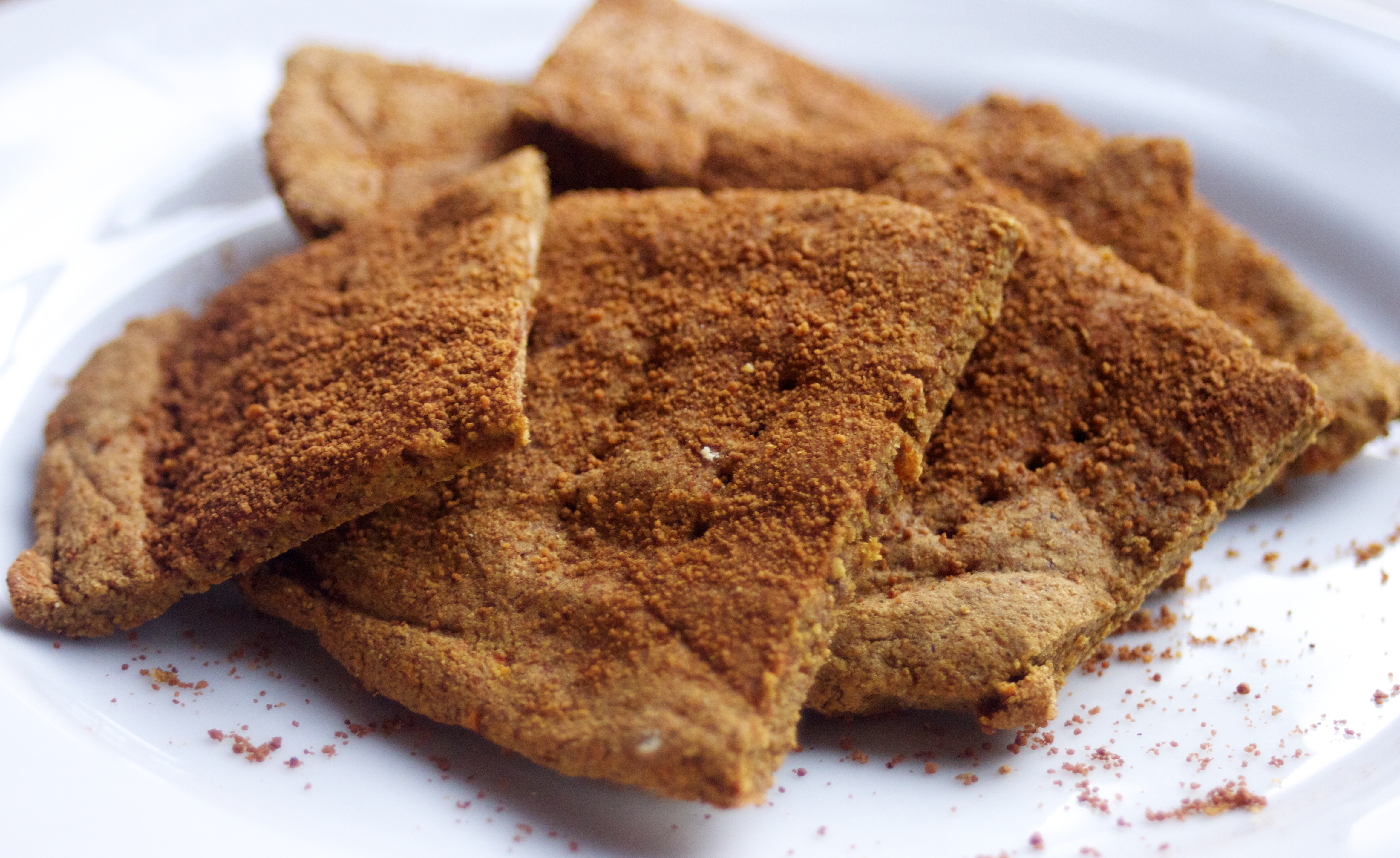
Paleo Autoimmune Protocol Cinnamon Graham Crackers (Cricket Flour)

December 9, 2014

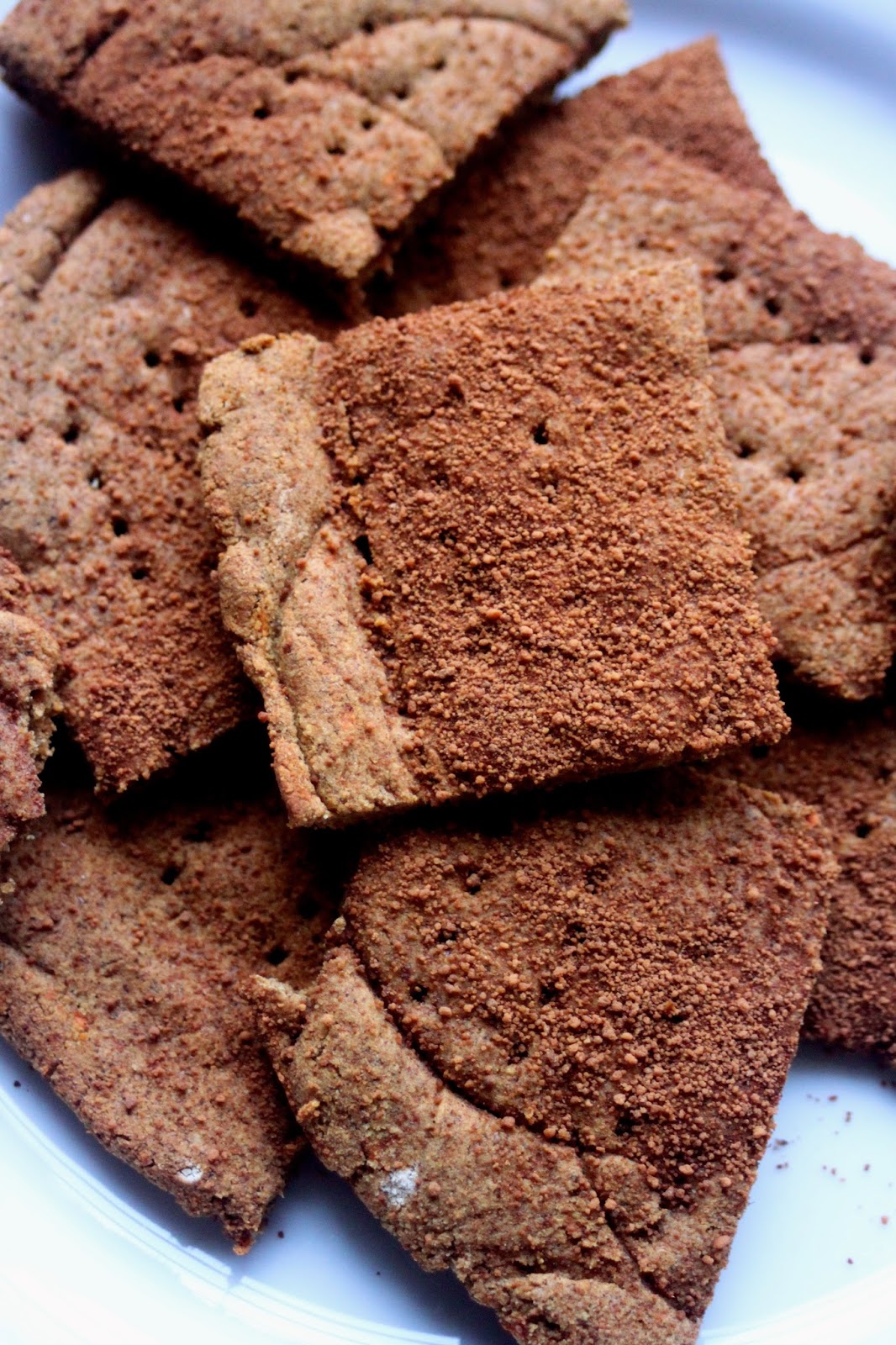
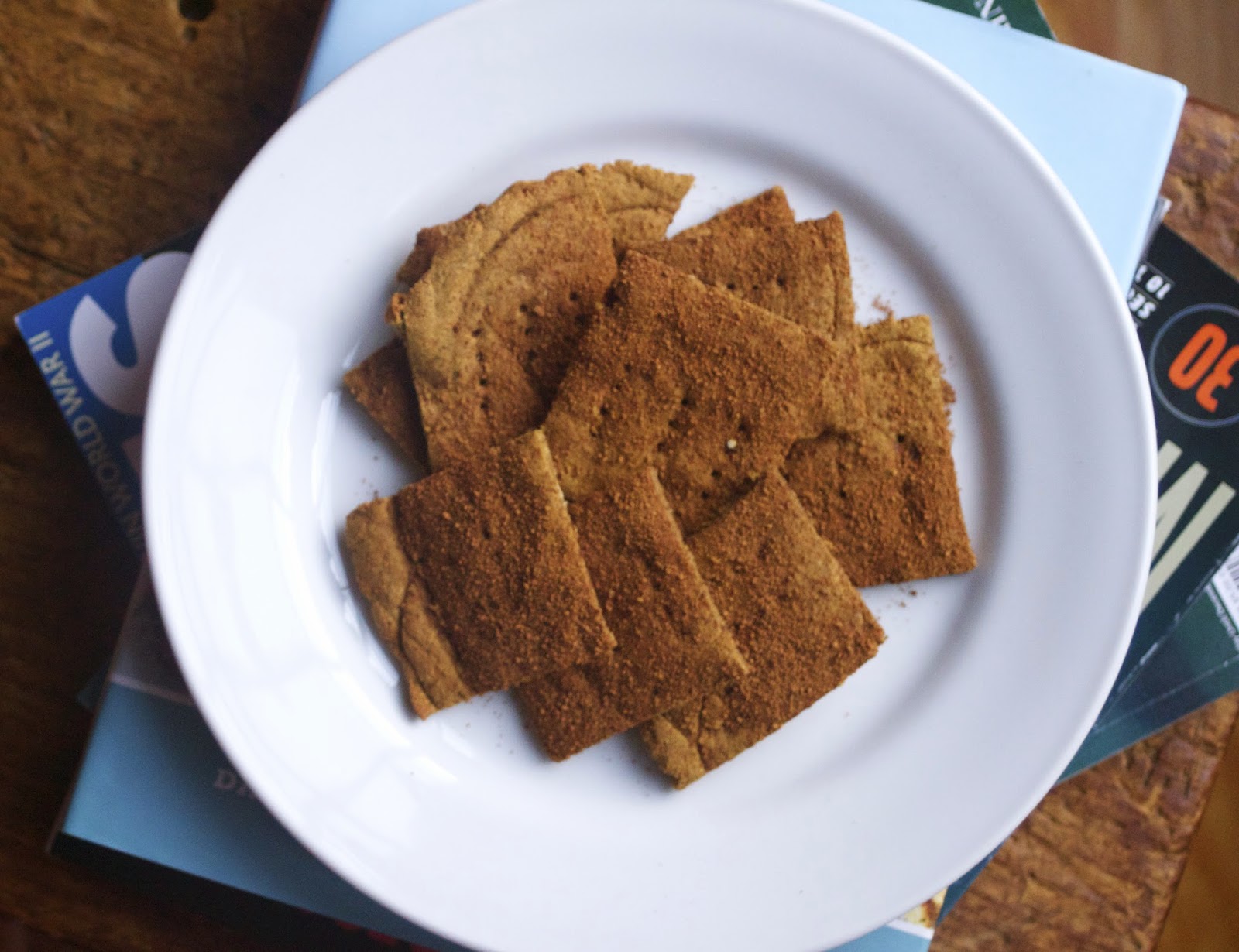
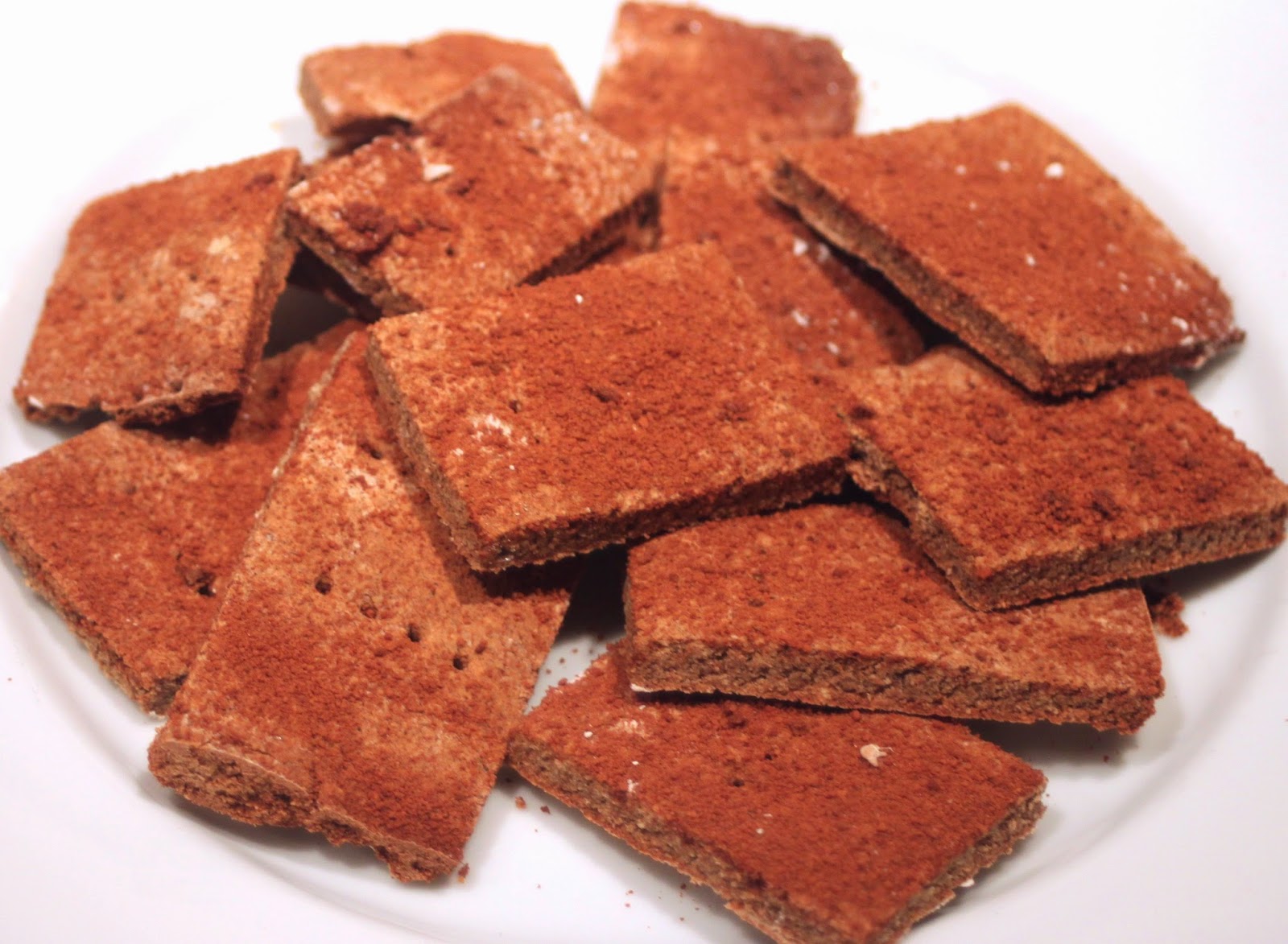
I wish you could experience how amazing my house smells right now.  The aroma of sweet, cinnamon and maple baked graham crackers is absolutely to die for. However, these are anything but normal graham crackers, as you will read in a moment.  The first thing you might think when seeing cricket flour in the ingredients is “GROSS!” So stop, stop right there, and hold your horses.  Though cricket flour may at first make you convulse, the history and nutritional content may make you think otherwise.  Another thing to point out is that baking or cooking with cricket flour does not actually mean you are eating live bugs (though this is typically the thought first into people’s heads). Of course, we are not used to seeing bugs ground into flour here in America, but whole crickets have been (and still are) eaten in foreign countries for decades.  Why?  Because they are an AMAZING superfood.   Not only are they a source of complete protein (12.8 protein content per 100 grams, 1/2 the amount of most meat products), but they are chock full of iron, magnesium, and calcium. Though America seemed to give up entomophagy (the act of eating insects) from the beginning of time, it is said that 80% of of the world’s nations eat 1,000 species of insects (including North, Central and South America, Africa, Asia, Australia, and New Zealand).  My graham crackers also use tiger nut flour, which, much like cricket flour, is quite nutrient dense as well, though in some different ways.  Not only do tiger nuts have an almost identical micronutrient content when compared to mother’s breast milk, but they also surpass red meat in more than half of its nutrients, in particular the vitamin and mineral content.  You may be familiar with the protein and energy bars,  EXO and Chapul, both of which are popular for utilizing cricket flour to boost the proteincontent.  However, using this foreign flour in the kitchen is both handy and an amazing resource for those on the Paleo diet.  Tiger nut flour, which also may be a bit new to you, is relatively new in the Paleo scene as well.  With a sweet, nutty taste, tigernuts remind me more of an almond more than anything.  However, despite their name, they are not a nut but actually a starchy tuber that grow on the end of Cyperus grass.  They are thought to be one of the most ancient sources of nutrition from Egypt that is harvested from the Delta Nile.   Interestingly enough, there have been pictures depicted in the 100th, 18th dynasty Theban tomb, where chufa (tiger) nuts are being harvested.  It also is said that it was in Spain, that the Moors first began cultivating chufa grass to make a tasty drink out of the ends called “Horchata de Chufa.” Therefore, with all of the history in mind, I thought there would be no better Paleo flour combination than that of cricket and tiger nut, due to them both being both age old foods cultivated worldwide.  Of course, it is no surprise to me that I may have a hard time convincing some of you that eating a cracker made with cricket and tiger nut flour would taste anything like a normal graham cracker.  However, I can promise you that today’s graham cracker recipe is simply irresistible.  Typically when I make recipes for my family, I don’t have a problem not tasting the finished product, let alone the batter.  That being said, this recipe had me hooked, and I just had to taste them once finished. Not only that, but my father exclaimed he could “eat the whole plate,” while my mother was equally enthusiastic about my new creation. Lightly sweetened, and with the perfect crunch, these graham crackers are identical in both texture and taste to that of a regular graham cracker.  By combining cricket and tiger nut flour, the “nutty” flavor that graham crackers usually have is perfectly duplicated, without the use of an actual nut flour.  Pureed green plantain, which acts as a natural binder, is also a food high in resistant starch, and therefore great for GI health.  Overall, I cannot say enough things about today’s recipe.  Sweet, yet not too sweet, crunchy, but not crumbly, and overall extremely delicious, these protein-packed graham crackers are truly loved by everyone in the family.  To order your cricket and (or) tiger nut flour, you can do so through the amazon affiliate links located in the ingredients list, or from Next Millennium Farms by clicking here.    As a note, I do realize that cricket flour is on the pricier-side for Paleo friendly flours.  However, for those with many food allergies and sensitivities and (or) individuals following an Autoimmune, it is a great low carb option.  Not only that, but I have yet to see a recipe that uses ALL cricket flour, meaning it is likely to last in your pantry for quite a while.  If you are looking for a trustworthy, organic, and even certified non-GMO source of cricket flour, Next Millennium Farms, as mentioned above is dedicated to providing the highest quality of ingredients.   Lead the protein revolution and get your cricket flour today!
Cinnamon Graham Crackers
Print Recipe
Ingredients

  • 1 cup + 2 tbsp tiger nut flour 
  • 1/2 cup cricket flour 
  • 1/4 tsp sea salt
  • 1/2 tsp baking soda
  • 1 1/2 tsp ground cinnamon
  • 4 oz (1/2 cup) green plantain – pureed 
  • 4 tbsp avocado oil (or) non-hydrogenated palm shortening  
  • 1/4 cup maple syrup
  • 1 tbsp maple sugar

Process

  • Preheat oven to 350 degrees.
  • In a food processor, puree peeled plantain, maple syrup, and avocado oil until smooth.  
  • Add tiger nut flour, cricket four, sea salt, baking soda, and 1 tsp cinnamon, letting the food processor run until a smooth dough has formed. 
  • Line a baking sheet with parchment paper, sprinkle with a bit of tiger nut flour, and scoop dough onto the dusted sheet. 
  • Sprinkle dough with more flour, and cover with a sheet of plastic wrap, rolling the dough out until 1/8th inch thick. 
  • Remove plastic wrap, running a wet knife through the dough to make squares and (or) rectangles.
  • Score the dough 3 times per square with a fork to create tiny holes.
  • In a small ramekin, combine 1 tbsp maple sugar and remaining 1/2 tsp cinnamon.
  • Sprinkle cinnamon sugar mixture over graham crackers.
  • Place dish in the oven and bake for 20 minutes until sides have browned.
  • Allow crackers to cool and become fully crisp, then enjoy! 


John 11:25 “Jesus said to her, “I am the resurrection and the life. The one who believes in me will live, even though they die;”

Filed Under: AIP, autoimmune paleo, coconut free, cricket flour, gluten free, Sweets and Snacks, tigernut flour Tagged With: cricket flour, egg free, graham cracker, grain free, nut free, Paleo, primal, tiger nut flour

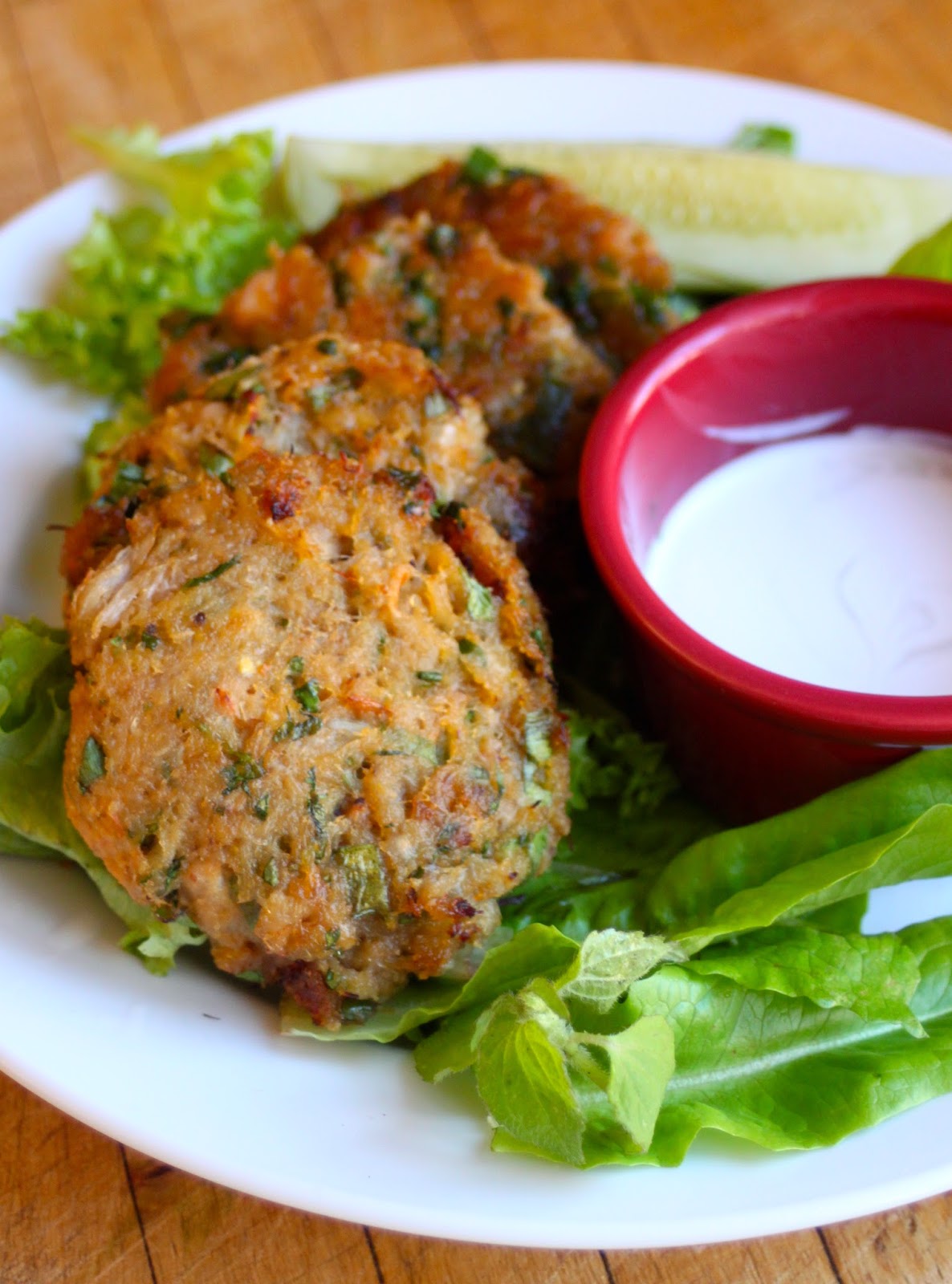
Paleo Autoimmune Protocol Mexican Crab Cakes

December 7, 2014

 
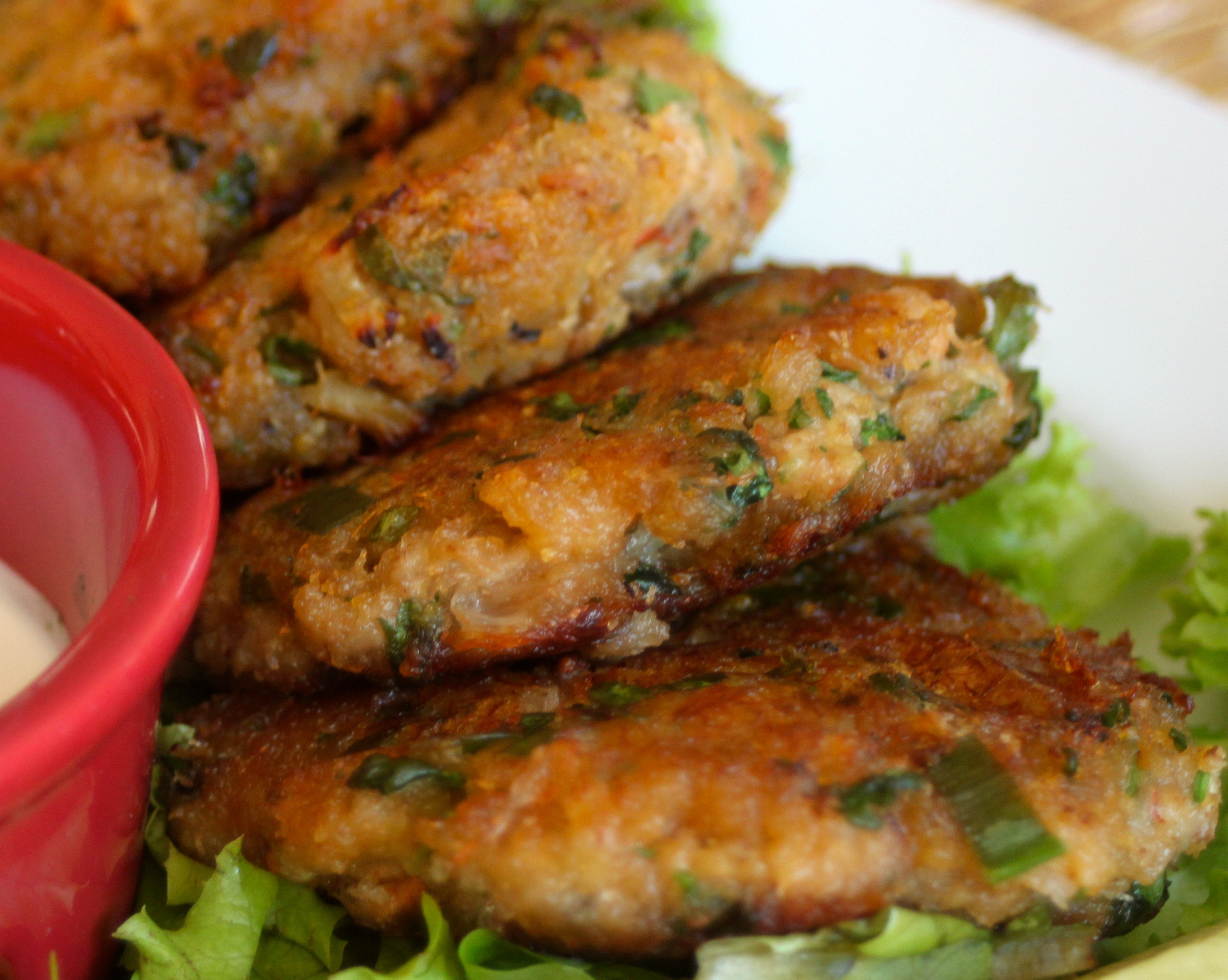
There have been so many recipes that I have created and (or) want to make it seems there aren’t enough days in the week to accomplish all of them! Today’s recipe was one that I have been wanting to make for months, due to never being able to find one quite like it. Crab cakes have always reminded me of my childhood, as my families summers are always spent on the Cape in MA. However, the distant memory of this seafood dish was never necessarily a great one, as I always thought they were much to rich and filling. Unlike the usual crab cake filled with extra binders, this recipe utilizes one of my favorite, versatile, and whole-foods; plantains.  
 
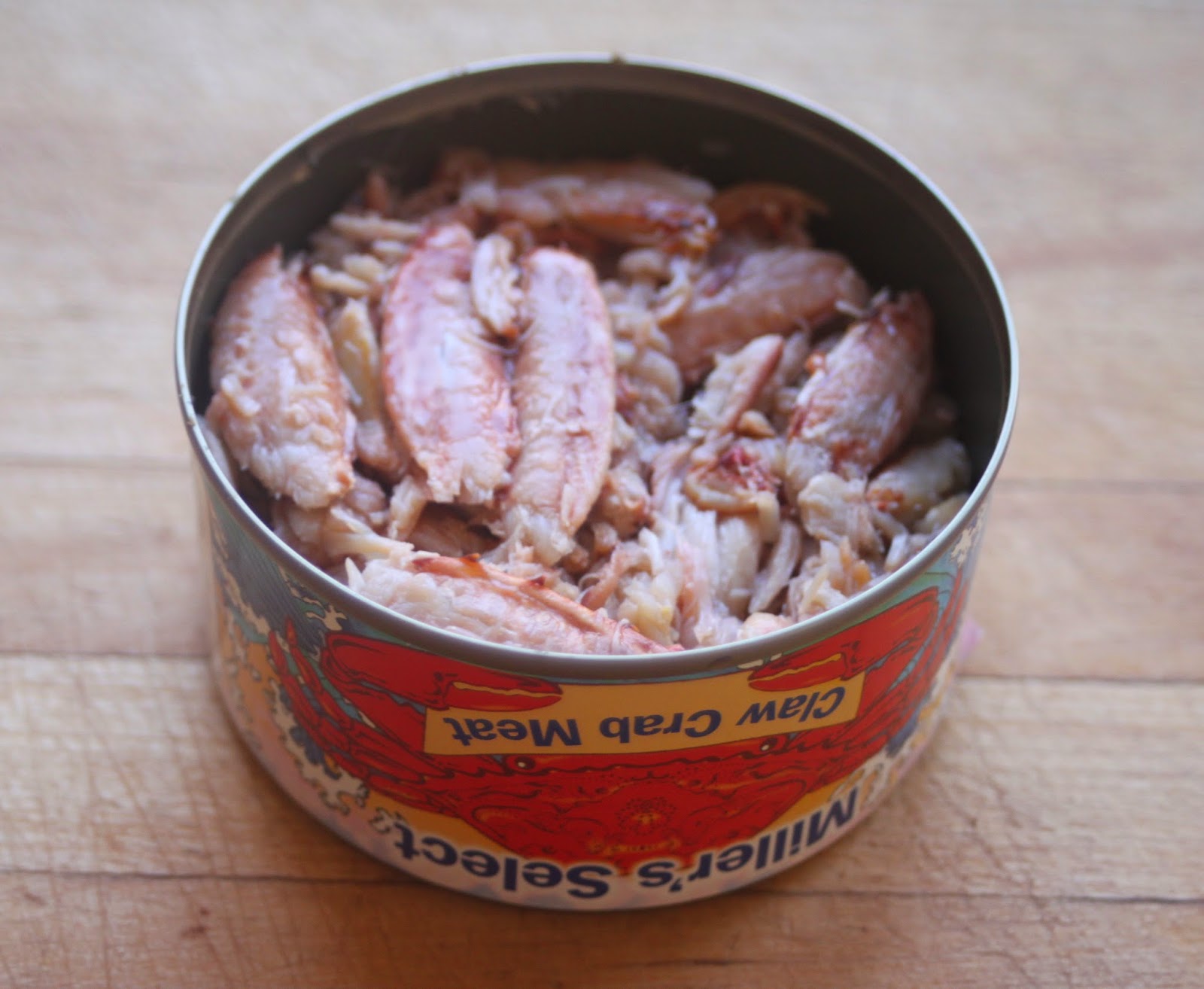
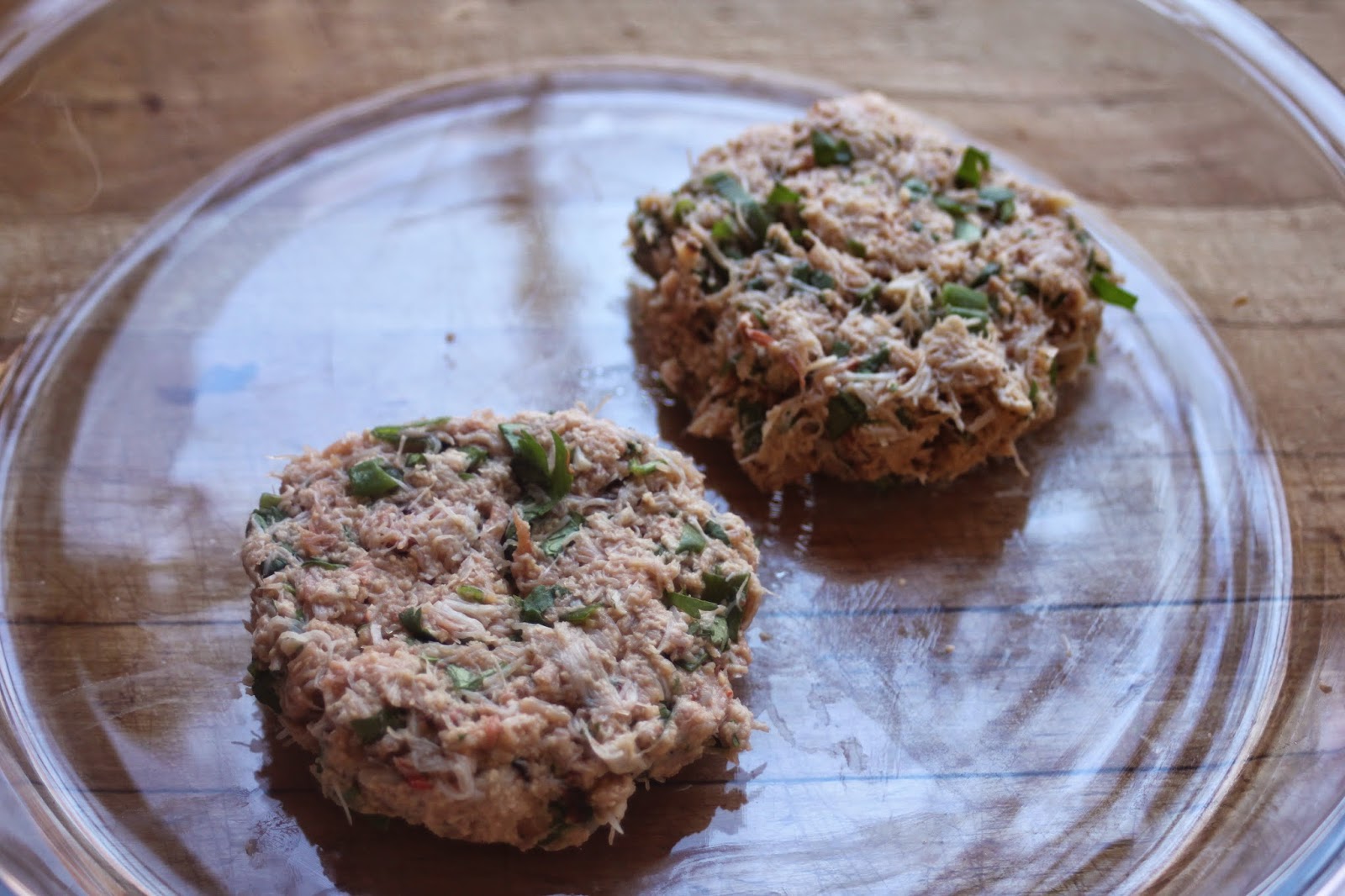
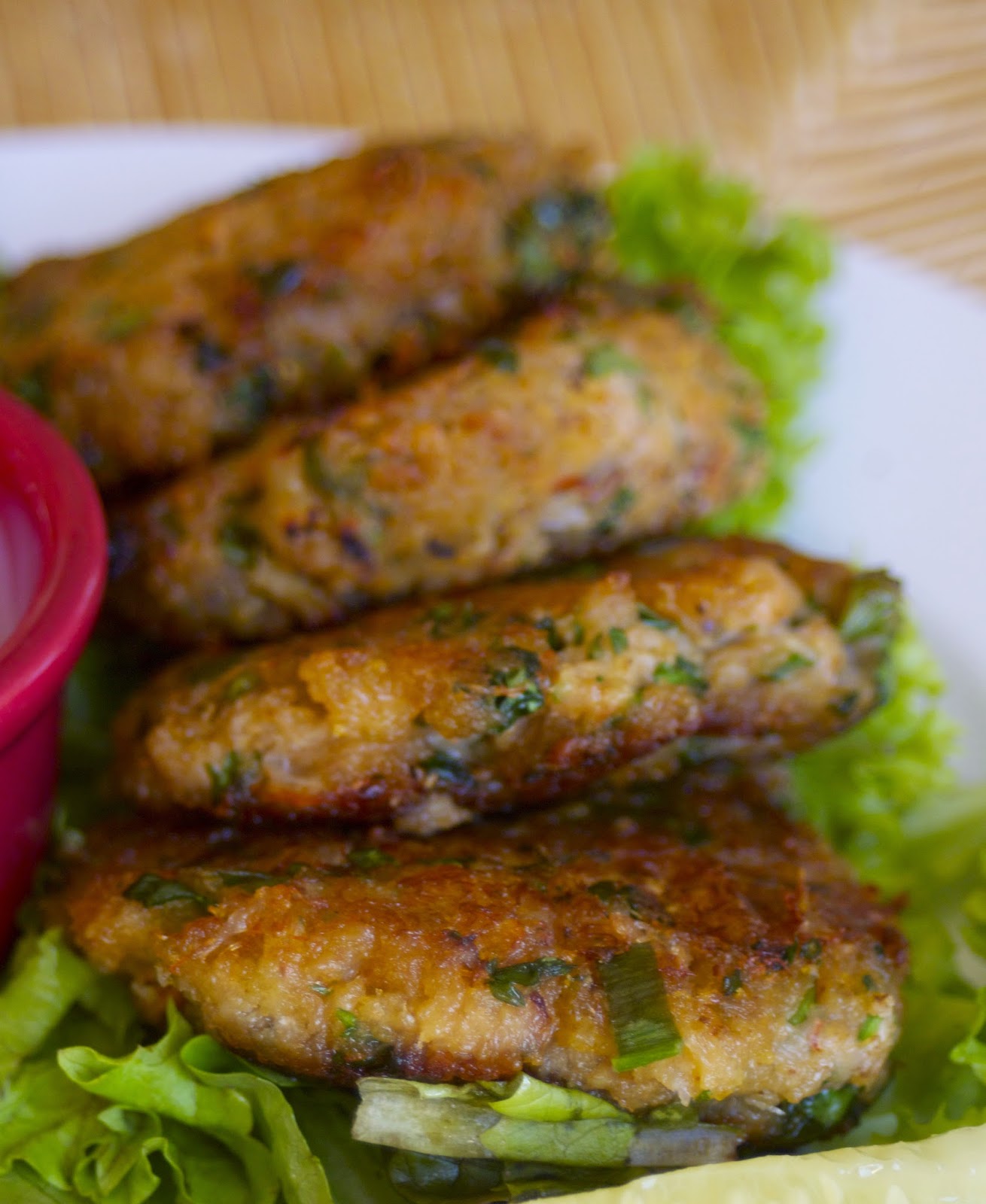
I am very excited to share this recipe with you because it seems that I, myself, have been looking for an egg-free, flour free crab cake recipe for forever.  If you are not a fan of crab, or simply cannot get your hands on it, canned salmon, tuna, or even sardines would definitely work! The key is using the claw meat of the crab, as any canned white meat I have ever had seems to hold more moisture and thus not allow for the cakes to stay together quite as well.  For cooking you have two options, either on the stove in a skillet, or simply baked in the oven.  Either method results in a fabulous crab cake, so simply do whichever you prefer. Though I baked half of my cakes and fried the other two in duck fat, the instructions below are for the fried method, as it resulted in an extra crunchy exterior texture (which I love). Of course, if you do not follow an Autoimmune Paleo diet, I have been told that my spicy mustard recipe goes great with crab cakes, as well as my mojo sauce.  Pictured are crab cakes that I served with a bit of full fat coconut milk for some extra flavor, though this is completely optional, as the cakes are quite flavorful without a sauce. 
All in all, this recipe is quick and easy, as I put them together on the fly after getting home from a doctors appointment. My mom absolutely loved the cakes, as the texture and taste are exactly how any “normal” version would be (minus the sickening richness).  Please enjoy! 

Mexican Crab Cakes  
Print Recipe
(Makes 4 cakes) 
Ingredients 

  • 8 oz (1 cup) canned crab claw meat 
  • 1 lime – juiced
  • 1 green plantain – 1/3 cup puree 
  • 1/4 cup cilantro – chopped
  • 3 tbsp green onion – chopped
  • 1 tsp salt
  • 1 tbsp duck fat 

Process

  • In a food processor, puree plantain until completely smooth. 
  • Drain clump meat and place in a medium sized mixing bowl. 
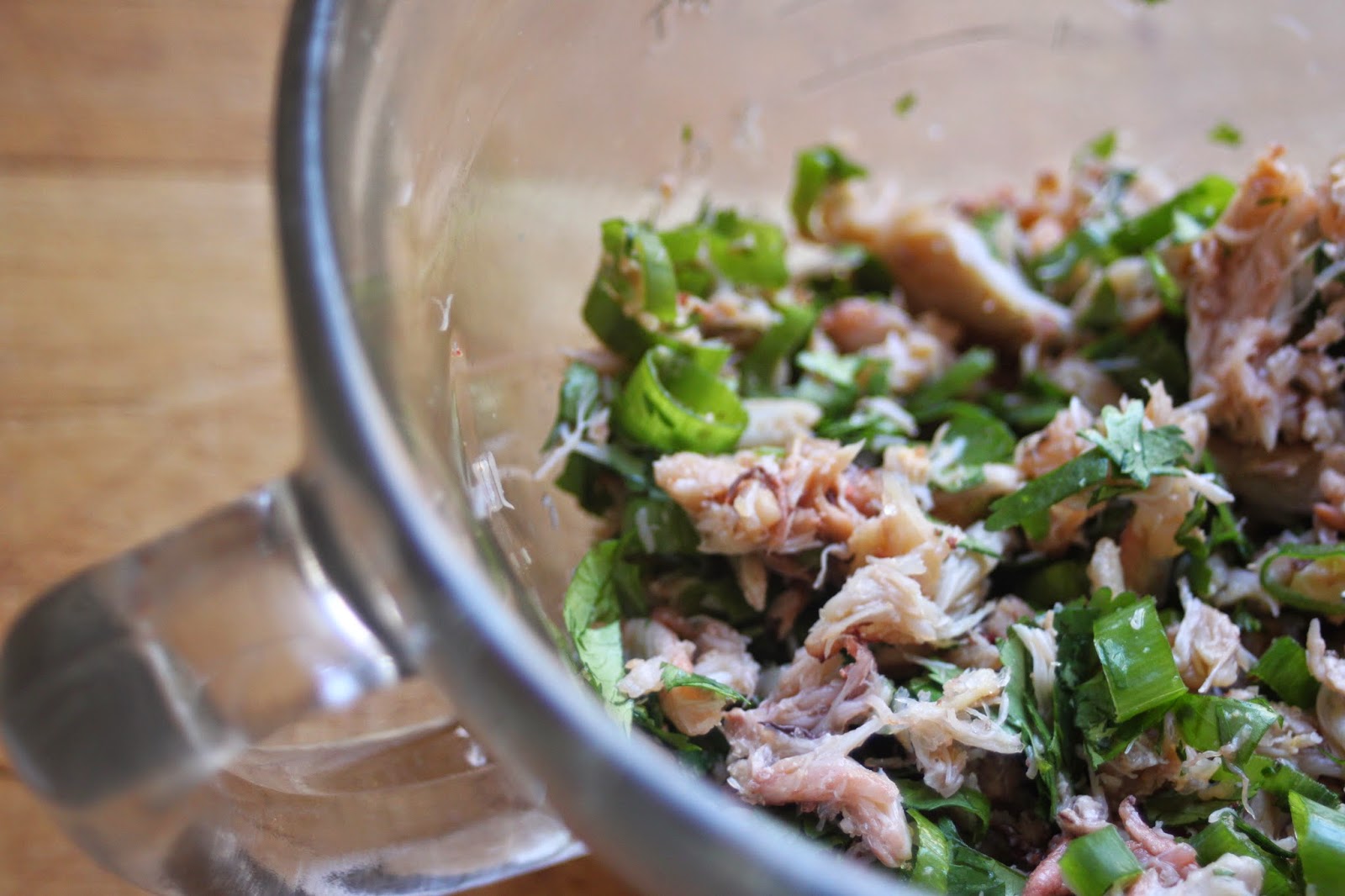
  • Add chopped herbs and salt, mixing until fully incorporated.
  • In a small bowl, mix together the plantain puree and lime juice.
  • Fold the plantain mixture into the crab with a spatula until fully combined.
  • Form the mixture into 4 crab cakes, 3/4th inches thick. 
  • In a medium sized pan, heat duck fat on medium-low.
  • Once the oil begins to sizzle place crab cakes onto the pan.
  • Let cook 3-4 minutes per side. 
  • Place crab cakes on a plate and serve with desired sauce. 
Recipe Notes  
If you do not want to dirty the stove, simply grease a baking dish with 1 tbsp of duck fat and bake the cakes for 20 minutes, at 400 degrees, flipping over 15 minutes in. 
If you are not a fan of crab, or simply can’t get any, you can also use canned salmon, sardines, or tuna!


Genesis 28:15 “Behold, I am with you and will keep you wherever you go, and will bring you back to this land. For I will not leave you until I have done what I have promised you.”

Filed Under: AIP, autoimmune friendly, autoimmune paleo, beyond the bite, Protein Dishes, seafood Tagged With: Cilantro, crab cakes, egg free, Genesis 28:15, grain free, green onion, mexican, Paleo, plantain, seafood

Paleo Autoimmune Protocol Banana Snack Cookie

December 7, 2014

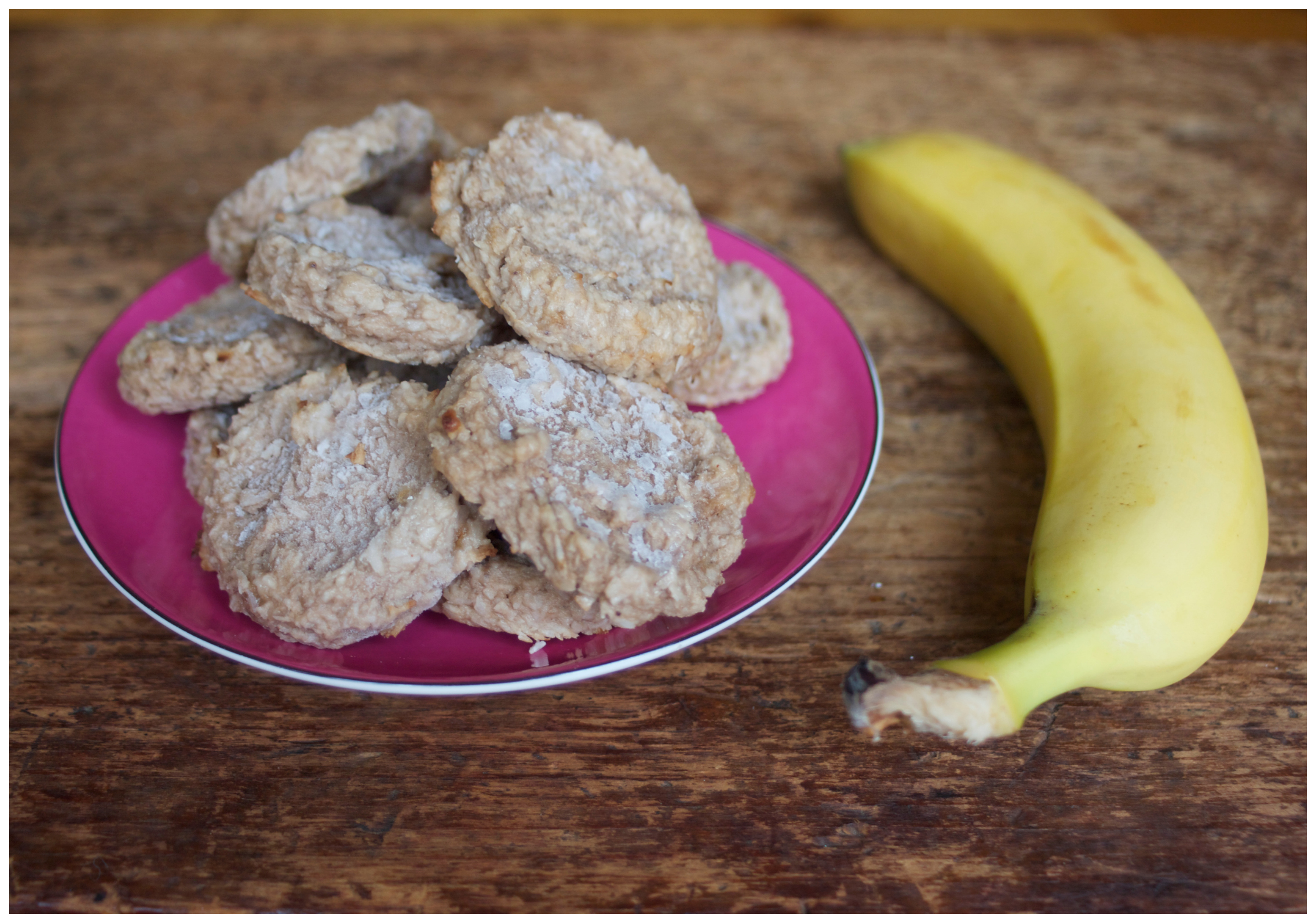
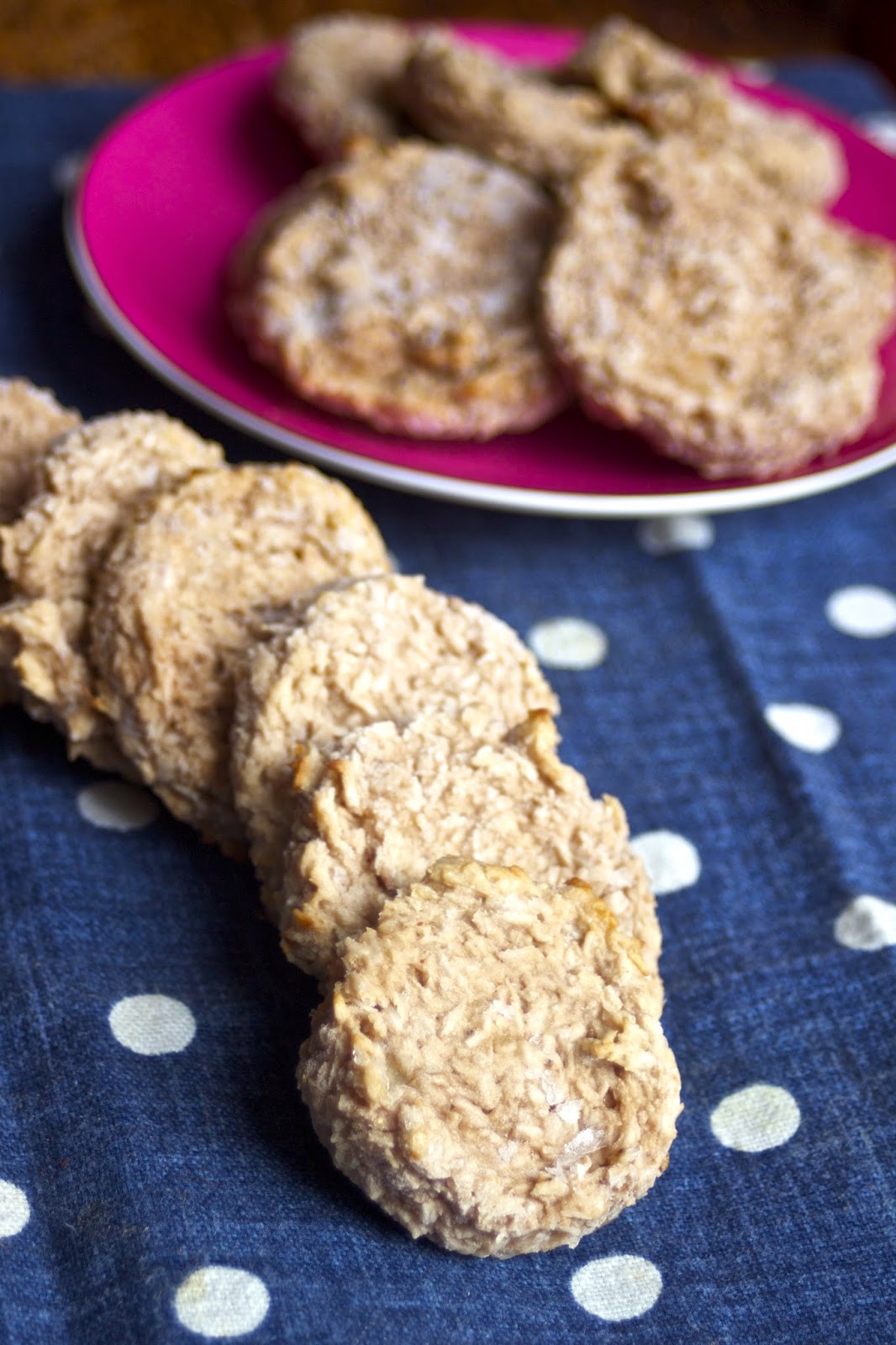
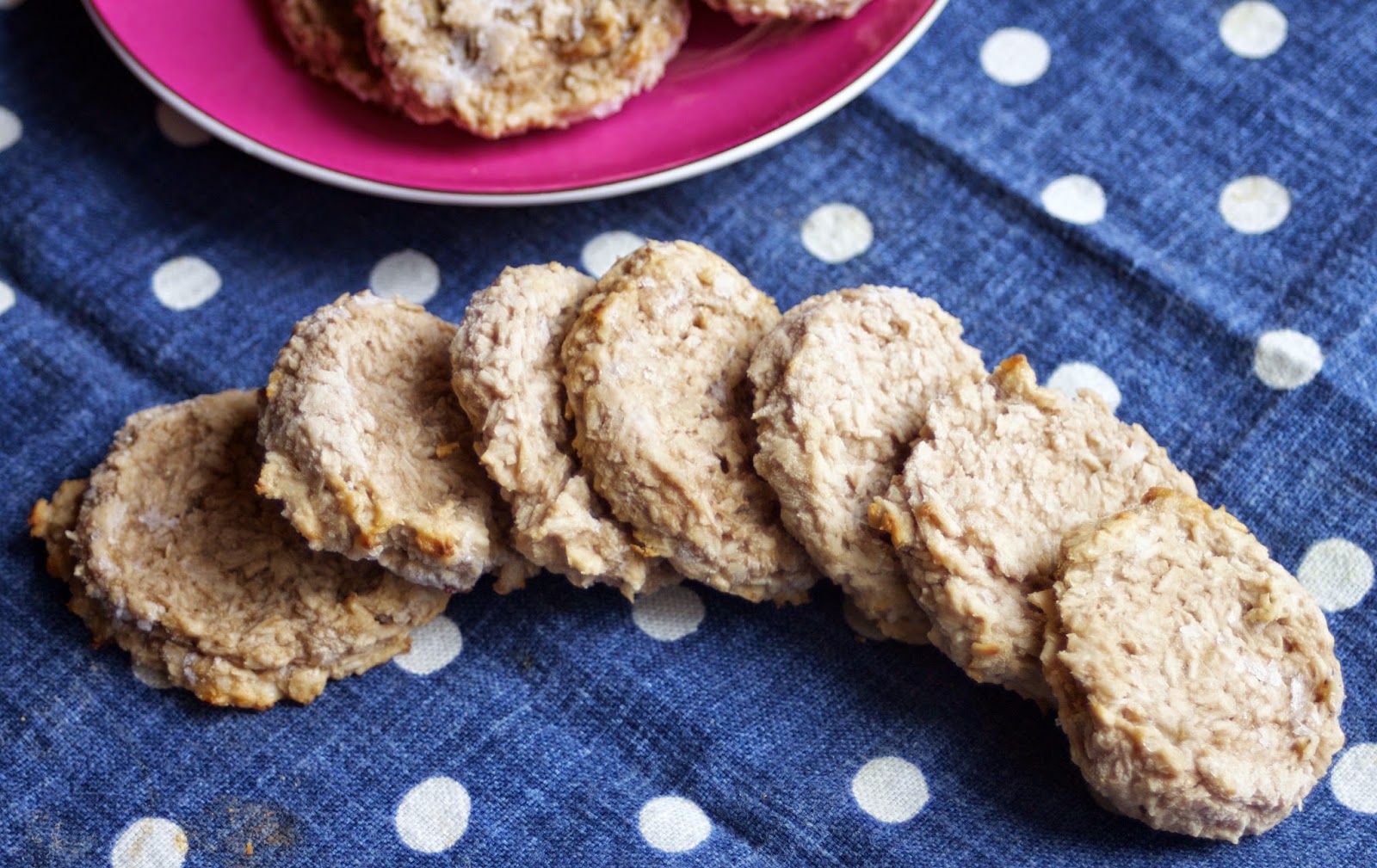
With extended family in town this past week, I decided to take advantage of the extra mouths to feed by making new creations.  My family does not celebrate halloween, however, since molded and wrapped high fructose corn syrup (aka candy) is literally being thrown around and handed out everywhere, I figured my family and friends would appreciate if I made the real deal.  If you are anything like me and get a headache at just the smell or even thought of Jolly Ranchers, stay tuned for upcoming recipes of almond joy bites and chocolate caramel fudge chews, I can promise they’re much tastier.  Obviously, todays recipe is not candy, but rather a relatively easy fruit sweetened snack cookie made with only 5 ingredients. I call them a “snack” cookie because they are not all together overly-sweet or rich like your typical chocolate chip cookie, but more like my sweet potato breakfast cookie.   They also happen to be AIP (auto-immune paleo) friendly, as I use gelatin to replace what binding an egg would accomplish.  Real gelatin (not the kind in Jello) has many healing benefits, as it is rich in collagen, proline, keratin, glycine, trace minerals, and protein, all of which together aid in gut repair, digestion, skin, hair, teeth, adrenal, hormone, and liver health.  I could go on and on about how powerful it is, and definitely would call it a real “superfood,” right along with my beloved saturated fat.  If you are interested in learning more about what gelatin has to offer, head over to Grass Fed Girl’s page here.   Not only does it work great as an egg replacer in baking, but you can make cute little Jello-like gummy snacks with just about any type of fruit or beverage that you like! The Paleo Parents also express their love for gelatin in a post that shares information on which type of gelatin to buy, as well as a slue of great recipes.  
Banana Snack Cookies 
Print Recipe
Ingredients
  • 8 oz (1 cup of chunks) banana – peeled
  • 1/4 cup no sugar added apple sauce 
  • 1 tbsp vanilla (optional)
  • 1 1/4 cup shredded, unsweetened coconut
  • 1 gelatin egg (1 tbsp gelatin mixed in 3 tbsp warm water) 
  • Dash of salt (optional) 
Process
  • Preheat oven to 350 degrees.
  • Line a baking sheet with parchment paper.
  • In a food processor fitted with the “S” blade, mix banana, apple sauce, salt, and vanilla until smooth.
  • Make gelatin egg in a small ramekin and add to the processor, allowing to run until thoroughly mixed in.
  • Add 1 1/4 cup of shredded coconut and pulse until just combined.
  • With a cookie scoop, scoop batter onto prepared baking sheet and use your wet palm or fingers to flatten.
  • Bake in the oven 15 minutes and allow to cool slightly before moving to a wire rack.


Proverbs 4:11 “I guide you in the way of wisdom and lead you along straight paths.”

Filed Under: AIP, autoimmune paleo, Dessert, Sweets and Snacks, vegan Tagged With: apple sauce, bananas, coconut, egg free, free sweetened, Gelatin, grain free, grass fed girl, nut free, Paleo, paleo parents, primal, sugar free

Paleo Autoimmune Protocol Hawaiian Pork Roast

December 7, 2014

Despite this past week being very painful, I still wanted to accomplish my recipe-development-Thursday dish.  If you, or someone you know suffers with the effects of Chronic Lyme, you will soon learn, and loathe, the full moon cycle.  It is said that the reproduction cycle of Borrelia Burgdorferi bacteria (i.e Lyme spriochetes) is around every 28-30 days, while the full moon itself also every 29.53 days.  Though Borrelia become very active on the full moon, they have also been documented as reproducing around the new moon cycle, which occurs every 29.53 days as well.  These two moon cycles alternate every 2 weeks, which can simultaneously cause a noticeable increase in one’s Lyme related symptoms.  So while one may feel like they are going crazy around the full and new moon, the big question that arises is “why?” During both of these cycles, both the moon and sun are pulling on the earth, causing the the three to be aligned, and simultaneously increasing the earth’s gravitational pull.  
 
 
What does this mean?
 
Well, as you might already know, the ocean’s tide is directly connect to the cycle of the moon.  Much like the water on earth, the 80% water content of our bodies is also affected by the moon’s gravitational pull.  Because spirochetes can not survive for very long outside of the human body, they learn to adapt to the given hosts environment.  Therefore, it is thought that when the gravitational pull increases during the moon’s phases, the bacteria also get busy “rearranging.”  Another aspect of the universe that occurs during the new moon cycle, is the increase of electromagnetic energy.  Though subtle and unnoticeable for humans, this magnetic field affecting us at a cellular level, is said to be easily detected by animals and other living creatures.  During this energy increase, animals are drawn to hunt, travel, and mate.  An example of this would be bass, which are observed to spawn around the first full moon, as well as certain bird species who migrate for mating reasons during this time.  Therefore, with that in mind, it is rather appropriate to conclude that Borrelia bacteria act in the same way around the full and new moon.  
 
So what are the implications for those infected with the nasty Lyme spirochetes?  Typically, my symptoms begin worsening the week of the full moon, while they then taper off in the weeks afterward.  Not only does my joint, gut, and overall body pain skyrocket, but sleeping becomes practically impossible.  This may sound weird to those who have never had Chronic Lyme, but it is literally like there is something alive in me that won’t allow me to go to sleep.  It is important to note that this is not merely a mind game that I play with myself, as I actually strive to ignore and forget about the moon’s cycles.  However, it is for certain that Lyme bacteria know, as I find my symptoms worsening, regardless of if I am aware of the bright, looming dot in the sky or not.  Nausea, joint pain, muscle weakness, irritability, itchy and crawling skin, insomnia, severe GI pain, and headaches, are all common symptoms that grow.  Not only that, but my dog Ruger, who has previously been infected with Lyme Disease, goes completely berzerk around the differing moon cycles.  Just this past week, he has been noticeably more ornery, and as my mom suspected and then later pointed out, it was the full moon.  Regardless of how much scientists and doctors might know on “why” we patients of Chronic Lyme feel worse every 28-30 days, one thing is for sure – the increase in symptoms is undeniable.  
 
 
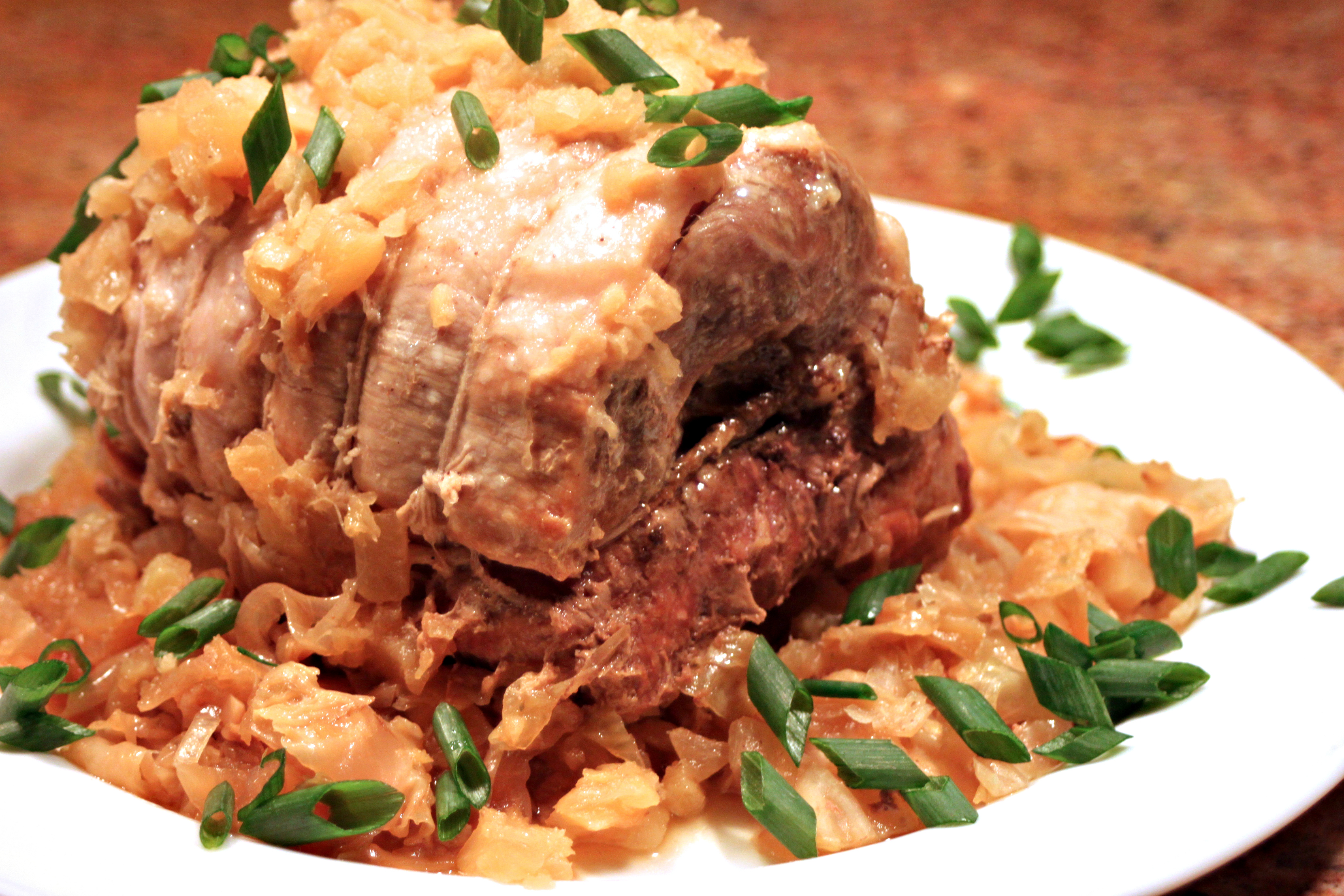
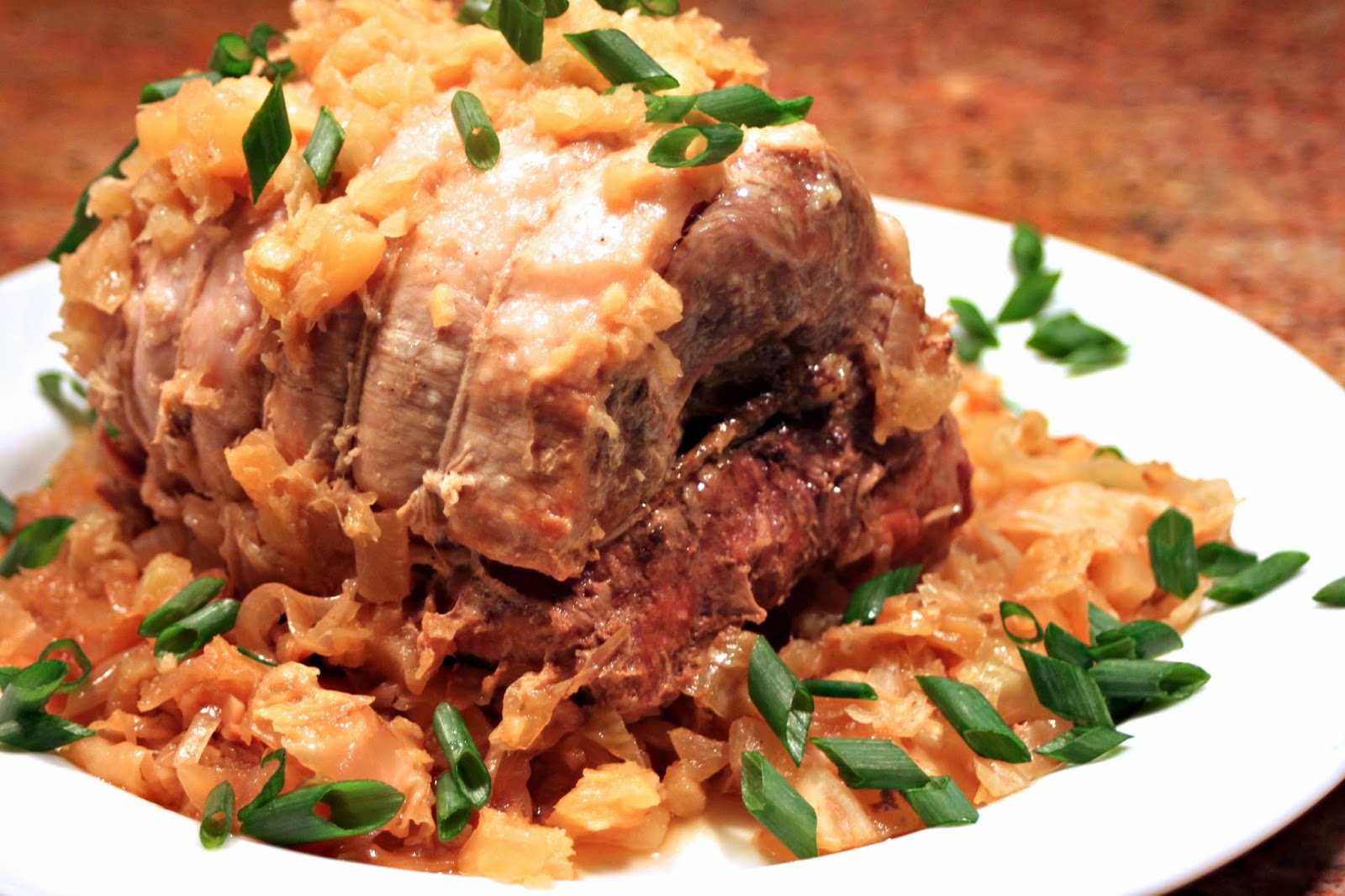
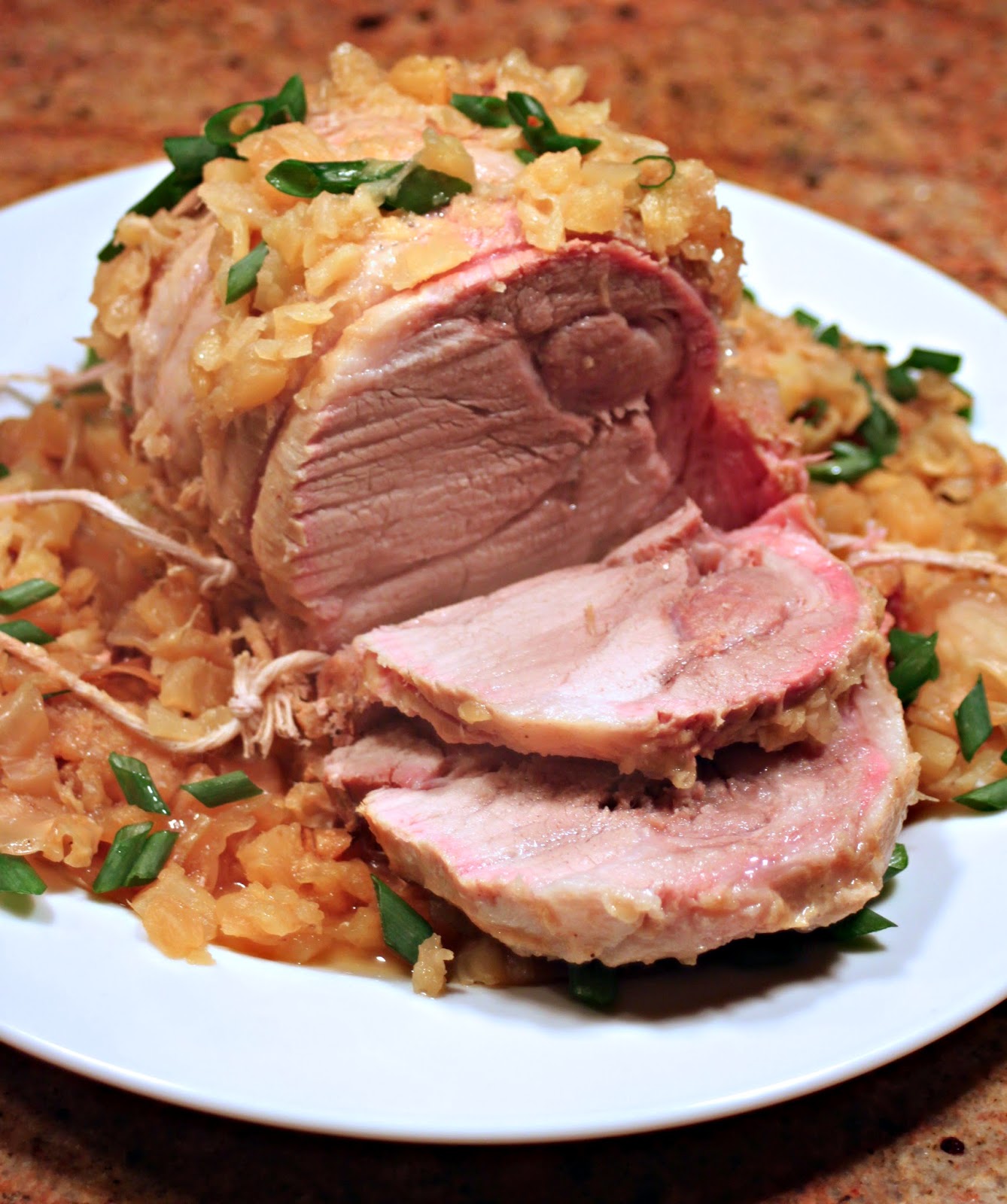
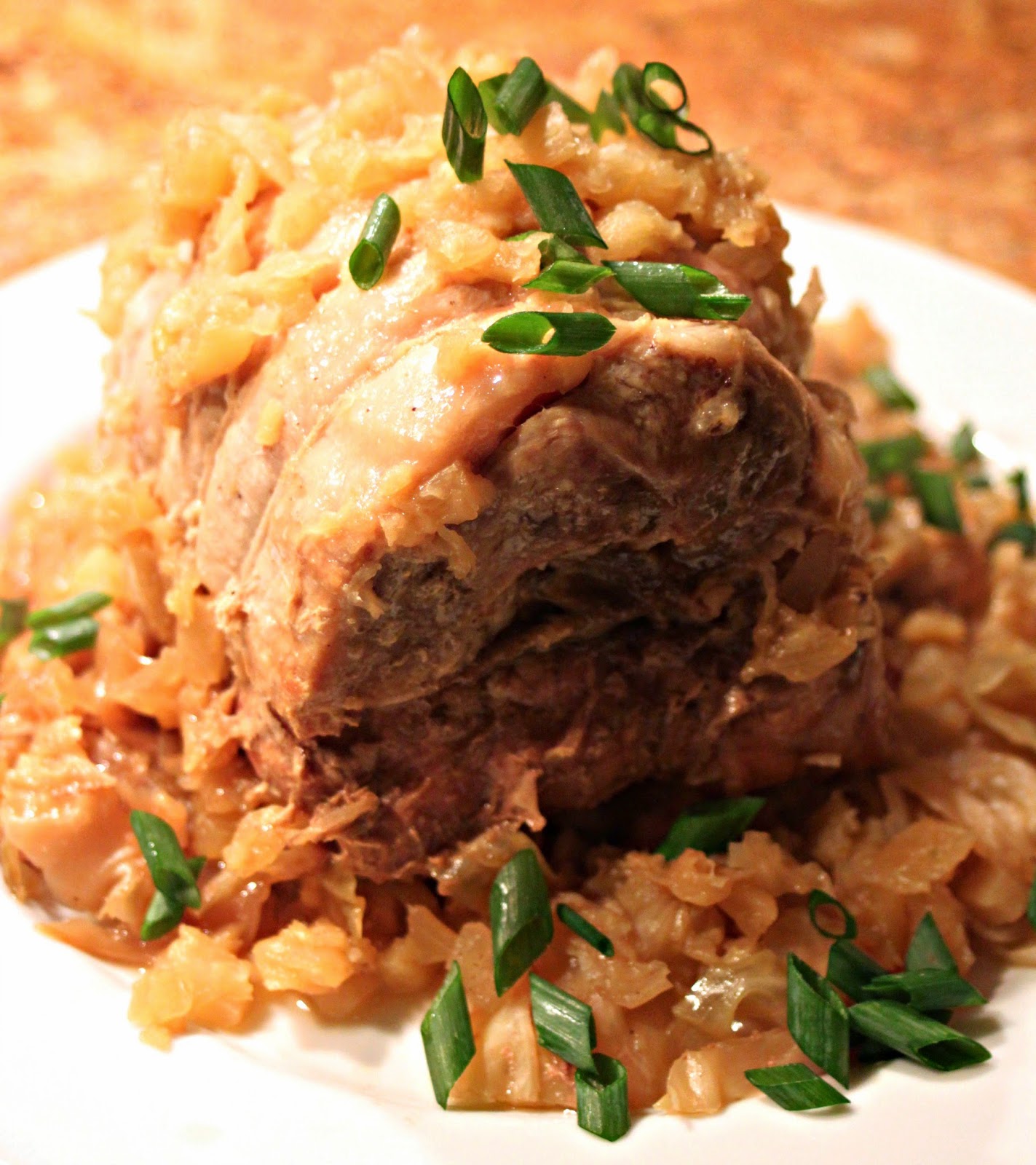
With all of that being said, I needed to create a pretty simple dinner if I wanted to live to see tomorrow.  Therefore, it was absolutely perfect when my mother pulled out a boneless pork roast from Green Valley Farm, a local, family run business right down the road.  With just a few vegetables to chop, and a couple bottles of ingredients to open, this roast recipe can be put together in minutes.  However, despite the simple preparation, the end result is a succulent, juicy, and fully flavored pork roast that the whole family will enjoy.  Because I put this recipe together in the afternoon, I set the slow cooker to 5 hours on high.  Yet if you are looking to spend even more time away from the kitchen and (or) house, putting the crockpot to 7 hours, on low, will result in an equally delicious meal.  All in all, both of my parents, as well as our family friend Nick, could not get over at how tasty this meal was.  What was even better was the amount of energy I spared in the making.  Therefore, I know you will enjoy this tropical taste of heaven as much as we did.   

Hawaiian Pork Roast
Print Recipe
(Serves 4-5)
Ingredients

  • 1, 3 lb organic, boneless pork roast
  • 7 cups cabbage – shredded 
  • 2 white onions (11/2 cups) – slivered 
  • 3 tbsp fresh ginger – chopped
  • 1, 20 oz can crushed pineapple 
  • 1/4 cup Coconut Aminos
  • 2 tsp sea salt
  • 1 tsp Red Boat fish sauce
Process
  • Remove pork roast from packaging, dry with a paper towel, and sprinkle with 1 tsp sea salt.
  • With a large knife, shred cabbage, cup onions into slivers, and finely chop the fresh ginger.
  • Mix ingredients together in a crockpot and sprinkle with 1 tsp sea salt.
  • In a mixing bowl, combined crushed pineapple, Coconut Aminos, and fish sauce. 
  • Make a bed in the cabbage mixture, and then add the pork roast, nestling it inside. 
  • Pour pineapple mixture over the pork and place the top of your slow cooker.
  • Turn heat to high and allow the roast to cook for 5 hours (or) set heat on low for 7 hours.


Galatians 5:13 “You, my brothers and sisters, were called to be free. But do not use your freedom to indulge the flesh; rather, serve one another humbly in love.”

“Full Moons And Their Mysterious Affect On Those With Lyme Disease.” Tired of Lyme L Lyme Disease Support & Consolation. N.p., n.d. Web. 06 Dec. 2014. <http://www.tiredoflyme.com/full-moons-and-lyme-disease.html#.VIN1cGTF848>.

Filed Under: AIP, autoimmune friendly, autoimmune paleo, beyond the bite, chronic lyme, meat, pork, Protein Dishes Tagged With: Galatians 5:13, grain free, hawaiian, Health info, Paleo, pineapple, pork roast, primal

Paleo Autoimmune Protocol Sugar Cookie Icing (Refined Sugar Free)

December 6, 2014


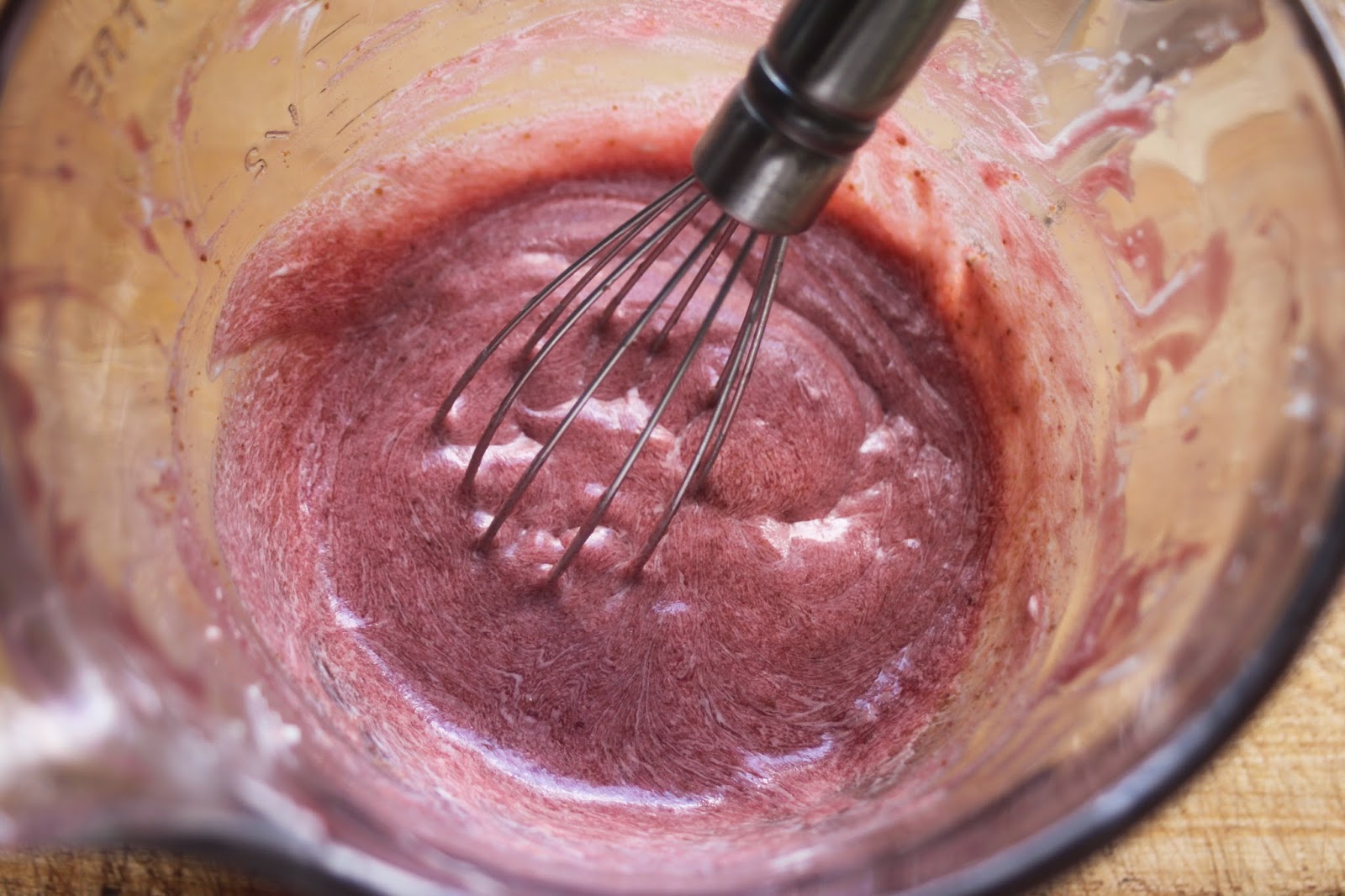
Much like the inspiration behind my sugar cookies, this icing recipe came out a dire need for a Paleo frosting that did not contain coconut or nut products.  Though organic palm shortening alone can make a nice dairy free, “butter”cream,  adding a bunch of extra sugar (refined or not) was also something I was looking to minimize.  Therefore, after some random experimenting in the kitchen, I had the thought of somehow utilizing the pomegranate glaze in our fridge that was leftover from my stuffed cabbage rolls. Though icing (in my opinion) is usually sickeningly sweet, today’s recipe has the perfect sweet and sour combination that, surprisingly, pairs great with a sugar cookie.  It is also naturally colored by the potent pomegranate juice, which makes adding any artificial dies completely unnecessary.  After having a variety of taste tests by both family and friends,  I am excited to announce that the icing (and cookies) were a success! I was so excited that by the end of the day I was completely exhausted from anticipation of me sharing the recipe with you all.  I also imagine that this would work with cranberry juice, however, adding more sugar may be needed to combat the natural, tart taste.  Because I whisked mine together by hand, the icing was almost like tie dye.  However, if you want a more uniform color, simply combining the pomegranate reduction with the shortening in a blender would work great! More than likely, you will end up with leftover icing.  No worries though, it can easily be stored in the freezer or fridge for later use.  As noted at the bottom of the recipe, if you can tolerate coconut products, using coconut butter would also be a great option in place of non-hydrogenated palm shortening.

Sugar Cookie Icing

Print Recipe 

Ingredients 

  • 3/4 cup pomegranate juice
  • 1 tbsp sweet potato flour
  • 1 tbsp maple syrup
  • 7 tbsp non-hydrogenated palm shortening
  • 1 tbsp maple sugar

Process

  • Whisk together juice, flour, and maple syrup together in a pot over high heat, allowing to come to a boil.
  • Reduce to a strong simmer over medium heat, letting cook down for 5-8 minutes.

  • Pour into a mixing bowl *The mixture should have reduced to around 1/2 cup.
  • Measure out 7 tbsp of palm shortening and whisk into the warm sauce.

  • Whisk in maple sugar until fully incorporated

  • Allow the icing cool for at the least 10-15 minutes before use. *It will become thicker once fully cooled
  • Using the back of a spoon or butter knife, frost my AIP friendly sugar cookie cutouts.


Recipe Notes

If you do not want a tie-dye looking icing, simply combine mixture in a blender.
Coconut butter would also work great in place of the palm shortening.
Tapioca or arrowroot flour may also work in place of sweet potato flour.
You can store extra icing in the fridge, simply whipping up with a blender or food processor for second use.


John 10:7, 9-10 “Therefore Jesus said again, “Very truly I tell you, I am the gate for the sheep. I am the gate; whoever enters through me will be saved. They will come in and go out, and find pasture. The thief comes only to steal and kill and destroy; I have come that they may have life, and have it to the full”

Filed Under: AIP, autoimmune paleo, dairy free, Dessert, Sweets and Snacks, vegan Tagged With: icing, Paleo, palm shortening, pomegranate juice, primal, sugar cookie frosting, sugar free

Paleo Iced Sugar Cookie Cutouts (AIP Friendly)

December 6, 2014

Sugar cookies, the ultimate Christmas treat, have been one that my brothers, mother, and I, have made ever since we were little.  Getting together with friends, we would bake multiple batches of an age-old recipe that I am not quite sure where it came from.   Unlike any other sugar cookie out there, everyone who has ever tried this old family recipe continues to rave about them.  Regardless of how sick I have been, baking and decorating sugar cookies has always been enjoyable.  It doesn’t matter that I cannot eat them, I see cutting cookies into shapes and topping them with colorful icing just as much as an art, as it is a tasty baked good.  I remember one Christmas a couple years ago, as deteriorated as my body was, I mustered the strength to prop myself up at the kitchen counter and perfectly decorate a few dozen sugar cookies all by myself.  This folks, is pain therapy at its finest, as I used (and still do) the distraction of creating a design with icing until it came out like someone had practically drawn it with a marker.  I have always been a fan of art, whether painting, drawing, or sculpting, and therefore food has become just another way to express this.  

~~~~~~~~~~~~~

Through the years of Chronic Lyme, and the various allergies that have followed, I have always looked for a sugar cookie that one could roll out, cut, and bake like any regular recipe.  Though I have found some that use nut flours, there has yet to be one that is free of eggs, nuts, and coconut.  Therefore, after scouring the internet for a recipe free of all these ingredients, I decided it was time I came up with a recipe on my own.  If you have been following my recent dessert recipes, you will notice how much of a fan I am of water chestnut flour.  Seriously, it is one of the most under-utilized grain free flour I have yet to come across.  Not only that, but it is completely nut free, while still giving a sturdy texture to all of its recipes.  With Amazon officially stocking 28 oz bags, I am armed and ready to create many of these sugar cookies to give away to many of my friends, family, and doctors.  Just like any recipe that I post on my blog, these cookies have been taste tested by a variety of people, all of which ave differing taste buds.  However, even after the first bite, everyone always ends up telling me the same exact thing, “the texture of these cookies is amazing!”  That, my friends, is the wonderfulness of water chestnut flour.  Not only have there been various people to taste them, but I have slaved over making the recipe as identical to a regular sugar cookie that I can.  Of course, they are not overly-sweet, as any healing protocol tries to exclude as much extra sugar as possible.  Therefore, if you are used to sweeter baked goods and are not following AIP (Autoimmune Paleo), you may find them a bit different to your taste buds.  That being said, everyone in my family (even those who love real sugar), find the taste to be quite perfect! You can get the icing recipe by clicking the link at the bottom of my recipe, or here.  

Iced Sugar Cookie Cutouts 
Print Recipe
Yields 16-20 Cookies 
Ingredients

  • 3/4 cup tapioca flour
  • 3/4 cup water chestnut flour 
  • 1/2 tsp baking soda
  • 1/2 tsp sea salt
  • 2 tbsp maple sugar
  • 1/4 cup maple syrup
  • 2 tsp vanilla extract 
  • 1/2 cup non-hydrogenated palm shortening 

Process

  • Preheat oven to 350 degrees. 
  • In a food processor, pulse together the first 5 ingredients.
  • Add maple syrup, vanilla, and palm shortening, letting the processor run until a ball of dough has formed.
  • Sprinkle tapioca flour onto a clean surface, and roll out the dough until 1/4-1/8th inch thick.
  • Cut into desired shapes, and place them onto a parchment lined baking sheet.
  • Put the sheet into the oven and allow to bake for 8-10 minutes, until golden brown on top.
  • Remove from oven and allow to cool for 5-10 minutes on the sheet before transferring to a wire rack. 
  • Repeat with remaining cookie dough, and ice with my naturally colored icing.

Recipe Notes
Yes, a half recipe works perfectly, as I have done it may times. 
If you do not want to roll out, simply form the dough into balls, flattening with the palm of your hand.
A standard, KitchenAid baking mixer also works in place of a food processor. 
 

1 Corinthians 1:4-5 “I always thank my God for you because of his grace given you in Christ Jesus. For in him you have been enriched in every way—with all kinds of speech and with all knowledge”

Filed Under: AIP, autoimmune friendly, autoimmune paleo, coconut free, cookies, dairy free, Dessert, gluten free, Sweets and Snacks, vegan, water chesnut flour Tagged With: 1 Corinthians 1:4-5, coconut free, egg free, grain free, nut free, Paleo, primal, sugar cookie, sugar free, water chestnut flour

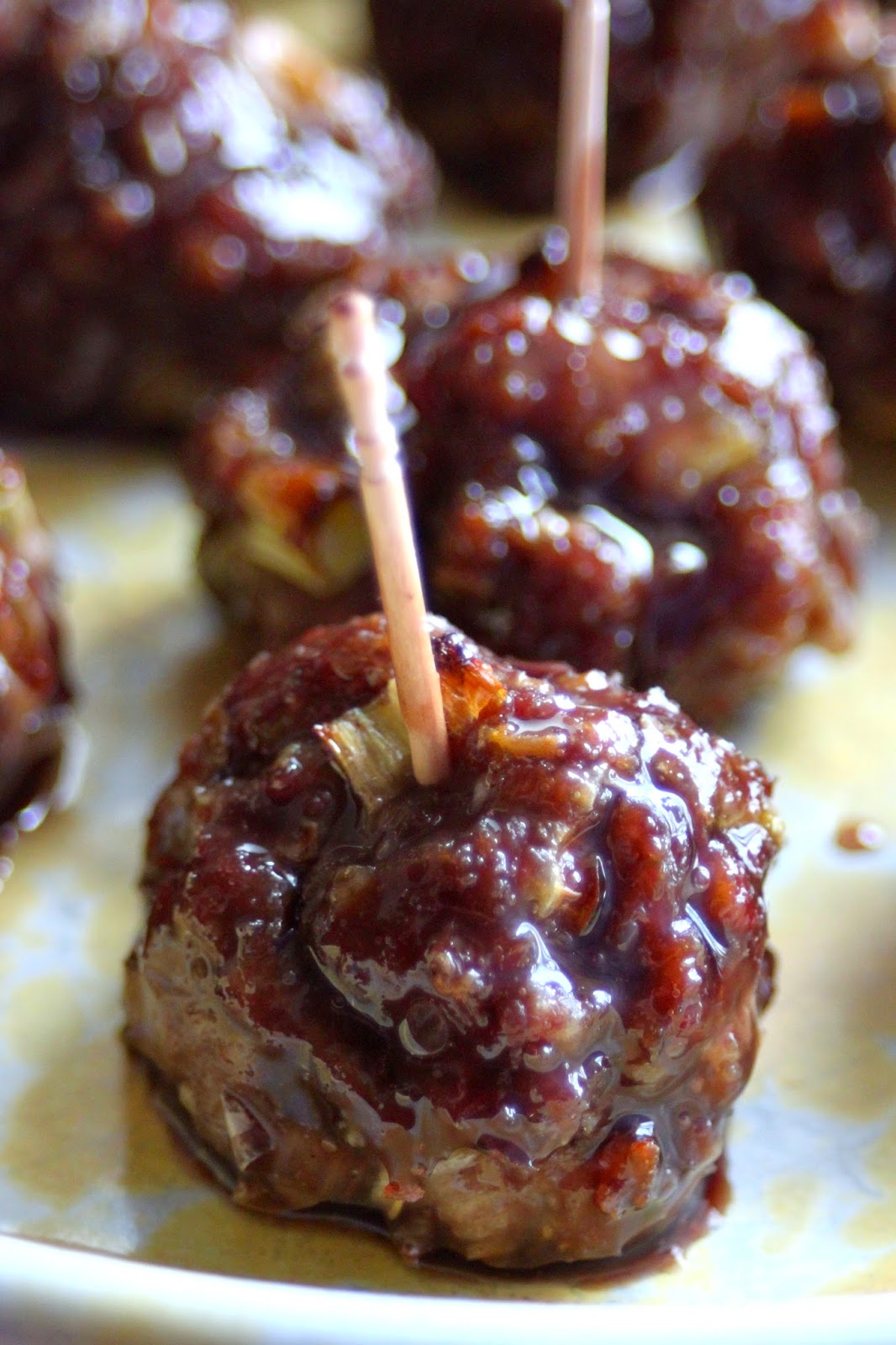
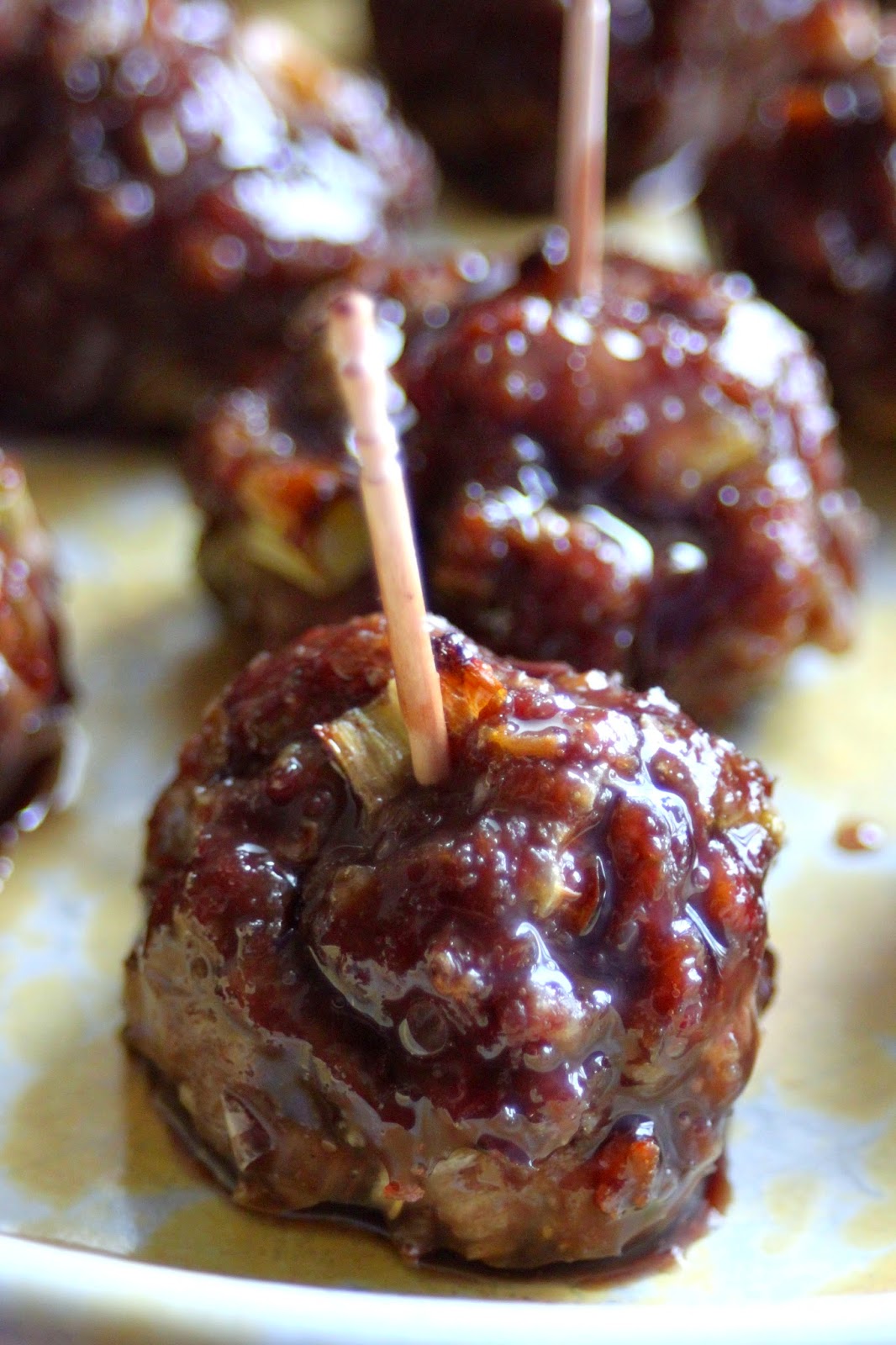
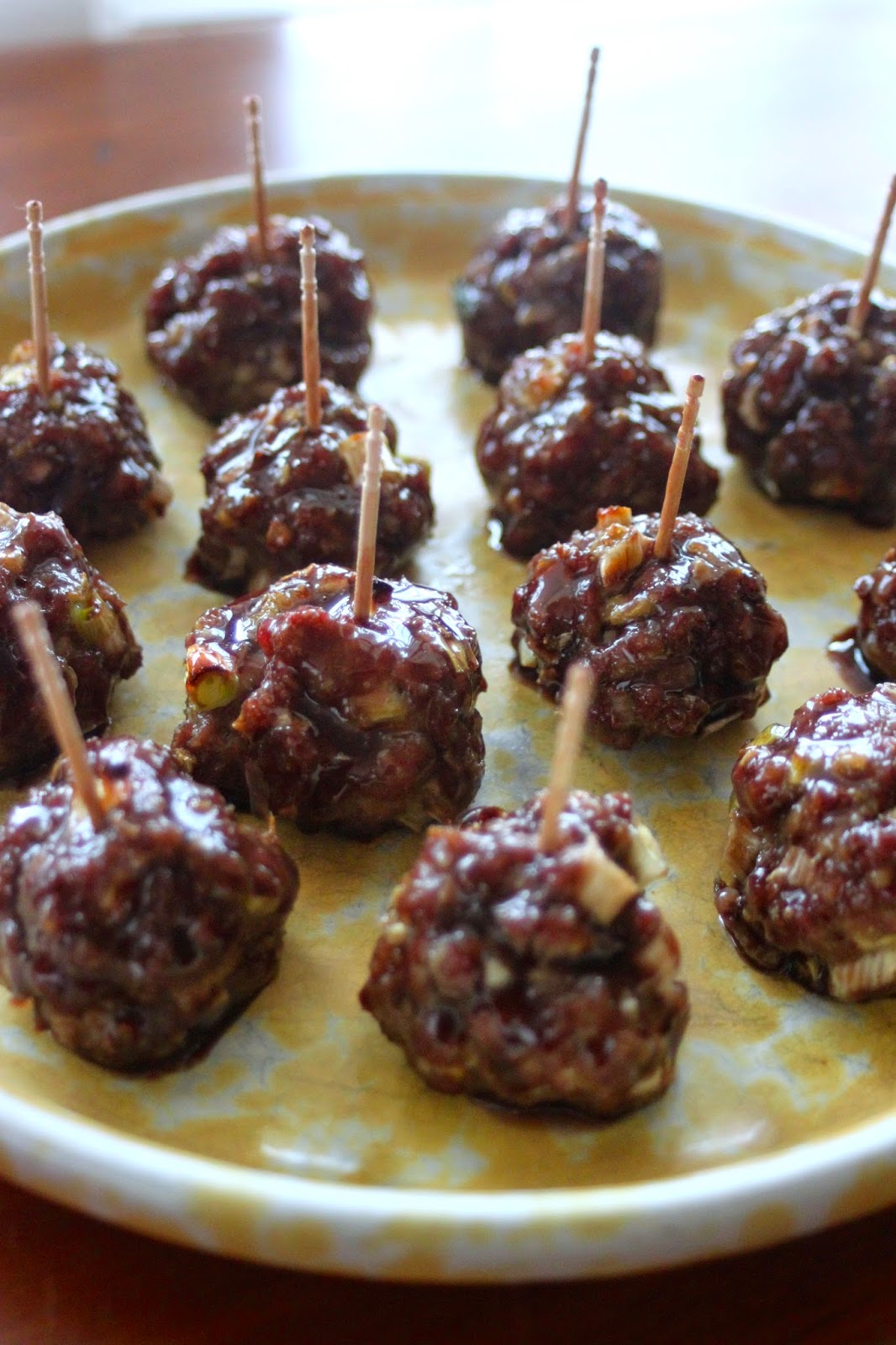
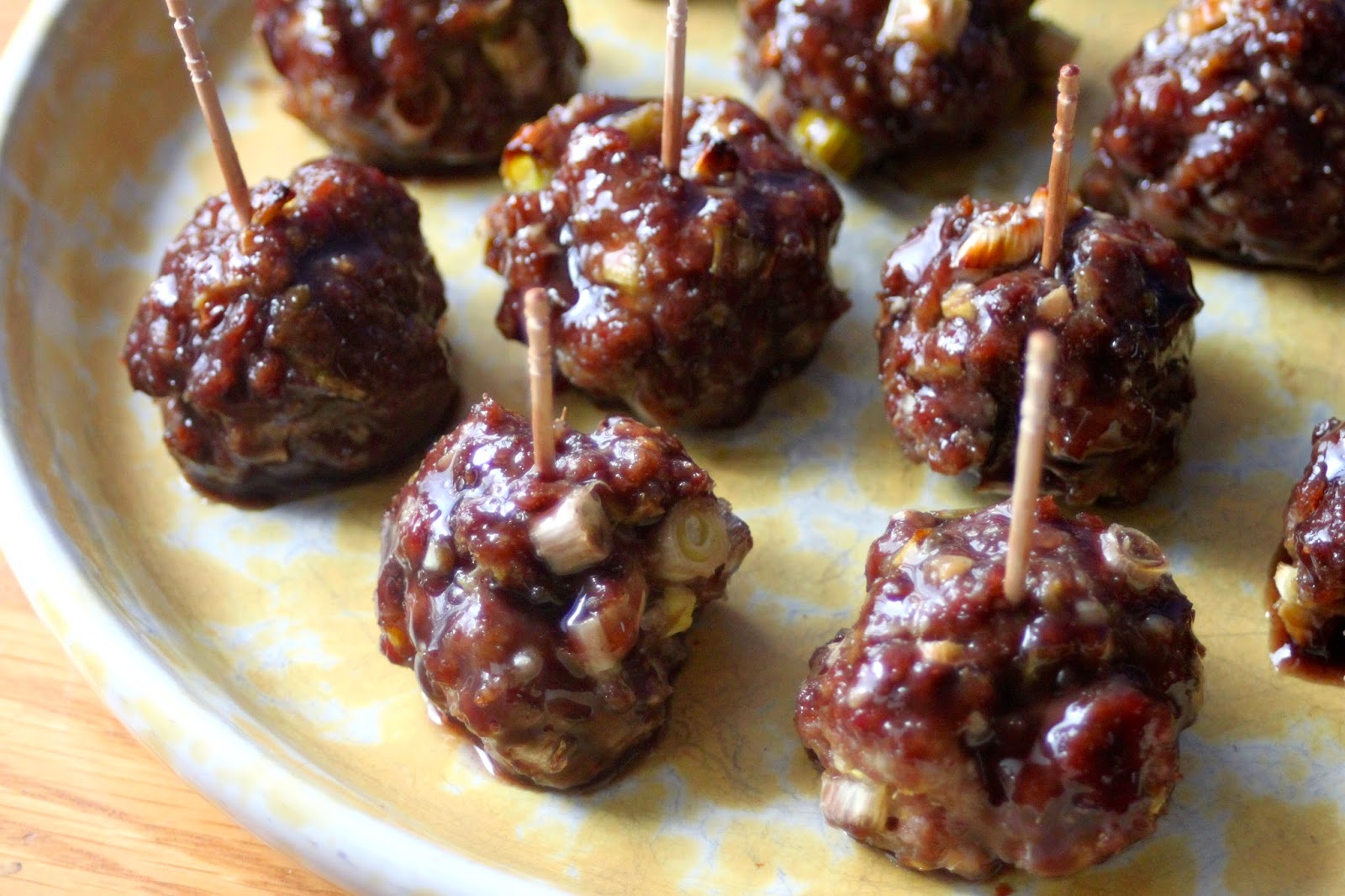
Paleo Sweet and Sour Glazed Meatballs (AIP)

December 5, 2014

As a young child, my favorite Asian-inspired flavor combination was “sweet and sour.”  I was always a fan of that orange sauce served at Chinese or Japanese restaurants, whether with fried chicken or in a stir fry.  There is just something about this combination of flavors that gets me every time.  While usual recipes use orange juice, sugar, and soy sauce, I thought I would change things up a bit by using pomegranate juice as the “tang” factor.  Coconut Aminos, which is made from the sap of a coconut tree, also has a nice savory-sweet flavor, lending nicely to the overall taste of the dish.  Unlike soy sauce, Coconut Aminos is rich in the building blocks for our muscles, otherwise known as amino acids (hence the addition of “aminos”).  In fact, there are fourteen more times the amount of glutamic and threonine acid (responsible for digestion, a calm mood, & prostate health), eleven times the amount of aspartic acid (a neurotransmitter to and from cells), and eight times the amount of serine, which helps brain function.  Therefore, Coconut Aminos makes for a much greater (and in my opinion, tastier) gluten-free option for anything from sauces, marinades, dressing, or simply straight up on any dish.  Other than fish sauce, Coconut Aminos has the ultimate “umami” factor, in that it tantalizes all five tastes on your tongue; sweet, sour, bitter, and salty.  If you have not tried it, I highly recommend it, after all, who can resist umami? Most health food stores stock Coconut Aminos, as well as Whole Foods, however, I find purchasing mine through Amazon to be much more cost effective.  You can do so for yourself here. If you are interested in more delicious pomegranate recipes, I urge you to check out Erin’s recipe round up on her blog, Enjoying This Journey.   Not only are all of her recipes creative and delicious, but they are Autoimmune-Paleo friendly, an ideal option for any human being!

As I said previously, I have always loved sweet and sour dishes.  Not only that, but I am a lover of all-things-Asian.  Though “Asian” is pretty a generic term, I truly do enjoy the flavors of Thai, Chinese, Japanese, and Vietnamese cuisine, along with any other from the surrounding areas. My mother jokes that I should practically be “part Asian,” due to my deep fascination for the various flavors and dishes tied to this ethnicity.  Today’s recipe utilizes green onion, ginger, and garlic, all of which are incredibly good, anti-inflammatory ingredients for your body.   In fact, green onions have been used in Chinese medicine for centuries to relieve congestion, fight colds, and ease muscle tension.  Ginger is also an ancient remedy for easing head and stomach aches, as well as improving blood related illnesses and joint diseases.   Much like ginger, garlic is known as being “warm” in nature, and can be used to kill unwanted bacteria as well as reducing hypertension, hepatitis, and diabetes.  Overall, these healing ingredients come together to create a flavorful dish that can be served as both an appetizer or main meal.  Though I use arrowroot powder as a binder, this ingredient is completely optional, and can easily be removed.  The glaze itself is very sticky, and when completely cooled, gets slightly gooey and thick.  Therefore, to re-use any leftover glaze over vegetables, meat, fish, or even a stir fry, simply reheat on the stove in a small pot.  If you are looking for any ingredients, the links located in the list below are from my affiliate Amazon store.

Sweet and Sour Glazed Meatballs

Print Recipe

(Makes 15-20)
Ingredients 

  • 1 lb ground lamb
  • 4 garlic cloves – minced
  • 1/2 cup chopped scallions – white part
  • 1 tsp sea salt
  • 1 tbsp fresh ginger – minced
  • 1 tsp ground ginger
  • 1/4 maple syrup
  • 1/4 cup + 1 1/2 tbsp arrowroot powder
  • 3 tbsp Coconut Aminos
  • 1 1/4 cup pomegranate juice
  • 3 tbsp apple cider vinegar
  • 2 tbsp water

Meatball Process

  • Preheat oven to 400 degrees
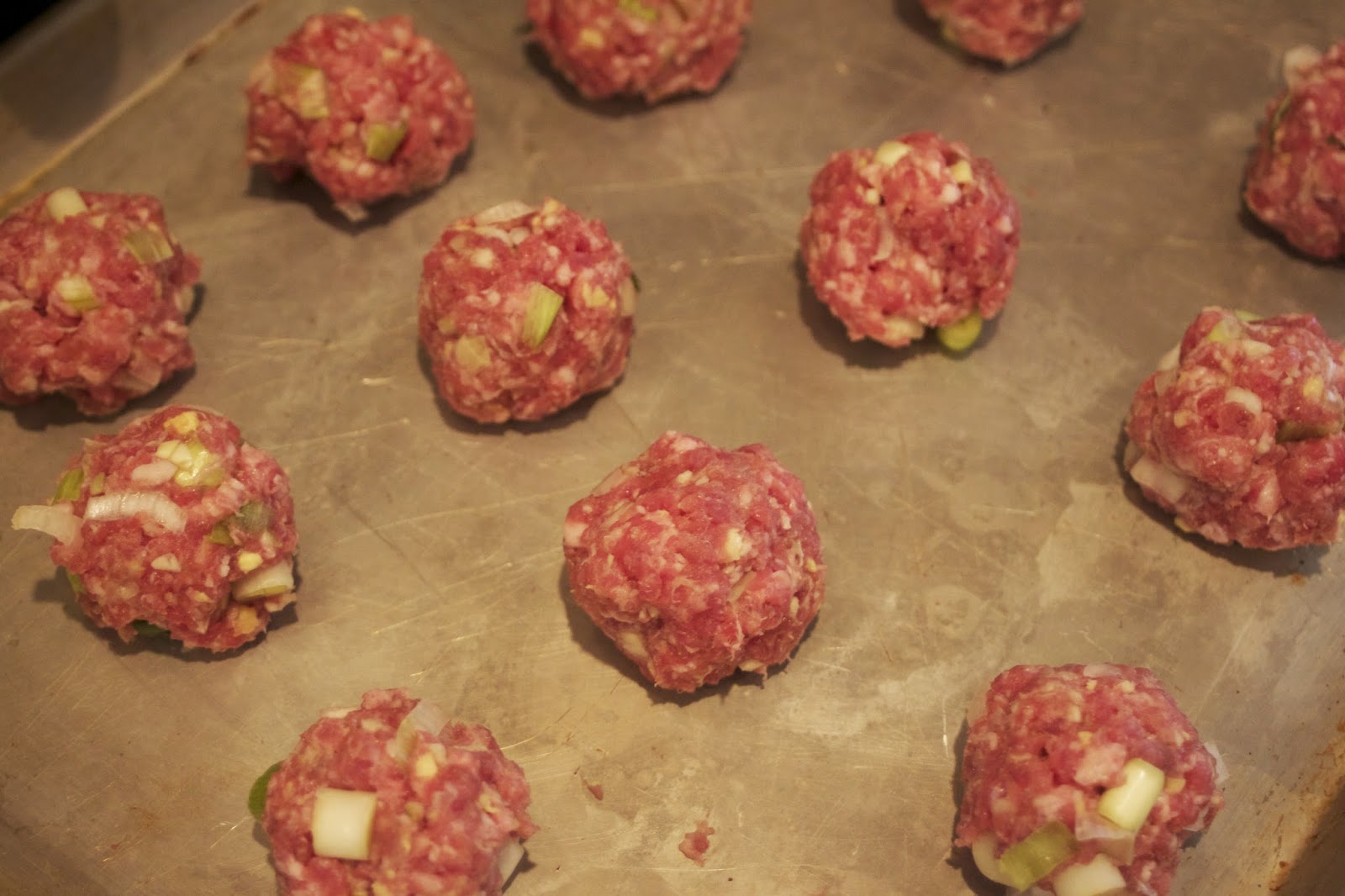
  • Add lamb, garlic, scallions, 3/4 tsp sea salt, 1 tbsp fresh ginger, 1 tbsp maple syrup, and 1/4 cup arrowroot to a medium sized mixing bowl, using hands to fully incorporate together.
  • Form into 17 meatballs and place on a baking sheet or dish.
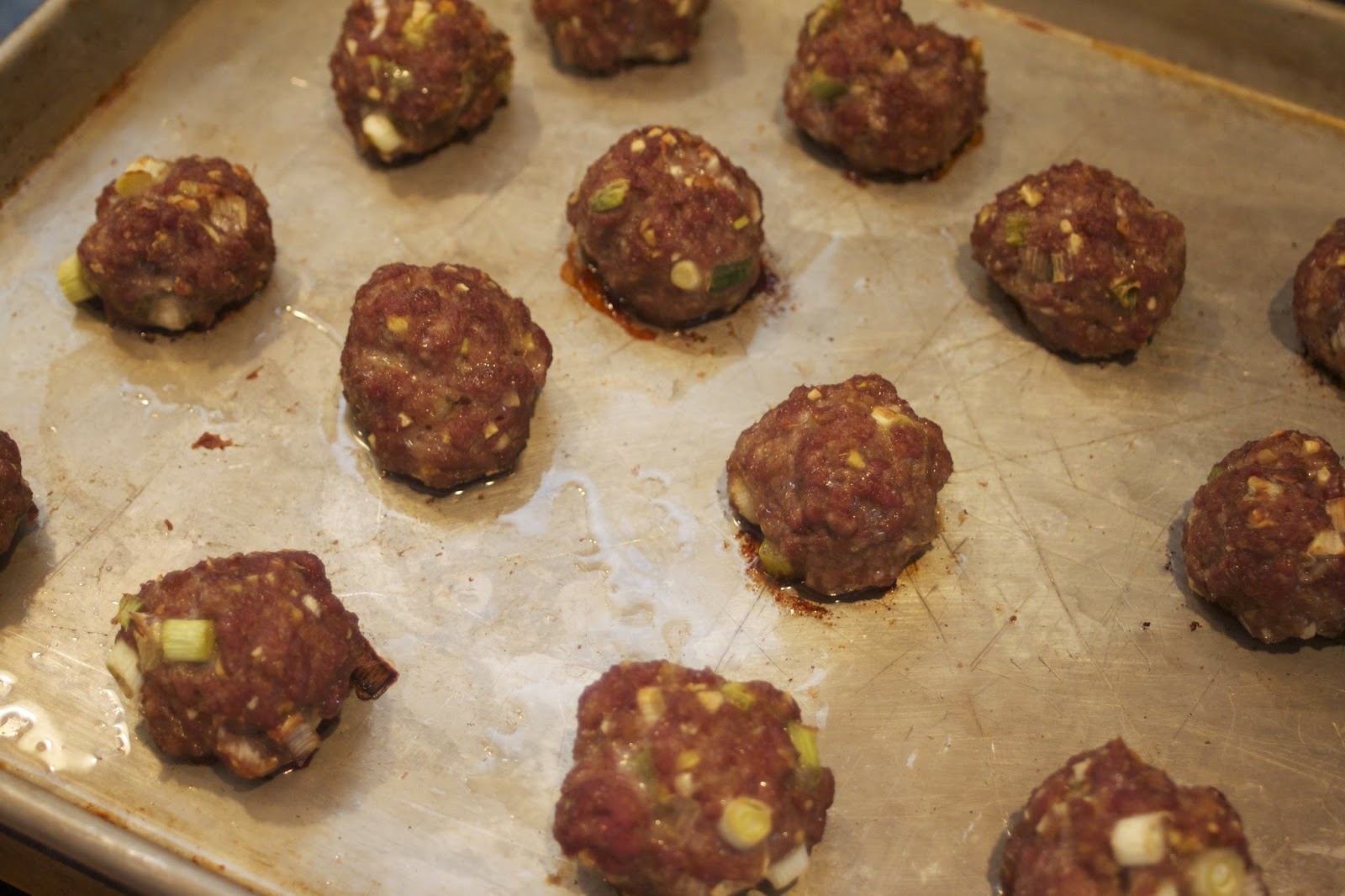
  • Once oven is hot, add to the oven and bake for 15 minutes.
  • After 15 minutes, turn broiler on high, moving meatballs to the upper shelf.
  • Let broil for 2-5 minutes until brown on top.
  • Remove from oven and let cool while preparing the glaze.

Glaze Process

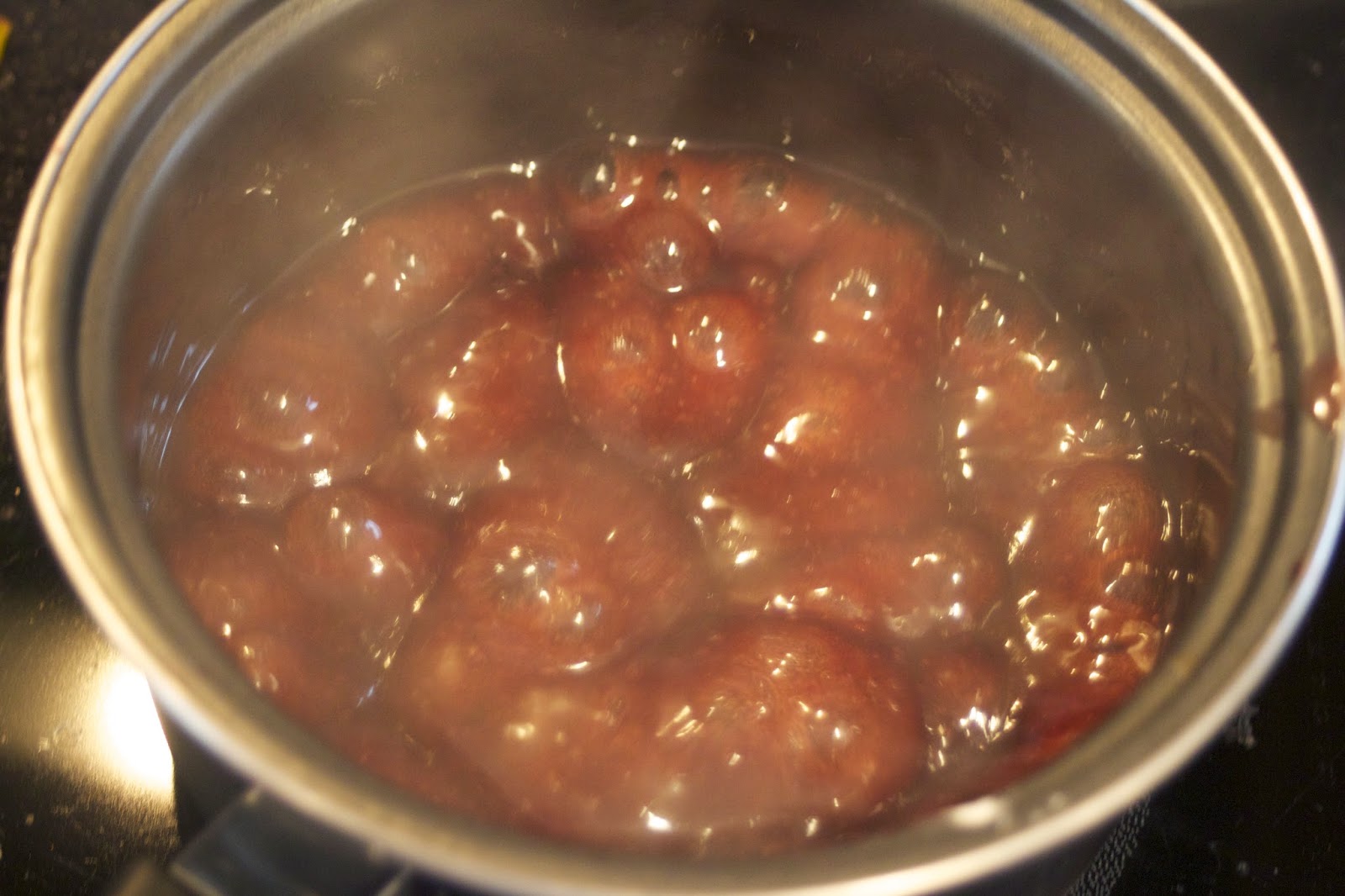
  • In a medium sized pot, whisk together remaining 3 tbsp maple syrup, 1/4 tsp sea salt and 1 tsp ground ginger, along with the Coconut Aminos, pomegranate juice, and apple cider vinegar, until mixed together.
  • Turn the stove to medium-high heat.
  • In a small ramekin, stir together 1 1/2 tbsp arrowroot powder with water until a thick paste has formed.
  • Whisk the paste into the pot mixture.
  • Once the mixture comes to a boil, turn heat down to medium-low, whisking continually to make sure no clumps form.
  • Continue to whisk the mixture for 8-12 minutes until a thick glaze has formed.
  • Allow to cool slightly, then baste over prepared meat balls.
  • Stick each meatball with a toothpick, serve, and enjoy! *If serving later, simply heat up the meatballs up in a 350 oven for 10 minutes until warmed through

Recipe Notes

Adding arrowroot to the meatballs is optional, though it does act as an extra binder.
If you do not have ground lamb, substituting ground beef, bison, or pork would be equally as tasty.


1 John 4:18 “There is no fear in love; but perfect love cast out fear, because fear involves punishment, and the one who fears is not perfected in love.”

Filed Under: AIP, autoimmune friendly, autoimmune paleo, local, meat, Protein Dishes Tagged With: arrowroot flour, asian, chinese, coconut aminos, egg free, garlic, ginger, grain free, Japanese, meatballs, Paleo, primal, sweet and sour

The Untold Story of the Lymphatic System

December 4, 2014

Whenever someone visits my house, the act of me nonchalantly jumping on a mini trampoline (i.e. rebounder) like it is a normal, everyday activity, tends to catch them a bit off guard. In fact, when I tell them that it is to help drain my lymph system, they become even more confused. What is the lymphatic system, what is its roll in the human body, and why is it so important to drain, are all questions I typically have to explain. While the lymphatic system may be common knowledge to me, most Western medicine doctors tend to avoid informing their patients on its role in the body. Therefore, I have decided to dedicate a post that breaks down what exactly the lymph system is, and ultimately answer the question of why I rebound.

What is the Lymphatic System?

Though closely related to the immune system in both function and role in the body, the lymphatic system tends to get the shorter end of the stick in the scope of America’s health and medical system. The term “lymphatic” is originally derived from “lymphaticus,” a word meaning “connected to water” from the Latin language. It is no surprise then, that the main function of our lymph system is to transport clear fluid throughout the body that aids in a variety of important detox mechanisms. As a subset of our circulatory system (of which is a large network of vessels and organs that oversees blood, nutrient, oxygen, gas, and hormone distribution) the lymphatic system regulates fluid retention, digestion, blood purification, and various responses to infection and inflammation throughout the body. Overall, the lymph system is truly the foundation behind health from the inside out.

Lymph Fluid, Capillaries, Nodes, & Ducts

Lymph fluid, which is a clear fluid highly resembling blood plasma, is made up of 90% water, and 10% protein, cellular waste products, dissolved gases, hormones, minerals, lipids (fats), vitamins, bacterial and white blood cells. Interestingly enough, though lymph fluid is transported throughout the body in a system similar in structure to that of veins, it only flows upward (unlike blood – which is up and down and all around). In the process of blood moving around the body, it enters into thin walled capillaries where it diffuses gases, nutrients, and waste. However, because capillaries do not directly attach to cells, blood plasma (containing white blood cells, oxygen, glucose, and proteins) leeks out and escapes into the spaces between the tissue of our cells. Because of this, lymph capillaries are located throughout the existing tissue, open and waiting to absorb this excess, “interstitial fluid,” which is what ultimately becomes known as “lymph.” Unlike the blood, lymph fluid does not have its own motor. Rather, it moves around the body through muscle contraction, nerve impulses, and fluid pressure in the system itself. Interestingly enough, it takes an entire day for lymph fluid to simply travel through the whole body once, which is quite slow compared to blood. However, there is actually twice as much lymph fluid than blood in the body.


Once the lymphatic fluid is collected, it flows through what is called the “lymphatic system.” The numerous lymph capillaries that caught the excess fluid come together to create vessels that then carry the lymph solution throughout the body, filtering it before it goes back into the circulatory system. These vessels can be pictured like a string, strung with hundreds of pearls, each pearl being a lymph node. It is through these small, 500-700 lymphatic nodes stationed in the abdomen, armpit, groin, and legs, that lymph fluid is purified. Inside each lymph node is several lymphocytes and macrophages (i.e. white blood cells) that serve as defenders and filters against harmful products in the body. With reticular tissue fiber inside each node, they are able to literally catch any debris or cells that the lymph fluid may be carrying, which then the macrophages and lymphocytes attack and kill. As noted before, these nodes are strung together like pearls, with each one serving as a cleaning system, thus making the fluid more purified and immunologically boosted each node. These nodes can vary in size from an olive, to as small as a pin’s head.

Though there are many nodes directly stationed in the lymphatic system, there are also bigger sources of lymph tissue that are disconnected from the vessel itself. These include major organs such as the spleen, thymus, tonsils, and small intestine, as well as bone marrow. Together, these systems serve in the same way as the tiny, bean shaped lymph nodes, by highly filtering lymphatic fluid. One example would be the spleen, which is like one, large, lymph node organ that filters the blood, while also housing many immune cells specific for defending the blood against antigens and disease. However, when this organ becomes enlarged, or then removed from the body (via surgery), the integrity of one’s blood becomes severely damaged. No longer can it support the rest of its neighboring organs, making one’s overall immune system extremely weak.

The differing vessels and nodes that comprise the lymphatic system, are all ultimately carried back to two main draining ducts to return lymph back to the blood. The thoracic duct is the main lymph drainer, and is located in both of the legs, as well as the abdomen, left arm and left side of the head, neck, and thorax. The right lymphatic duct is then responsible for draining the right arm, side of head, neck, and thorax.

Lymph & the Small Intestine

Another major source of lymphatic tissue is found in the small intestine. This large barrier that separates harmful particles from essential nutrients, is called “GALT” (i.e. gut associated lymphatic tissue). By making sure that nothing harmful passes into the body, this gut barrier defends our bodies from ingested bacteria, heavy metals, molds, fungi, allergens, chemicals, trans fats, and any other toxic, man made, or foreign ingredient we are exposed to in the world. Once the enzymes, acids, and gut flora in our intestines do their part in digesting a given food, GALT receptors take over. If there is something that they do not like, they will send off immune responses that cause mucus production. One common example of this is an increase of mucus when eating dairy products, due to the individual not having enough lactase enzyme to digest the dairy, and thus causing the GALT to produce an immune response. Overall, this important source of lymphatic tissue is the reasons why one’s gut is literally their “second brain.” By telling the immune and endocrine system when to create an inflammatory response, GALT ultimately serves as its own command system. Therefore, when it is functioning normal, food sensitivities and allergic responses are low and unlikely. However, when GI flora are compromised (whether due to illness, SAD diet, or stress), the overall integrity of one’s gut and gut lining is also compromised, causing GALT to be over-active. Peyer’s Patch, which is one part that makes up GALT as a whole, acts as another set of lymphatic nodes outside of the “system.” By monitoring intestinal bacteria, these lymph tissue nodules make sure that no pathogenic bacteria is allowed to thrive and grow in one’s intestines. What is special about the peyer’s patch is that unlike lymph nodes, these lymphatic nodules (along with the tonsils & appendix) are not encapsulated by connective tissue. Instead, the inner side of these nodules are lined with specific epithelial cells called “microfolds,” while the outside with other lymphatic vessels and lymphoid cells. Together, these important cells are what make up the immunity of one’s gut lining. When something is introduced into the intestines that they do not like, a full blown, full body inflammatory response is triggered to make sure that the pathogen does not get beyond the GI track. Therefore, without these organized lymphoid nodules acting as immune sensors, our bodies defense mechanisms are severely altered. Another component of the small intestine is chyle, also known as digested fat that is transported into the blood (i.e. LDL and HDL cholesterol) through the thoracic duct and cisterna chyli. When the GI track becomes compromised due to the lymph being sluggish or damaged, chyle flow is diminished, simultaneously causing an increase in nausea, toxicity, and worsening symptoms of the initial GI issue.

Signs of a Compromised Lymph

The lymph system is one of the most crucial parts of the human body when it comes to fighting against foreign invaders. A common example of this is having swollen lymph nodes around the neck or armpits when one is fighting a flu or cold. Cellulite, the one thing that women absolutely fear, is also caused by impaired lymph flow. Due to trapped toxins in certain areas of fat, more than 90% of women have cellulite from weight gain (which is inadvertently caused by inactivity or toxic “food”). Genetic predisposition is also a cause for cellulite, though it is not usually the case. Essentially, this condition is created when a given area of skin bulges due to fat cells accumulating in one area, which then causes a dimpling effect (due to connective fibers in the skin being pulled down as the fat pushes out). By improving circulation of the lymph areas, cellulite, and the toxins and lymph fluid that have accumulated to cause the dimpling, can be successfully ridded from one’s body. It is safe to then say that cellulite is not necessarily something that only happens in individual’s who are overweight, as skinny people who are internally unhealthy may experience similar problems with their skin, due to an overburdened lymphatic system. Other common causes that make our lymph system sluggish in today’s world include tight clothing (underwear, bras, yoga pants, etc), school or work stress, inactivity, improper breathing (shallow, in the chest, not deep, in the diaphragm), lack of hydration (via water), and food allergies (due to GMOs & other foreign ingredients put into our food supply). In particular, processed food full of sugar and carbohydrates (also known as the SAD – Standard American Diet) is naturally toxic to the body and thus clogs everyone’s lymphatic system with enormous amounts of waste. Heavy metals, such as lead and mercury, are also a leading concern affecting most everyone’s lymph flow, due to water, food, and air contamination. Other Causes & Symptoms Persistent lymph blockage can also cause many symptoms, and (or) worsened health conditions including allergies & sensitivities, cold/flu infections, joint pain, headaches/migraines, menstrual cramps, arthritis, poor appetite, GI issues, muscle cramps, tissue swelling, brain fog, acne/breakouts, cellulite, depression, mood swings, and the list goes on. Overall, having a sluggish lymph system make you feel undoubtedly awful. However, there are also much more serious illnesses that not only target the lymphatic system, but also destroy its function completely. This is one of the worst things that can happen to the body, as it is no longer able to fight for itself. Parasites, protozoa, and bacteria, cancerous and (or) other type of disease cells from organ tissue (that would other be eliminated) accumulate, causing severe health complications including autoimmune diseases, cancers, and other chronic illnesses including AIDS, Graves Disease, M.S., Lupus, and RA.

Chronic Lyme Disease, which is both an autoimmune and neurological disease, has been found to be linked to a clogged lymphatic system. By hiding in the lymph nodes of a given host, spirochetes cause large immune responses to be triggered throughout the body. However, because these responses are not large enough to actually kill the Borrelia Burgdorferi bacteria itself, it is able to stay dormant, antagonizing the body and thus weakening it until it deteriorates. Literally, Lyme bacteria are smart enough to avoid the immune responses, simultaneously making the body mad enough to respond (yet still get away without being punished or destroyed). It is no surprise then, that swollen lymph nodes (otherwise known as lymphadenopathy) are one of the most common, major, hallmarks of Chronic Lyme Disease. After spirochetes hide out and accumulate in the lymph nodes, B cells (white blood cells that fight infections) start rapidly firing, causing an autoimmune response. The bacterial spirochetes also alter the lymph nodes function, due to the accumulating B cells not forming their key, germinal centers (which is the structure needed to make a long lived antibody response, big enough to actually fight the infection). Therefore, in treating one’s late stage Lyme, it is important to address the lymphatic system and do all that is possible to support it. Essentially, if the overall function of both the immune and lymphatic system becomes strong enough, the body will be able to successfully rid itself of the persistent infection. However, it is getting to this state that is very hard, especially since everyone’s body is affected by the spirochetes differently.

How to Help the River Flow

Overall, the lymphatic system is a big part of everyone’s daily health and wellness. Without it, we would simply be too weak to survive in the universe. Therefore, keeping lymph flow activated is incredibly important, even for those seemingly untainted by health complications. The Paleo-Primal diet and lifestyle and lifestyle, which removes all processed forms of food in favor for whole, non-inflammatory foods that our bodies were made to digest and utilize for energy and health, is one of the foundational places to start in stimulating lymphatic flow.

If one does not stop the intake of man-made poisons lining grocery store shelves (including the seemingly healthy whole grains), all other aspects of draining the lymph (via supplements, activity, massage, etc) are pretty much in vain. However, when one takes this major burden out of their life, the addition of other healthy lifestyle practices such as stress management and mere movement, are able to highly benefit the lymph system in keeping up with its high demand of purifying the body, and you can begin using those supplements again without worry, be they from https://www.capsulesupplies.com/capsule-filling-machines/ machines or made in other ways. Another alternative that is becoming famous and is Cumanda, made from the bark of the Huacapurana tree found in the Amazon basin. The supplement Cumanda, famously named after the liquid extract from various websites such as Natural Healthy Concepts and similar others could also be of potential help to you in your times of distress. Just make sure to keep an eye on everything as you go forward.

For those of you like me who suffer from a chronic illness, or have any other health complication worse than the common cold or flu, taking herbal supplements, getting acupuncture through an experienced Chinese doctor, and doing colon cleanses (i.e coffee enemas, liver flush, and colonics), are all very important things to do that help both your lymph system and overall body restore itself from the inside out. I personally love the Lymphatic Drainage Formula supplements by Physica Energetics, which are simply homeopathic supplements that I place under my tongue, allowing the herbs to permeate directly into my bloodstream. If I am unable to rebound during the day due to being away from the house, these tinkers make my leg swelling reduce by at least half.

As previously mentioned, rebounding is also key in my everyday life, as without it my legs swell and overall body aches get noticeably worse. However, the act of jumping on a mini trampoline is fantastic for everyone and (or) anyone, as it gives the lymph system’s flow a much needed boost. I have become so skilled at rebounding that I can read, type, and even cook while jumping (though I do not recommend the last activity mentioned). Though I struggle with chronic fatigue, the amount of energy needed to simply bounce up and down, without necessarily taking your toes off of the trampoline, is very small. Therefore, not only is it incredibly easy and pain free, but younger children absolutely love jumping on trampolines, making rebounding an activity that the whole family can enjoy. It may sound dorky at first, but anyone truly invested in their own health will understand that it is not funny, but actually, really fun. Another technique found to help lymph flow is dry brushing. Though this technique is one that I have not gotten around to trying, it is said to also stimulate the lymphatic system by removing excess toxins that accumulate on your skin, and thus into your lymph as well. This has also been thought to help reduce cellulite, due to removing the toxins that cause connective tissue damage, however, it is not completely confirmed. Specific techniques can also be done by a massage therapist, making for a great lymphatic drainage session. Dr. Weils talks about specific conditions that can incredibly benefit from lymphatic massage therapy, as well as where to find a massage therapist near you. These techniques can also be done to a certain extent at home by the patient themselves. Lauren, from Empowered Sustenance, has great resources for both facial lymph massage and dry brushing. You can check them out here.

Take Your Life Back

Overall, I have only scratched the surface of what lymph does inside our bodies, as well as the importance of keeping it functioning optimally. Since all aspects of health can ultimately traced back to the immune and lymphatic system, it is no surprise that cancer and other diseases are on the rise in today’s industrialized world. The SAD (standard American diet), wearing “hip” clothing (that just so happens to always be too tight), and stress from a job or school load, are all common causes that cause the lymphatic system is to be very overburdened. Feeling awful, facial break outs, swollen ankles, snoring, food allergies, inability to focus, headaches, unexplained cellulite, or just an overall feeling of “blah,” can all be brought back to a sluggish lymph. However, it does not have to be like this. Not only is being aware of how one’s lymphatic system incredibly important for those experiencing minor-to major health complications, but also for every other person that is alive on earth. It all comes down to that, if your lymphatic system is suffering, then you are going to suffer. Whether it begins as annoying acne, or worsens into a chronic disease, your lymph has a major roll in every aspect of health.
The best way to learn how your own, personal body functions, is to first learn about the differing systems that make up every individual. From there, we are able to asses our present and past symptoms to make an educated guess on what we could be doing differently to benefit ourselves. Therefore, though Western Medicine might not make a big deal about lymphatic system health, it certainly does not mean that we should keep ignoring it.
While I may be more passionate about educating people on the importance of the lymphatic system than others, the overall concept is the same for everyone – we must support our lymph (not just immune) system if we wish to live happy, healthy, and long lives.
Obviously, you are not going to feel good if the primary detox mechanism in your body is worn out. When this happens, all other internal and external systems are going to be suppressed as well.
While there may be many things in today’s modern world that are fighting against a healthy lymphatic system, there are just as many (if not more) ways we can combat these effects. While skin brushing, massage, and saunas may not be exactly “practical” for everyone, simply following Paleo-Primal eating strategies (i.e toxin-free), drinking enough water, being active, avoiding the typical tight fitting clothes, rebounding, and breathing correctly, can all increase lymphatic function a great deal. Even though many can’t constantly go to the spa, you can have something like that at home to help you with drawing out those toxins whilst pairing it with the other activities, getting yourself an ionic foot detox machine might help towards detoxifying your body and helping your lymphatic function, check with your health professional before you try it out to see if using this in conjunction with other ideas may benefit you better than before. Get your lymph moving and get your life back!


John 8:12 “ When Jesus spoke again to the people, he said, “I am the light of the world. Whoever follows me will never walk in darkness, but will have the light of life.”

Filed Under: chronic lyme disease, Food and The Human Body, health article, Lyme 101 Tagged With: GALT, Health info, John 8:12, lymphatic massage, lymphatic system, Paleo, primal, rebounding

Paleo Parents Guest Post: Gingerbread Men (AIP Friendly)

December 3, 2014


Just this past summer, I sporadically decided to begin a blog dedicated to my journey with Chronic Lyme Disease.  While getting my name “out there” in the world is a perk, the two main reasons I started Beyond the Bite are anything but along the lines of being “famous.”  God’s love, along with help and information for those with Chronic Lyme (or any other health complication for that matter), are truly the driving forces behind every recipe that I create and health article that I post.   Without God, I would have never made it to writing this blog, let alone get up everyday and “strive to thrive” with an illness as debilitating as Lyme.  Therefore, when the Stacy from the Paleo Parents told me that she wanted me to guest post on their blog, I was truly humbled (and a bit, er, really excited).  Not only is God the reason behind all that I do on my blog, and life in general, but I know that any opportunity that may arise in any aspect of life is by His doing alone.  If you are really good, or terribly bad at something, the fact that it is (or isn’t) part of God’s ultimate plan for you, is what determines whether it is a success or not.  That being said, with every post, article, guest post, or interview that I may (or may not) get in the future, all the glory is ultimately His.  I am just a servant, born on this earth to fulfill the work of Christ to the best of my ability.  Though my illness may have come as a surprise to my family and I, God knew all along the road He had perfectly mapped out for me long before I saw it coming. That is right, perfect, without blemish, the best possible for me.  The past, present, and future trials of my life may be hard, exhausting, and frustrating, however, if it is God’s way, then it is flawless.  Just when you feel like you may be in over your head with more than you can handle, He might just surprise you with yet another blessing.  In my case, the Paleo Parent’s guest post was just that.  Never underestimate the circumstances of your life regardless of how trying they may become, because ultimately, they can always be turned around for something much greater than what “no eye has seen, nor ear has heard.” 

If you have not already, I encourage you to follow the Paleo Parents website,  along with their various social media sites to get recipe updates and health information. Just this past month, I had the opportunity to meet them in New York City for the Real Life Paleo book tour.  Though I do not have their most recent cookbook,   I know from personal ownership that  “Beyond Bacon” is an amazing cookbook to invest in! Bacon jam, chocolate lard fudge, Swedish meatballs, pork tamales, proscuitto and roasted peach ice cream, what is not to love? Though I could go on forever about this great cookbook that respects the whole hog, educates readers on the cultivation of the pig, how its meat affects our bodies, and what “quality” really means, you are just going to have to purchase the book for yourself.  The Paleo View is also a podcast produced by Stacy, Matt, and Sarah from the Paleo Mom.  Not only do I look forward to these podcasts each week, but my mom herself loves tuning in while she is doing house work and chores.  

You can check all of these things out, along with my guest post over on the Paleo Parent’s site, which features a new Christmas cookie recipe for festive gingerbread men!  With no eggs, nuts, gluten, dairy, grain, or refined sugar, these cute characters are great treats for those following an autoimmune approach to Paleo.  If you do not have lard on hand, substituting coconut oil, non-hydrogenated palm shortening, ghee, or butter (if tolerated), works just as well.  Though the icing is optional, sprinkling the cookies with maple sugar before baking yields in an equally delicious cookie without the extra frosting.  Either way, you, your family and friends, are sure to love making and eating these gingerbread cookies!
Click here to view the post now.   


Psalm 136:1 “Give thanks to the Lord, for He is good. His love endures forever.”

Filed Under: AIP, autoimmune friendly, autoimmune paleo, beyond the bite, chronic lyme, coconut free, cookies, dairy free, grain free, Sweets and Snacks, water chesnut flour Tagged With: beyond bacon, egg free, gingerbread men, guest post, Paleo, primal, the paleo parents

Paleo Stuffed Mushrooms (AIP)

November 30, 2014

How was your Thanksgiving? My families was a success, considering we have never had eighteen mouths to feed on the special occasion! Though we were in Tennessee, I was blessed with a great kitchen to cook and create recipes in, and it helps that all of my appliances were working to the highest quality so I didn’t have to worry about them breaking during the middle of it all. Although the idea of looking for a home warranty plan, from somewhere like First American Home Warranty is still appealing to me as I’ll have that reassurance of knowing that I have added protection should something catastrophic happen to my appliances. Hopefully, I won’t need it, as this is the first time where I’ve felt great joy spending time in the kitchen and cooking for everyone. Not only that, but I didn’t have to worry about being over my head in clean up, as there were many helping hands around to assist in dirty dishes. After all of the time spent in the kitchen, I myself was “spent,” and was glad when the turkey finally came out of the deep fryer. My father had never used a deep fryer before, so getting things up and running was a bit of an experiment. It’s a good thing we had the Best Deep Fryer so we knew it was trustworthy. Not only did frying our turkey outside free up much-needed oven space, but the skin on the outside got super crispy and delicious (just how I like it)! Though it may have gotten a bit over-cooked due to cooking faster than expected, I still think it was a great change to the typical pan roasted turkey. However, I am definitely looking forward to the traditional style, as no gravy can be made from the drippings, nor is saving the bones for soup an option. Yet don’t get me wrong, cooking our bird in true Southern fashion is something I will never forget, and hey, now we have a deep fryer!

Somehow in my family, we always end up eating our Thanksgiving meal much much later than planned. Therefore, while waiting for last minute pies to be baked, potatoes to be mashed, and bacon to get crispy (served with brussel sprouts of course), I decided to take advantage of the time and make new dishes. Today’s is an appetizer that I created for Thanksgiving day, though it can easily be served as lunch, or a a side dish at dinner. Stuffed mushrooms are similar to stuffed pepper recipes, in that they usually consist of cheese and bread crumbs. However, who ever said that you could not stuff mushrooms with non-inflammatory, nutrient dense, and equally delicious ingredients? Though the recipe calls for canned tuna, you can easily substitute this with any other canned seafood on hand, or leftover meat such as Thanksgiving turkey or ham. Of course, if you cannot find tarragon or dill, you can just as easily substitute these out for other fresh herbs. Really, this recipe is very versatile to whatever you have stocked in your fridge, though I do highly recommend following the written ingredients. In my opinion, tarragon is one of the most under-utilized herbs available in America. Similar in taste to anise or licorice, this fresh herb is a staple in most French cooking, and is part of a herb mixture known as “fines herbes” a cousin of “herbes de provence.” There are three types of tarragon in the world, French, Russian, and Mexican, and though any variety found at the grocery store will work well, it is thought that the French kind is the most flavorful. Regardless, simply grabbing any tarragon you can find is perfect.

All in all, I was told these stuffed mushrooms were tasty. Of course, I am not promising that any picky eaters will pick up this appetizer and absolutely love it. However, for those who appreciate simple yet flavorful food, my stuffed mushroom recipe will be a hit. To get the most out of the recipe, serve these little guys right when they come out of the oven, as they tend to taste better when still warm. Eating them as leftovers is an option, just know that the avocado will brown. Though I served them at Thanksgiving, they are suitable for any occasion, and I hope (as always) that you will whole heartedly enjoy them!


Stuffed Mushrooms
Print Recipe
(Makes 20-25)
Ingredients
  • 1 1/2-2 lb small mushrooms
  • 2 avocados
  • 1 cup canned tuna (crab, salmon, or sardines also work great)
  • 1/2 tsp sea salt
  • 1 lime – juiced
  • 1/4 cup red onion – minced
  • 2 tbsp fresh tarragon – finely chopped
  • 2 tbsp fresh dill – finely chopped
  • Avocado oil

Process

  • De-stem and pat mushrooms with a damp cloth to clean.
  • Preheat oven to 350 degrees
  • Place mushrooms stem side down on a big baking sheet and brush tops with avocado oil
  • Put in preheated oven and bake for 10 minutes, until the tops have browned.
  • Remove from oven and flip over once cool enough to touch.
  • In a medium sized mixing bowl, smash avocado with a potato masher into a thick paste.
  • Add tuna and mix until fully incorporated.
  • Add in lime juice, sea salt, red onion, tarragon, and dill, mixing together until evenly distributed.
  • Spoon filling mixture into the holes of each mushroom cup.
  • Place back in oven and bake for another 10 minutes.
  • Transfer to serving dish and enjoy!


2 Corinthians 4:16 “We do not lose heart. Though our outer self is wasting away, our inner self is being renewed day by day.”

Filed Under: AIP, autoimmune paleo, ketogenic, Protein Dishes, seafood, vegetables, Vegetables and Sides Tagged With: 2 Corinthians 4:16, avocado, egg free, mushrooms, nut free, Paleo, primal, stuffed mushrooms, Tuna

Paleo Energizing Cranberry Smoothie (AIP)

November 29, 2014

AIP Pear Crumble (inspired by Mickey Trescott) 

The Spunky Coconut’s Salted Pecan Pie (Find recipe here)

My AIP Spiced Pumpkin Pie (Find recipe here)

AIP Stuffed Mushrooms 

AIP Sweet and Sour Glazed Meatballs

Candied Spiced Nuts (Recipe coming soon) 

 
I hope everyone’s Thanksgiving was a blessed day!  Spending mine in Nashville with close friends and family was truly just that.  Though it was hard getting there, the outcome was definitely worth it.  Breaking one’s coping schedule to do something different can be hard, scary, and not always pain-free, but overall, pushing the envelope every now and then is needed (whether suffering from a chronic illness or not).  Finding which time to do this however, is key, as you never want to do so much as to set your health back.  Therefore, though my body is still very fragile, and daily symptoms still quite debilitating, I managed (through God’s strength alone) to put all personal preferences aside, hop on a plane (well, sort of) , and finally make it down to my second home in Tennessee.  I have always had some sort of bond with the state, maybe due to my older brother thriving in College there, which makes leaving almost harder than arriving.  I am glad to get home, get back on my treatment routine, hopefully make forward steps in healing (with a few, inevitable steps backward as always), and God willing, go back to Nashville stronger and in even better health.  For now, I will take home the lessons learned from traveling in sticky situations, cherish the amazing fellowship with new and old friends and family members, and be joyful in the fact that my second home will be ready and waiting for me when God says “ready, set, go!”  
 
 
My AIP, date sweetened Cranberry Sauce
 
Our Thanksgiving feast was the largest my family has put on in many years.  Excited, my father decided he wanted to deep fry our turkey.  Since we wanted to do it right, we used coconut oil. Surprisingly, the bird was done faster than expected, however, the end result was still delicious.  Above I have included some of the recipes that I created, along with previously posted ones.  We also served PaleOmg’s chipotle deviled eggs, The Paleo Mom’s prosciutto wrapped melon-grape sticks, Sustainable Dish’s zucchini pinwheels, and many other sweet and savory plates.  It was a Thanksgiving to remember for certain.  
Though almost everyone added a dollop of cranberry sauce to their plate, there always tends to be leftovers.  Therefore, I decided to create a nourishing smoothie to utilize this tangy sauce. Great as part of your breakfast, lunch, or snack, this creamy drink will leave you feeling refreshed and “energized” (quite the opposite of an typical Thanksgiving feast).  Please enjoy!
 

Cranberry Energizer Smoothie 
Print Recipe
Ingredients

  • 1/4 cup homemade cranberry sauce 
  • 1 inch piece of fresh ginger (or 1 tsp ground ginger)
  • 1 ripe pear
  • 1 ripe avocado
  • 3 medjool dates
  • 7 ice cubes
  • Pinch of salt

Process

  • Using a high speed blender, add cranberry sauce, ginger, pear, avocado, dates, and salt and blend until mostly chopped up.
  • Add ice cubes and blend until thick like a milkshake.
  • Pour into two serving glasses and dollop with an extra tsp of cranberry sauce and enjoy.


Psalm 55:22 “Cast your cares on the LORD and he will sustain you; he will never let the righteous be shaken.”
 

Filed Under: AIP, autoimmune paleo, drinks, Sweets and Snacks, vegan Tagged With: avocado, cranberry sauce, milkshake, Paleo, primal, smoothie, Thanksgiving leftovers, vegan

Integrative Manual Therapy: IMT

November 28, 2014


There has been a lot of differing supplements and treatment plans that have had their impact and place in my journey of recovering from Chronic Lyme Disease.  Recently, I started visiting Therapeutic Enterprises, one of the closest “doctor appointments” yet to happen (thank you Jesus).  Because it is hard to explain what exactly my therapy treatment consists of, I first must explain IMT.


What is IMT?

Integrative Manual Therapy first addresses the structure of one’s body, followed by the resulting function.  It is common sense that if a machine is not put together correctly, it is not going to work right.  This concept is also completely applicable to the human body.  Therefore, through philosophy, art, and science, IMT leaves behind approaching health by using yesterday’s knowledge, in place for how tomorrow’s information can help us here and now.  Sharon Giammatteo, PhD, initially started the Integrated System Approach in 1971, of which IMT has built upon.  Both with the underlying philosophy of treating one’s signs, symptoms, and level of overall function, ISA and IMT believe the key to obtaining health is attainable through treatment of the entire bodily structure, not just one specific system like common, modern health practices.  Instead, the mind, body, and soul of an individual is taken as a whole, allowing one to fully heal, recover, and thrive from the inside out. 

Holistic vs. Modern Medicine 

If there was a single, specific pill or medicine for all of the world’s health complications, no one would ever have to worry about being, or even the possibility of getting sick.  Obviously, this is not reality, as everyone is made unique, thus making how their body deals with a disease and a given treatment different.  Though all around we humans are made in the same way, the chemical make up, tissue and blood type, skeletal structure, and other biological features, are all independently special in each individual.
Yet somewhere in the past centuries, the individualization of each human being has been forgotten.  Modern medicine tries to fit us all into a box, making diagnosis based off of how well one’s symptoms comply to the standard mold.  Instead of looking for the root cause of one’s change in health, people are put on treatments to simply mask their symptoms. If something does not fit into a physician’s standard textbook or past teaching, a disease suddenly becomes deemed untreatable. 
As a patient and advocate for Chronic Lyme Disease, I can attest first hand to how degrading Western Medicine can be to those that don’t fit into their narrowed approach to treating illness.  It is those open to learning who approach health with an integrative state of mind, that are truly pioneering in the study of how untreated spirochetes manifest as both a neurological and autoimmune disease.  People everywhere are diagnosed left and right with Fibromyalgia, Lupus, M.S, RA, IBS, clinical depression, and many others, all because their daily symptoms and signs fit into these preconceived, studied, medicinal molds the best.  Regardless of if these health complications are caused by Lyme or not, treatment is often faulty, making for an unexplainable, untreatable condition that simply arose out of nowhere, that the patient will now have for their entire life.  
However, this is the farthest thing from the truth, as the body only becomes unhealthy when the various systems comprised internally become dysfunctional (i.e. the immune system). For every outward health complication, there is an internal chemical equation responsible for the resulting, external symptoms.  Despite how well scientists have been able to summarize some of these equations into definitions and diagnosis, the alterations found in every human being will ultimately produce a different effect.  Therefore, once one realizes that everyone’s body is different, that they will react to a given stressor or event differently, and thus produce different symptoms, treatment ultimately needs to be tailored to that specific individual.  By making one’s internal systems stronger, the body is able to become stronger and fend for itself, without the need of external, foreign, or synthetic support (drugs, medications, supplements, etc). 

How Does IMT Work? 

So how is this seemingly miraculous result accomplished?  The answer, though not what one may be expecting, is simple; touch therapy.  By learning the different functions of each internal system of the body,  IM therapists are able to “connect the dots” through placing their hands on different spots in the body that naturally should be communicating.  When one goes through any sort of illness, trauma, or shock to their system such as a concussion or falling off of a horse, there is much more to the resulting injury or disease than what manifests on the outside.  Internally, organs, veins, arteries, muscle tissue, nerves, and bones, all respond to the situation differently.  Instead of communicating and working as a whole, they curl up into a fetal position and strive to keep themselves protected.  When this happens, not only does one externally suffer, but the systems inside one’s body become dysfunctional, sluggish, and inadvertently more of a burden to the individual than help.  
IMT first teaches students the role of each system in the body, then how it should function, as well as the dozens of health complications that may arise if they are doing the opposite.  Instead of applying force through surgery or masking the problem with a drug, integrative manual therapy allows the body to restore itself.  By getting internal organs up and running, communicating with one another, and thus optimally working, the function of the body is then ready to thrive.  Without this outside help from both the patient and therapist, those suffering from an ailment or disease struggle with complete healing, due to the internal structure never being corrected.  However, once the organs, veins, muscles, tissue, and nerves (and many other systems) are communicating, they are able to reposition themselves where they were intended throughout the body and thus function as originally planned.  When this happens, progress in one’s health is inevitable, thus proving that the body can (and will) heal itself, once given the right materials. By applying soft, yet deliberate technique to the myofascial tissue of one’s body, practitioners trained in IMT are able to find the areas quiet and (or) dysfunctional throughout an individual.  

Who Can Benefit From IMT? 

Naturally, every system in the body has its own energy and flow. However, when this is disrupted, whether through sports injury, chronic illness, or simply day to day stress, outward symptoms arise.  Common conditions such as musculoskeletal problems (back, neck, food, ankle, hip pain , weakness, stiffness etc), visceral/fascial problems (menstrual cramps bladder incontinence, acid reflux, GI issues), overuse syndromes (such as tendonitis) and sleep apnea, can all be assessed, and thus fixed through IMT and the resulting self-healing attributes of the individual themselves.  Chronic illness and disease, as well as their resulting effects, are also successfully addressed, helped, and ultimately healed through Integrative Manual Therapy from the root cause and up.  IMT is not a weird, spiritual therapy, nor is it weak in supportive evidence that it works.  Rather, this holistic approach to medicine is based firmly in both science and common knowledge. Whether you have a damaged shoulder due to working out, or migraines that even the greatest chiropractor can not fix, IMT is for you.  If you suffer from a chronic illness, or simply cannot get out the cycle of the common cold, receiving integrative manual therapy treatment will be of incredible help to your health.  There are many amazing testimonies of children with Down Syndrome being able to walk and talk from IMT, despite the pre-conceived odds of conventional doctors. Learning, mood, growth, and any type of inflammatory disorder, are just a few of the things that IMT addresses.  

My Experience 

Though I have only been receiving IMT for a couple months now, every time I receive it, the results are amazing.  One day I will walk in with severe kidney pain, only to leave with zero lower back discomfort.  Like most illnesses, healing from Chronic Lyme Disease involves slowly peeling back the layers of an onion.  Through integrative manual therapy treatment, my therapists and I are able to address the various, debilitating symptoms that are ultimately caused by dysfunction of internal organs. Because everyone’s bodies and condition of health is different, the amount of therapy one gets per week is dependent on how accepting they are to the treatment both mentally and physically.  Most weeks, I receive an average of 3, hour long treatments, of which I am very tired afterwards.  It is no secret that healing is much harder than getting sick, however, the small yet positive results after each IMT session are truly incredible.  
Regardless of if you have a debilitating health condition or not, going to school for IMT is highly beneficial for those in the field of personal training, gym ownership, pilates and yoga instructing, as well as physical and occupational therapy, or any other job that involves the human body.  All in all, schooling in Integrative Manual Therapy allows one to learn and study the body from the ultimate, hands on approach, not a limited textbook. Not only will becoming experienced in this field of medicine benefit your patients, but also your own body as well.  


Further Resources

Therapeutic Enterprise Therapists

IMT Education

Find a Therapist


Gabriella 


1 Chronicles 16:8 “Give praise to the Lord, proclaim his name; make known among the nations what he has done.”

Filed Under: autoimmune disease, chronic lyme, Treatment Tagged With: holistic, IMT, Integrative Manual Therapy, integrative medicine, Paleo, primal

Paleo, Date Sweetened Cranberry Sauce (AIP-Friendly)

November 26, 2014

Cranberry sauce is the perfect compliment to a Thanksgiving feast.  Without this tart, slightly sweet, and tangy condiment, the dinner table is just not the same.  Though this recipe is a bit last minute, it is so easy to put together, I just had to share the recipe.  
This year is the first in many that my family are away from our permanent home for Thanksgiving. Instead, we traveled to Nashville, TN to spend the holiday with close friends and family.  Getting here was rough, and truly it seemed like the awful day would never end. Yet by God’s grace and strength my family made it, quite exhausted and run down, but still all in one piece. 
After a couple days of resting, it is time to get busy cooking for tomorrow’s Thanksgiving day.  With the help of my friend Amaris, my autoimmune Paleo spiced pumpkin pie, the Spunky Coconut’s corn syrup-free pecan pie, and many other appetizer and side dishes, are all in the works.  In the weeks to come after Thanksgiving, I plan on sharing the other recipes that I created.  However, today, I thought I would quickly share the sugar-free cranberry sauce I came up with on the fly.  By soaking medjool dates, there is no need for any added sugar, as the fruit becomes thick like maple syrup.  If you do not have clementines, juice from half of an orange, or a whole lime or lemon, works just as well, as I made many versions to test it out. All in all, today’s cranberry sauce comes together in less than 15 minutes, and can easily be put together and made days prior.  Though I am sharing this recipe last minute, the time needed to make the sauce is so short that sparing the stove-top space is anything but an issue. Please enjoy, and have a blessed Thanksgiving! 
Sugar Free Cranberry Sauce 
Print Recipe
Ingredients
  • 6 medjool dates – pitted, soaked in boiling water until soft
  • 3 cups fresh cranberries
  • 1 clementine – juiced
  • 1/3 cup water 
  • Pinch of Salt
Process
  • Mince soaked dates, and add them to a medium sized sauce pan with 1/3 cup of water, clementine juice, and sea salt.  
  • Turn heat to medium-hight, add cranberries, and stir to combine.
  • Once the mixture comes to a roaring boil, lower heat to medium-low, allowing to reduce by half for 10 minutes.
  • Stirring the mixture every now and then to ensure the sauce does not stick to the bottom of the pan.
  • Spoon into desired serving bowl and serve. 


1 Thessalonians 5:18 “Give thanks in all circumstances; for this is God’s will for you in Christ Jesus”

Filed Under: AIP, autoimmune paleo, beyond the bite, condiments, Condiments and Sauces, dairy free, gluten free, vegan Tagged With: 1, cranberry sauce, dates, grain free, primal, sugar free, thanksgiving, vegan

Nourish Balance Thrive Guest Post

November 26, 2014

 
Just a couple of weeks ago, the lovely lady Julie Kelly of Nourish Balance Thrive, contacted me to be featured on her podcast, The Paleo Baby.  Both her and her husband offer a holistic business that fuses age old health solutions with modern scientific testing, both things that are right up my alley.  First things first, they help you must fix your diet, followed by balanced hormones, stress, and gut health, etc… Ultimately, following these steps can (and will) allow you to thrive as an individual, hence, Nourish – Balance – Thrive.  I am a firm believer in the fact that you can help heal yourself and take control of your health, regardless of how hopeless or far gone you may be.  Julie, who just so happens to be a “food scientist,” has a similar passion as me for “all things edible,” as well as the chemical equations behind the human body.  She and her husband Chris also have a beautiful daughter named Ivy, who is the inspiration behind The Paleo Baby, a podcast about growing up “all things Paleo.”  Therefore, when they contacted to me to be a guest on their blog, I simply could not resist!
As many of you know, the PK Protocol is an IV and oral supplemental treatment that I am receiving for the effects of Chronic Lyme Disease.  Because this protocol is originally from Europe and therefore not super “popular” in American’s conventional medicine, I decided to educate people on the amazing science behind Dr. Patricia Kane’s protocol. You can view my guest post here.  


I also had the completely amazing (and at first, a bit nerve racking) opportunity to speak on Julie’s podcast, The Paleo Baby. There, I touch on my journey with Chronic Lyme, the PK Protocol, and how I came to the Paleo diet and lifestyle.  Though I talk about my initial diagnosis with Lyme, truly it is only the tip of the deep, deep ice berg.  Therefore, if you have any other questions, please feel free to email me, or check out my previously posted articles here.


I am so thankful for the opportunity to reach others with information about Chronic Lyme, as well as the PK Protocol.  If you have not already, I encourage you to check out Julie and her husband’s site. Not only are they genuinely wonderful individuals, but their take on medicine is truly the changing force that this world needs. Thriving in today’s modern lifestyle may be rare, but it is certainly not impossible (nor incredibly difficult).  Everyone can (and should) learn their body, take back their health, and go above and beyond the standard level of living.  Yes, flourishing in a world  full conventional wisdom’s deceiving lies is obtainable, and the folks behind Nourish Balance Thrive help you do just that. 

If you have not already, check out Chris and Julie’s sight at Nourish Balance Thrive.  While you are at it, follow them on Facebook,  Instagram and Twitter, for all-things optimal health and wellness. 


Hebrews 12:28 “Therefore, since we are receiving a kingdom that cannot be shaken, let us be thankful, and so worship God acceptably with reverence and awe,”

Filed Under: chronic lyme, low carb, Lyme 101 Tagged With: holistic, integrative medicine, ketogenic, Nourish Balance Thrive, Paleo, primal, the pk protocol

Paleo Autoimmune Protocol Sweet’N Savory Hash

November 25, 2014

 
Sitting in an airport void of a single volt of electricity is not something anyone, regardless of their health status, looks forward too.  But that is me, and my family, sitting in the Baltimore airport, with a canceled flight, trying to get a connecter to Nashville, TN.  I don’t travel, simply because my daily symptoms and pains inhibit me from functioning like a normal human being.  Going to Nashville was an exception, and I am not going to lie, it is rather awful to be extra exhausted from being up since 4 am, while have no luggage or food.   But that is not why I am sharing today’s post with you all.  Obviously, despite how doom and gloom it feels, I will, and am, surviving.  Hopefully, by the time I post this I will safely be in Nashville, recuperating from this airport excursion, and powering up to have an awesome Thanksgiving.  In the meantime, I will just lie here on the floor in terminal A and write about today’s recipe. 

Hash, a loose term used to describe pretty much anything thrown together in a skillet, is probably one of the tastiest, no-talent-necessary dishes one can make.  Though potatoes are typically used in “hash-browns,” I chose to use butternut squash instead.  Before I got sick, winter squash was rarely on our mealtime table.  My mom was never a fan of how hard it would come out of the oven, or the mushy consistency that boiling produced.  However, as my allergies simultaneously grew with my illness, I found that I kept stumbling upon roasted squash recipes.  As my mom suspected, the recipe came out boring, bland, and really unappetizing, just how we had remembered it.  Yet as my experience in the kitchen got more advanced, I realized, duh, you just have to cook it longer, at a higher temperature, and (the best part) add more cooking fat.  Not only does this yield a tastier finished product, but the squash itself becomes super crispy, a texture everyone can help but love (especially those with an aversion to squash).  Therefore, I almost hesitate to call squash, “squash,” due to there truly being so many tasty kinds (granted you prepare them the right way).  One of my personal favorites is delicata.  Though harvested in the fall, this heirloom variety of summer squash introduced in 1894, yields a thinner skin, which means no peeling necessary.  Some compare the flavor of this vegetable a cross between sweet corn and pumpkin pie.  But enough about squash, and onto the rest of today’s recipe.


Before roasting, I coated the butternut squash in both oil and apple sauce (i.e. sugar and fat), which gives the squash extra caramelization.  If you still can’t wrap your head around squash being delicious, substituting sweet potatoes works great instead, though I highly recommend trying the recipe the way I originally created it.  Collards, a tough, cruciferous vegetable full of vitamin K, C, A, and a variety of other nutrients, tends to be served as the Southern dish of “creamed collards and grits.”  However, by slicing the leaves into slivers and then sautéing them with pears, onions, and the applesauce coated squash, the slight, natural bitterness the collards possess is hidden. All in all, this caramelized hash is a great addition to any meal, especially your Thanksgiving day feast.  Whether along side eggs or sausage for breakfast, tossed cold onto of a salad for lunch, or served over a juicy grilled burger (my parent’s personal favorite), no one will even realize that they are eating the vegetable once loathed as children.  In fact, I know for certain everyone at your Thanksgiving meal will definitely prefer this over pureed squash any day.  With a combination of succulent, sweet, salty, and crispy, what is there not to love about this delectable dish? 

Sweet’N Savory Hash
Print Recipe
(Serves 4) 
Ingredients
  • 4 cups butternut squash – cubed – 1/2 inch thick
  • 3 cups collards – de-stemmed, cut into 1/2 inch slivers
  • 1 purple onion (1 cup) – thinly sliced 
  • 1 pear (1/2 cup) – cut into chunks
  • 3 tbsp no-sugar-added apple sauce
  • 3 tbsp lard – melted
  • 1 tbsp sea salt
Process 
  • Preheat oven to 425 degrees. 
  • Measure 1 tbsp of lard into a roasting pan, placing in the oven to melt while preparing other ingredients.
  • Peel and cut squash into like-size cubes.
  • Put squash in roasting pan with apple sauce and melted lard, sprinkling with 1 tsp sea salt and placing into preheated oven for 30 minutes.
  • While the squash is cooking, fill a pot 2/3 way up with water, allowing to come to a roaring boil.
  •  De-stem, and chop collards into like-sized slivers, dropping into the boiling water to blanch for 1 minute.
  • Next, pour collards into a strainer and run cold water over them to stop the cooking process.
  • Back on the stove, heat remaining 2 tbsp of lard in a medium sized skillet over medium-low heat.
  • Slice onions and pear, adding to the pan once hot.
  • Allow to caramelize for about 10 minutes.
  • Add the collards and remaining 2 tsp of sea salt, letting the greens wilt down, and then turning the skillet to low. 
  • After squash has become soft after 25-30 minutes, turn broiler on high, placing the pan  place it under the top broiler, allowing to brown extra.
  • Once broiled, add squash to the sautee pan, stirring into the mixture until fully combined. 
  • Serve hash warm over turkey, a burger, salad, or anything you like!


Colossians 3:17 “And whatever you do, whether in word or deed, do it all in the name of the Lord Jesus, giving thanks to God the Father through him.”

Filed Under: AIP, autoimmune paleo, vegetables, Vegetables and Sides Tagged With: butternut squash, collard greens, hash, Paleo, primal, thanksgiving

Paleo Stuffed Cabbage with Pomegranate Reduction (AIP Friendly)

November 24, 2014

 
Real food may be nutritious, but that does not mean it cannot be incredibly delicious. One of my favorite ways to spice up what some folks might see as bland and boring “health food,” is by fusing sweet and savory flavors together. With Fall in full swing and Thanksgiving and Christmas quickly approaching, I decided to take advantage of the pomegranates now available in almost any grocery store.  Simply eating the seeds of a pomegranate as a snack is delicious, however, I wanted to create an actual meal that utilized the sweet, yet tangy flavor of the fruits seeds and juice. 
Seeding a pomegranate can be somewhat messy, if done the wrong way that is.  Last Thanksgiving, I learned how to easily remove the seeds without squirting your clean clothes with potent red juice, or tediously picking them out one by one.  Check out the video for yourself here.   For the reduction sauce, I use 100% no sugar added pomegranate juice that my mother found for me at Whole Foods.  
 
Even Stacy enjoyed my AIP Spiced Pumpkin Pie


My lovely friend Audrea from A Bountiful Blessing helped me with test tasting and taking photos.  Unlike myself, she has very pretty fingers and hands, making her quite the “handy” (no pun intended) model.   She and I (along with her husband my parents and younger brother) also had the fantastic opportunity to visit Sarah, the Paleo Mom, and Stacy and Matt from the Paleo Parents, in NYC for a book signing.  The weather was very sunny, while traveling was a breeze due to no traffic or parking issues (thank you God).  After visiting the beloved Hu Kitchen, Union Square Green Market (at which I bought my first packet of ostrich meat – delicious) and Mario Batali’s Eatily, the three of us girls headed over to watch Sarah, Stacy, and Matt begin their cooking demo. After many years of trekking to NYC for dr. appointments (of wich I still do), zvlit was such a treat for two of my favorite bloggers to visit the city! Though I was very exhausted and in pain from being out all day, sitting on the floor watching their cooking made it much more enjoyable.  Another plus was that they inspired me to make a new AIP friendly gnocchi recipe that I will be sharing in the weeks to come!
All in all, our trip was amazing, and Sarah, Stacy, and Matt are just as personable, nice,  and genuine as they appear through social media.  If you have not already, follow their websites (thepalomom.com & paleoparents.com), and of course support them through purchasing their cookbooks. Being real people, with real stories, and AMAZING recipes, I promise you will not be disappointed. Also, a big thanks to Sarah, Stacy, and Matt themselves for coming all the way to NYC! 
 
 
Stuffed Cabbage Rolls
Print Recipe 
(Serves 6-8)
Ingredients
  • 10-12 medium sized cabbage leaves
  • 1 lb parsnips (2 cups mashed) – peeled and chopped
  • 16 oz ground organic lamb  
  • 1 tsp salt
  • 1 1/2 cup leeks – chopped
  • 2 1/2 tsp ground ginger
  • 1 pomegranate de-seeded (1/2 cup pomegranate seeds) *Watch video here. 
Process 
  • In a large pot filled with boiling water, place peeled parsnips chunks and let boil for 15 minutes until fork tender. 
  • Once soft, use a ladle to transfer parsnips into a strainer, allowing to cool until able to handle.
  • Place parsnips in a large bowl and mash with a potato masher. *There may be a hard “core” piece that you are unable to fully mash up.  If so, simply remove these bits by hand before continuing. 
  • In the same pot, place cabbage leaves and let blanch for 1 minute until slightly wilted.
  • Immediately remove from the boiling water and place in a strainer, rinsing will cold water to stop the cooking process, and setting aside for later use. 
  • Next, heat the pot over medium heat, adding ground lamb, leeks, and ginger, cooking until meat is browned. 
  • Turn the heat off and stir in pomegranate seeds until fully incorporated.
  • Add in mashed parsnips and continue to stir until the ingredients are thoroughly mixed. 
  • Preheat oven to 375 degrees. 
  • Remove the pot from the heat, placing 1/4 cup (or more) of the mixture into each cabbage leave.
  •  Fold both sides of the cabbage leaf over the meat mixture and roll from the bottom up, making sure the sides stay tucked in.
  • Repeat with the remaining leaves, placing each roll one after another into a medium sized baking dish.
  • Add dish to the oven to further cook and heat up for 30 minutes.
  • Remove from the oven, and serve with pomegranate reduction. 
 
Pomegranate Reduction Sauce 
Print Recipe
Ingredients 
  • 1 1/2 cup 100% no sugar added pomegranate juice
  • 2 tbsp raw honey.
  • 2 tbsp sweet potato flour
  • 2 tbsp water
  • Dash of Salt 

Process 

  • In a small sauce pan, bring juice and honey to a boil.
  • Reduce mixture to a simmer, letting cook for 10 minutes.
  • In a small bowl, make a slurry by mixing together the sweet potato flour and water.
  • Whisk the slurry into the simmering mixture, making sure to continue whisking so that no clumps form. 
  • Allow the sauce to simmer for another 10 minutes until slightly thickened.
  • Pour into a small pitcher and serve over cabbage rolls.


Psalms 121:5 “The LORD watches over you– the LORD is your shade at your right hand;”

Filed Under: AIP, autoimmune friendly, autoimmune paleo, beyond the bite, lamb, low carb, meat, Protein Dishes Tagged With: fall flavors, grain free, lamb, leeks, Paleo, parsnips, pomegranate, primal, thanksgiving

« Previous Page
Next Page »

Primary Sidebar

Recent Posts

My Guide to Practical Animal-based Eating

Paleo Banana Collagen Bars with Coconut Flour (Nut-free)

Paleo AIP Cinnamon Raisin Collagen Bars (Fruit-sweetened, Coconut-free)

Coconut Flour Molasses Spice Cookie Bites (AIP-friendly, Nut-free)

Crustless Keto Cheesecake (Carnivore-friendly)

Paleo Fruit Sweetened Harvest Bread (Gluten-free)

Copyright © 2026 · LBD Pro V on Genesis Framework · WordPress · Log in