• Skip to primary navigation
  • Skip to main content
  • Skip to primary sidebar
  • Home
  • About Me
    • My Videos
    • Organ Meat Makeover
  • Recipes
  • Health Articles
  • Resources
    • Young Living Essential Oils

Beyond the Bite

Get Beyond the Tick Bite and Eat Right For Your Life.

  • E-books
    • Organ Meat Makeover
    • Practical Animal-Based Eating
  • About Me
    • Videos
    • Health Articles
  • Recipes
    • Email
    • Facebook
    • Instagram
    • Pinterest
    • YouTube

Recipe Index

Paleo Cassava Flour Korean Pork Dumplings (Autoimmune-Friendly)

March 9, 2015

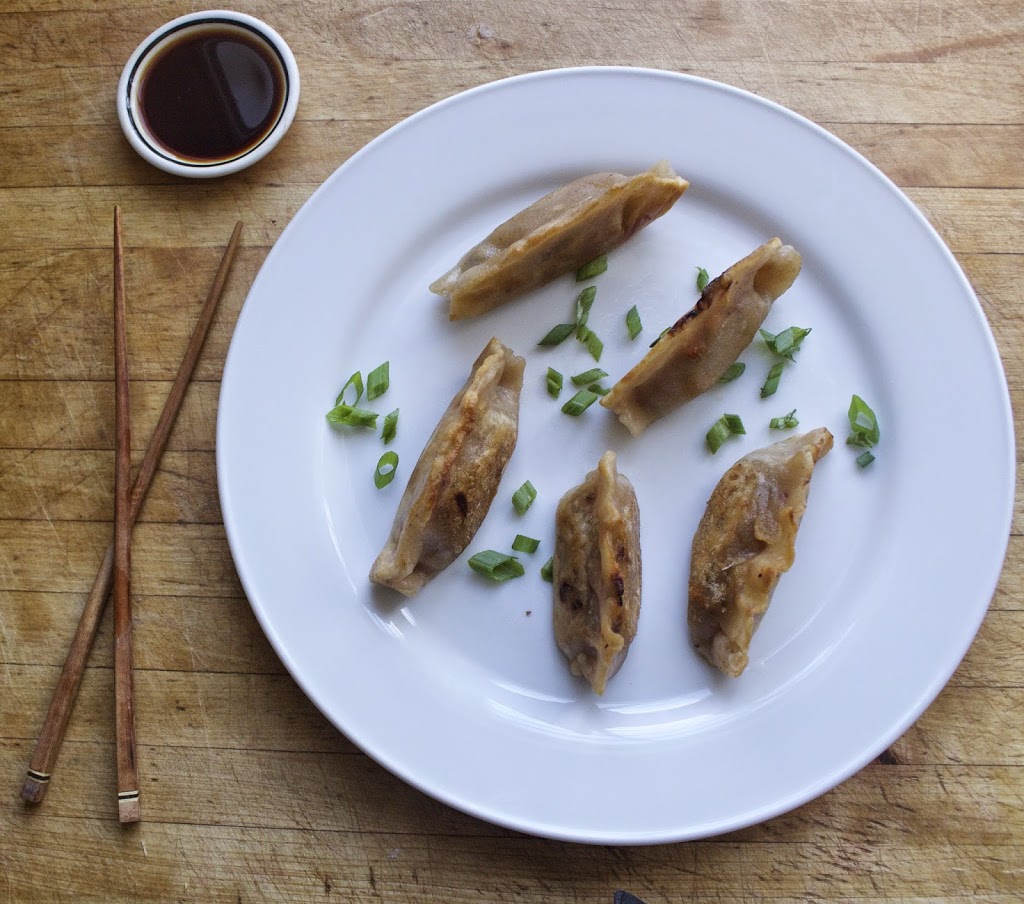
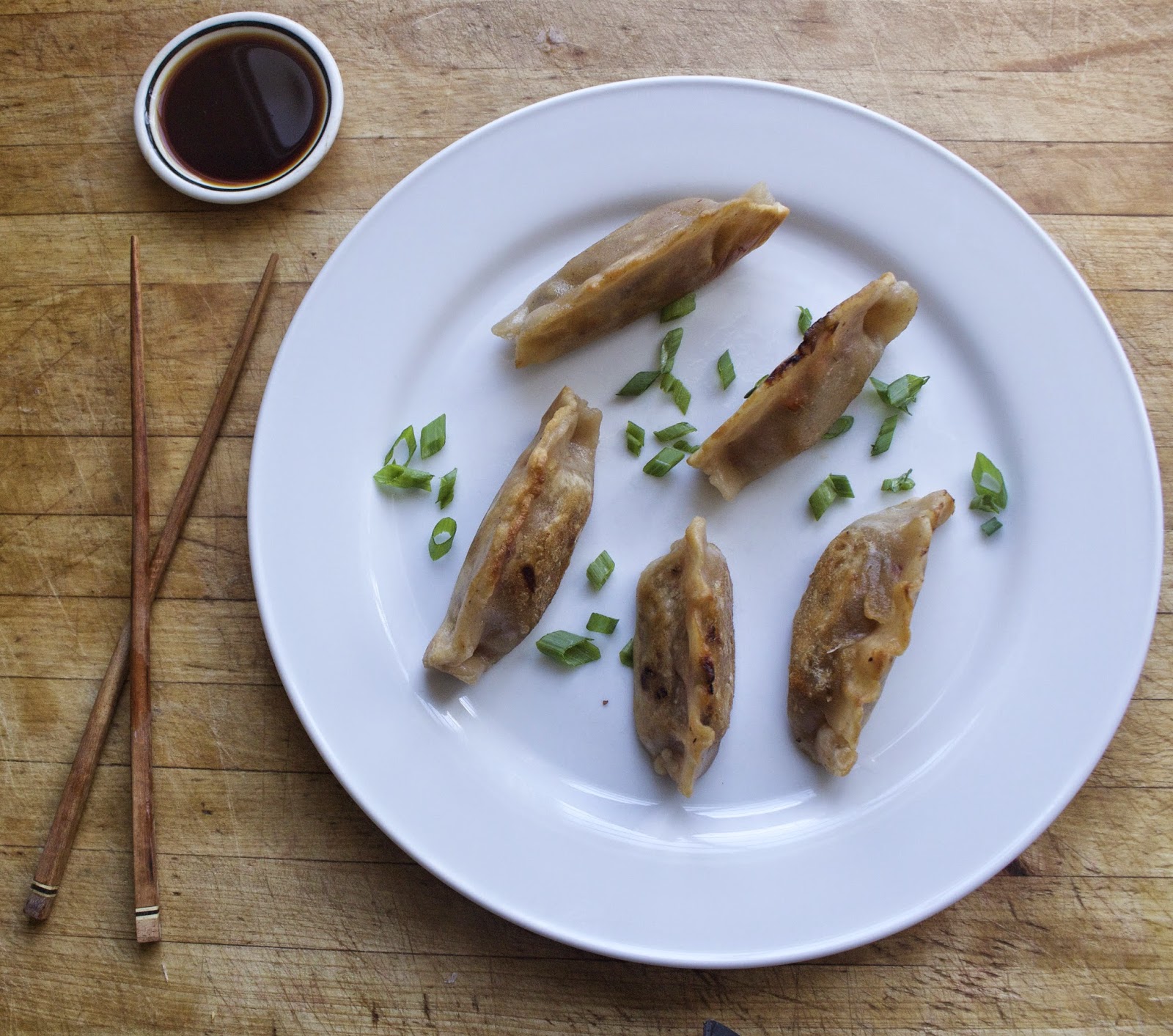
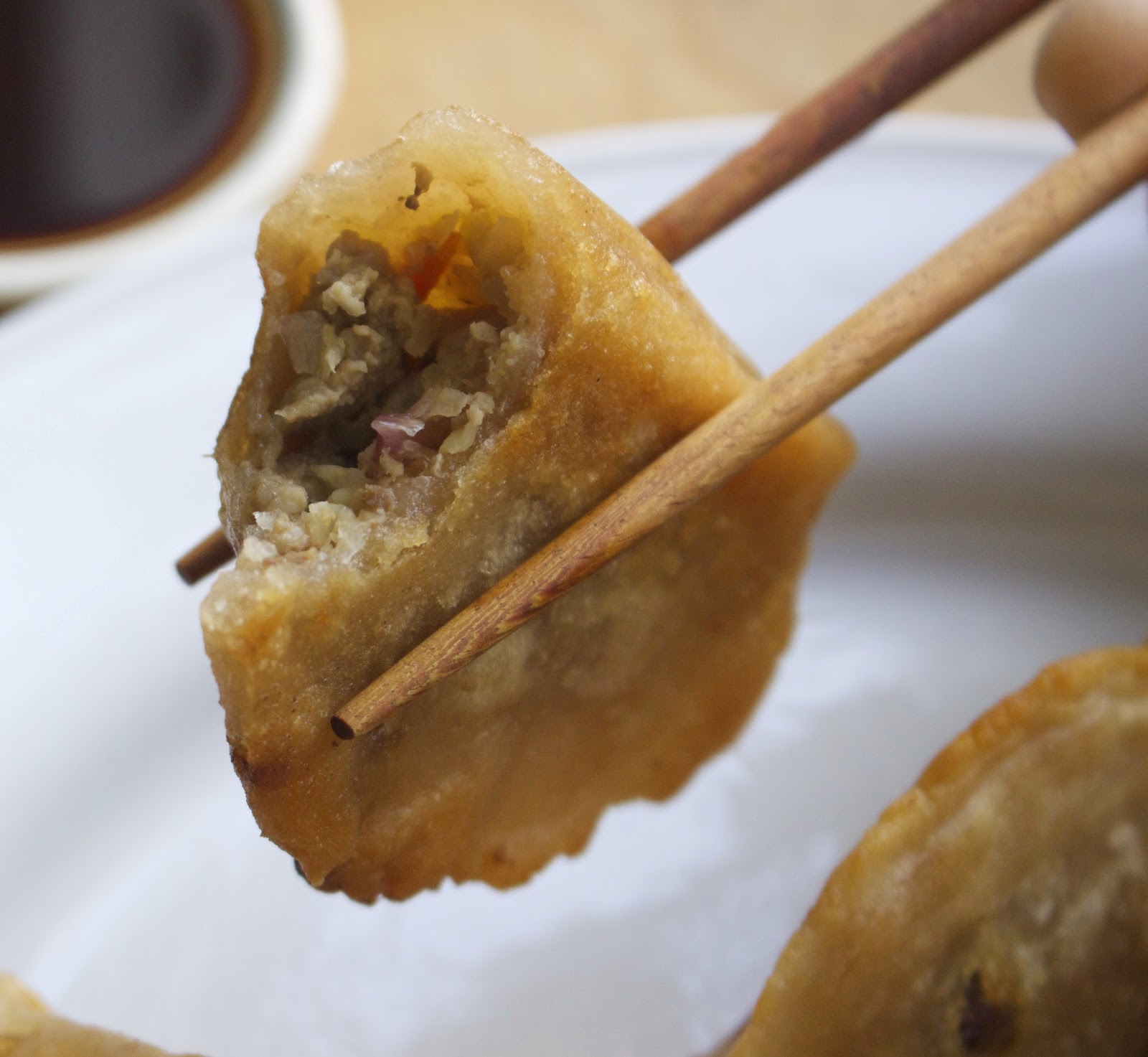
I have been wanting to make dumplings for quite some time now, and when Otto’s cassava flour arrived on my doorstep just last weekend, I knew it was just my ticket to do so.   I chose to make this recipe in two stages, with the first day being when I prepared the dumpling wrappers, put them on a baking sheet wrapped in plastic wrap, and placed them in the freezer over night.  Then, after cooking off my filling the next day, I removed the sheet from the freezer and allowed the wrappers to thaw for about 15 minutes before filling them with the meat mixture, and then frying.  As a note, this recipe is not a deep-fry recipe per-say, but more of a searing, so there is no need to worry about not having a deep fryer.  Though the process written below may seem a bit long, there truly are only four main steps; make the dumpling wrappers, cook off the filling, fill the dumplings, and cook the dumplings – that is it!  If there is leftover filling, simply freeze it for later use.  
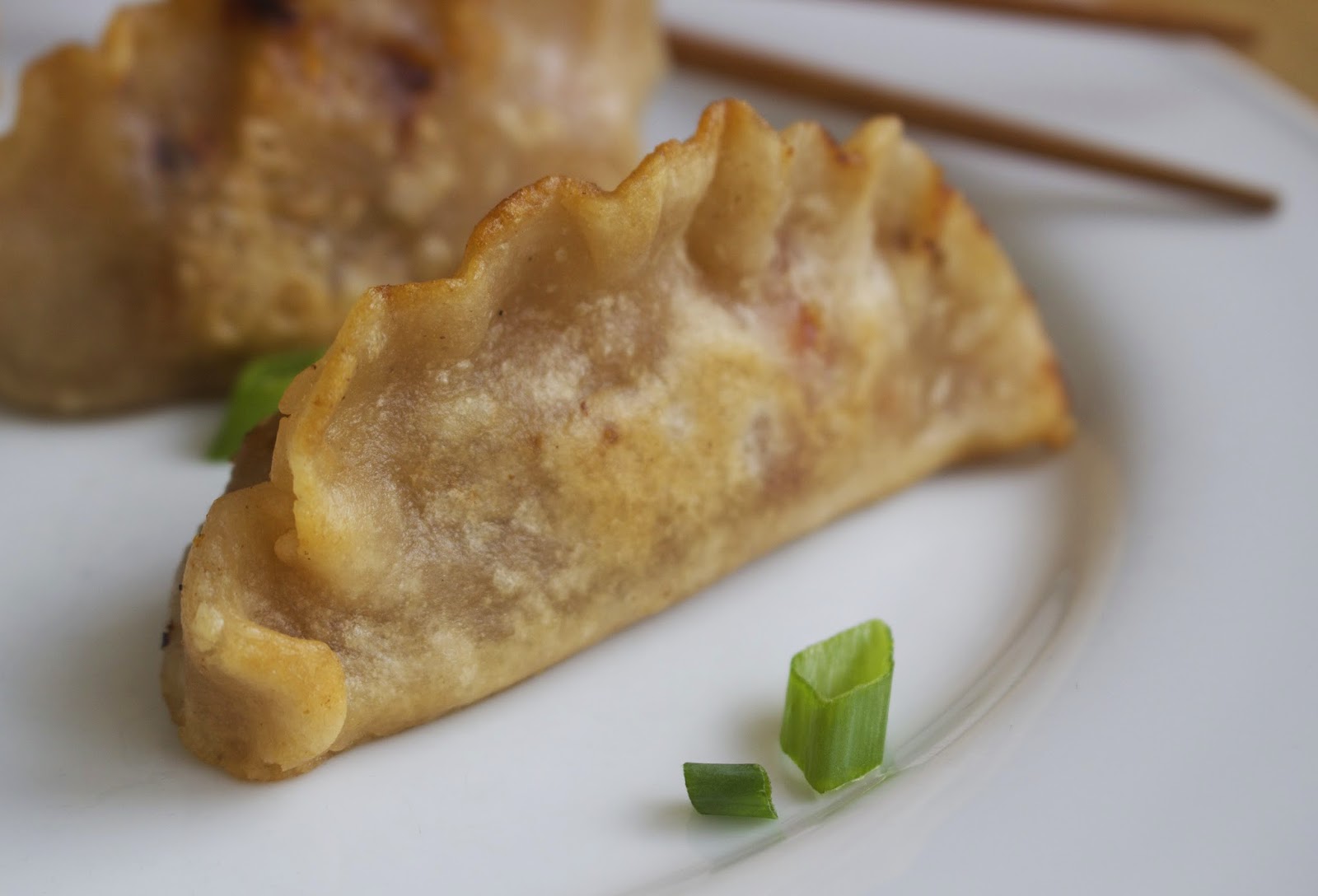
I served these at lunch for my mother, who insisted my brother had to at least taste one. Needless to say, he wanted much more than a small bite, and ended up loving them so much that he even asked for more,  of which my mother kindly gave him some of hers (though she was sad to do so).  Overall, these pork dumplings were a big hit, and were described as “perfect,” with my mother now saying she wants to make the recipe on a daily basis.  I also could not be more happy with how Otto’s flour worked and held together in the dumpling wrappers. Though it is supposed to replace wheat flour 1:1, I actually had to add twice the amount of water needed in a regular recipe.  Besides that, the flour handled very well, had a fantastic texture, and didn’t crumble or break apart once.  In the words of my family, today’s Korean pork dumplings are “so good” and both my brother and mother could have easily eaten many more.  In fact, there was not even any questioning by my brother, as to whether or not they were “Paleo,” or “special” as he calls some of my recipes.  Though today’s dumplings may not necessarily be an authentic Korean dish, it is from a traditional mandu that I got my inspiration.  Overall, my family and I were truly ecstatic on how today’s recipe not only looked, but tasted as well. I know you will feel the same when making the recipe, so enjoy, and savor every last bite!
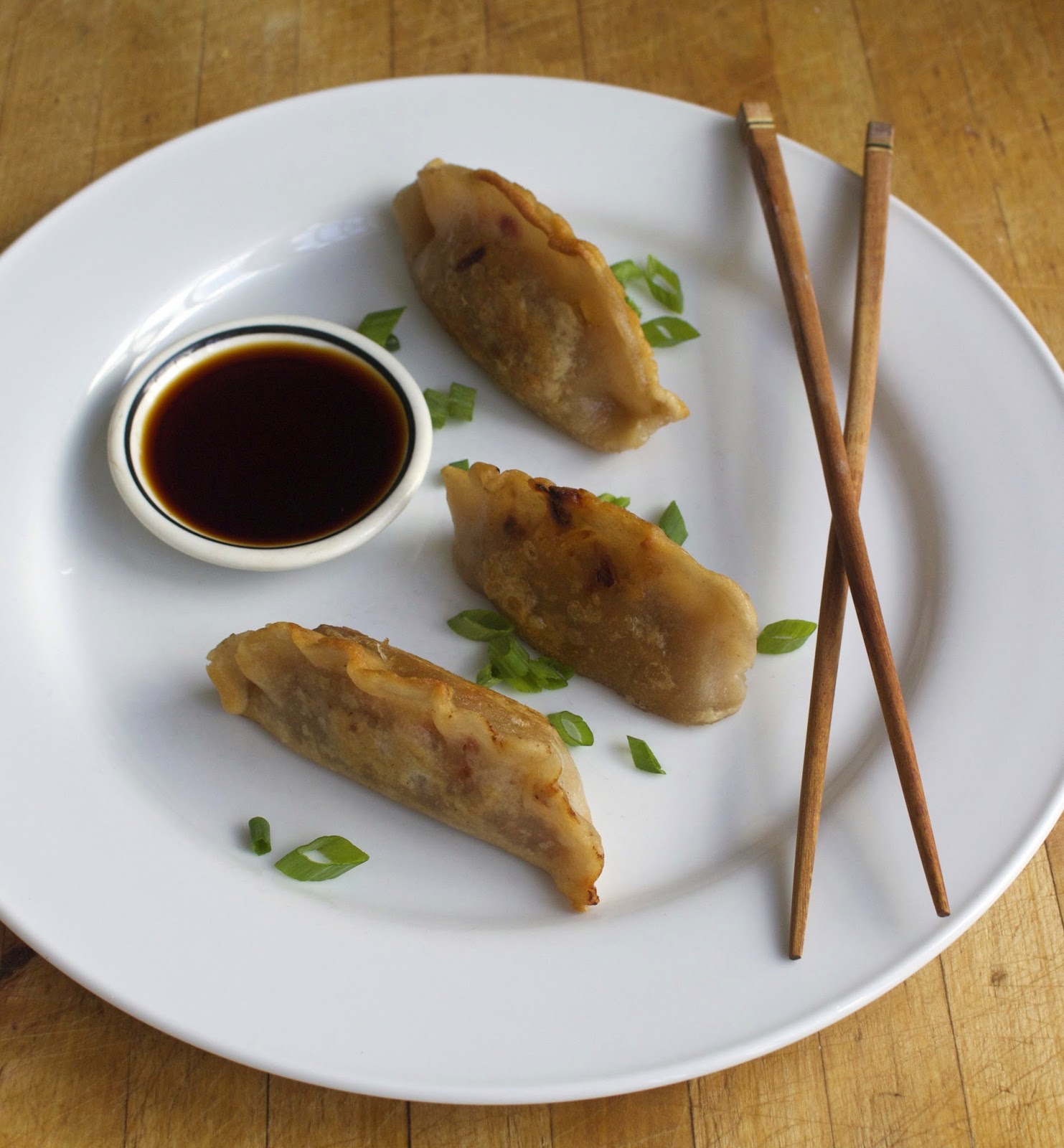
Korean Pork Dumplings
Print Recipe
(Makes 8 Dumplings)
Ingredients

  • 1 cup Otto’s cassava flour
  • 1/4 tsp sea salt
  • 2/3 cup water
  • 1/4 lb ground pork
  • 1/2 cup shredded cabbage
  • 1/3 cup diced carrots
  • 1/4 cup chopped green onion
  • 1 lime – juiced 
  • 1 1/2 tsp garlic powder
  • 1 tsp ground ginger
  • 2 tbsp honey
  • 1/2 tsp Red Boat fish sauce 
  •  6 tbsp lard
Process
  • To make the dough, combine cassava flour, sea salt, and water in a bowl with a wooden spoon until combined.
  • Use your hands to further kneed the dough until a ball has formed, placing the dough in a plastic bag and squeezing out all of the air, allowing it to rest for 15 minutes.
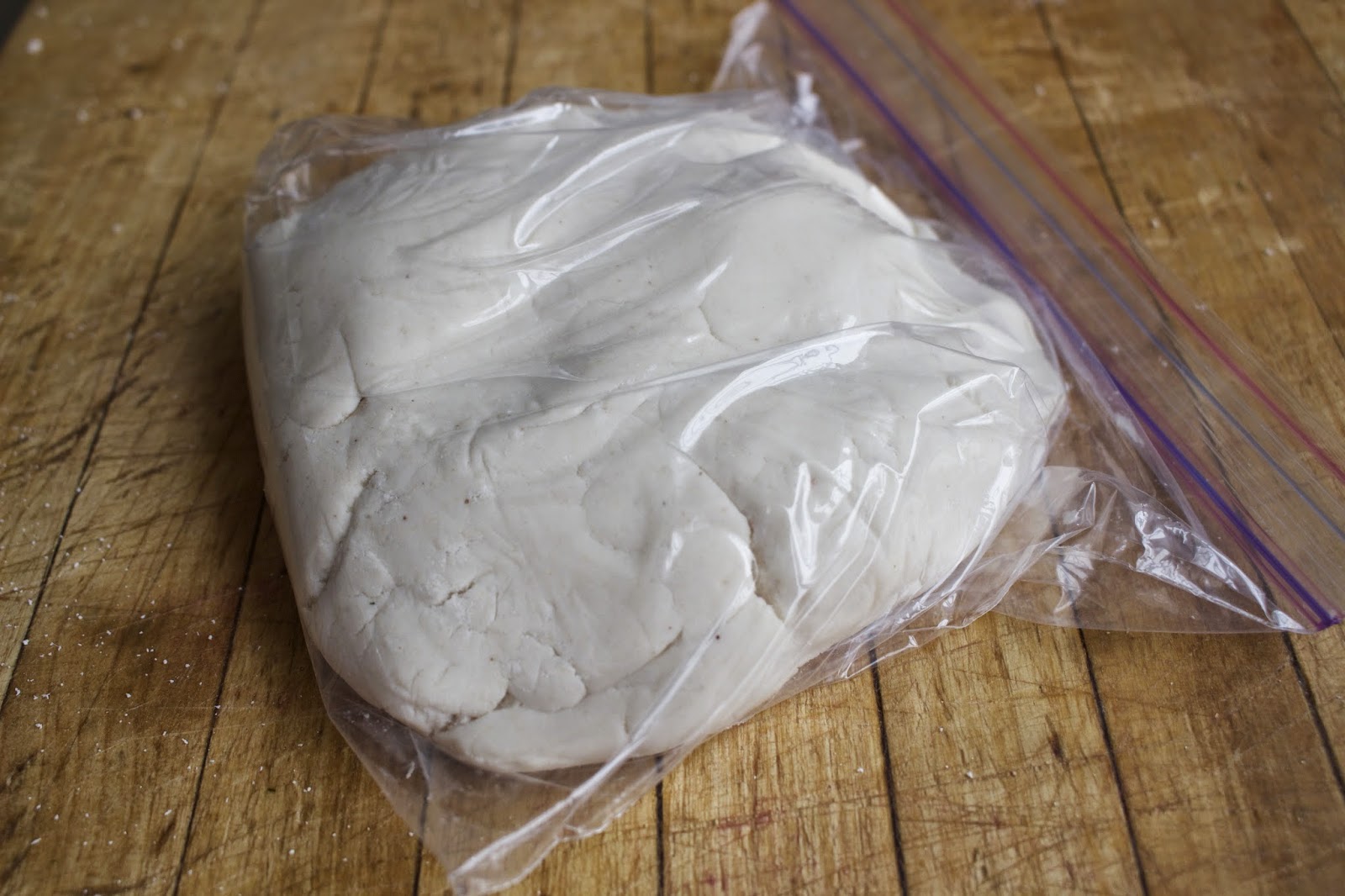
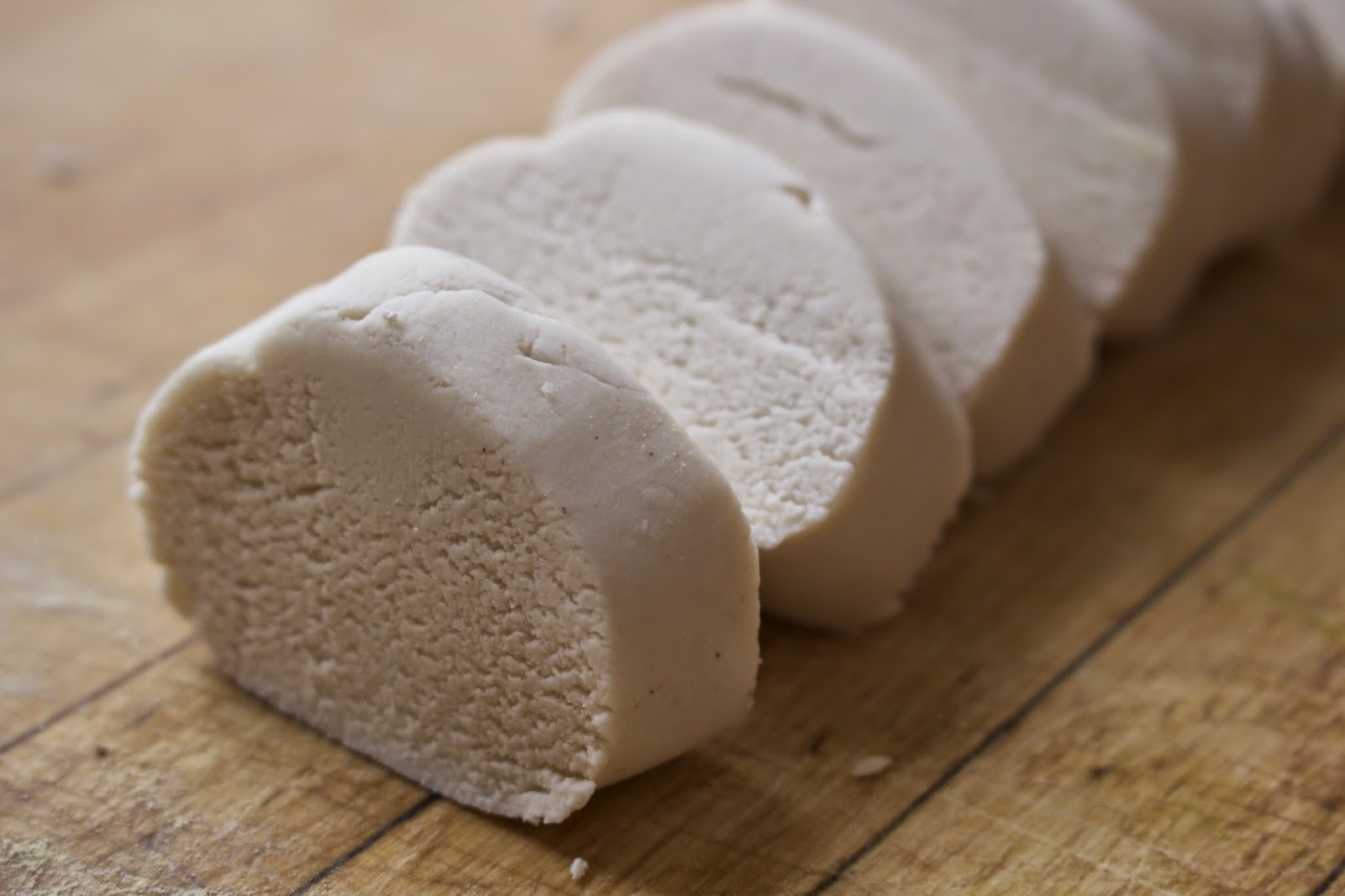
  • After 15 minutes, remove the dough from the bag and kneed for 5 minutes by hand until smooth, forming into a even log at the end. 
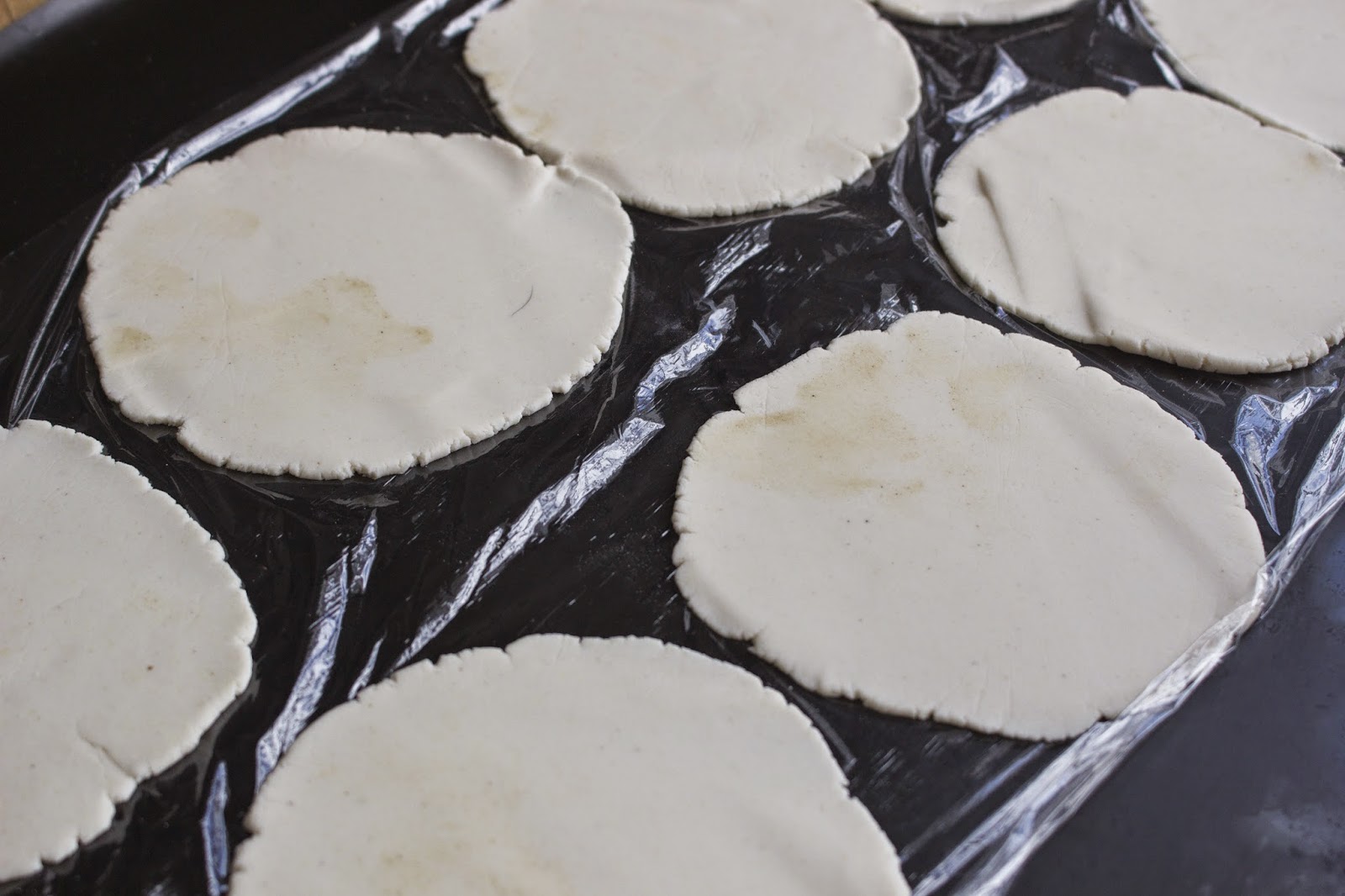
  • Cut log into 8 like-size pieces, and roll out to 4 inch circles on a surface dusted with extra cassava flour. (You can do this by hand or with a rolling pin).
  • Place circles on a sheet lined with plastic wrap and place another piece of plastic wrap over them, allowing them to rest while making the filling, or storing in the in freezer for later use.
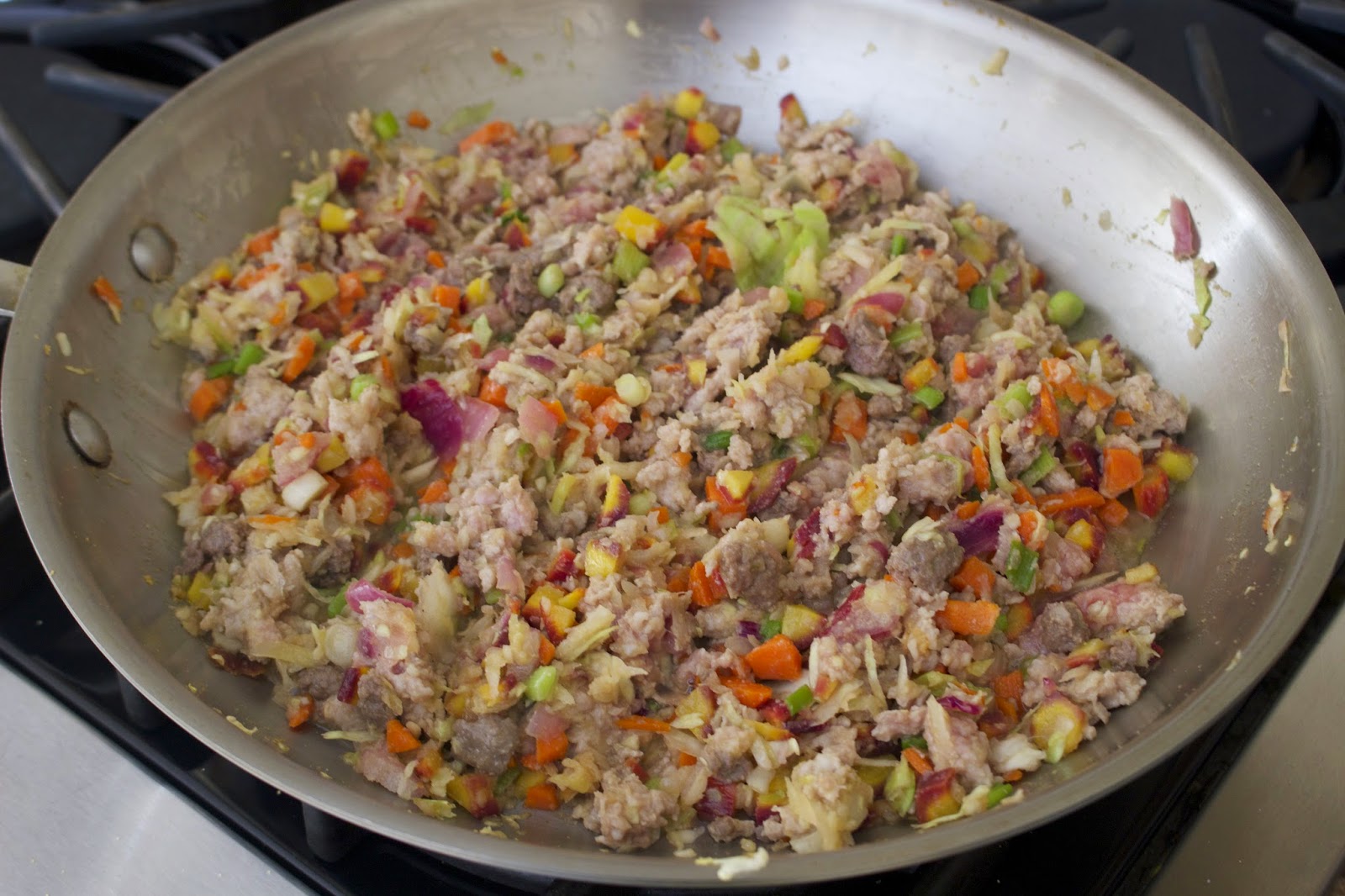
  • To make the filling, shred cabbage with a sharp knife or in a food processor, dice carrots into small pieces, and chop green onion. 
  • Combine lime juice, garlic powder, ground ginger, honey, and fish sauce in a small ramekin and set aside.
  • Heat 2 tbsp lard on medium-low heat in a large skillet.
  • Once hot, add prepared vegetables to the skillet and sautee for 5 minutes, then add the ground pork and prepared sauce, sauteeing for another 5 minutes until the meat has fully cooked, then transferring the mixture to a large bowl. 
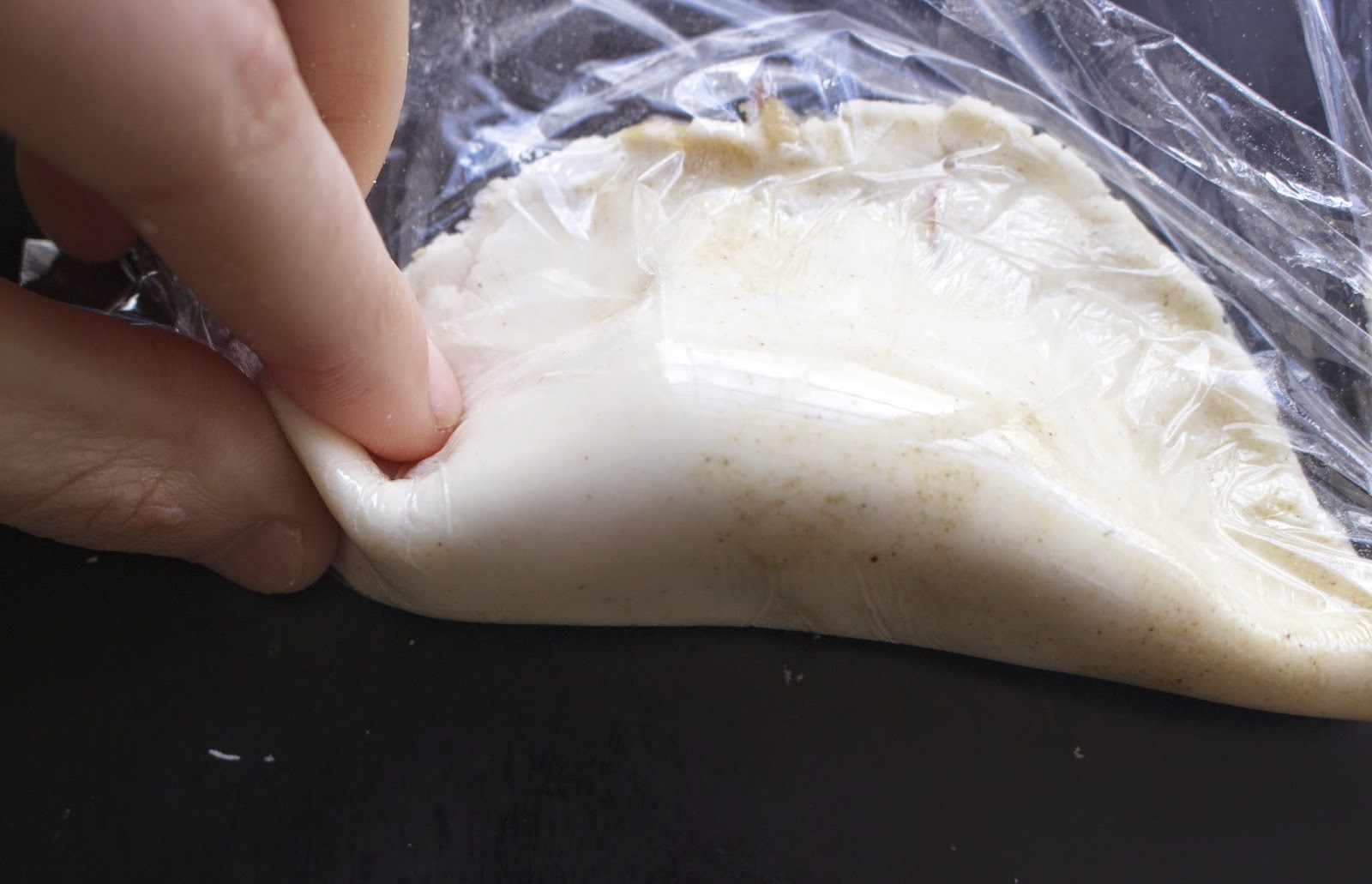
  • Spoon a couple tablespoons of the filling into the center of each prepared dumpling wrapper,  and then fold the wrapper in half, sealing with your fingers by pressing the two edges together, and folding up the sides.  
  • Back in the skillet, heat 4 tbsp of lard on medium-heat until hot, then lower to medium-low.
  • Place prepared dumplings in the pan on one of there sides, allowing to cook for 3-5 minutes until golden, then flipping over so they are standing straight up and down, cooking for another 3-5 minutes until golden until the bottoms are golden as well. 
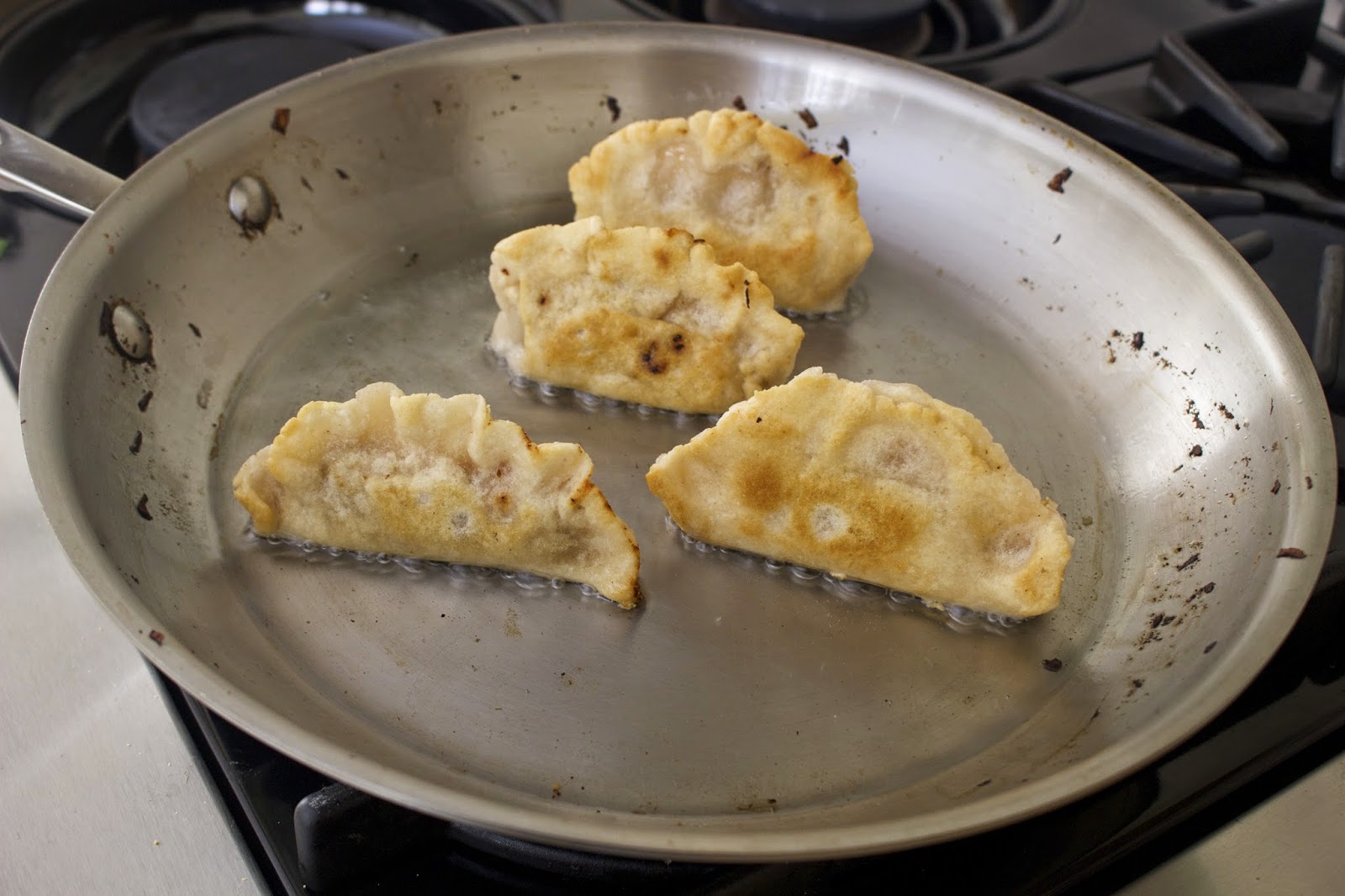
  • Flip the dumplings over once more onto their 3rd side, allowing to cook for 3-5 minutes until browned, then add 3 tbsp of water to the skillet and quickly cover, allowing the dumplings to cook 3 minutes more.

  • Once cooked and golden on all three sides, remove dumplings from the pan and place on desired serving platter.
  • Dip in Coconut Aminos or your favorite sauce and enjoy! 


Hebrews 1:10-11 “You, Lord, in the beginning laid the foundation of the earth, And the heavens are the work of Your hands.  They will perish, but You remain.”
Filed Under: AIP, autoimmune friendly, autoimmune paleo, dairy free, gluten free, Protein Dishes Tagged With: asian, chinese, coconut free, dumplings, egg free, grain free, Hebres 1:10-11, korean, nut free, Paleo, pork, primal

Paleo Bacon Wrapped Beef Heart (Autoimmune-Friendly)

March 7, 2015

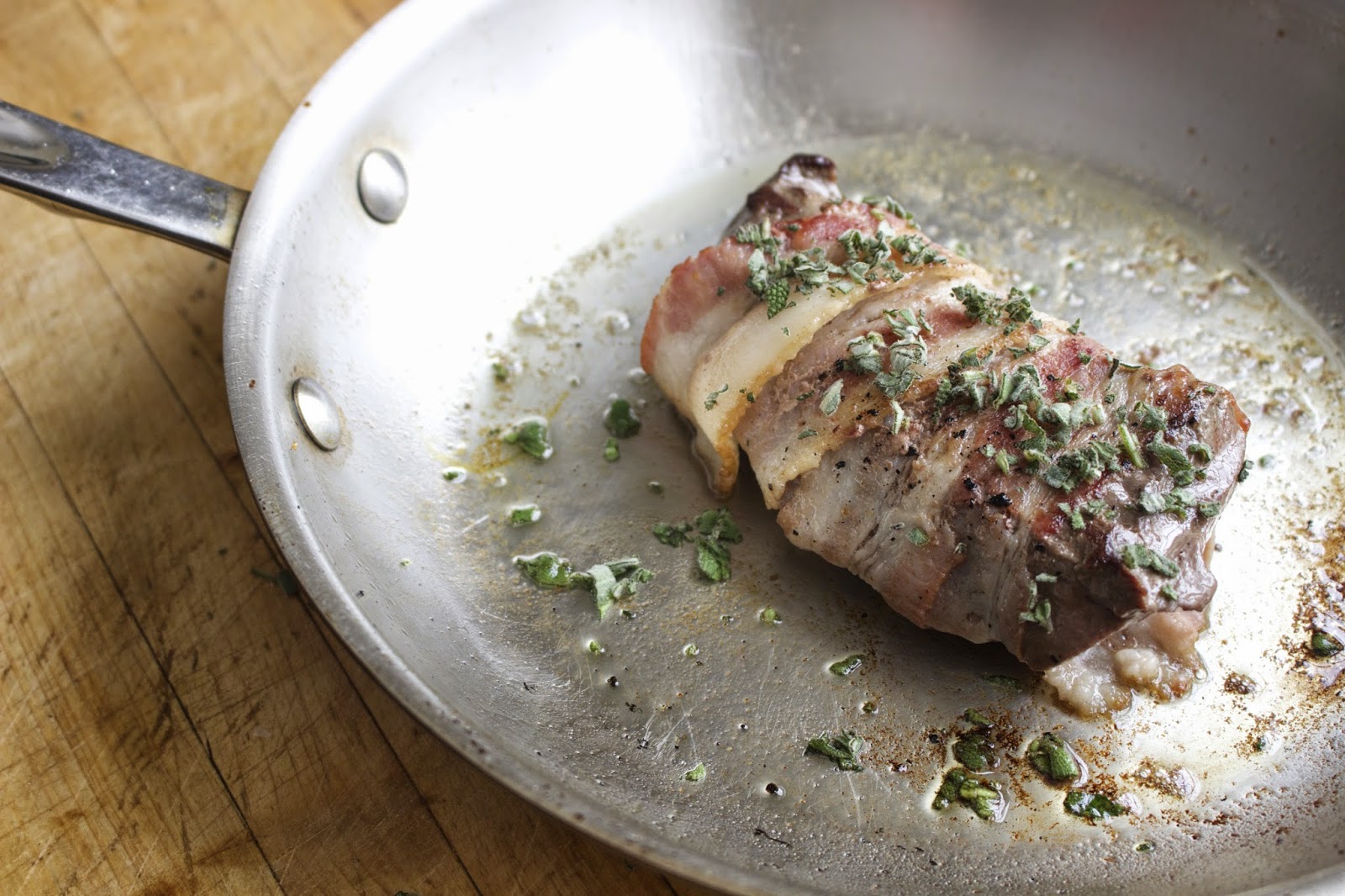
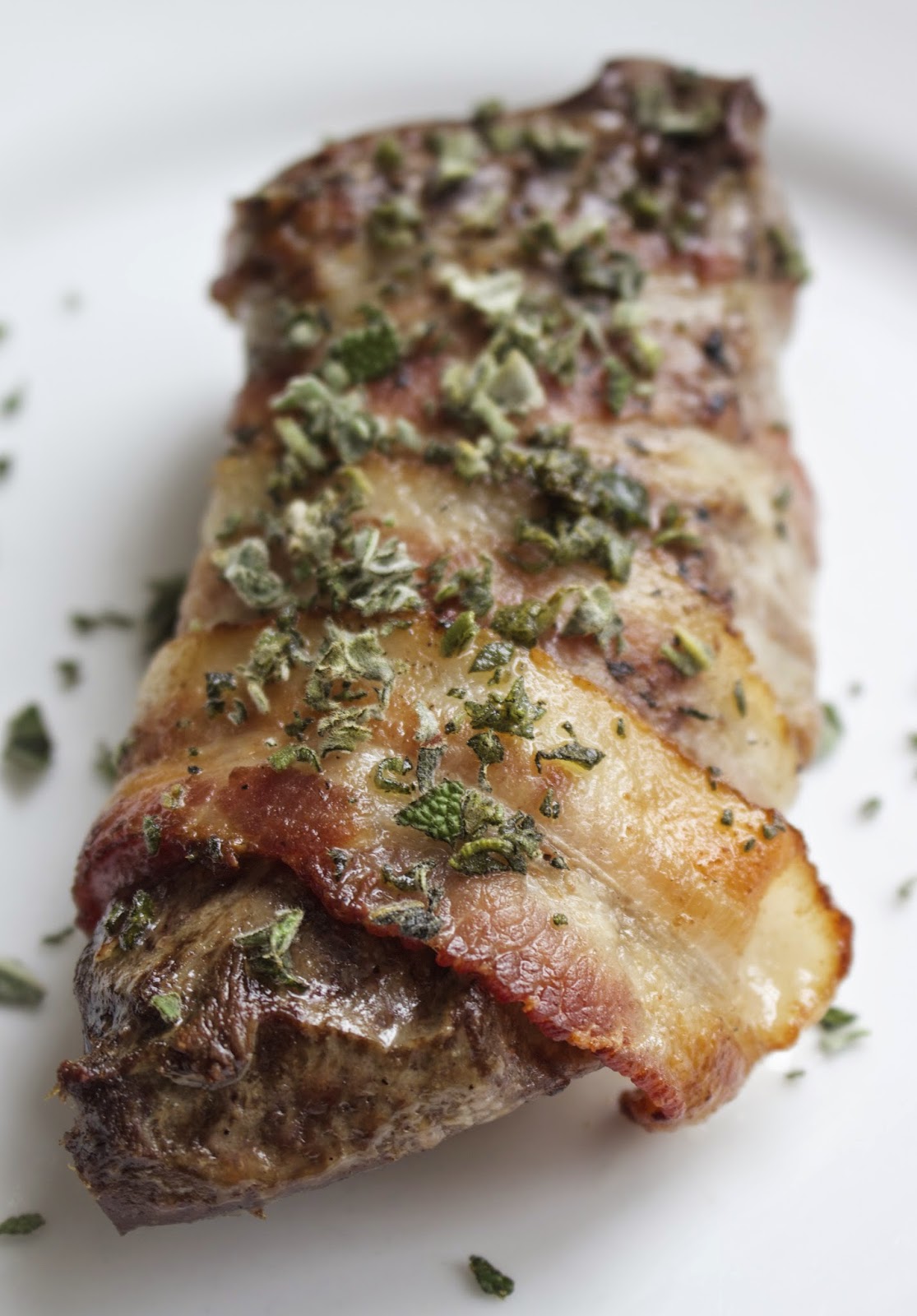
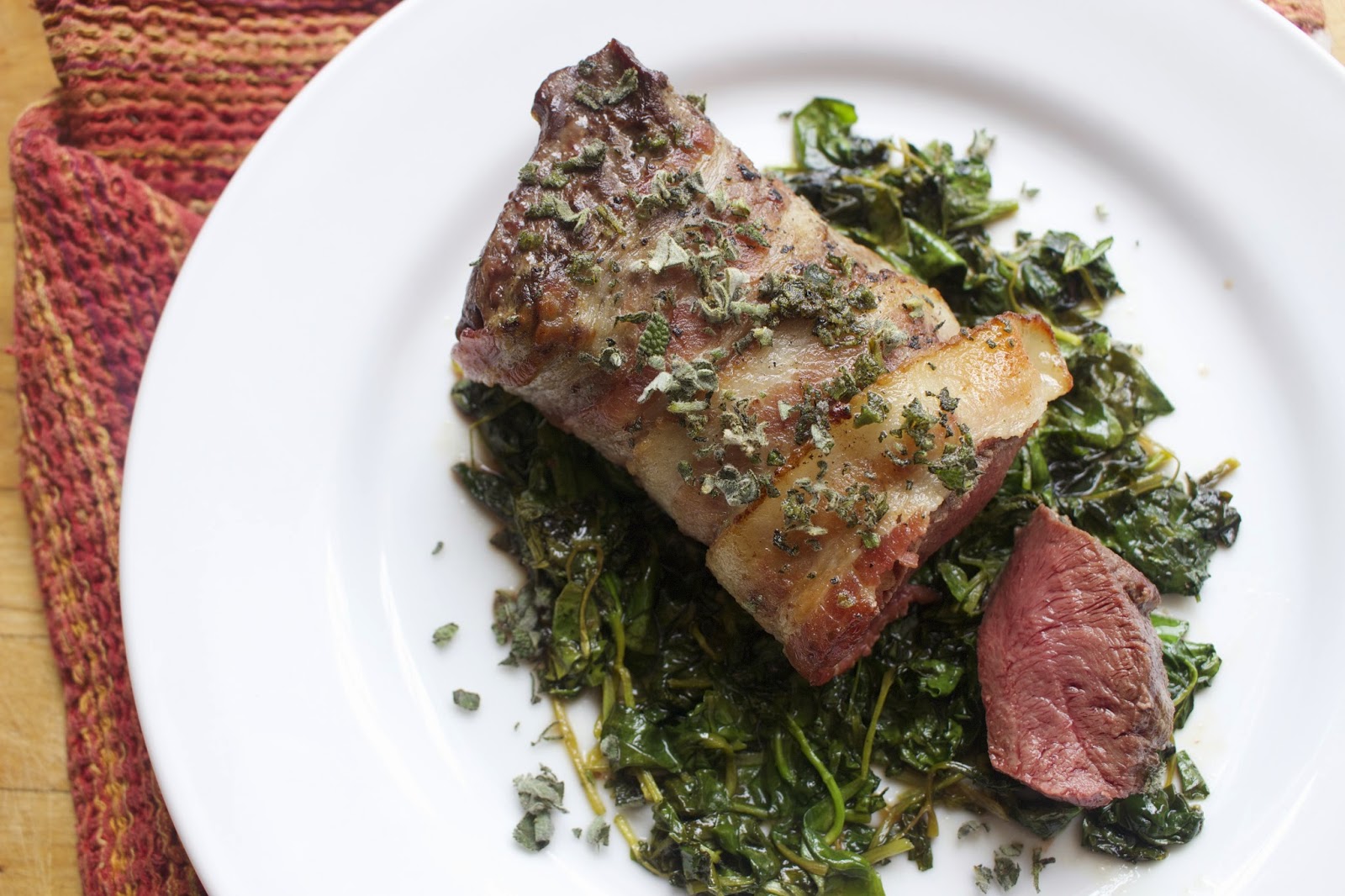
I love organ meat, and bacon, so why not put the two together?  Despite how fond my body and taste buds have grown for offal, convincing those around me that it is seriously very tasty, hasn’t exactly been very successful.  My father will eat it if I prepare it for him, simply because he grew up eating it and is therefore already gotten over the mental-block that organ meat brings.  At first, it can come as a shock to your taste buds, as it can be very rich, and almost too-flavorful for our tongue to handle.  However, as time goes on, and you slowly incorporate it more and more into your weekly meals, all of the sudden your body (and mind) will forget that there was ever an aversion to offal.


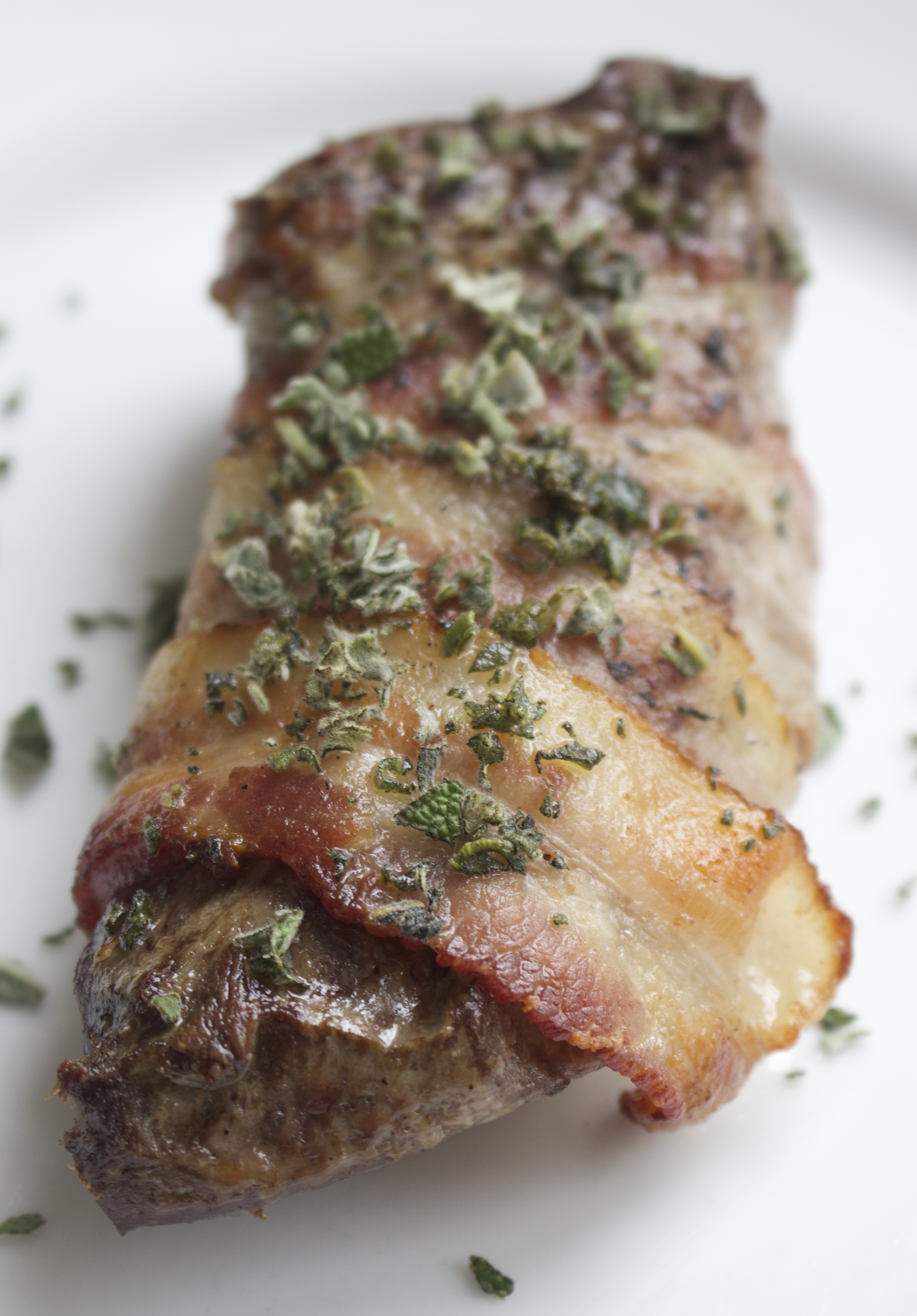
 There are a few, key reasons why eating organ meat is important, for everyone, not just for those who are trying to heal from a chronic illness like myself.   Much like kidney, and liver, heart is very high in nutrients compared to that of regular, muscle meat.  Not only is it the highest food source of copper to-date, but it is also chock full of the enzyme CoQ10, which is critical for not only health at the cellular level, but also supports collagen growth, which is what keeps our hair, connective tissue, and cardiovascular system happy and strong.  Overall, today’s recipe serves as the perfect way to introduce beef heart into your diet, after all, who doesn’t like something wrapped in bacon? Not only that, but if you are expecting heart to be as pungent as liver, you are in for a treat, as beef heart has a very mild flavor, with an overall texture 99.9% like muscle meat from beef.

Bacon Wrapped Beef Heart
Print Recipe
(Serves 1-2)
Ingredients

  • 6 oz grass-fed beef heart (1 inch tall, 6 inch long cut strip) 
  • 2 slices of bacon
  • 1 tbsp fresh chopped sage
  • 1 tsp lard

Process

  • Preheat oven to 375 degrees.
  • In a small skillet, heat lard on medium-low heat until hot.
  • Wrap your strip of beef heart in bacon from end to end.
  • Once the skillet is hot, sear the beef heart on one side for 3-5 minutes, then flip it over and do the same on the other side for 3-5 minutes.
  • Once the oven is preheated, sprinkle half of the chopped sage on to of the beef heart, and place in the oven, allowing to bake for 13 minutes.
  • Remove the heart from the oven and allow to sit for 5 minutes, before sprinkling with remaining sage and slicing into desired pieces.


Isaiah 25:1 “O Lord, You are my God. I will exalt You, I will praise Your name, For You have done wonderful things; Your counsels of old are faithfulness and truth”

Filed Under: AIP, autoimmune friendly, autoimmune paleo, gluten free, ketogenic, low carb, organ meat, Protein Dishes Tagged With: bacon, beef heart, coconut free, grain free, Isaiah 25:1, ketogenic, low-Fodmap, nut free, offal, organ meat, Paleo, primal

Daily Dose of Encouragement: Trust

March 6, 2015

DailyDoseEncouragement

Trust, otherwise known as a “firm belief in the reliability, truth, strength, of someone or something,” is crucial in healing, and living life in general.  Why?  Because if we never trust, then we will never take chances.  If we never push ourselves out of our comfort zones, we will never do hard things, and just as anyone with a chronic illness knows, getting better is certainly more difficult than becoming sick in the first place.   Of course, there are times in all of our lives that we are called to rest and wait, yet this does not last forever, and sooner or later God will call us to stretch the boundaries and trust in Him.  A personal example would be this week, when my family and I are taking a trip across the U.S to visit our family in Colorado.  While I am very happy to go, see my family, and have new experiences, traveling at this point in my illness is still very hard on my body.  Somehow, I always end up with a cold or extra sickness of some sort that makes me feel even worse than I normally do.  Not only that, but just the act of being away from home, can throw my body for a loop.  Naturally, it is only human to fear how my body might handle the plane ride, if I am going to be able to physically have enough energy to deal with the airport, or be able to deal with the physical pain that comes with  having to put how I feel aside, and do the hard thing that traveling is.  Yet, despite all of these rather seemingly logical reasons as to why going to Colorado might leave me fearful and hesitant, I have learned throughout the years that I must continually remind myself not to let the worry and dread of stretching my bodies limits overcome me, but instead, trust that God will take care of me and provide all that I need.  Truly, we never know how God might use or work in us, therefore, not only does trusting in Him to help us through everyday challenges lift a ginormous burden off of our shoulders, but it also gives us the freedom to dream of all that God can do.  We as humans think we are good at trusting, yet this only lasts until the moment something goes wrong.  Then, we become anxious, leading us to panic and forget that we were ever trusting in the situation to begin with.  However, it is key to continually remind ourselves that the Lord is with us wherever we go, He will give us strength to do all things, and not once do we need to worry about how seemingly bad or good, the turn of events will pan out.  If all of these promises are true, why do we ever find ourselves becoming worrisome and not putting our full trust in God? I find that if my trust is wavering, in whatever situation it may be, it is because I never truly put my entire belief in Christ’s ability to do all that He promises, but rather was trying to figure out how I could make the situation go perfectly through my own physical effort.  However, just a little trust, is not trust at all, and we must realize that in order to firmly plant our belief in Christ and all that He can, and will do for us, we must completely surrender.  Giving our everything to the unknown can be frightening, especially in the case of a chronic illness, when we know that there may be pain and extra exhaustion involved.  Yet we must put to side all that we think will happen, and trust that God will be in control, and whatever happens, He will not bring us to something, without leading us through it victoriously.  We cannot know what God may do for us, unless we would give Him the chance to prove His everlasting power and strength through a situation in life that we otherwise would not choose to conquer if it was up to our own doing.  However, when we trust in something bigger then ourselves, there is no need to fret or become worrisome, about what we think will happen, or all of the reasons why it is impossible for us to do such a thing. Rather, we can be bold, brave, and stand firm in knowing that we can place our full trust in God, whenever, through whatever, because He will never leave us nor forsake us, and will always help us do all things.


Psalms 118:6 “The LORD is with me; I will not be afraid. What can mere mortals do to me?”

Filed Under: chronic illness, chronic lyme disease, God, Personal Experiences Tagged With: chronic disease, daily dose of encouragement, lyme, psalms 118:6, trust

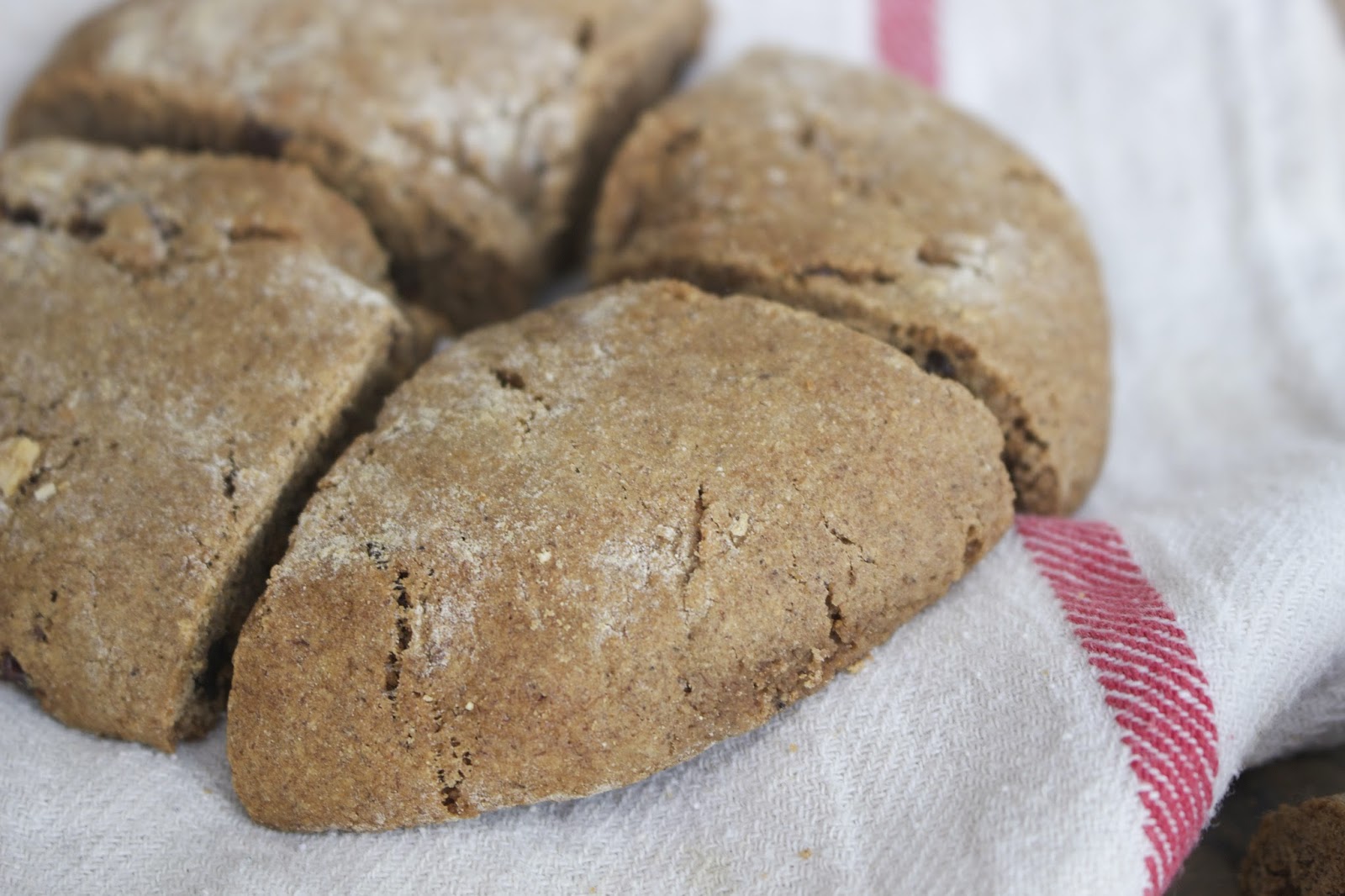
Paleo Auotimmune Protocol Cinnamon Raisin Soda Bread (Tigernut Flour)

March 4, 2015

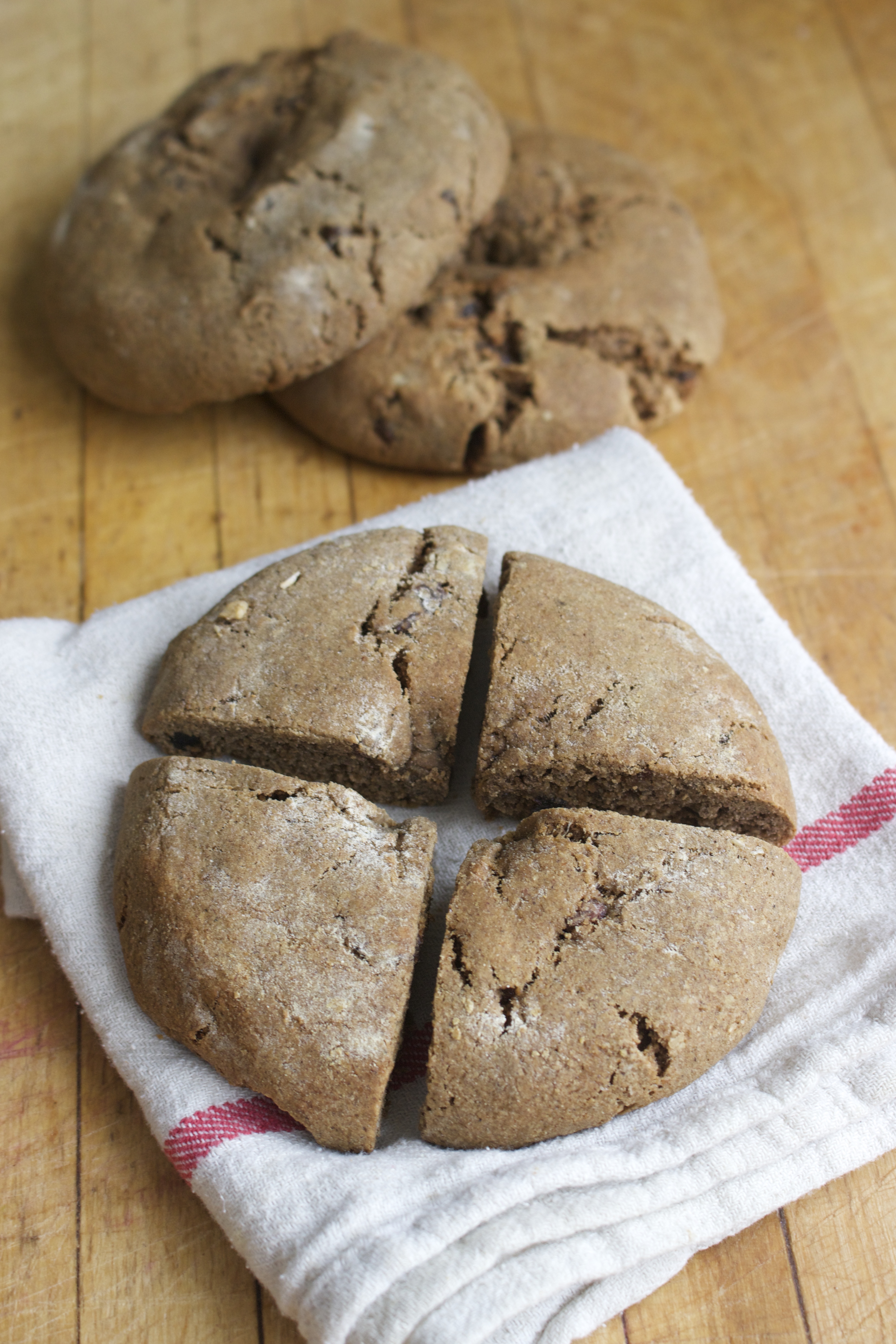
I am not one to try and replicate bread products.  Throughout all the years of being sick, and having to give up foods otherwise very prominent in the standard American diet, I simply don’t have desire, or tastebuds, to ever eat anything like bread again.  To me, if a “food” requires other ingredients to be put on top of it in order to taste good, it is not real food at all.  That being said, I still certainly find joy in re-creating classic recipes for others, with a more whole-foods, low-inflammatory approach.  Today’s soda bread recipe is a perfect example, as not only is it autoimmune-friendly, but it also remarkably similar to that of a traditional soda bread.  Not only that, but the bread as a whole is tasty enough on its own, though using it as a vessel for your favorite fat is still certainly acceptable.  If you are not familiar with soda bread, it is a bread from the 19th century leavened with baking soda (hence the word soda) in place of yeast, of which is reacted with sour buttermilk to cause the dough to rise. Though my recipe, and many of the originals, are on the sweeter side, Irish soda bread was seen as a poor mans food, eaten as a main course.  The cross marked on the top of the round loaf was done so by those in the Southern regions of Ireland, while those in the Northern parts of the country skipped the crisscross and cut it into 4 triangles before cooking on a flat griddle, of which they then slathered in warm butter.

~~~~~~~~

 At first, soda bread may not sound too exciting.  However, today’s cinnamon raisin version is sure to convince you otherwise, as both my family and friends thought it was truly outstanding.  With a crusty outside, yet moist, bread-like texture on the inside, and a slight sweetness from the maple syrup, this cinnamon raisin bread pairs perfectly with your morning cup of tea or coffee, as a treat, or, as my mom plans to enjoy hers, on a plane ride while we traveled to Colorado.  What is even better, is that it is yet another great way to sneak entomophagy into your weekly eats.  As a note, if you wish to make it completely fruit sweetened, you can easily substitute the maple syrup for date paste puree, or apple sauce, though that results in much less sweet loaf.  The yellow plantain may also be replaced with a yellow-green banana, though I cannot 100% guarantee anything.  Overall, I wouldn’t change one thing about today’s recipe, nor would those who taste tested it for me, ensuring that you too will love making it as well.  But that is not all, I have two things that I must remind you of.  First, make sure and enter my Organic Gemini giveaway for your chance to win some tigernut products, and second, head on over to The Paleo Mom to learn all about her new show, Paleo Bites, and spread the word to all your friends and family!

Cinnamon Raisin Soda Bread

Print Recipe

(Makes 4, 6 inch round loaves) 
Ingredients

  • 1 cup tigernut flour
  • 1/2 cup arrowroot flour
  • 1/4 cup cricket flour
  • 1 tbsp grass-fed gelatin 
  • 1 tbsp cinnamon
  • 1 tsp baking soda
  • 1 tsp grain-free baking powder 
  • 1/2 tsp sea salt
  • 1/3 cup pureed plantain (yellow-green)
  • 1/2 cup maple syrup
  • 1/4 cup non-hydrogenated palm shortening – melted
  • 1 tsp vanilla extract
  • 1 tbsp lemon juice
  • 1 tbsp water
  • 1/2 cup raisins
  • Arrowroot flour for dusting

Process 

  • In a food processor, puree peeled plantain until smooth, then add in maple syrup, melted palm shortening, and vanilla, processing until fully combined.
  • In a small bowl, sift together tigernut flour, arrowroot flour, cricket flour, gelatin, cinnamon, sea salt, and baking soda.
  • In a small ramekin, dissolve the grain free baking powder in the lemon juice and water.
  • Add both the dry mixture and baking powder slurry to the food processor, allowing the mixture to puree until a sticky dough has formed.
  • Remove the blade from the food processor, fold in the raisins, and allow the dough to sit for 30 minutes at room temperature.
  • Preheat oven to 350 degrees.
  • Once the dough has rested, use floured hands to divide the dough into 4 equal pieces.
  • Form each piece of dough into a 4 inch wide, 1 1/2-2 inchs tall circular loaf, placing each on a parchment lined baking sheet. *If the dough is too sticky to handle, simply sprinkle more flour on top of the loaves until it is easier to work with.
  • Score the top of each loaf with a knife, making a shallow crisscross.
  • Place the baking sheet in a preheated oven, allowing them to bake for 25 minutes, until golden around the edges.
  • Remove from the oven and allow the loaves to cool 10-15 minutes before removing and cooling further on a wired rack.
  • Cut into fourths, slather with your favorite fat, and enjoy!

Recipe Notes 

If you do not have cricket flour, it is worth trying to replace it with either more tigernut flour, or almond flour if you can have nuts.


Joshua 1:9 “Have I not commanded you? Be strong and of good courage; do not be afraid, nor be dismayed, for the Lord your God is with you wherever you go.”
Filed Under: AIP, autoimmune friendly, dairy free, gluten free, Sweets and Snacks Tagged With: cinnamon, coconut free, egg free, joshua 1:9, maple syrup, nut free, Paleo, plantain, primal, raisin, soda bread, tigernut flour

The Paleo Approach and the Case of a Leaky Gut

March 3, 2015

 
The gut is a very complex, important system in the body.  Not only does it act as one’s second “brain,” but it also serves as the absolute best portrayal of an individuals overall health.  That being said, when the GI tract becomes compromised, whether due to dietary or lifestyle factors, one’s entire body is going to take a large tole, of which can lead some pretty disastrous health conditions, including autoimmune disease(s).  Ultimately this happens when intestinal permeability increases, thus causing gut bacteria imbalances, while also the lining of the gut being damaged and subsequently becoming leaky.  Though it might seem that only those that are suffering from a chronic illness have a gut susceptible to becoming leaky, it may come as a surprise to you to know that a damaged GI tract almost always begins first, not second to a given health condition.  Therefore, today I will lightly discuss how one’s gut can become leaky, and overall how to repair any damage that has already taken place. 
 
Defenders of the Gut  
Nature.com


There are various ways that one can develop a leaky gut through both diet and lifestyle factors.  More specifically, it is damage to the enterocyte cells present in the gut, and tight junctions that hold these cells together.  Enterocytes are the transport cells, of which reside in the mucosa of the intestine, that bring digested nutrients from the food we eat, into the outside of the gut lining, where they can then be carried to wherever in the body they are needed through blood and lymph vessels.  Overall, it is these enterocyte cells that keep the good in our GI tract, and the bad out.  Yet, in the case of a leaky gut, contents of the intestines (both good and bad) can leak into ones bloodstream, lymphatic and immune system, therefore causing the body to adversely react, attack itself, and cause many of the symptoms that make up a given illness or disease. This is due to the fact that, on the other side of the enterocyte cells of the gut, there are immune cells.  These cells act as soldiers,  ready to protect the body from any foreign invaders that may get through the protective gut lining, which, as previously mentioned, occurs when enterocytes become damaged and leave holes in the gut lining.  Another way that toxins, pathogens, bacteria, and waste products can seep through the gut barrier, is when the protein structures that hold together the various cells of the gut, are damaged.  These are called tight junctions, and overall are responsible for keeping the intestinal lining functioning optimally, while also allowing nutrients the body needs to be absorbed. However, when these junctions become unraveled, or become dysfunctional and stuck wide open, they serve as yet another way contents from the GI tract can trigger immune responses that cause the body to go into attack mode.  This can create minor, to severe health complications including food and environmental allergies, autoimmune disease, FODMAP intolerance, nutrient, fat, and vitamin malabsorption, and various other inflammatory health conditions stemming from seemingly insignificant skin disorders such as eczema, to debilitating illnesses such as MS or rheumatoid arthritis.  

General outline – See The Paleo Approach for details. 

Enemies of the Gut 

The effects that occur after a leaky gut is formed can be extremely hard to fix, and certainly something everyone should do their very best to avoid.  To do so, it is even more important for individuals to understand and realize what commonly causes a leaky gut in the first place.   Enterocytes, which are the cells that make up part of the GI tract’s lining, can meet their death in a few different ways, including pathogens present in the body, toxins, and foods that the body is unable to properly digest, of which include grains (not just gluten), nightshade vegetables (pepper, tomato, eggplant, potato), legumes (beans, lentils, etc…), pseudo-grains, and dairy.  Together, these food groups contain high amounts of lectins (such as prolamins, agglutinins), anti-nutrients (also known as digestive enzyme inhibitors), phytates (also present in smaller amounts in nuts and seeds) and saponins, all of which can damage, or even cause death to the vital cells that comprise the GI tract’s lining as a whole.  Not only do these compounds inhibit critical digestive enzymes, but they also are hard on the gut lining itself due to the inability for the body to digest them, which in turn feeds gut dysbiosis (i.e. gut bacteria imbalance), another complication that arises a long side a leaky gut (ex: SIBO).  

Though a normal individual with no present health complications is able to continually repair these re-occurring insults to their gut lining, this does not happen in a compromised system, of which could stem from an unknown infection, microbial imbalance, genes susceptible to a given health problem, or simply too much of the same, harmful dietary and lifestyle factors mentioned above.  When this happens, contents present in the gut, whether beneficial or harmful, leak into the immune system  through the holes where enterocyte cells would otherwise be.  It is important to note that while harmful food choices make up a large portion of the diet aspects that undermine our gut, medications, NSAIDS (ibuprofen, aleve, etc..), and antibiotics can contribute to the formation of a leaky gut as well.   Aside from enterocyte cell death, the gut can become leaky when the tight junctions that hold it together, become dysfunction and left open.  This can happen when  zonulin (the modulator of the opening and closing of cells in the GI barrier), becomes over-active, leaving the junctions wide open, when normally, they should be closed tightly, only allowing certain nutrients to be absorbed into the body.  Zonulin can become dysfunctional for a few reasons, the primary contributor being the indigestible proteins found in wheat products.  Alcohol consumption is also a key factor in damaging tight junctions, as it literally unravels what would otherwise be a “tight junction” between enterocyte cells.  When this happens, the result is similar to that of when zonulin becomes over-active, leaving the doors wide open for foreign particles to distribute into the immune system.   Whether through cell death, tight junction dysfunction, or the harmful diet and lifestyle that come a long with these factors, having a leaky gut has been shown to be not only present in all individuals with health conditions, but also the precursor to developing one.  Because of this, it is important for those not only with a chronic illness, but healthy individuals as well, to protect their GI tract from many of the harmful diet and lifestyle factors that have become so common in today’s modern world. 

General outline – See The Paleo Approach for details. 
 How to Find Healing

Despite it seeming as though the odds of healing are stacked against one who has developed a leaky gut, and a subsequent autoimmune disease, there is hope.  As Dr. Sarah Ballantyne discusses in The Paleo Approach, removing all pro-inflammatory foods from ones diet, while simultaneously maximizing nutrient density, can aid significantly in healing one’s gut and thus entire body.  It just so happens that some of the most beneficial foods that are emphasized on the autoimmune-protocol, are also high in glycine, an amino acid that is critical in sealing off leaky patches in the GI tract.  Offal (i.e. organ meat) such as liver, kidney, and heart, meat that is cooked on a bone, bones themselves, and therefore, bone broth, are all great ways to get large amounts of glycine into one’s diet.  Probiotics are also crucial in healing the gut, whether in the form of food such as sauerkraut, kombucha, and kvass, or specially formulated supplements such as Prescript Assist and Gut Pro.  Utilizing Great-Lakes, grass-fed gelatin, or Vital Proteins collagen, in cooking,  or taken as a supplement, can also provide support for your gut by getting an extra boost of extra “glue,” and subsequent nutrients that the body needs to heal.  Having enough of the amino acid glutamine, is also crucial in order to heal, therefore making the supplement L-Glutamine beneficial for maximizing GI health.  For those that have developed a leaky gut, it is very likely that they will become intolerant to FODMAPs, which is why avoiding these foods while trying to heal, can be very helpful to reduce extra symptoms and inflammation.  That being said, while changes in one’s diet are fully necessary to heal leaky gut, there are also some lifestyle factors that must be taken into account.  Minimizing stress, getting 9+ hours of sleep, and chewing your food thoroughly (30+ times per bite), are all equally important.
Just as the formation of microscopic holes in one’s GI tract, healing from a leaky gut certainly does not happen over night.  It can take many months of persistent changes in one’s diet and lifestyle, to fully fix the damage that has been done.  However, just as hippocrates said, all disease begins in the gut, and as Dr. Sarah Ballantyne mentions in her book, it is pretty much impossible to have an autoimmune disease without already having a leaky gut, therefore proving the only way to find true health is to begin with the GI tract.  For those with an autoimmune condition, or any other inflammatory health condition, following the autoimmune-approach outlined in The Paleo Approach, can have you well on your way to restoring the integrity of the gut, no matter how minor or severe your condition may be.  

As for myself, leaky gut has certainly been something that I have struggle even before I hit my brick wall with Chronic Lyme Disease.  It was in the months before my body completely collapsed that I began having mysterious GI issues, therefore leading me to take gluten, dairy, corn, soy, and sugar out of my diet in hopes to relieve symptoms.  Though this helped, it didn’t get rid of all of my symptoms, which is due to the fact that there was still an underlying cause for my weakened body (i.e untreated Lyme).  That being said, when my immune system finally gave up fighting Lyme, and the effects that it caused/was causing in 2011, my gut only got worse from there.  Ever since then, I have been persistently trying to do everything that I can to heal what we now know to be “leaky gut,” and though it can seem completely hopeless at times, I do believe someday, somehow, my gut will be restored.  Last year, I found myself following Dr. Sarah Ballantyne’s protocol, of which has helped tremendously in minimizing inflammatory symptoms, and overall trying to fix my leak gut.   I also take many of the supplements mentioned earlier in today’s post, however, my body tends to have an aversion to gelatin and bone broth, no matter what way that I take it.  Not only has the development of a leaky gut caused severe, re-occurring infections, allergies, and additional, inflammatory symptoms in my journey with Chronic Lyme Disease, it has simultaneously become one of the biggest road blocks in my healing to this date.  Therefore, I cannot stress how important gut health truly is, not just for those who are already sick, but for those who are healthy and looking to maintain their present state of well being. In the end, the information presented in today’s post is just the beginning of all that goes into getting, and then healing a leaky gut, and if you are interested in further information, make sure to check out The Paleo Approach, and The Paleo Approach Cookbook by Dr. Sarah Ballantyne. 


Job 23:10-11 “But He knows the way that I take; When He has tested me, I shall come forth as gold. My foot has held fast to His steps; I have kept His way and not turned aside.”
 
Ballantyne, Sarah. The Paleo Approach: Reverse Autoimmune Disease and Heal Your Body. N.p.: n.p., 2014. Print.

Filed Under: AIP, autoimmune disease, Food and The Human Body Tagged With: alcohol, dairy, Dr. Sarah Ballantyne, enterocyte, gluten, grains, leaky gut, legumes, nightshades, the paleo approach, the paleo mom, tight junctions

Paleo Sage and Citrus Marinated Salmon (Autoimmune-Friendly)

March 2, 2015

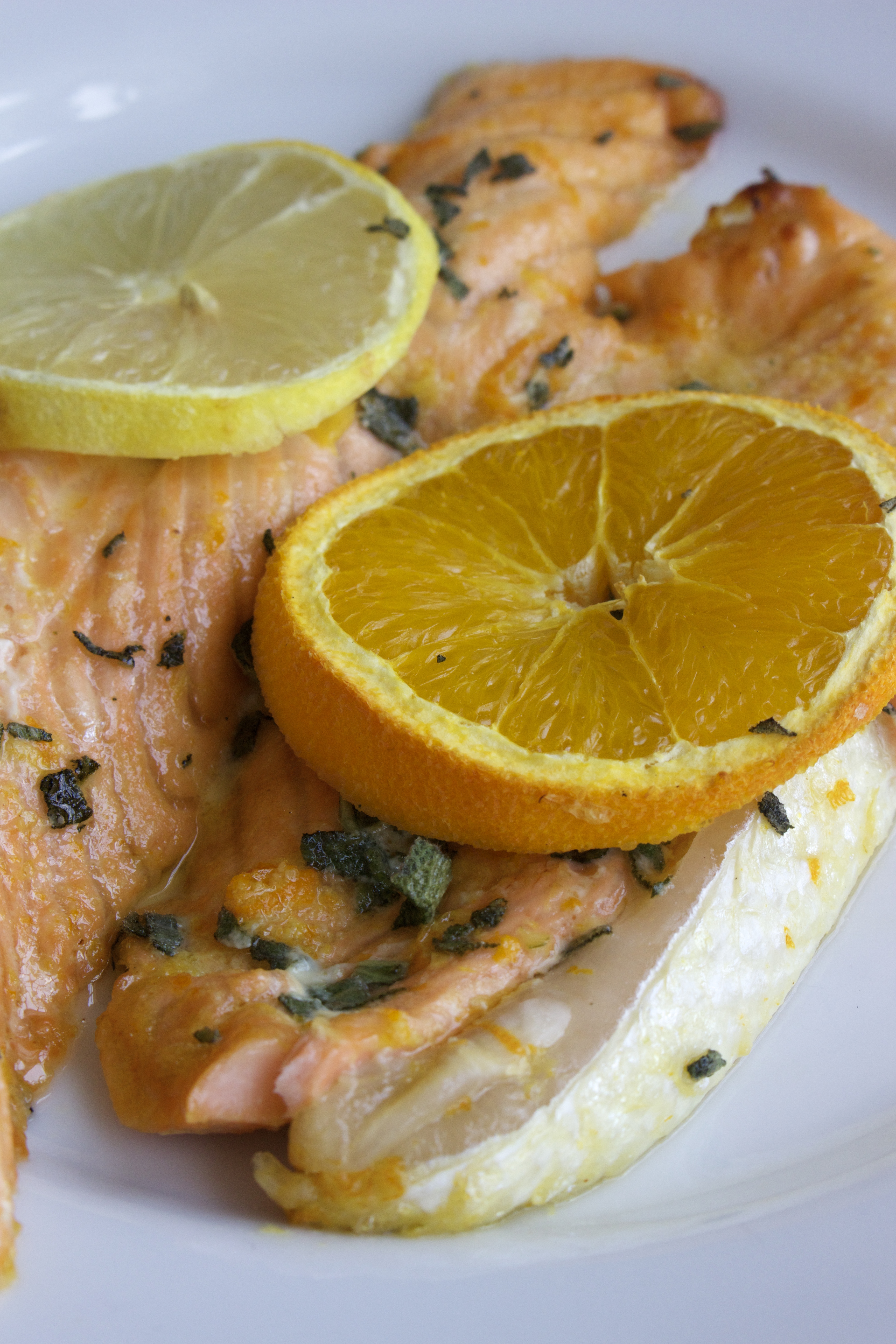
You may think that my salmon in today’s recipe looks a bit, well, weird, and in fact you would be right.  One of the cheapest sources of seafood that I have yet to find, is salmon belly at my local fish shop.  Because the entire world is still in its craze of “fat phobia,” apparently no one wants these succulent cuts of the salmon, as well as other fish, including tuna belly, which is seriously the best part of the fish.  Naturally fatty, with a rich flavor, cooking with salmon belly ensures that you will never have a dry fillet of fish, even if you over-cook it.  That being said, salmon belly isn’t available everywhere, as my brother who lives in Tennessee, is told everywhere that he checked, that the fish they receive is already cut into fillets.  However, if you are lucky enough to live near the coast, where the fish is fresh right from the boats and brought to a business still whole, you may just be in for a special treat.  Bottom line, ask around, as you never know what gems you may find hiding out at your local fish store.  

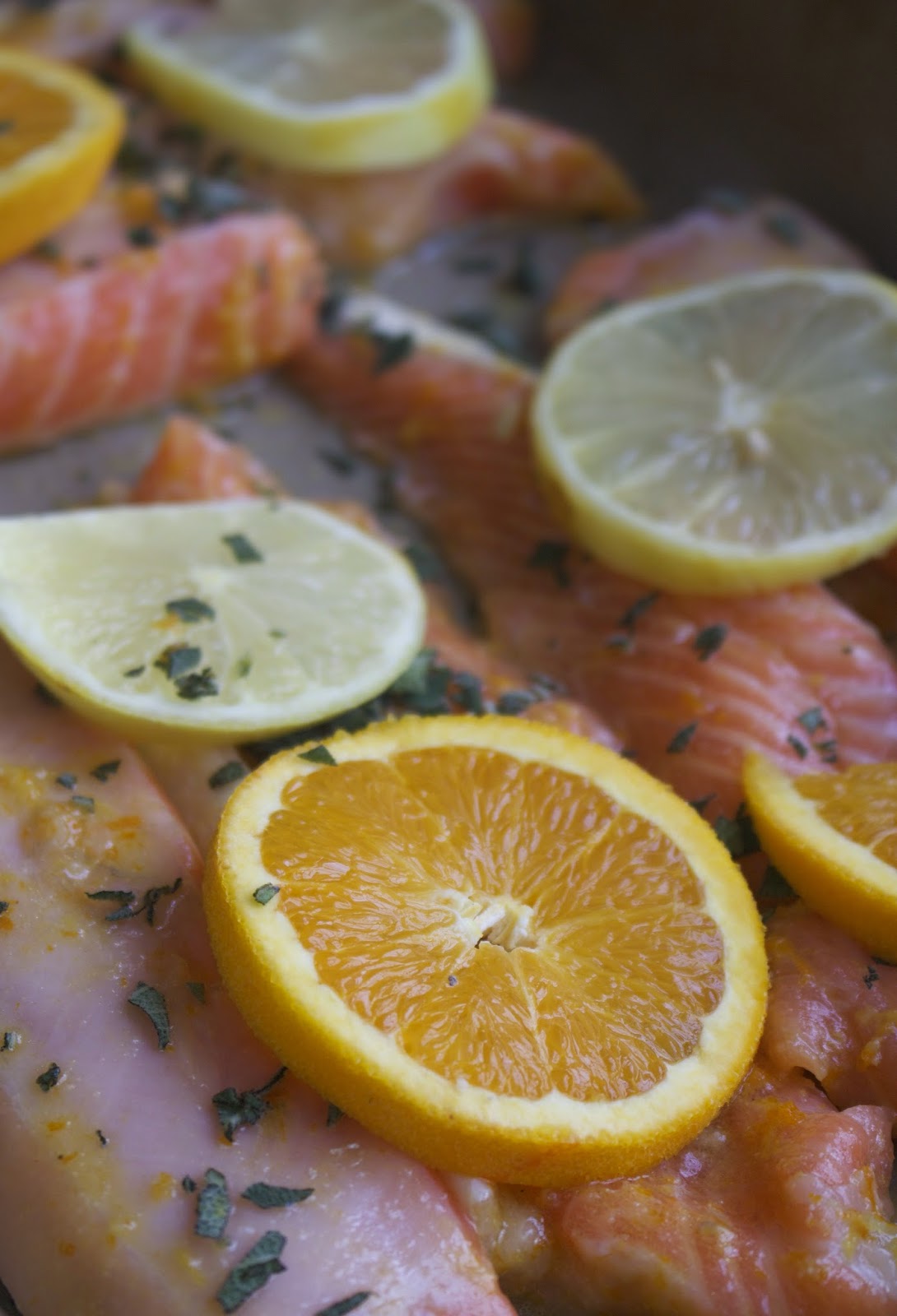
Though my family typically enjoys bluefin tuna and striped bass that was previously caught by my father and brother during the summer, this past year was void of good fishing.  Therefore, despite my mother not being entirely fond of fish, she has been making it a priority to prepare it at the least, once a week.  Of course, getting salmon belly for one dollar per pound at a local fish store certainly made eating fish much easier, as that is a major discount.  With all that said, today’s recipe is amazing regardless of if you are lucky enough to find salmon belly.  Marinated in a sweet, citrus dressing, and topped with just a sprinkle of fresh sage before baking, this salmon dish will take your taste buds to new heights.  Though I served it for dinner, it would also be a great breakfast recipe, regardless of if you can eat eggs or not.

Sage and Citrus Marinated Salmon

Print Recipe

(Serves 3-4)
Ingredient

  • 1 1/2 lb salmon fillets
  • 1 medium sized lemon
  • 1 small orange
  • 2 tbsp fresh sage – chopped
  • 2 tbsp avocado oil
  • 1 tbsp honey
  • Zest of 1 lemon
  • Zest of 1 orange
  • 1 tsp sea salt

Process

  • Place salmon in a medium sized bowl.
  • Zest both the lemon and orange, the cut the lemon and orange in half, squeezing one half of the juice into a small mixing bowl.
  • Add the zest, avocado oil, honey, and sea salt to the small mixing bowl, and stir until the marinade is combined.
  • Pour marinade over the salmon, cover bowl with plastic wrap, and place in the fridge for 30-60 minutes.
  • Preheat oven to 400 degrees.
  • While the salmon is marinading, chop up fresh sage, and cut remaining halves of the orange and lemon into three thin slices each.
  • Once the salmon is done marinading, place the fish a baking dish, sprinkling with the chopped sage, and placing lemon and orange circles on the top.
  • Place the baking dish in the preheated oven and bake for 12-14 minutes, until the salmon is no longer translucent.
  • Remove from the oven and allow to set for a couple of minutes before plating and serving with your favorite vegetables.


1 John 4:11-12 “Dear friends, since God so loved us, we also ought to love one another. No one has ever seen God; but if we love one another, God lives in us and his love is made complete in us.”

Filed Under: AIP, autoimmune friendly, autoimmune paleo, low carb, Protein Dishes Tagged With: 1 John 4:11-12, citrus, fish, honey, ketogenic, lemon, orange, Paleo, primal, sage, Salmon, salmon belly, seafood

Paleo Tigernut Chocolate Chip Cookies (Egg, Nut, Dairy, Coconut Free)

February 28, 2015


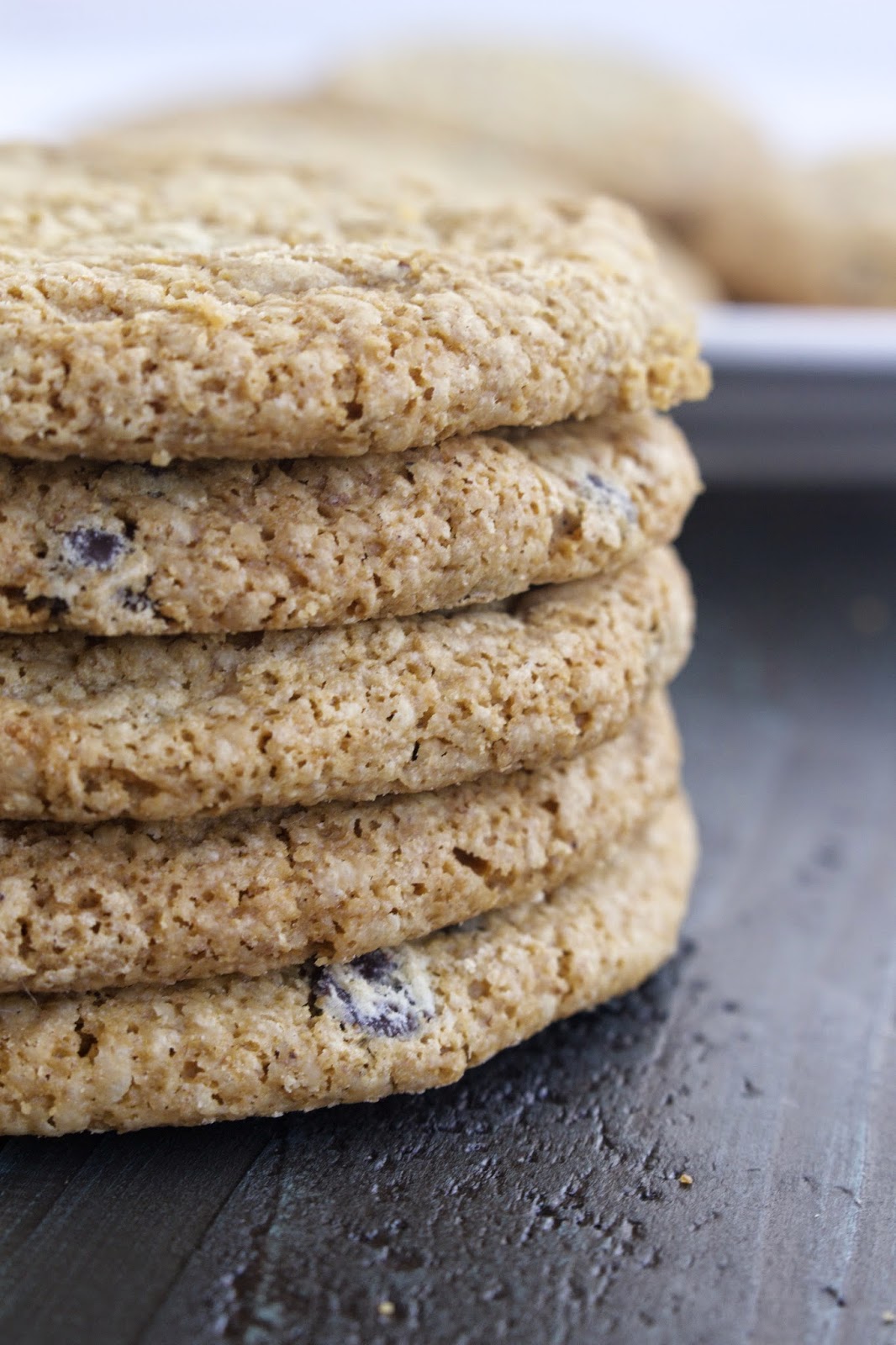
After many months eating and experimenting with tigernuts, I decided it was time that I let my blog followers have a chance to experience all that they have to offer.  Organic Gemini,  a company based out of Brooklyn New York (a city very near and dear to my heart due to many important doctors being located there that have helped me in my battle with Chronic Lyme Disease), produces tigernut snacks, flour, and horchata drinks that are all completely gluten free, organic, nut free, kosher, vegan, raw, non-gmo, and Paleo, of which can all be found in today’s giveaway.  There will be three winners, who will each receive a variety pack of horchata flavors (6 total), a bag of tigernut flour, and a bag of raw tigernuts.   For those of you who are on the Autoimmune-Protocol, the unsweetened, original, banana, and strawberry flavor horchatas are completely AIP-friendly, and simply sweetened with a bit of medjool dates.  Overall, after making many recipes with Organic Gemini’s tigernuts, tigernut flour, and tasting the horchatas, it would be an understatement to say that these products are anything but amazing.  Much to my families surprise, they absolutely loved the horchatas, including my younger brother, who typically is not keen to trying new things.  (Giveaway open to Us residents only.Of course, I did not want to host a giveaway of Organic Gemini’s products, without sharing yet another way I use them, more specifically, their tigernut flour.  That being said, there are some recipes that will never stop being classics, one of these is the chocolate chip cookie, a treat that any other cookie created has yet to match.  Therefore, I decided to create one using tigernut flour, as it is very versatile and yields a texture similar to almond flour, yet without the added heaviness.  However, today’s recipe are not just ANY chocolate chip cookie, as they are free of eggs, nuts, coconut, dairy, and refined sugar ingredients. Of course, I am sure that you can come up with dozens of reasons as to how making a cookie free of all of those ingredients isn’t really a cookie at all, and rightfully so.  However, I am here to change all those preconceived notions of allergen-friendly baked goods out there, and present to you a cookie that not only tastes good, but easily holds its own against all other Toll House cookies out there.  Though it may sound too good to be true, my mother can attest to how remarkably similar these cookies are to the “real thing.”  Not only do they bake like a regular cookie, but they set up and hold together just like the cookies that I enjoyed as a child (pre-Chronic Lyme Disease).  Tigernut flour may not be taking the world by storm, yet, but I believe that it will certainly become more and more popular, as bloggers like myself take the plunge and experiment with the exotic flour.

THIS GIVEAWAY HAS NOW CLOSED

  If you are looking to avoid all forms of refined sugar, you can make my homemade chocolate chunks (recipe here), or substitute dried fruit in place of the chocolate all together for a completely AIP-friendly version.  Despite the fact that I cannot even eat the treats that I create at this point in my life, creating these chocolate chip cookies seriously has me shaking with excitement.  Simply knowing of all the individuals that will be able to enjoy these cookies, makes me so happy just thinking about it.  The real indicator that these cookies are a winner, was that my brother, despite the fact that he always thinks there is something missing in Paleo baked goods, couldn’t help himself but go back for more.  My mother had to stop him on his fourth cookie, simply because she knew I needed to take photos of them, after which he told her with wide eyes that they were “so good” and “nothing was missing.” If that comment, from a 15 year old boy who despises the term “Paleo” be put in front of his food, does not convince you of how good these cookies are, I am not sure anything will!  In the end, I could not be more proud and happy to present to you these chocolate chip cookies, a recipe that even my younger brother gave me permission to make him time and time again. Please enjoy, and remember to share today’s giveaway with all of your friends and family.  GOOD LUCK! (For more tigernut recipes, visit my Paleo Flour page here)

Tigernut Chocolate Chip Cookies

Print recipe

(Makes 1 dozen)
Ingredients

  • 3/4 cup tigernut flour
  • 3/4 cup arrowroot flour
  • 1/4 cup lard
  • 1/4 cup non-hydrogenated palm shortening
  • 1/4 cup maple syrup
  • 1 tbsp grass-fed gelatin
  • 1 tsp vanilla extract
  • 1/2 tsp baking soda
  • 1/2 tsp sea salt
  • 1/2 cup Enjoy Life Chocolate Chips  *AIP substitutions below
Process
  • Sift tiger nut, arrow root, baking soda, gelatin, and sea salt together in a medium sized mixing bowl.
  • Beat together maple syrup, shortening, and vanilla on medium-low, in a stand mixer until combined.
  • Slowly add in dry ingredients to the wet until a sticky cookie dough has formed.
  • Fold in chocolate chips and scoop cookie dough onto a parchment lined baking sheet, placing in the freezer to chill for 10 minutes (or) chill cookie dough in the fridge for 30 minutes.
  • Preheat oven to 350 degrees.
  • Place baking sheets into the oven and bake for 12-14 minutes, until the cookies are set and golden around the edges.
  • Remove the cookies from the oven, allowing them to cool for 10-15 minutes, before transferring onto a wire rack for further cooling.

Recipe Notes

To make vegan, simply use all palm shortening in place of the lard and use 2 tbsp of pureed green plantain in place of the gelatin.
If you can have nuts, almond flour will work in place of the tigernut flour.
To make AIP, simply substitute raisins, or any other dried fruit of choice, for the chocolate chips.


Psalm 13:10 “Love does no harm to a neighbor. Therefore love is the fulfillment of the law.”

Filed Under: AIP, autoimmune friendly, dairy free, Dessert, egg free, gluten free, nut free, paleo, Recipes, Sweets and Snacks, tigernut flour Tagged With: chocolate chip cookies, coconut free, grain free, nut free, Paleo, primal, tigernuts, vegan

Daily Dose of Encouragement: Accepting

February 27, 2015

DailyDoseEncouragement

 For every chronic illness, God has an amazing plan that goes right a long with it.  What do I mean?  Well, just like any human life, those with health conditions have many, great purposes here on earth.  Though being sick certainly was not one that we would have ever hoped and dreamed for, it is ultimately being used to help us live out our life to the fullest.  Now, this is not to say that the trials that come a long with a chronic illness are not painful, exhausting, and completely debilitating.  However, it is crucial to not get wrapped up in today’s troubles, and thus forget see the entire picture of what is in store for us.  This can be hard, especially when we feel as though everything that we knew, were comfortable with, or good at in life, has been stripped away.  Yet unlike ourselves, God knew that this moment in life would come all along,  and has been planning and perfecting what will come out of it before we were even born.  Now it is our choice to either accept what is happening and what is in store, or rebel against our illness, God, and all of the effort that comes a long with finding health once more.  At times it may seem easier to just give up, not put in our own, personal effort to heal, and just wait for doctors to fix us.  However, it is crucial to realize that God has brought us to this circumstance for a reason, and we must do all that we can to learn, grow, push ourselves, and earnestly seek what He has available to us now, and what He has in store later down the road.  If we don’t accept the change of life, our own, selfish and limited perception of how things should be, blocks our view from seeing all of the limitless possibilities that God wants to bring out of this illness. Just because we don’t like change in life, doesn’t make it is a bad thing, as this negative view on the turn of events is simply our human nature.   Instead, we must take hold of our situations, learn from our health condition, realize what changes we must do in our diet and lifestyle to heal, and know that through Christ, doing all the seemingly impossible tasks at hand is possible.

 Yet it all comes back down to us, and our decision of acceptance, despite what the trials of life may bring, or how easy, hard, or seemingly impossible they may seem.   God is all mighty, all knowing, and ever present, and will always help us succeed in rising above our illness.  The devil will try and make us feel worthless, weak, indecisive, unable to tackle what we know must be done in order to heal and take care of our ourselves. He will make us feel as the life God has given us is more of a curse than a blessing.  However, doing things our own way, and not accepting the trial that God has presented in the form of a chronic illness, will only ever lead to disaster in both life and our health.  Instead, we must not only accept our chronic illness, but we also must embrace it.   Of course, it can be hard to willingly welcome a change in our lives, especially something as drastic as a chronic illness, and this certainly won’t happen overnight.  However, we must not forget that it is always possible to grow from any circumstance, and become a stronger and smarter a long the way.  Though finding peace in accepting pain and suffering can also be difficult, everything that God is allowing to happen in our life is for the good, and we therefore must learn to always accept it with thanksgiving.  Though this is tough love, God knows that it is necessary to fulfill His perfect plan in our lives, otherwise, He would not allow it. As humans, it is easy to get stuck in our old ways, feel sorry for ourselves, view our illness as an inconvenience, or even try and pretend like you aren’t sick, looking back on your old life with wishfulness.  Yet this is not where God has called us to be.  Instead, we must have faith in the present and future life that God is giving us, know that it is not the end of our story here on earth, and after a living a life in submission to His will and His word, all of our tears will be wiped dry, as we spend eternity with Him in heaven.  Overall, having a chronic illness is not the end of the world, but rather, can serve as just beginning of finding all that is in store for us, as long as we accept and believe it.

1 Timothy 4:4 “For everything God created is good, and nothing is to be rejected if it is received with thanksgiving…”

Filed Under: A Daily Dose of Encouragement, chronic illness, chronic lyme, God, Personal Experiences Tagged With: 1 Timothy 4:4, acceptance, bible verse, daily dose of encouragement

Paleo Roasted Delicata Squash Medley (Autoimmune-Friendly)

February 26, 2015


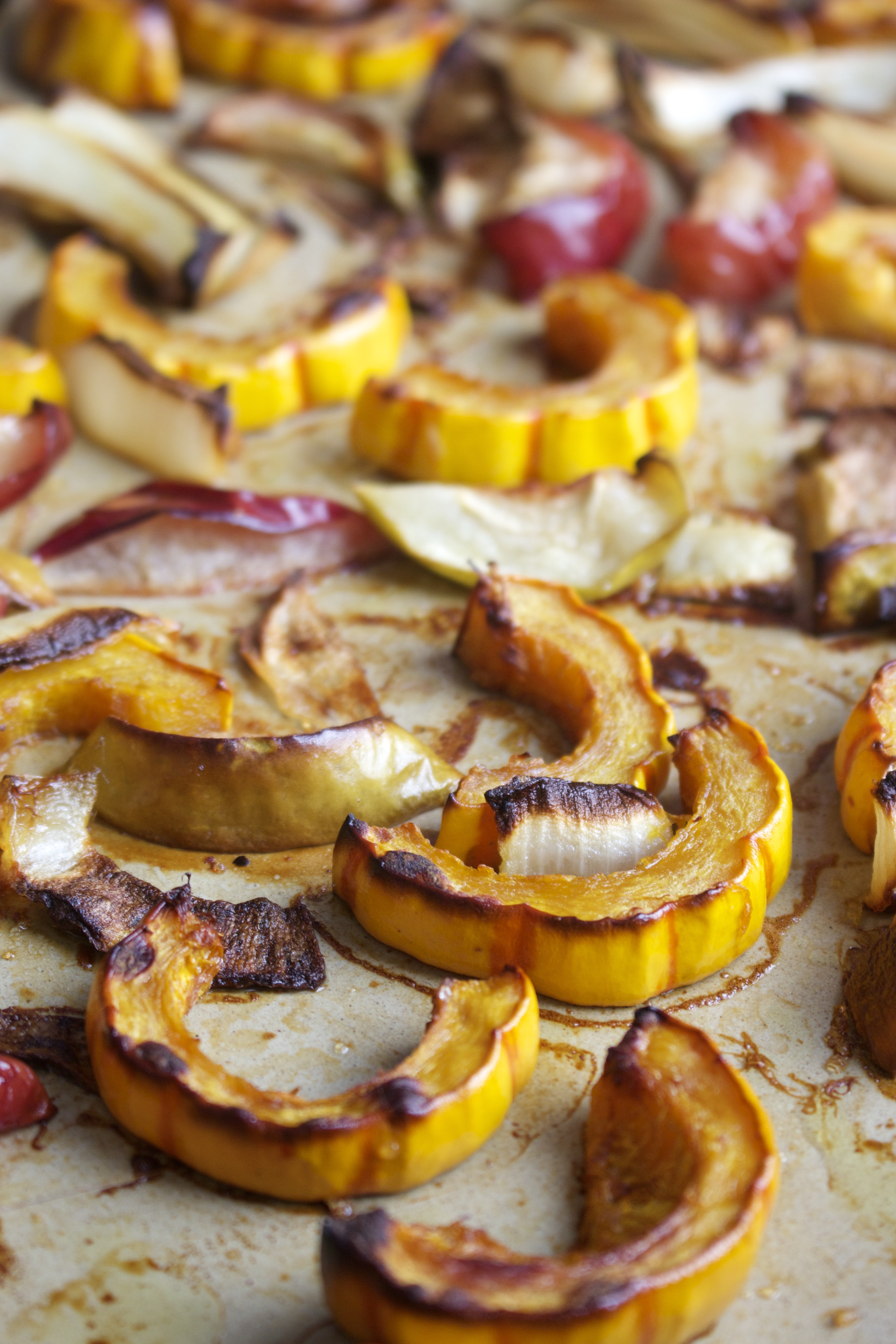
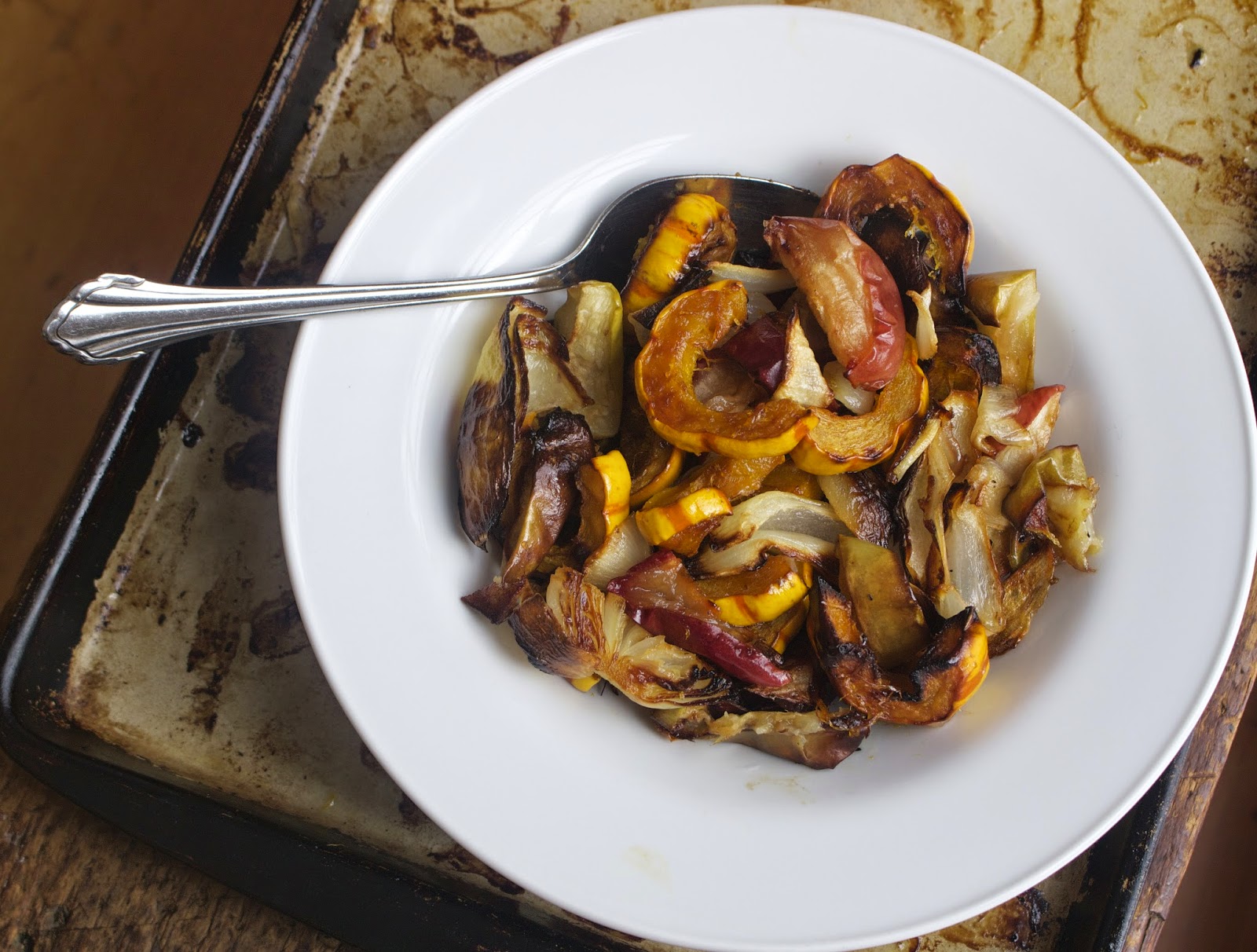
If you liked my previously posted recipe for Herb Roasted Stuffing made from taro root, or my Sweet and Savory Hash with butternut squash, then you are in for a treat with today’s recipe. Much like this week’s Garlic and Sage Pork Chops, this roasted squash medley was a recipe that I created as a way to change up the usual preparation for the vegetables I served for my mother’s birthday dinner.  To my excitement,  everyone around the table thoroughly enjoyed my slight variation on a typical roasted squash dish, so much so that they told me I simply had to post in on my blog.  So, here it is folks, a savory roasted squash medley with just a hint of sweetness from the apples and a touch of maple syrup.  As a note, if you like your vegetables crispy and very brown, be sure not to cut the onion and apple too small, or else they will become black and burnt, far quicker than the squash itself will cook.  That being said, I have to admit that eating crispy, charcoal pieces of onion is actually pretty tasty.  Overall, today’s recipe is yet another that proves just how simple, yet delicious, real food can be.  It doesn’t have to be fancy, expensive, time consuming, or energy-draining, all that you need is a few, wholesome ingredients, and you have got yourself a killer dish that will not only taste good, but will feel good as well. Again, whether for breakfast, lunch, or dinner, this roasted delicata squash medley will remind you just how easy and delicious cooking real food is, and that is a fact.

Roasted Delicata Squash Medley

Print Recipe

(Serve 2-4)
Ingredients 

  • 1 lb (16 oz) delicata squash
  • 1 large yellow onion (2 cups)
  • 2 small apples (1 1/2 cups)
  • 3 tbsp lard – melted
  • 1 tbsp maple syrup
  • 1 tsp sea salt

Process

  • Preheat oven to 400 degrees.
  • Cut the squash in half, scoop out the seeds, and cut each half into 1/2 inch wide crescents.
  • Cut both the apple and onion in half, and chop into 1/2 inch wide crescents.
  • Place the onion, squash, and apple onto a large, rimmed baking sheet.
  • In a small sauce pan, heat lard and maple syrup until the lard has melted.
  • Pour the mixture over the vegetables and fruit, mixing with a spatula until evenly coated.
  • Sprinkle the sea salt over the vegetables and fruit, placing the baking sheet in the oven and allowing to bake for 30-40 minutes, until the squash is cooked to your liking.


Matthew 22:37-39 “Jesus said to him, “‘You shall love the Lord your God with all your heart, with all your soul, and with all your mind.’ This is the first and great commandment. And the second is like it: ‘You shall love your neighbor as yourself.”

Filed Under: AIP, autoimmune friendly, autoimmune paleo, vegan, vegetables, Vegetables and Sides Tagged With: apple, apples, delicata, grain free, lard, maple syrup, Matthew 22:37-39, onions, Paleo, roasted squash, squash

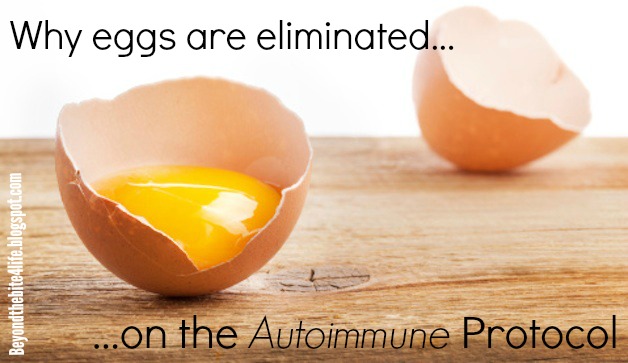
The Autoimmune Paleo Protocol: Eggs

February 25, 2015

 
Throughout some of my past posts, I have mentioned different aspects of the Autoimmune Protocol that have helped significantly in fighting against Chronic Lyme Disease.  However, because the who, what, where, when, and why’s of the protocol can be a lot for people to take in all at once, and certainly is too much information for me to include all in one post, I have decided to take the time and explain some of the  fundamental dietary aspects of the protocol in a series of posts, starting with today’s topic of eggs. 
 
Eggs as a Whole
 
Before I get started, I want to make one thing clear, and that is that for an individual with no autoimmune conditions, eggs are perfectly fine to eat.  In fact, properly raised eggs are very nutrient dense, with 13 differing nutrients contained all in the yolk (not the white).  That being said, with all of the fat and cholesterol dogma clouding people’s ability to think for themselves, the egg has slowly turned from a healthy breakfast food, into an artery clogging cause for heart disease.  However, this statement is very misleading, as eggs (yes, the whole thing) have never once been linked to creating heart disease.  Overall, eggs are rich in vitamin A, E, B, iodine, antioxidants, and fat, yes fat, an essential part of every human’s diet responsible for health all the way down to the very cellular makeup.  As previously discussed in my Fat Phobia series (parts 1, 2, and 3), foods that contain the right types of fat are not what is making today’s nation obese, nor is it the cause for the rising rates of heart disease and other metabolic disorders.  Therefore, despite conventional medicine telling us to limit our consumption of eggs down to a slim 3-4 per week, there truly are no guidelines to consuming organic, pasture-raised and (or) local eggs that come from a sustainable farmer committed to treating his chickens the best way possible.  If you are interested in learning more on why you should be eating the whole egg, check out Liz Wolfe’s book “Eat the Yolks,” I highly recommend it. 
 
Eggs & Autoimmunity  
 
OK, so now that we have established the fact that eggs are perfectly healthy to consume on a daily basis, there is a catch in this statement, and that is for those with an autoimmune condition.  The problem lies almost entirely in the egg white, though the yolks can also be somewhat problematic to individuals as well.  Reactions to eggs are due to an enzyme known as “lysozyme,” an anti-microbial compound of which the body naturally secretes in mucus membranes to fight against harmful invaders, an example being the tears we produce when crying.  However, there comes a problem with ingesting this enzyme when one is experiencing autoimmunity, due to the fact that lysozyme can cross the gut’s barrier, and thus are able to aggravate the immune system even further through various mechanisms all ultimately harmful to the body. 

Egg Whites

There are two separate parts of an egg, both of which have two very different jobs.  It is the egg white in particular, that contains the lysozyme enzyme, of which is present to protect the from specific, intruding bacteria.  However, this strong act of defense does not get taken away when cooked or ingested, causing a problem within a compromised body.  When ingested, lysozyme will connect with proteins and their fragments (some of which are present in the egg white itself), forming a compound that can not be digested by the protease enzyme in our digestive track.  However, the problem with lysozyme does not only come from compounds present in the egg, but also its special ability to “pick up” other proteins from the various bacteria present in our gut.  Together, with the extra proteins attached to the lysozyme enzyme, as well as its handy enzyme inhibitors (ovomucoid, ovinhibitor, ovostatin, and cystatin), it is able to get through the gut barrier and enter into the bodies circulatory system.  This interesting quality of lysozyme is due to the fact that it is of positive charge, causing an electrostatic attraction to the negatively charged proteins found in intestinal epithelial cells, of which are some of the main regulators in one’s intestinal track.  Because of this strong attraction between the opposing charges of lisozyme and the cells that control the integrity of our gut, lisozyme, and all of its proteins that are tagging a long for the ride, are able to rapidly absorb into the blood stream.  Due to the time that lisozyme spent in the GI tract, picking up various bacterial, food, and egg white proteins, its appearance of a large, indestructible molecule in the blood stream, is not welcomed by the body.  Instead, immune responses are stimulated, causing the body to attack itself, the main contributor behind a given autoimmune disease. 

AIP Clarity 

After on learns the interesting nature of the lisozyme enzyme present in egg whites, it is rather clear as to why one would want to avoid them if they are experiencing autoimmunity.  With the Autoimmune Protocol eliminating all pro-inflammatory foods from one’s diet, eggs are inevitably one of the first to go.  However, this is not to say that one will not ever be able to eat eggs again, as once the immune responses are regulated and under control, the problems that come with consuming eggs may no longer be present.  For that reason, egg yolks are one of the first in the reintroduction phases of AIP, of which are later followed by the entire egg (white included).   As for my own experience, eggs were first very friendly to me in my journey with Chronic Lyme Disease, and I thoroughly enjoyed them as morning an omelette.  However, as the severity of my illness grew, so did the number of histamine-induced food allergies, due to increased intestinal permeability (i.e. leaky gut) from various, additional parasitic, protozoa, and bacterial infections.  Therefore, it was not long before symptoms arising from the consumption of eggs became very noticeable, leading me to slowly eliminate them from my diet completely.  Of course, skipping eggs for breakfast is not an easy thing to do, and can send those used to their morning omelette for a spin.  However, this is where I learned to incorporate white fish into my morning routine.  It may not sound very appetizing at first, but baking, broiling, or poaching fish can be a great addition to your morning meal, as is it one of the most easily digested proteins available.  Not only that, but some of the most affordable types of fish are also the most nutrient dense, of which include oily, cold water fish such as wild sardines, herring, salmon, and anchovies.  If you are having trouble getting over the act, or even thought, of consuming fish in the mornings, it can be helpful to start out with smoked varieties as they tend to be more palatable, especially when topped with a squeeze of citrus.  Overall, avoiding eggs can seem like a pain at the beginning of the Autoimmune-Paleo Protocol, however, it is certainly necessary in regaining the integrity of one’s entire body when experiencing autoimmunity.  To learn more on how to use diet and lifestyle to manage an autoimmune condition, make sure to check out The Paleo Mom, and her book, The Paleo Approach. 


Proverbs 4:20-22 “My son, pay attention to what I say; turn your ear to my words.  Do not let them out of your sight, keep them within your heart; for they are life to those who find them and health to one’s whole body.” 

Ballantyne, Sarah. The Paleo Approach: Reverse Autoimmune Disease and Heal Your Body. N.p.: n.p., 2014. Print.

Filed Under: AIP, autoimmune paleo, chronic illness, chronic lyme, Food and The Human Body Tagged With: egg enzyme, egg protein, eggs, elimination phase, lysozyme, proverbs 4:20-22

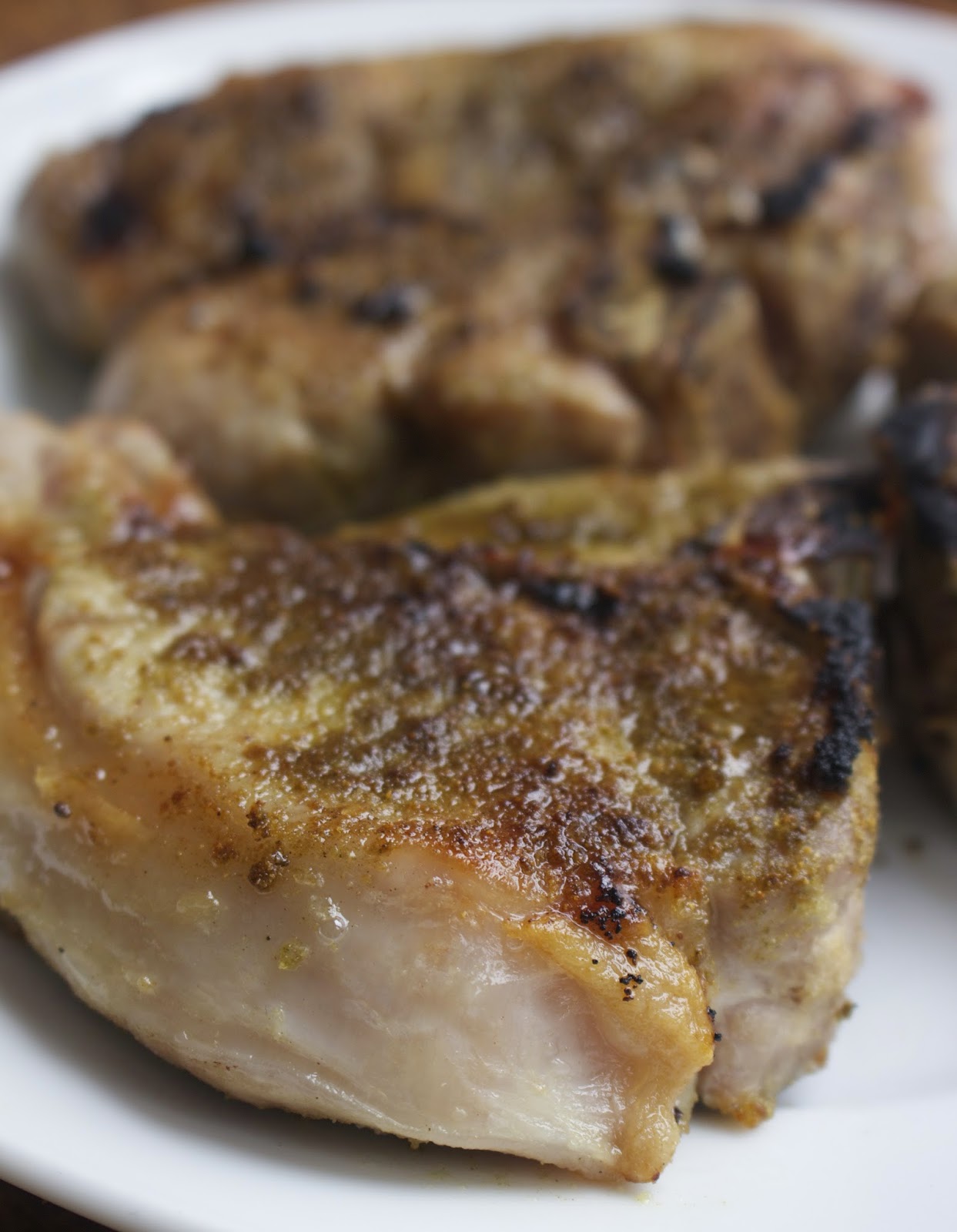
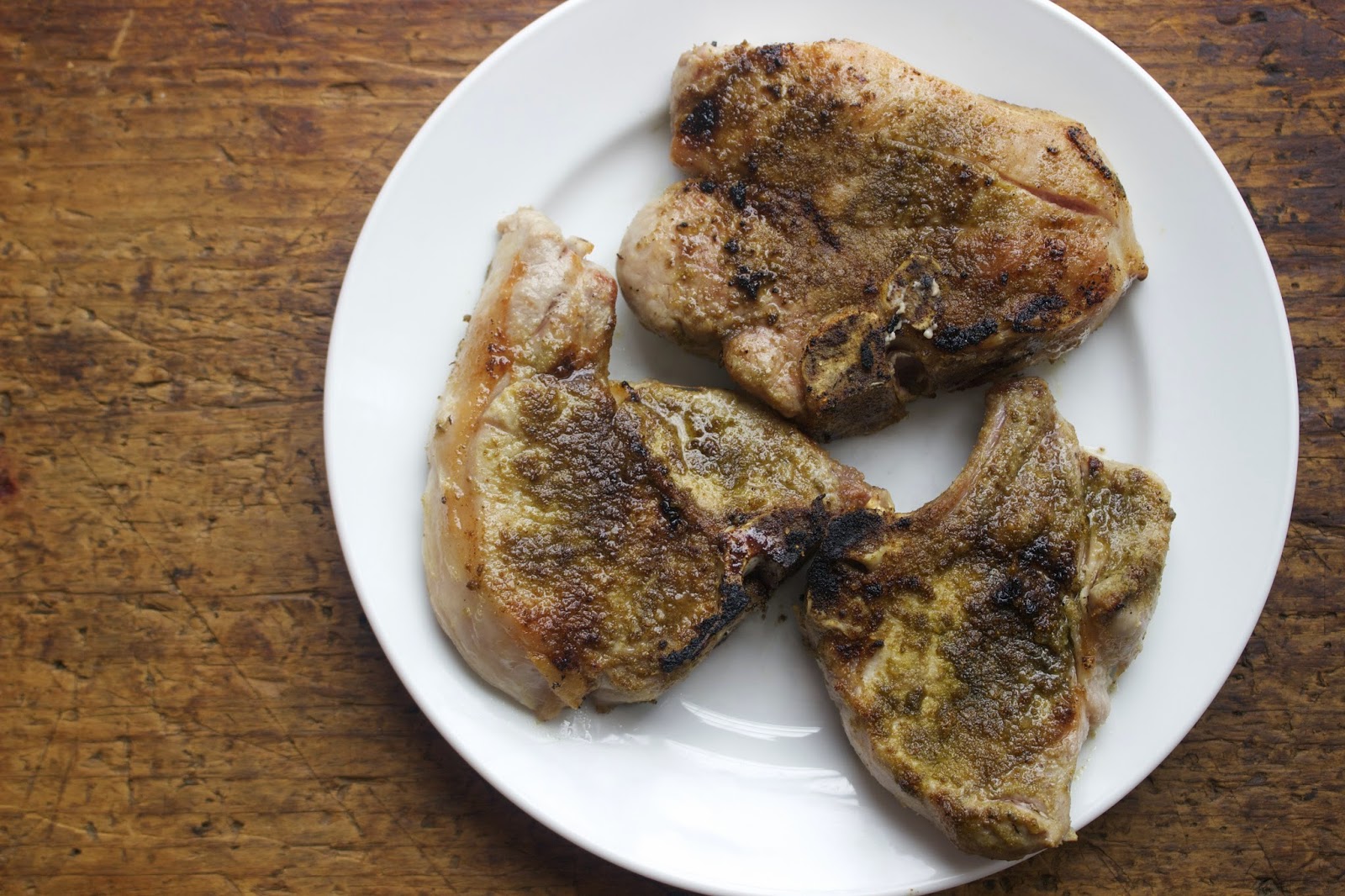
Paleo Garlic and Sage Pork Chops (Autoimmune-Friendly)

February 24, 2015

 When you cook these chops, make sure to not burn the house down.  Yeah, I am being serious, as this recipe comes with a rather funny story.  A couple weeks ago, I was have a rough day, yet it was my Mother’s birthday, and I wanted to prepare something for her dinner.  So, I decided to brine and broil some pork chops, since the time standing and overall energy required is very minimal for a process like that.  Well, much to my surprise, the fire alarm went off half way through the broiling process.  Funny thing is, the article I was previously reading about brining pork chops, warned me that cooking them might cause a lot of smoke, and to already have a window or door cracked open.  However, I initially shrugged this note off, and not being one to freak out, simply opened all of the windows and turned the oven fan on very high, in hopes to air out the house and not cause any extra stress on my parents who were both away at work.  Despite my attempts to keep it on the down-low, the fire department came, down our little country road, and, well, everyone in my family found out.  Therefore, my advice to you when making this recipe, is turn on a fan, or open a window, or just do something,  prior to cooking, so that you can ensure no large fire trucks will be dropping by to say hello.  On that note, this recipe is so mouthwatering delicious, it is definitely worth the little bit of smoke that may be produced from the fat on the pork chops.

 As previously mentioned, today’s garlic sage pork chops are super simple, and require very little energy to prepare. All that must be done is the preparation of a simple water and salt brine a few hours before you plan on cooking the chops, and viola, you have succulent and tender cut of meat ready at your disposal. You may be wondering why the brining is necessary, and truly, it is not entirely.  However, brining meat is an essential step in ensuring that your meat does not become tough and chewy, something you certainly do not want to risk on your good pork chops.  In fact, meat is said to lose 30% of its moisture content when being cooked, yet with a brine, it can be brought down to at least 15%.  The salt also makes some of the proteins present in the meat to break down, of which allows the water from the brine to insert itself into the meat, and thus when cooked, gets trapped inside. With all that said, who wouldn’t want to take a hold of the benefits of brining? Overall, my family fell in love with these garlic and sage pork chops, and thus approved of me making them again and again, proving what just a simple brine and a few tasty herbs can really do.


Garlic and Sage Pork Chops

Print Recipe

(Serves 4)
Ingredients

  • 4 pork chops, 1 1/2 inches thick
  • 3 cups water
  • 3 tbsp sea salt
  • 1 tbsp lard
  • 1 tbsp ground garlic
  • 1 tsp ground sage
  • 1/2 tsp sea salt
Process
  • Heat 1 cup of water in a medium sized sauce pan until boiling.
  • Stir in 3 tbsp sea salt until dissolved, add remaining 2 cups of water, and allow to set until room temperature.
  • Place pork chops in a medium sized bowl, covering with the water and allowing to brine for 1-4 hours.
  • Once ready to cook, remove pork chops from the brine and pat dry with a paper towel until no longer wet.
  • Mix remaining 1/2 tsp sea salt, sage, and garlic in a small ramekin.
  • Rub pork chops all over with the lard and herb blend, placing on a wire baking rack pan.
  • Place the top rack of your oven 6-8 inches away from the broiler
  • Preheat broiler on high.
  • Once hot, place pork chops under the broiler, cooking 3-4 minutes per side until just browned.
  • Remove from the oven and allow to sit for 5 minutes before serving.


Psalm 1:1 “Blessed is the man who walks not in the counsel of the ungodly, nor stands in the path of sinners, nor sits in the seat if the scornful.”

Filed Under: AIP, autoimmune friendly, autoimmune paleo, dairy free, gluten free, ketogenic, low carb, Protein Dishes Tagged With: coconut free, garlic, grain free, ketogenic, nut free, Paleo, pork, primal, psalms 1:1, sage

Paleo Chocolate Protein Fudge Bites (Autoimmune-friendly)

February 23, 2015


Today’s recipe is pretty straight forward.  Not only is it easy to prepare, but it is also very versatile, meaning that you can make it according to your specific dietary needs.  Below I have included notes for those following Dr. Sarah Ballantyne’s Autoimmune-Paleo Approach, as well as if you eat Ketogenic.   You can use any fat, as long as it is saturated, whether it be cocoa butter, coconut oil,  non-hydrogenated palm shortening (of which I have all done myself), or even grass-fed ghee, if you can handle it.  Adding different flavorings, such as peppermint extract, is also an option, as it would give the chocolates a refreshing Peppermint Patty taste.  That being said, the main gist is that these protein fudge bites are a great way to introduce entomophagy into your life.  Though I have posted previous recipe that use cricket flour, including these Cinnamon Graham Crackers, Blueberry Streusel Muffins, and my No-Bake Fig Newton Bars, I thought it would be a good idea to share a recipe that most everyone would have the ingredients for.  Overall, I love finding creative ways to add insect protein into my family and I’s life,  today’s recipe being yet another that they fully enjoyed, not caring one bit of the ingredients.  Chocolate fudge bites, with a punch of sustainable protein, what is not to love? 
Chocolate Protein Fudge Bites 
Print Recipe
Ingredients
  • 1/2 cup non-hydrogenated palm shortening *Substitutions below
  • 1/4 cup unsweetened cocoa (or) carob powder
  • 1/4 cup cricket flour
  • 2 tablespoons grade B maple syrup *Omit if using carob 
  • 1/4 tsp sea salt
Process
  • Heat palm shortening and sea salt over medium-low in a small sauce pan until melted.
  • Whisk in cocoa powder, cricket flour, and maple syrup until smooth.
  • Spoon chocolate mixture into heart shaped candy molds and place in the fridge or freezer to set (about one hour). 
  • Once set, remove the chocolates from their mold and keep in a mason jar in the freezer. 
Recipe Notes
Feel free to use coconut oil, cocoa butter, or ghee in place of the shortening.
To make AIP-friendly, use carob powder in place of the cocoa, and use coconut oil or palm shortening as the base. 
To make Ketogenic, simply substitute maple syrup for pure stevia to taste. 
If you do not have heart shaped molds, simply pour the mixture into a lined loaf pan or mini muffin tin fitted with paper cups.  
You can source your cricket flour from Aketta by Aspire, Next Millennium Farms, or through the Amazon affiliate link provided in the ingredients list. 
 
Lamentations 3:24 ““The Lord is my portion,” says my soul, “Therefore I hope in Him.” 

Filed Under: AIP, autoimmune friendly, autoimmune paleo, dairy free, gluten free, Sweets and Snacks Tagged With: coconut free, cricket flour, ketogenic, Lamentations, nut free, protein

Paleo Roasted Leek Greens (Autoimmune-friendly)

February 21, 2015

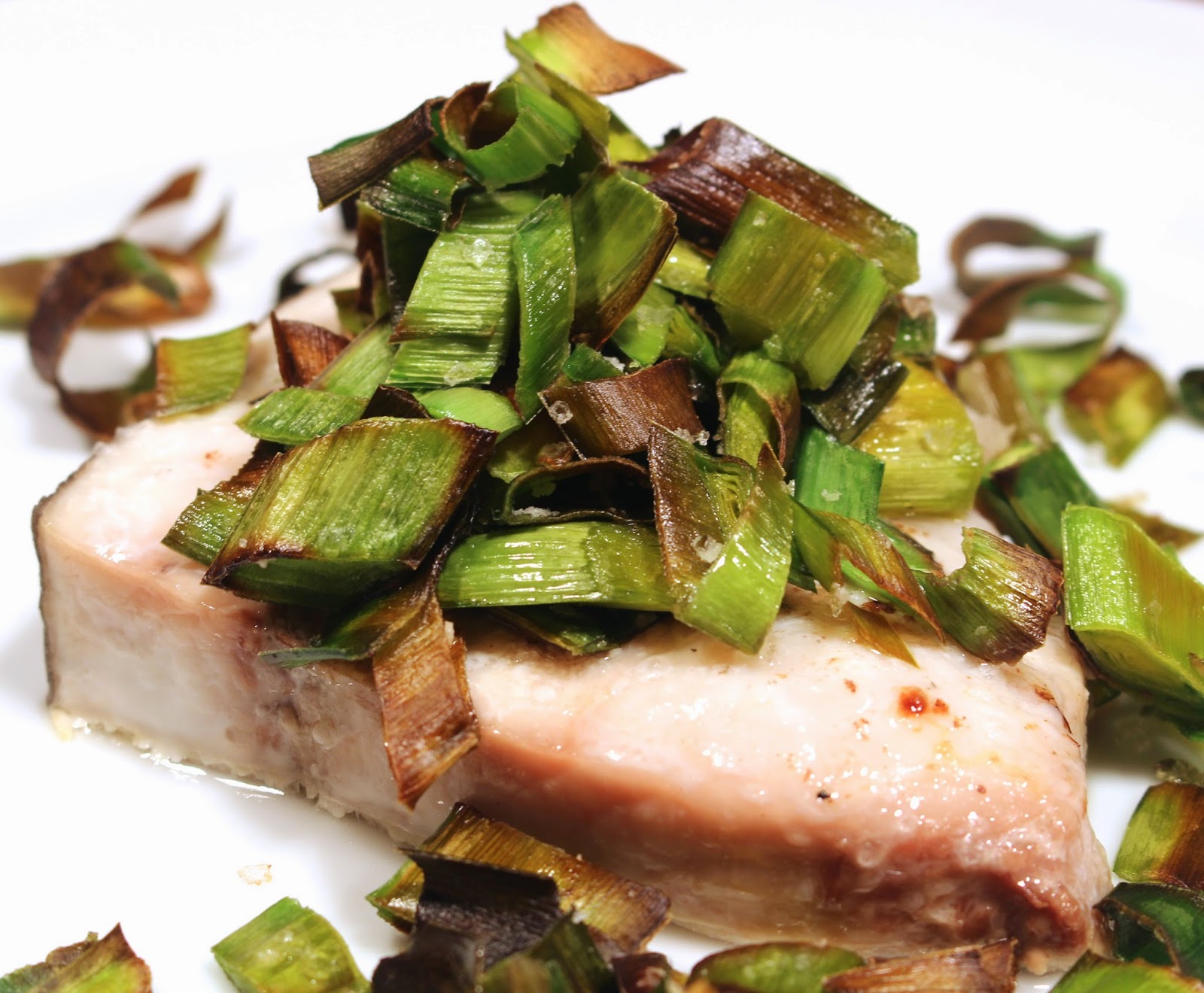
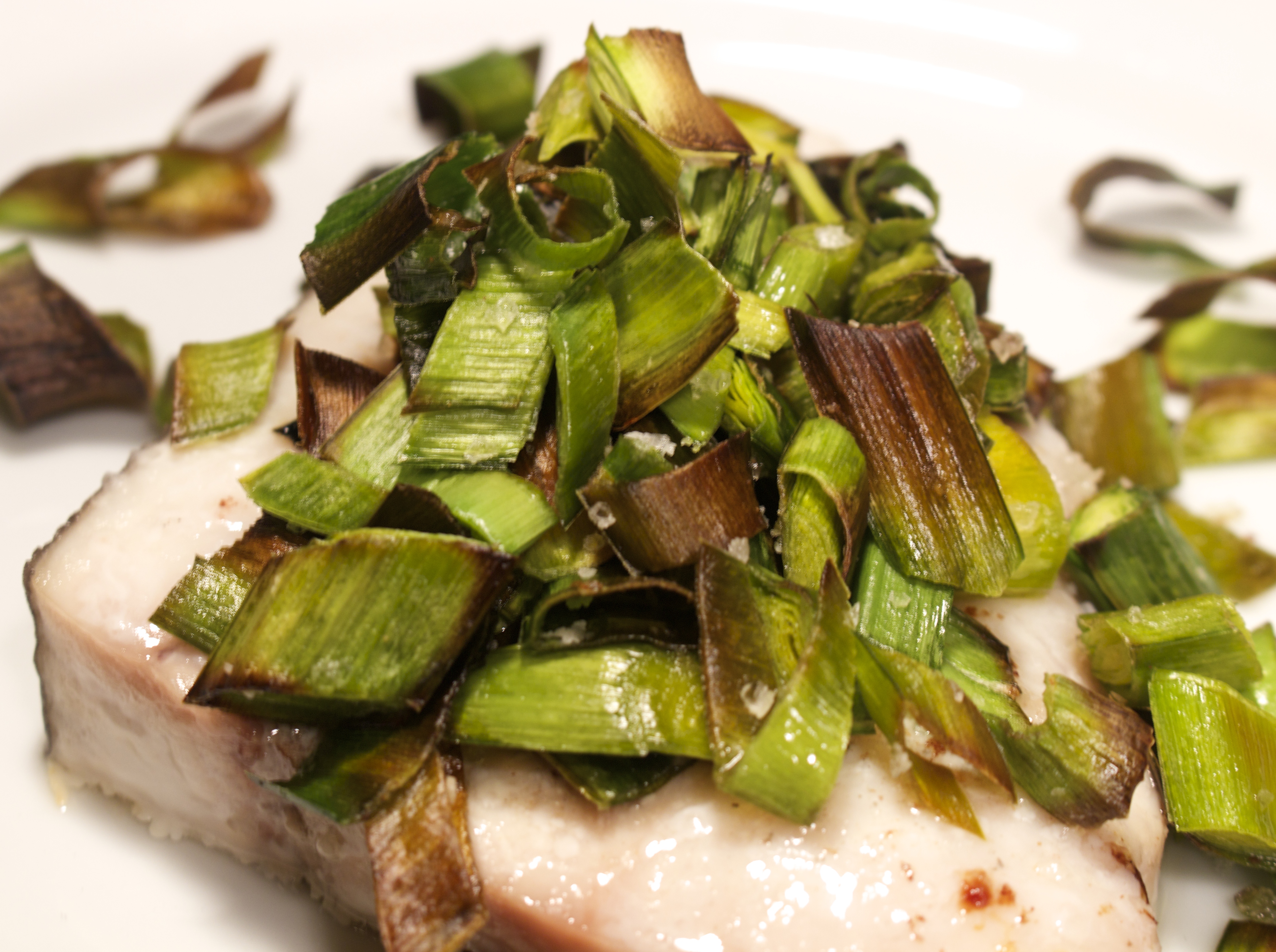
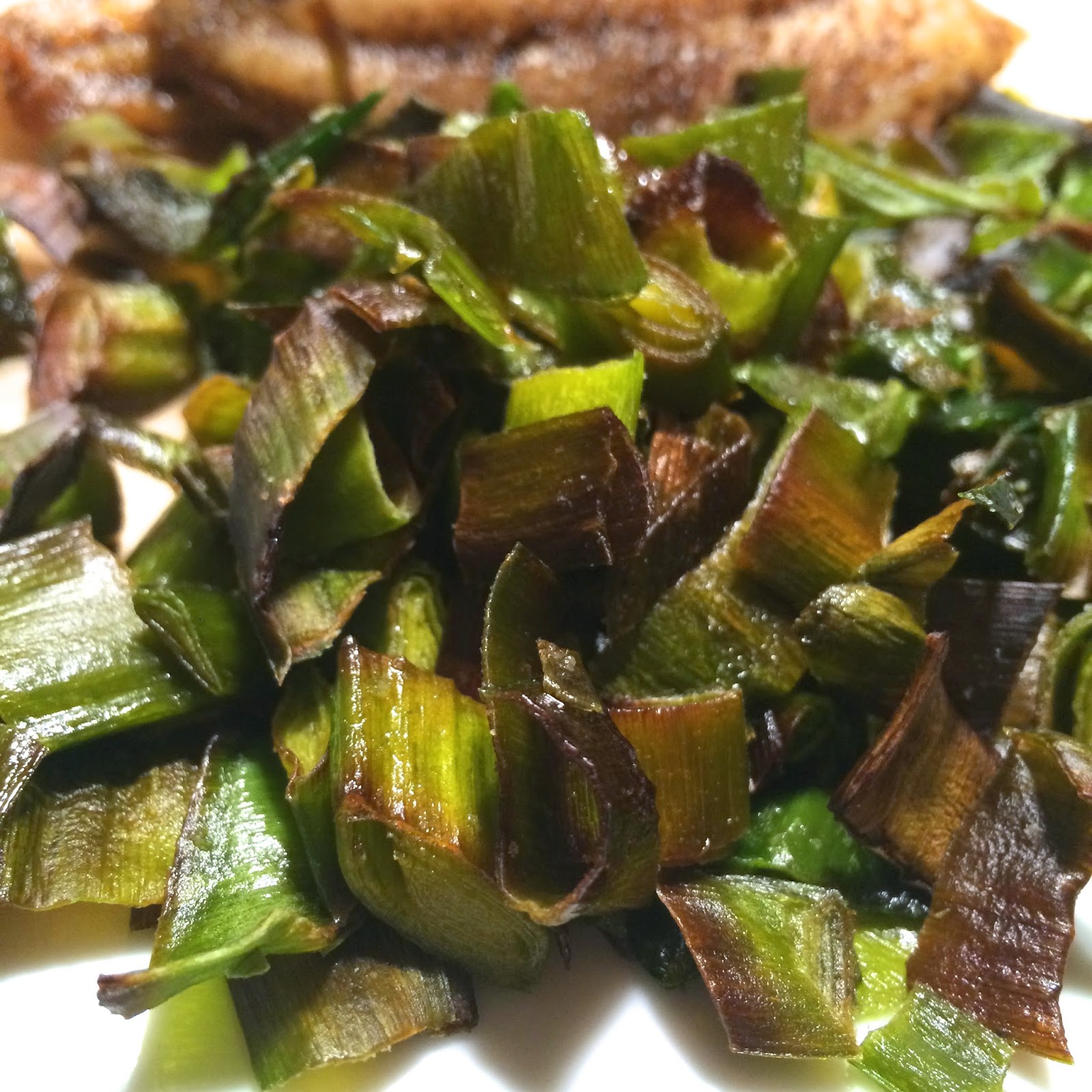
 Before I began roasting leeks, cooking with their green, stiff, stalks, was never something I ever did.  Yet with the vegetable continually popping up at every winter farmer’s market that I went to, I decided to get creative and prepare them in a way similar to that of my crispy baked collard chips.  Throughout all of my different experiments, I found that not only are leek greens good incorporated into dishes, but they are even more tasty placed on top of food, of which brings us to today’s recipe.  Both tender, crispy, crunchy, and bursting with that beloved onion flavor (yet low-FODMAP) these roasted leek greens are fantastic as a side dish, over your main course, or put on top of a salad. That being said, it is important to keep on eye on them when they are roasting, as they can all too quickly become like burnt like charcoal .  However, it is not to say that they are not delicious this way, as I have made the mistake of cooking the just a bit too long, many times.  Somedays, I like to drizzle balsamic vinegar into the roasting dish a few minutes before taking them out, which gives them even more of a caramelized taste.  Overall, these roasted leek greens have become a favorite in my family, as not only do they make the kitchen smell wonderful, but their addition to the dinner plate is simply too delicious not to love. 
 

Roasted Leek Greens 
Print Recipe
(Serves 2) 
Ingredients

  • 2 cups chopped leek greens (from 3-4 long leek stocks) 
  • 1 tbsp avocado oil
  • 1/2 tsp sea salt

Process

  • Preheat oven to 425 degrees. 
  • Chop the green part of each leek stalk into 1/2 inch rounds.
  • Place chopped leeks in a salad spinner, rinsing with water, and spinning dry.
  • Transfer leeks into a baking side, sprinkling with 1/2 tsp sea salt, and tossing with 1 tbsp avocado oil.
  • Once hot, place the leeks in the oven to cook for 15-20 minutes until crispy and browned. 

Ephesians 5:2 “Be completely humble and gentle; be patient, bearing with one another in love.”

Filed Under: AIP, autoimmune friendly, dairy free, ketogenic, Vegetables and Sides Tagged With: coconut free, Dinner, ephesians 5:2, grain free, leek greens, low-Fodmap, nut free, Paleo, primal, side dish, vegan

Daily Dose of Encouragement: Rising Above

February 20, 2015

DailyDoseEncouragement

It would certainly be a lie to say that I never struggle with staying encouraged.  In fact, fully embracing and living according to the truths that I write in these posts is easily just as hard for me as it may be for those reading it.  Typically,  the dose of encouragement that I am posting reflects what I am personally going through, of which brings me to today’s topic.  Have you ever had a week where it just seems like every little thing that could go wrong, does?  Whether it be a supplement not coming in the mail due to the wintry weather conditions, appointments getting canceled, conflict in the household, or even something small like tripping over your pet in the hallway, some weeks it just seems like the whole world is against you.  If you are anything like me, you like things to always go “right,” and when everything seems to turn around and slap you in the face, over and over again, it can be a rather tough to stay positive and rise above.

Truly, there is only so much we as humans can physically do to make sure everything in our day-to-day lives goes smoothly.  Even when we do everything right, we still may fail, and if we don’t fail this time around, someone else is sure to disappoint us or let us down, of which can leave us very frustrated.  So how do you find encouragement, when it seems like everything that happens is just tearing you down one piece at a time?  Just this past week I came across a devotional that discussed taking hold of the hope that God gives us, and thus be greatly encouraged.  What is this hope?  Ultimately, it is the promise of heaven, of which is our birthright for us Christians.  The writer points out that we can’t simply sit back and expect the encouragement to come to us, rather, we must look for it, grasp it, and never let go, despite how hard the storms of life may throw us. The apostle Paul wrote in Philippians 3:14, we must “press on toward the goal,” the prize being eternity in heaven with our heavenly father, of which we have already obtained by accepting the free gift of salvation.  All that we must do is own it, focusing solely on what God has already done by dying on the cross, what He is doing in your life here and now through your chronic illness, and where you will ultimately end up at the end of this life full of struggle and disease – heaven.  If we dwell on all of these things, instead of all that is going wrong around us, we can find hope, which ultimately brings encouragement to our souls.  It’s hard, really hard, especially since we are made up of flesh and bones, unable to see beyond what the present circumstance will bring.  We cannot see into the future, and though we can try to plan in advance as much as possible, we have no idea what tomorrow, or even the next few hours of our life will bring.  So when everything seems to come crashing down, and all of your plans to get better are seemingly ruined, remember one thing – every trial that goes by, every bump in the road, and every tear that you cry, is bringing you one step closer to being in heaven with Jesus, where you will spend eternity.  Just as we are unable to control the future,  the human mind is also unable to physically fathom what eternal life, without any pain, sickness, or trial, looks or feels like.  However, this does not take away from the hope and encouragement that we can feel by constantly reminding ourselves that it is coming.  Even if it seems like everything of this world is working against you and your healing, remember that Christ is still living in you, working through you, and carrying you, all the way to your ultimate, eternal destination.  Regardless of how unfair, painful, and confusing the trials of life may become, holding fast to this hope that comes with seeking above, will always help us rise above.


Psalm 105:4 “Look to the LORD and his strength; seek his face always.”

Filed Under: chronic illness, chronic lyme, God, Personal Experiences Tagged With: daily dose of encouragement, perfection, psalm 105:4

Paleo Autoimmune Protocol Book Review: He Won’t Know It’s Paleo

February 19, 2015

 
Bre’anna Emmitt, the author of the new, Autoimmune-Paleo Protocol cookbook, “He Won’t Know It’s Paleo,” was gracious enough to give me the opportunity to review her tasty recipes, and even share one with you all today as a sneak peak into all that the cookbook contains.
 
He Won’t Know It’s Paleo
 
With so many new Paleo cookbooks on the market, it can be hard to decipher which ones are truly worth purchasing.  This also applies to those that claim to have Autoimmune Protocol-friendly recipes, some of which contain misleading information that can make following AIP very confusing.  However, Bre’anna’s book is anything but the latter, as not only does it contain her personal story of eating Autoimmune-Paleo, but it also compares the differences between regular Paleo and AIP, how to get your family on board, as well as how to reintroduce foods back into your diet once a given autoimmune condition is in remission.  As someone who has been following Bre’anna’s blog from when she had just began,  I was rather excited when I heard that she was going to release her very first cookbook.   That being said, though the name “He Won’t Know It’s Paleo,” may make you raise your eyebrows in skepticism, I can promise that, after just one recipe, you will suddenly understand why the name is completely necessary.  With a slue of delicious appetizer, condiments, baked goods, breakfast foods, soups, salads, sides, entrees, and even desserts, He Won’t Know It’s Paleo covers all forms of sweet and savory recipes that no, you do not have to miss out while on AIP.  Bre’anna also includes a guide of key ingredients to have in one’s cupboard, as well as a description, and where to find these ingredients in case you are new to following Autoimmune-Paleo. The cookbook is also full of eye-catching photos, all of which make the recipes that much more enticing.  
 
The Food
 
The cookbook I received from Bre’anna was in e-book form, however, that did not take away from the pretty format that the book is presented.  After quickly scrolling through all of the 150 pages, my mother and I took the time to slowly go through and select a list of recipes that we would like to make throughout the

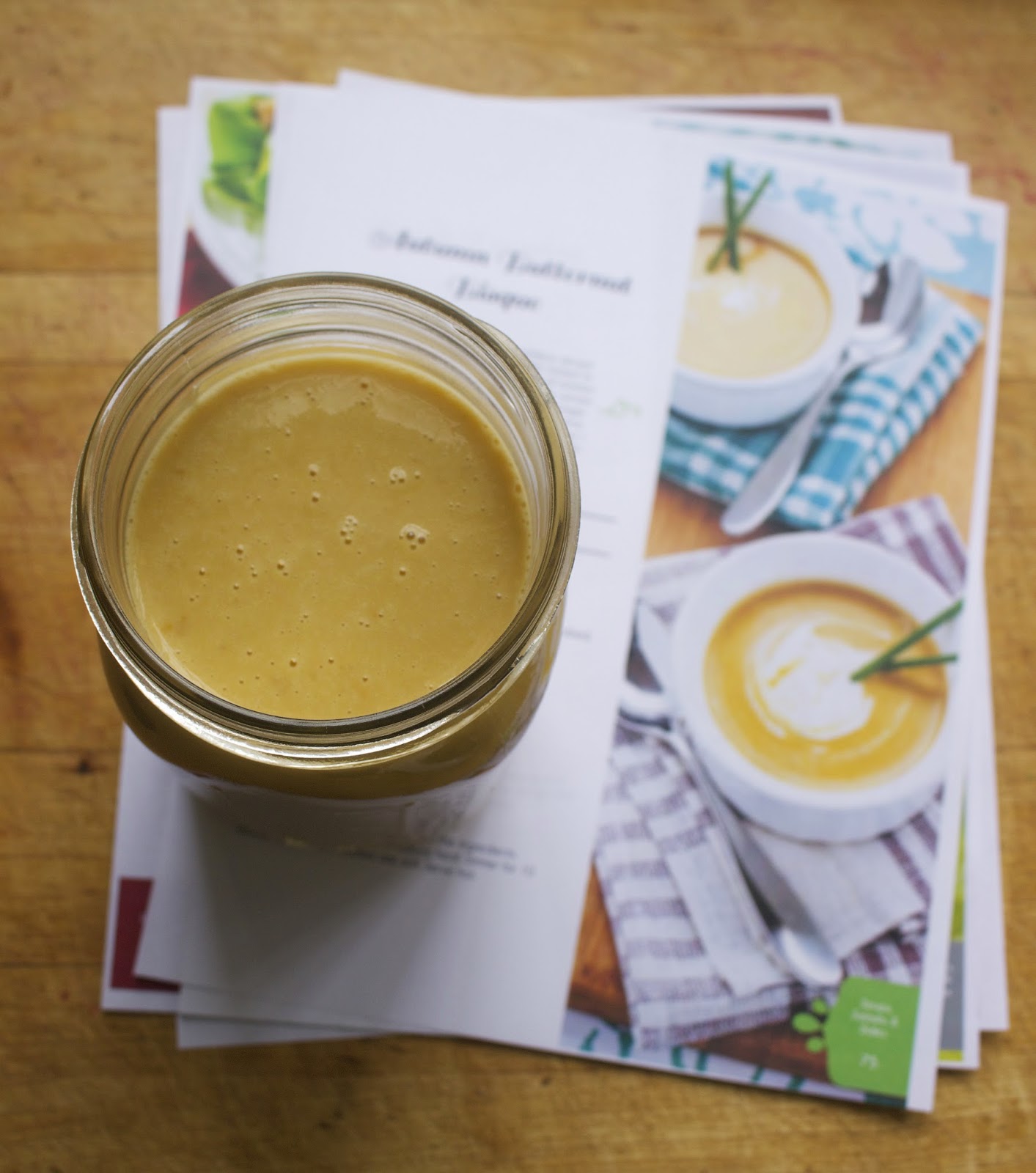
A mason jar of Autumn Butternut Bisque
from He Won’t Know it’s Pa
leo. 
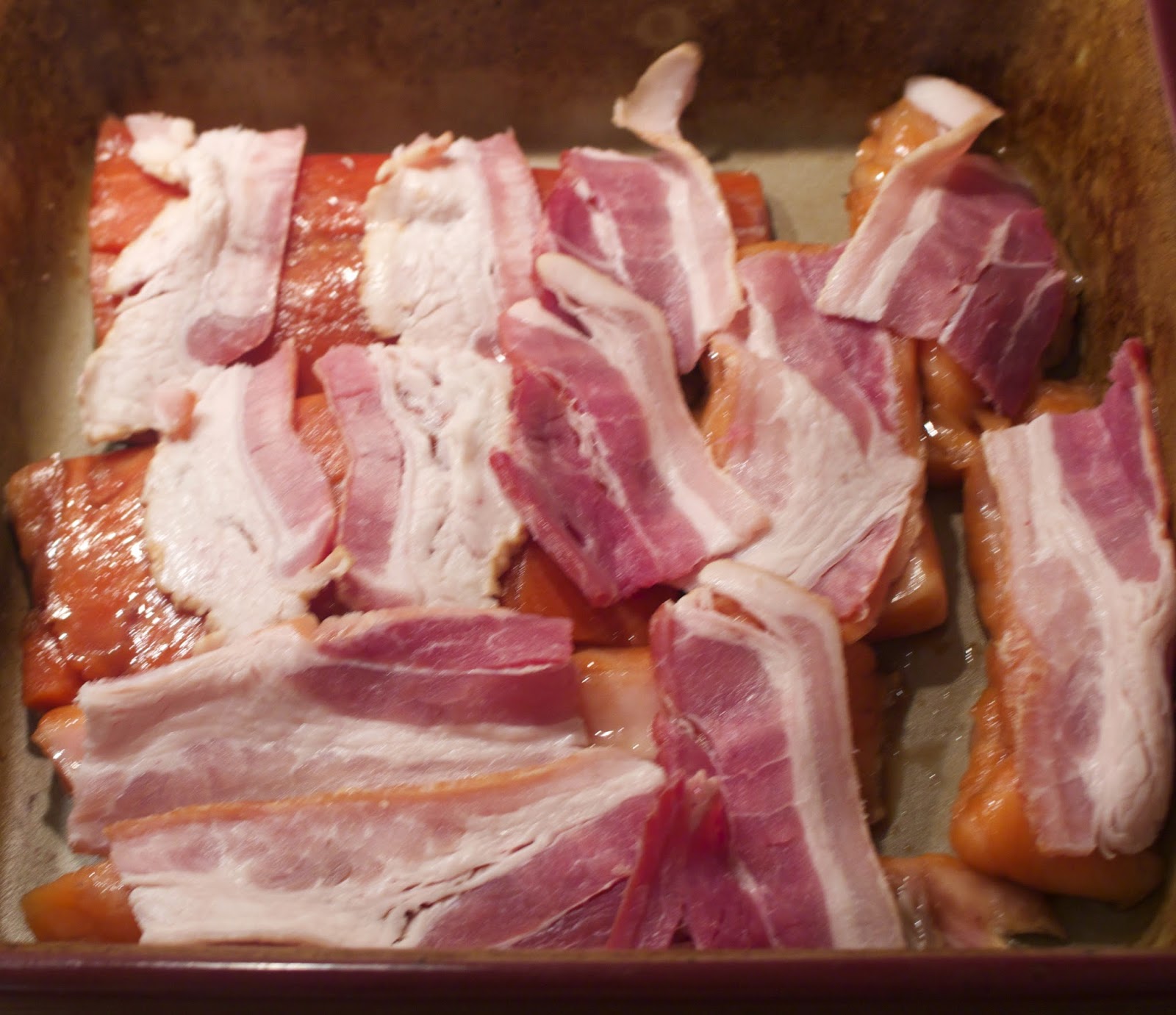
next few weeks.  First off, I chose to make the Autumn Squash Bisque, of which came together in a flash.  Not only was it an easy recipe that requires little to no energy (something that those with an autoimmune disease need), but it also was incredibly delicious, so much so that no one would ever guess it was made up of only 7 ingredients.  The bisque is great served cold or warm, and even freezes perfectly, allowing for one to have pre-made meals at their fingertips.  For the second recipe, my mother chose to prepare the Bacon Maple Salmon, of which we served for dinner despite being a recipe also great for an egg-free breakfast.   Again, despite the recipe being very straight forward to prepare, the flavor combinations were so delicious that even my brother devoured his in the span of only a few seconds.  Truly, it is my
Marinating Bacon Maple Salmon from
He Won’t Know It’s Paleo the cookbook.
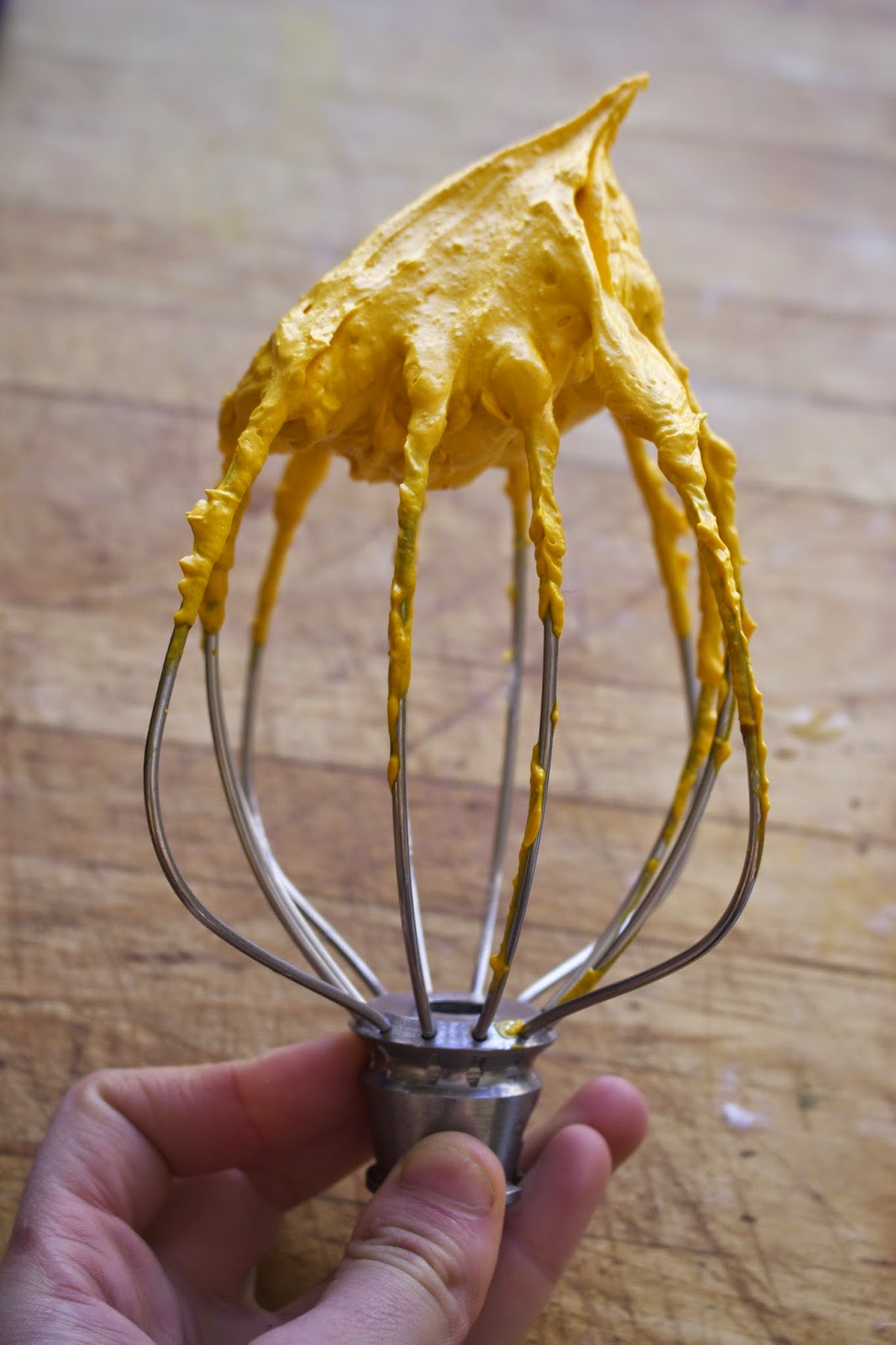
younger brother’s reaction to the dishes we prepared from He Won’t Know It’s Paleo, that prove the the cookbooks contents to live up to the name.  That being said, if you are still unsure of eating salmon for breakfast, there is a whole section dedicated to a combination of sweet and savory meals that can be eaten in place of eggs, including smoothies, breakfast sausages, pigs in a pillow, hash browns, and even a hot oatmeal utilizing spaghetti squash.  Over the past week, I had had the joy of playing around with the autoimmune-friendly mayonnaise that can also be found in Bre’anna’s cookbook.
Egg-free mayonnaise inspired by
HWKIP cookbook.

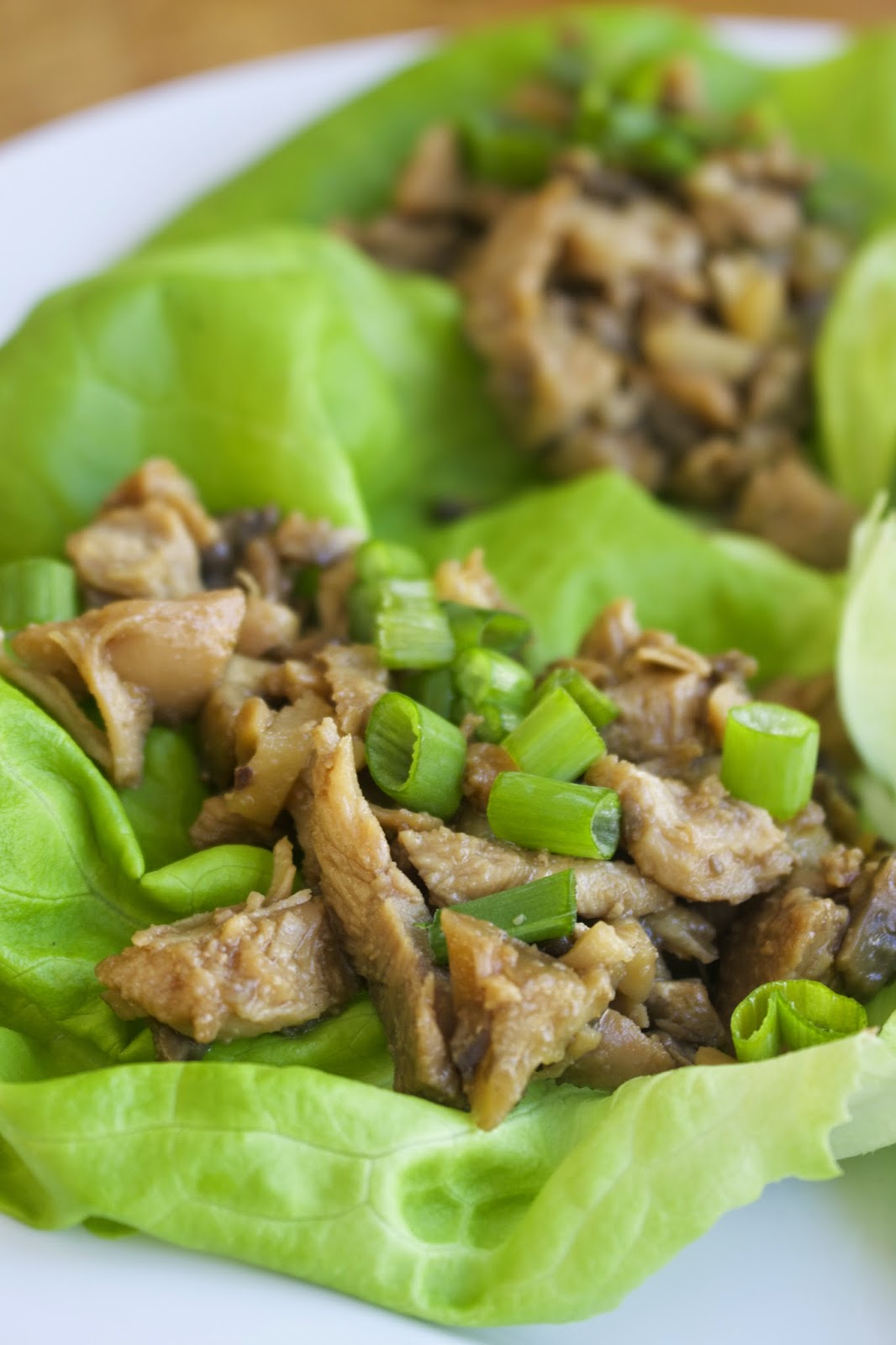
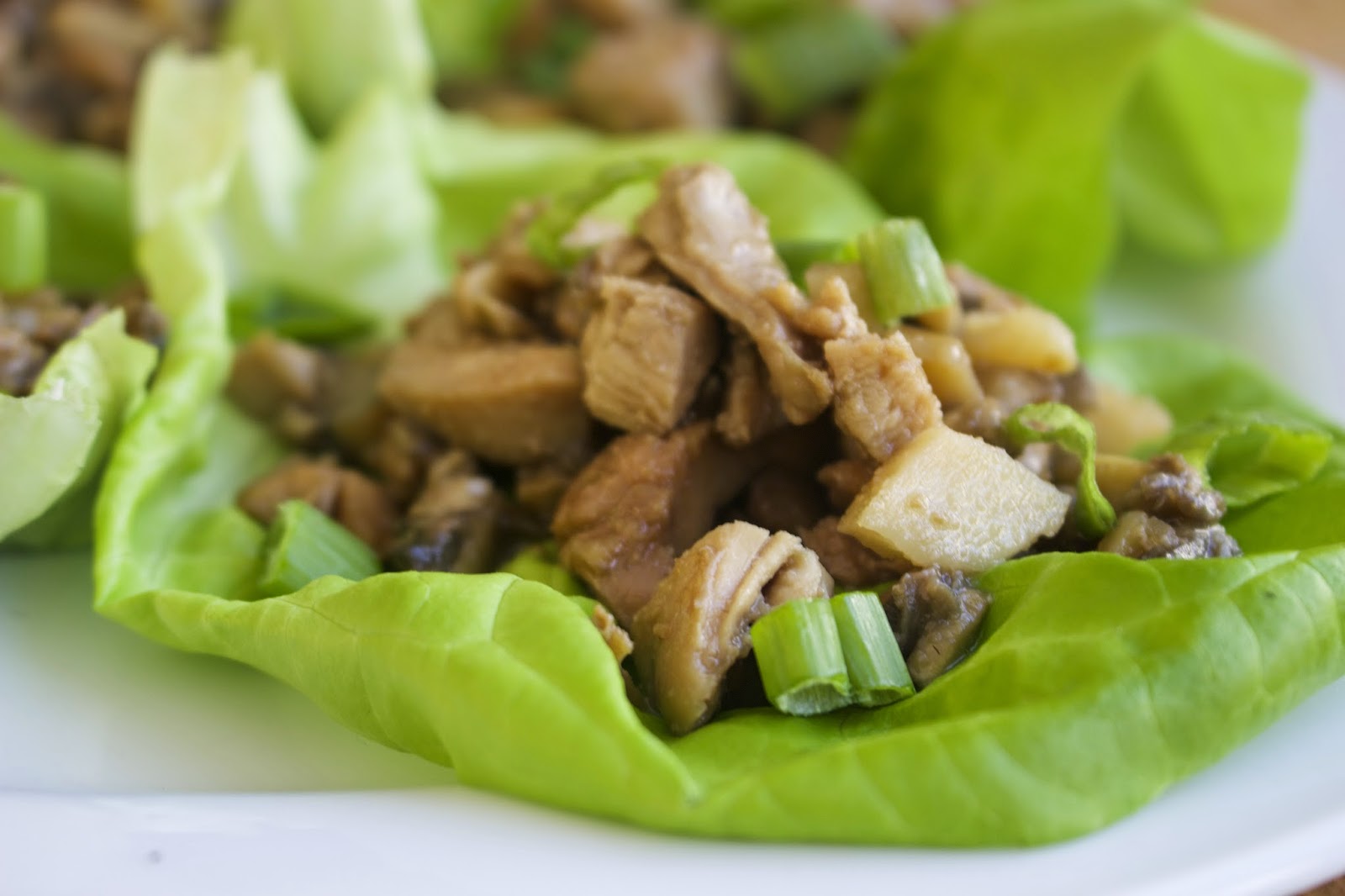
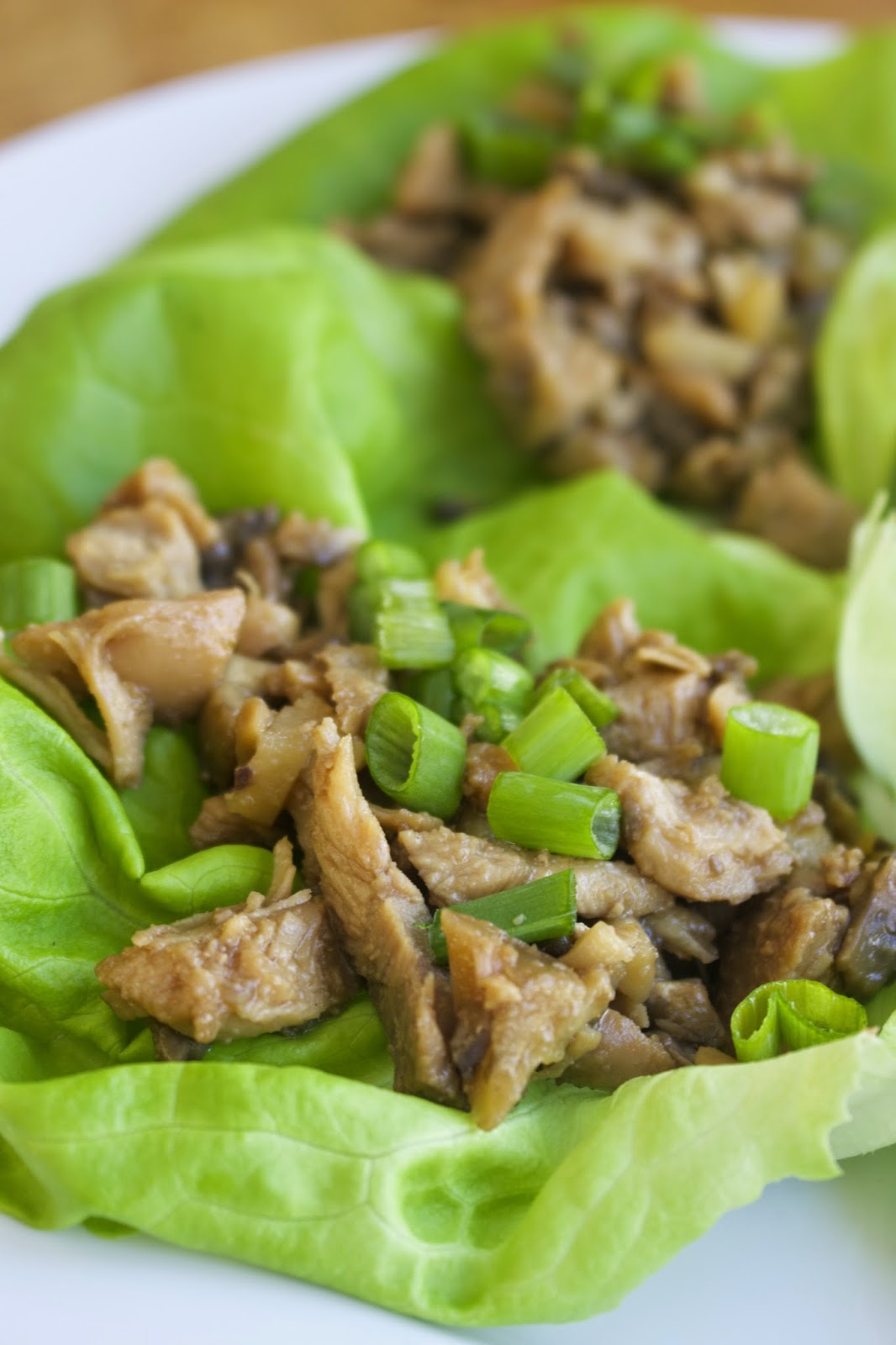
 Another killer recipe that I had the joy of preparing from He Won’t Know It’s Paleo the past couple of weeks (though certainly not the last), was the Asian Lettuce Wraps.  Because my brother has been bugging me for quite some time now that I should make him P.F. Chang style chicken lettuce cups, I instantly decided to take advantage of Bre’anna’s recipe and see if “He” (i.e my 15 year old brother) would not realize that it was Paleo.  Overall, he had no idea, and I was even able to sneak a little bit of cauliflower rice into his mixture of regular, white rice.  My mother also enjoyed the Asian Lettuce Wraps as part of her lunch, after which she exclaimed that we must make sure to include the recipe in our weekly menu.

A Sneak Peak 


 Overall, He Won’t Know It’s Paleo, is an amazing addition to the Paleo and Autoimmune-Paleo cookbooks on the market, as well as your bookshelf.   It would be an understatement to say that having Bre’anna’s book is completely worth purchasing, and truly can be seen as an investment in both you and your families health.  Whether you are just beginning to follow the Autoimmune Protocol, or are a seasoned veteran, He Won’t Know It’s Paleo has got you covered with over 100 recipes that make cooking on AIP (and life in general) that much easier.  If you are interested in purchasing the cookbook, you can do so through the amazon affiliate link provided in in today’s post, and in doing so, make sure to leave a review so that others can find Bre’anna’s cookbook as well! (Though I was given the opportunity to view the cookbook for free, the opinions I express in the review are completely my own, and very genuine.)


Asian Lettuce Wraps
(Courtesy He Won’t Know It’s Paleo Cookbook)
Print Recipe
(Serves 8)
Ingredients 
  • 3 tablespoons heat-stable cooking oil (I used lard) 
  • 2 boneless, skinless chicken breasts, diced 
  • 1/3 cup Coconut aminos
  • 2 tbsp honey
  • 2 cloves garlic, minced
  • 2 tsp apple cider vinegar
  • 1/2 tsp sea salt
  • 1 1/2 cups mined mushrooms
  • 1, 5 oz can diced water chestnuts, rinsed and drained
  • 1/3 cup chopped green onion
  • 8 iceberg lettuce leaves
  • 1 packaged kelp noodles (optional for topping)
Process
  • In a large skillet over medium-high heat, heat the oil.  Add the chicken and Coconut Aminos and cook for 5 minutes, stirring frequently.
  • Add the honey, garlic, vinegar, and salt.  Stir to coat the chicken.  Add the mushrooms, water chestnuts, and green onion and stir fry for 3-4 minutes, until the mushrooms are soft.  Simmer over medium-high heat until the liquid has evaporated, about 101-2 minutes, stirring occasionally to prevent burning. 
  • Spoon the filling onto the lettuce leaves and eat taco-style.  serve with extra Coconut Aminos, if desired.
Recipe Notes
Simplify this recipe by substituting 1 lb of ground chicken for chopped chicken breasts. 


Romans 8:38-39 “For I am convinced that neither death nor life, neither angels nor demons, neither the present nor the future, nor any powers, neither height nor depth, nor anything else in all creation, will be able to separate us from the love of God that is in Christ Jesus our Lord.”

Filed Under: AIP, AIP & Paleo Reviews, autoimmune, dairy free, gluten free Tagged With: cookbook review, grain free, he won't know its paleo, nut free, Paleo, primal, romans 8:38

Paleo Autoimmune Protocol Tigernut Granola (Nut-free)

February 18, 2015


As you can probably tell, I am on a tigernut kick.  Seriously, if I had the choice, I probably would stay in the kitchen creating recipes that showed off the versatility of tigernuts all day long.  Of course, that isn’t really an option, but nonetheless, it does not keep me from dreaming up recipes in my mind, with today’s just so happening to be one that I was able to make a reality.   Though most of my previous recipes use tigernut flour, I have recently come up with a few creations that use the starchy tuber as whole, of which I plan on sharing throughout the next couple of months.  That being said, the granola that I am sharing with you today is one that I simply couldn’t help myself but post as soon as possible.  My mother has always made homemade granola, and quite frankly, I have yet to taste a recipe that is as delicious as hers.  Therefore, I knew she would be the perfect candidate to test my new creation on.  Overall, I am happy to say that my Autoimmune-friendly granola got two thumbs up by both of my parents.  My mother in particular was very excited about having a grain-free granola that wasn’t heavy on nuts and seeds.  Though she typically enjoys a small bowl of her homemade granola every night, she has easily been replacing that with my tigernut granola, saying that it is good enough to be sold in stores. With a slight chew, and the perfect amount of crunch, natural sweetness, and texture from the tigernuts and banana chips, this granola is the perfect treat served in a bowl of ice cold coconut milk, or, as my father enjoyed his, with Organic Gemini’s strawberry horchata.  I, personally, can also attest to it being equally tasty served dry, as I couldn’t help but pick at a few pieces while taking photos of it.  The granola would also be great sprinkled on top of ice cream or a bowl of fruit.   In the end, this grain-less granola proves just another reason why I believe tigernuts will soon be taking the world by storm.  If you are interested in other recipes that use tigernuts, check out my “Paleo Flour” recipe page here.   *See my updated Sweet Cinnamon Granola for a coconut and banana free version.


Tigernut Granola

Print Recipe

(Makes 4 Cups) 
Ingredients

  • 1 cup whole tigernuts (2 cups ground)
  • 1 cup unsweetened banana chips 
  • 1/2 cup unsweetened shredded coconut
  • 1/2 cup currants 
  • 1/4 cup coconut oil – melted
  • 1/4 cup grade B maple syrup
  • 1 tsp vanilla extract
  • 1/2 tsp sea salt

Process

  • Place tigernuts in a bowl, cover with water, and allow to soak anywhere from 6-12 hours.
  • Preheat oven to 300 degrees and line a large baking sheet with parchment paper.
  • Once soaked, drain tigernuts and place in a food processor with the banana chips, pulsing until broken up into small pieces.
  • Transfer tigernut mixture to a large mixing bowl and stir in shredded coconut and sea salt.
  • Melt coconut oil and pour into the mixing bowl, a long with the vanilla and maple syrup, stirring the mixture together with a spatula until evenly coated.
  • Scoop tigernut granola mixture onto the lined baking sheet, spread out evenly with the back of your spatula, and place the sheet in the preheated oven to bake for 35-40 minutes, until just beginning to brown around the edges.
  • Remove the baking sheet from the oven and allow the granola to cool completely before mixing with the currents, and storing in a mason jar either in the pantry or fridge.

Recipe Notes

To make coconut-free, replace shredded coconut with freeze dried strawberries , once the granola is roasted (or omit all together), while replacing the coconut oil for avocado oil or melted, non-hydrogenated palm shortening.

*For both a coconut and banana free version, see my Sweet Cinnamon Tigernut Granola


Ephesians 1:4 “For he chose us in him before the creation of the world to be holy and blameless in his sight. “

Filed Under: AIP, autoimmune friendly, autoimmune paleo, dairy free, gluten free Tagged With: Ephesians 1:4, grain free, nut free, organic gemini, tigernuts

Paleo Spiced Meatballs With Apple Glaze (AIP)

February 17, 2015

With my Sweet and Sour Glazed Meatballs easily being one of my most famous recipes on Beyond the Bite, I wasn’t sure how I would ever top it.  Seriously, my previous meatball recipe seems to just keep on giving, with new people sharing photos and commenting on how much they like them every week.  It is funny how certain recipes become popular when you are not expecting it. That being said, instead of making an entirely different meatball recipe, I decided to create one based off of the recipe that you all know and love.  Much like my Asian-inspired meatballs, today’s recipe has a sticky, sweet glaze, of which covers a delicious, light meatball.  In my opinion, there is nothing that goes better with apple than turkey, and with the addition of a few of my favorite spices, these meatballs are just the addition one needs to liven up their winter meal plan.  Whether served hot out of the oven, or cold out of the fridge, these Spiced Apple-Glazed Meatballs were loved by everyone in my family.  Will they top my past Sweet and Sour Glazed Meatballs?  Well, I guess we will just have to wait and see. 

Spiced Meatballs With Apple Glaze
Print Recipe
(Makes 15-20) 
Meatball Ingredients

  • 1 lb ground turkey
  • 1/2 cup leeks – minced 
  • 1/4 cup arrowroot flour 
  • 1 tbsp fresh ginger – chopped 
  • 1 tbsp maple syrup
  • 1/2 tsp ground turmeric 
  • 1/2 tsp sea salt
  • 1/4 tsp cinnamon 
Glaze Ingredients
  • 1 cup apple sauce 
  • 1 tbsp arrowroot flour
  • 1 tbsp water
  • 1 tbsp apple cider vinegar
  • 1 tsp blackstrap molasses
  • 1/2 tsp ground ginger 
  • 1/4 tsp ground turmeric
  • 1/4 tsp sea salt
  • 1/8th tsp cinnamon
Process
  • Preheat oven to 400 degrees. 
  • In a medium size mixing bowl, combine meatball ingredients together with hands.
  • Form the mixture into 15-20, like-sized meatballs, and place on a large baking sheet.
  • Once up to temperature, place the meat balls in the oven and bake for 20 minutes.
  • To make the glaze, combine arrowroot flour and water in a small ramekin, until a smooth slurry has formed.
  • In a small sauce pan, heat apple sauce, molasses, and apple cider vinegar on medium until beginning to lightly bubble. 
  • Whisk in prepared slurry, spices, and sea salt, stirring for 3-5 minutes until thickened slightly.
  • Remove from heat and brush over prepared meatballs, and serve on a platter with extra sauce if desired. 


1 John 3:11 “For this is the message you heard from the beginning: We should love one another.”

Filed Under: AIP, autoimmune friendly, autoimmune paleo, Protein Dishes Tagged With: 1 john 3:11, apple, coconut free, egg free, grain free, meatballs, nut free, Paleo, primal

The Paleo Approach: Autoimmune Protocol 101

February 16, 2015

As Dr.Sarah Ballantyne shares in her book, The Paleo Approach, autoimmune diseases are becoming an unruly epidemic in today’s society.  Though 1/3 can be accounted for by genetic predisposition, the other portion is heavily influenced by environment, diet, and lifestyle factors, all of which have gone down the tubes in the last couple of centuries.  As the standard American diet, heavy in grains, sugar, and damaged oils, becomes all the more prevalent, so does the risk of one developing an autoimmune disease, and that is not just a coincidence. That being said, while it is sad that more than half of the nation is developing debilitating, life altering autoimmune diseases, there is a beacon of light.   This ever-growing ray of hope is called the autoimmune approach to Paleo, and it is undoubtedly one of the greatest means of finding healing in the seemingly hopeless and incurable health conditions that autoimmune conditions are.

What is the Autoimmune Paleo Diet?

The Autoimmune approach to Paleo (i.e. AIP) is a scientifically founded way of eating for those with an autoimmune disease(s), developed by Dr. Sarah Ballantyne of the Paleo Mom.  Ultimately, the protocol eliminates all pro-inflammatory foods and lifestyle factors, which then reduces any potential, damaging attacks that the body may have on itself, thus decreasing autoimmunity and allowing it to heal. Along with a given autoimmune disease, there are typically many other health conditions that arise in an individual, including leaky gut and hormone imbalance.  Therefore, with the combination of a nutrient-dense, healing diet and lifestyle, inflammation that would otherwise be stimulated through mere living, is exceptionally lowered.  From there, the body is able to begin rebuilding itself at a cellular level, simultaneously regulating the immune system, supporting proper organ function, and many other parts of the body that have been effected by a given autoimmune disease.  That being said, the autoimmune approach to healing should not be seen as an end all, be all, to cure one’s illness, but rather, the building blocks that allows one to take control of their health once more.  Though I myself have been following AIP for at least a year now, all of the effects and internal damage caused by Chronic Lyme Disease are not all magically healed.  However, what AIP has successfully eliminated all of the extra inflammation present from the autoimmune aspect of my disease, and thus help me find a way in addressing all of the other complications present.   Overall, an autoimmune approach to the Paleo diet is full of healing foods that help the body reduce attacks on itself and thus repair and rebuild its damaged systems. After all, health truly starts with what we put in our bodies.

Foods on Autoimmune Protocol

When people first look at the food list on the autoimmune approach to Paleo, they may see it as too strict or difficult to adhere to, and thus get easily discouraged.  However, this should not be the case, as there are plenty of delicious and nutritious foods that one will come to love as they watch their body heal.  On the other hand, it is also important to realize that all of the foods that are eliminated, are  done so for scientifically proven reasons, and are not simply rules to make one’s life miserable.  Protein, in the form of meat, poultry, fish, shellfish, and organ meat, along with vegetables (including those from the sea), fruit, spices, herbs, and high quality fats, all make up a well-rounded, diverse AIP diet. However, there are some crucial exceptions to the list of ingredients above, that should not be taken lightly, as they can seriously hinder one’s healing in the grand scheme of their journey.  On the protocol, one is to completely avoid all forms of grains, soy, legumes, dairy, seed, fruit, and berry derived spices (such as cardamom and black pepper),  eggs, alcohol, NSAIDS, coffee, cocoa, refined sugars, processed vegetable oils, pseudograins (such as chia), nut, seeds, and their oils, sugar alcohols, nightshades, algae, and any other foods that may fit in between these categories, such as processed foods and their additives. Though it may seem like a ghastly list of foods to avoid, there are complete explanations as to why one with an autoimmune disease should avoid them until their disease is under control, all of which can be found in Dr. Sarah Ballantyne’s book, The Paleo Approach. Overall, the reasons for the dietary restrictions are quite straight forward, as the foods that one eliminates for the time being, are all ultimately harmful to the immune system, hormones, and gut, especially if one is dealing with an autoimmune condition(s).  That being said, it is important to focus on what you can eat while following the AIP Protocol, not what you have eliminated for the time being.  Overall, if you are truly committed and believe in what you are doing, following the nutrient dense, low-inflammatory dietary guidelines mapped out by Dr. Sarah Ballantyne in the Paleo Approach or Paleo Approach Cookbook, will certainly come easier throughout time.

Is AIP for Life?

Ultimately, all of the “rules and regulations” of the Autoimmune-Paleo approach are not necessarily something one has to follow their entire life. That being said, if one has an autoimmune disease, knowing what foods can serve as triggers, is certainly the best way to obtain remission. However, the amount of time one needs to strictly adhere to the Autoimmune Protocol can vary from person to person, depending on the severity of their disease.  Some see noticeable improvements in a few months, while those like myself, have to wait many months before changes start to take place.  That being said, while one is in the elimination phase of AIP, it is very, very important to follow the dietary guidelines seriously.  Though it is only natural to make mistakes, and sometimes ingredients hide in foods that we are unaware of, eating foods that can trigger the body back into its damaging attack cycle, can significantly slow the healing process down. However, after one feels that their body has begun to heal, they are more then welcome to reintroduce foods back into their diet, and can do so with the outline Dr. Sarah Ballantyne has provided in her online resources here, as well as in The Paleo Approach.  As the AIP approach goes more “mainstream”, there are many individuals that bash the protocol for how seemingly strict and unrealistic it is.  However, despite all of these negative comments and views on the protocol, those who have tried it based off of Dr. Sarah Ballantyne’s work, know that it is one of the best things that they ever did for their life. In the end, it is important for people to realize that eating according to the elimination phase of AIP is not for a lifetime, and therefore should serve as encouragement and hope to those embarking on their journey to heal.  The autoimmune approach is not intended to cause people to be afraid of food, but instead, learn the connection between what they eat and how their body reacts.

Is AIP Worth the Effort?

 If I were to sum up my answer in response to the question, “is following an autoimmune approach to the Paleo diet worth it?” I would answer with a wholehearted YES! Having an autoimmune disease(s) is very debilitating and can easily overtake ones entire life.  Therefore, through my own personal experience with AIP, I can truthfully say that I see no other way in fully tackling and overcoming an autoimmune disease without the protocol.  I would say that though it may seem a bit daunting to follow the it at the beginning, it would be an understatement to say that the results are completely worth it.  Not only is inflammation reduced, but the autoimmune approach to diet and lifestyle allows one to know their body from the inside out, figure out what factors may trigger an AI flare or symptom, and ultimately be at home in one’s body once more.  Of course, much like any other medical treatment or therapeutic diet, the beneficial effects that occur by following the Autoimmune-Paleo Approach do not happen over night, however, this is where one must not readily give up.  Everyone’s body is effected by a given autoimmune disease differently, therefore causing the outcome of following the protocol to be different as well.  Some may experience significant relief in symptoms after a few weeks, while some it may take many months of persistently following the protocol, to find lasting relief.  As for myself, because Chronic Lyme Disease is both an autoimmune and neurological disease, following an Autoimmune Protocol has not taken care of all of my daily symptoms and effects.  However,  it would not an exaggeration that without it, I would not have made it this far in fighting back against the seemingly incurable illness that Lyme is.  Without the Autoimmune Protocol, the painful symptoms that plague my everyday are easily 10x worse, including joint and muscle pain, brain fog, GI complications, and more.   That being said, there is some damage from Chronic Lyme that AIP does not address, therefore causing me to implement other dietary factors that are needed to further heal, after I strictly followed AIP for many months.  However, I have not simply put away all that I learned about my body throughout the Autoimmune Protocol but rather, I have combined my knowledge to create a diet that best suites my illness, of which I call the Autoimmune-Keto Approach. Though it is still a mighty struggle to get through each day, following an autoimmune approach to the Paleo diet has allowed me to live and heal, despite the odds that come a long with the effects of Chronic Lyme Disease.  Bottom line? AIP heals, bottom line, no ifs, ands, or buts, and there are many individuals who stand as living proof that it does so.  In the end, you cannot argue with a life that has been changed for the better, therefore serving as the greatest evidence on why those with an autoimmune disease should give AIP a shot.

Further Reading

Top 5 Mistakes People Make on AIP
AIP Food Print Outs 
The Paleo Mom AIP
Will the Real AIP Please Stand Up


1 Corinthians 13:1-2 “If I speak in the tongues of men or of angels, but do not have love, I am only a resounding gong or a clanging cymbal. If I have the gift of prophecy and can fathom all mysteries and all knowledge, and if I have a faith that can move mountains, but do not have love, I am nothing.”

Filed Under: AIP, autoimmune disease, chronic lyme, Food and The Human Body Tagged With: autoimmune protocol, Paleo, primal, the paleo approach, the paleo mom

Autoimmune Paleo Protocol Recipes for Valentine’s Day 2015

February 14, 2015

ValentinesDayRoundup
The beginning two weeks of February, I chose to dedicate towards creating recipes that highlighted many, naturally red and pink foods.  Having this theme was a lot of fun, and truly, I could have kept going with it for quite some time.  In order to ensure that everyone has the chance of viewing all of the dishes and desserts that I made, I have included them all in today’s roundup, as well as previously posted recipes that also happen to be perfect for your Valentine’s Day. You can Pin the Roundup Here.

Citrus Beet Dressing

Ground Bison Sloppy Joes 

Cranberry Red Wine Braised Chicken

Bacon Beet Relish

Single Serving Cherry Crumble 

Ginger Jam Thumbprint Cookies 

Chocolate Covered Cranberry Truffles

Strawberry Snack Cake

More for your Valentines Day…

Espresso Fudge Brownie Bites 

Energizing Cranberry Smoothie

Homemade Raspberry Jam 

Sugar Cookie Cutouts

No-Bake Fig Newtons

Salmon Fish Chowder 

Sugar-free Cranberry Sauce 

Stuffed Cabbage With Pomegranate Reduction

 Sweet Glazed Salmon 

John 3:16 “For God so loved the world, that he gave his only Son, that whoever believes in him should not perish but have eternal life.”

Filed Under: dairy free, gluten free Tagged With: 2015, cake, coconut free, cookies, grain free, john 3:16, nut free, valentines day

Paleo Cranberry Chocolate Truffles (AIP Friendly)

February 13, 2015


Naturally sweetened with dates, sweet potato, and just the right amount of tang from the cranberries, these chocolate covered truffles are delicious enough to make anyones mouth water.  Not only that, but they can be easily be made AIP Paleo compliant, with a simple substitution of carob for the unsweetened cocoa powder.  Because of all of the chocolate lovers in my house, I chose to go with the cocoa version for the photos, however, I can promise you that they come out just as scrumptious with carob.  Truly, these truffles are very versatile, as they can easily be made with orange sweet potato, or any freeze dried fruit that is readily available, such as strawberry or raspberries.  At first, I wasn’t sure how my family was going to react to truffles made with sweet potato, after all, it is technically a vegetable.  However, after my mother went back for seconds, and with even my father saying they were amazing, I knew that the truffles were a clear winner.  What is even greater, is that you cannot tell that the base is made with sweet potato, except for the luxurious, fluffy, and smooth texture that it lends to the truffle’s filling.  Though they should be stored in the fridge for maximum shelf life, they hold up surprisingly well at room temperature.  In the end, the truffles were not only a hit with my family, but also with various friends that I shared with them, ensuring that they are the perfect treat to gift and enjoy this Valentine’s Day!

Chocolate Covered Cranberry Truffles

Print Recipe

(Makes 12)
Truffle Ingredients

  • 3/4 cup freeze dried cranberries
  • 8 medjool dates – pitted
  • 1/2 cup white Japanese sweet potato puree
  • 1/4 cup non-hydrogenated palm shortening
  • 1 tbsp sweet potato flour
  • 1/8th tsp sea salt
Topping Ingredients 
  • 1/3 cup non-hydrogenated palm shortening
  • 1/3 cup unsweetened cocoa powder (or) carob powder
  • 3 tbsp maple syrup *Omit if using carob
  • 1/4 tsp sea salt
Process
  • Peel and chop sweet potato, boiling until fork tender (10-15 minutes), and pureeing in a food processor until smooth.
  • In a small bowl, soak pitted dates for 5-10 minutes until soft.
  • Back in the food processor, blend freeze dried cranberries until a powder has formed.
  • Add the sweet potato, pitted dates, palm shortening, and sea salt, and continue to puree until fully combined.
  • Add in sweet potato flour and pulse until fully incorporated.
  • Using a cookie scoop, scoop dough onto a cookie sheet that is placed on top of a parchment lined baking sheet.
  • Place in freezer and allow to set while making the topping
  • In a small sauce pan, heat palm shortening and maple syrup until the shortening is melted.
  • Whisk in cocoa powder until smooth, taking the pan off of the heat.
  • Once the truffles are set and are cold, spoon chocolate coating over the truffles until fully covered, placing back in the freezer to harden if necessary.

Recipe Notes

Freeze dried strawberries or raspberries work great in place of the cranberries.
For an AIP-friendly coating, simply use carob in place of the cocoa and omit the maple syrup.
Sweet potato flour can easily be substituted for coconut, tiger nut, tapioca, or arrowroot.

Matthew 5:43-45 ““You have heard that it was said, ‘Love your neighbor and hate your enemy.’ But I tell you, love your enemies and pray for those who persecute you, that you may be children of your Father in heaven. He causes his sun to rise on the evil and the good, and sends rain on the righteous and the unrighteous.”

Filed Under: AIP, autoimmune friendly, autoimmune paleo, dairy free, gluten free, Sweets and Snacks Tagged With: coconut free, fruit sweetened, grain free, Matthew 5:43-45, nut free, Paleo, primal, sweet potato, truffles

Daily Dose of Encouragement: Love

February 12, 2015

DailyDoseEncouragement

With Valentine’s Day nearing, I thought there would be no better topic than love.  However, not just any love, but Christ’s love for every single one of us here on earth.   It is through the many years of living with a chronic illness, that I have come to realize just how important it is to be fully aware of the depth and height of God’s love for me.  Without it, life can all too easily seem very cruel, unfair, and pretty much pointless. However, when I meditate on the loving presence of God in my daily life, all of the hard edges of living with a chronic illness start to soften.  What do I mean? Well, when we do not believe that God has a strong, everlasting love for us, we suddenly feel as though we are out of favor with Him.  This causes us to be discontent with our circumstances, and thus try and fill the discontent with earthly possessions and passions.  We see everyone around us as obviously being better, and thus “more  loved,” by God, after all, they still have their health intact…right?  However, making the assumption that God does not love you the way He loves others, is just one of the many ways that the devil likes to use trickery and deceit to ruin our lives.  Just because you have a chronic illness, does not necessarily mean that you did something wrong, or that He chose to punish you.  No, God allows His children to suffer not because He finds pleasure in their sorrow, but because if He did not allow it, then He would be a liar, something that would deny His very existence.

DDELove

Ultimately, when God created this world, He gave us one commandment, and that was to serve and love Him just as He loved us.  However, it wasn’t long until this freedom got the best of us, we disobeyed, and thus brought sin into the world. It is from that day forward, illness, sickness, famine, trials, and ultimately death, all became part of life.  Therefore, it is quite easy to see that you do not necessarily have to do something wrong to “deserve” a given disease, rather, it is all part of the world we live in.  However, despite how depressing or helpless this may seem, there is hope.  God loved us so much, that despite the fact that we blatantly disobeyed His commandments, God sent His son to this earth to seek and to save those who are lost (i.e. all of us).   By dying on the cross as an eternal gift for us sinners, He then opened the doors for humanity to acknowledge their mistake of sinning in the first place – salvation.  Despite all that we have done, and continue to do wrong in this world, God promised that whomever believed and gave their life to Him, that they would not only be saved from eternal condemnation in Hell, but would also get to spend eternity with Him in Heaven.  Once again, God is keeping His promise of free will to us humans, and giving us the choice as to whether or not we want to surrender our lives to Him or not.  In other words, God knew we would experience this health complication here on earth, and He wanted to give us a second chance where we could live, free of sin and its consequences.   It is from the place of eternal salvation, that God also gives us many more promises, all of which can be found in His book, the Bible.  He promises to never leave us nor forsake us, will always give us all that we need, will never allow us to be tempted beyond what we can bear, will fill us with a never ending source of strength and peace.  He also promises His grace is sufficient for all things, He will always forgive all of our sins, while everything in Life, including a given chronic illness, will work together for good, for those who love Him.  The promises continue, as God continues to declare that He is with us wherever we go, in whatever circumstance, including a life of chronic illness.  He says that despite how hard these times may be, that if we continue to hold fast and follow Him, that no good thing will He uphold from us.  God promises to always be near to comfort us, guide us, and give us wisdom to face the challenges of today.  Not only that, but He promises to take care of the future, and that we should never worry about tomorrow, as His hands are already over it.  God also promises that, if we live a life according to His will, that He will give us the desires of our heart, that He will remain always faithful, and ultimately, no matter how many times we mess up, our destination of eternal salvation with Him in Heaven, is never taken away.  When we hold on to all of the promises that God gave us, because He loves us, our earthly existence full of tears, pain, struggle, and disease, becomes so minuscule compared to that of the glory that we will be spending with Him in eternity.  All that we must do is accept the unmatchable and unfathomable love that Christ showed us by dying on the cross for our sins.

Philippians 4:19 “But my God shall supply all your need according to his riches in glory by Christ Jesus.”

Filed Under: chronic lyme, God, Personal Experiences Tagged With: daily dose of encouragement, Jesus, love, philippians 4:19, Salvation

« Previous Page
Next Page »

Primary Sidebar

Recent Posts

incandescent light bulb

The Sun Is Only Half of the Story, Part II: Learning to Respect the Darkness

When Light is Not Enough

The Centralization of Our World: Human Health and Beyond

Farm sunrise

The Sun is Only Half of the Story, Part I

Why Redox Changed Everything for Me

Morning Sunrise Over a Quiet Cape Cod Beach

It Started with Sunrise

Copyright © 2026 · LBD Pro V on Genesis Framework · WordPress · Log in